Leadership & Resiliency Program Frequently Asked Questions
-
We would like to add a component to the
program. To what extent we can add activities that are not part of the
original LRP design without deviating too far from the model?
-
What steps do I need to take to replicate the
program?
-
Do all the activities have to be
"adventure" activities? Can they be "regular" sports
activities such as basketball, hockey, etc?
-
Does the manual include curriculum for out of
school groups?
-
Does the manual include information on
the adventure training expectations?
-
Where does the staff training occur?
-
How much time is involved in training?
-
When does my license expire?
-
I understand that the LRP facilitators need to be
Masters level. What if we can’t do this?
-
What is the proper "dosage" of LRP
programming in order to maintain fidelity to the program design?
-
I've read all this material, but still have
questions. What now?
In general, adding to the program is not a fidelity issue. It's when you take away from the original design that you get into a problem. Do consider the three core areas and the resiliency areas of focus for each of them. This will really help you sort and sift which other activities might still match with the program philosophy. We are happy to provide guidance.
What steps do I need to take to replicate
the program?
The first step is to complete and return the order form
(by fax or
email to
Erika Gilliam) for a license agreement. We require payment or
purchase order details at the time of the order. Once licensed, you will
be provided with access to the training manual. All licensees replicating
the program are required to complete training, which is the next step of
the program. Please see the price list
for additional details.
If you do not have the Adobe Acrobat Reader installed on your computer, click on the image below to go to the Adobe Systems, Inc. download site. Download and install the program according to the instructions. Adobe Acrobat Reader is free and is distributed by Adobe Systems, Inc.
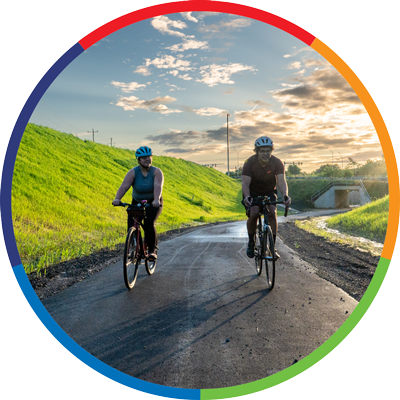
The "adventure" activities focus on positive risk-taking. Also, activities that will put participants in "new" situations where they might not initially be successful (or look cool) are great. Activities like yoga, archery and hiking have all been implemented for this component. These activities have to offer opportunities for program goal area process discussions and "regular" sports may not provide that – it's about the positive risk-taking, the "rush" of doing something adventurous, doing things that you might have to work at to be successful OR something at which you might not experience success. These activities also focus on delayed gratification and learning how to manage risks.
Does the manual include curriculum for out of school groups?
The entire program is process-focused and the manual is less a "curriculum" and more a guide to implementation. You will need to have program facilitators with group process experience. The manual does include details about all three components of the program: in-school groups, community volunteer experience/service learning and adventure/alternative activities. The manual also includes pre- and post-tests and other program evaluation information.
Does the manual include information on the adventure training expectations?
Yes, the manual does include this information and so does the training.
Where does the staff training occur?
We can do training at your site or you can send staff to us. It is also possible to partner with other organizations to share the cost of training – this is especially appealing to places only training one or two people. Contact us for details.
How much time is involved in training?
The training is 2-1/2 days with the other 1/2 day available for consultation and technical assistance. Groups often want to meet as a group to begin to map out their own local replication efforts. Generally, it's best to plan for three days total.
When does my license
expire?
The license is valid for three years from date on license document. If
you continue to implement the LRP following the initial three year
period, a renewal is necessary. Renewals are valid for an additional
three years.
I understand that the LRP facilitators need to be Masters level. What if we can’t do this?
Since LRP is process-focused it requires someone clinically oriented and skilled in group work. Masters level staff is a best practice but is not required. We understand that this may prove difficult for some and arranging for ongoing clinical supervision is necessary regardless. Facilitators will encounter challenging issues so having support is critical.
What is the proper "dosage" of LRP programming in order to maintain fidelity to the program design?
LRP is an intensive, year-round program. In order to meet fidelity requirements, the following program components should be planned for at the levels shown in the chart below.
The simplest way to consider fidelity to the program model is through a review of the program design and the recommended dosage for each component:
Program Component |
Frequency |
Months Per Year |
Dosage Total |
| In-School Resiliency Groups | 4x month (weekly) | 9 | 36 |
| Community Volunteer Experiences/ Service Learning Opportunities | 1x month | 12 | 12 |
| Alternative/Adventure Activities | 1x month | 12 | 12 |
|
3 Total components |
6 interventions per month |
Programming All Year |
60 activities/sessions per year |
Note: This design is a “best case scenario” and does not include consideration of holiday breaks from school or other events that would reduce the number of in-school groups or other activities.
I've read all this material, but still have questions. What now?
We're glad to talk to you to answer any remaining questions:
For program information please contact: Jamie MacDonald, Director, Prevention Programs at 703-383-8451
For ordering information please contact: Erika Gilliam, Administrative Assistant at 703-383-8430


Website Survey