Domestic and Sexual Violence 24-Hour Hotline 703-360-7273; TTY 711

SAFETY ALERT – If you are in danger, call or text 911.

SAFETY ALERT – If you are in danger, call or text 911.
For free, short-term individual and family counseling services (also available via teletherapy), call us at 703-968-4052. The DSVS 24-hour hotline is still available 703-360-7273.
National Resources
State Resources
Local Resources
Domestic Violence Action Center (DVAC)
Pennino Building, 12011 Government Center Parkway, Floor 7, Suite 740
Fairfax, VA 22035
Monday – Friday 8 am – 4:30 am (walk-in welcome)
Monday – Friday 8 am – 7 pm (by phone)
703-246-4573
DFSDSVSDVACInfo@fairfaxcounty.gov
For assistance, call 703-246-4573 or the Domestic and Sexual Violence 24-Hour Hotline at 703-360-7273.
Fairfax County Community Services Room
Tysons Corner Center
1961 Chain Bridge Road
McLean, VA 22102
703-246-4573
DFSDSVSDVACInfo@fairfaxcounty.gov
Wednesdays and Fridays 10:30 a.m.-7 p.m. (By appointment only)
Herndon Neighborhood Resource Center
1086 Elden Street
Herndon, VA 20170
703-246-4573
DFSDSVSDVACInfo@fairfaxcounty.gov
Wednesdays, 9 a.m.- 4:30 p.m. (By appointment only)
InovaCares Clinic for Women and Children
6400 Arlington Boulevard
Falls Church, VA 22042
703-246-4573
DFSDSVSDVACInfo@fairfaxcounty.gov
Mondays and Wednesday, 8 a.m.-4:30 p.m. (By appointment only)
James Lee Community Center
2855 Annandale Road
Falls Church, VA 22042
703-246-4573
DFSDSVSDVACInfo@fairfaxcounty.gov
Fridays, 8 a.m.-4:30 p.m. (By appointment only)
Kelly Square
Fairfax County Health Department
703-246-4573
DFSDSVSDVACInfo@fairfaxcounty.gov
Monday-Friday 8 a.m.-7 p.m. (By phone only)
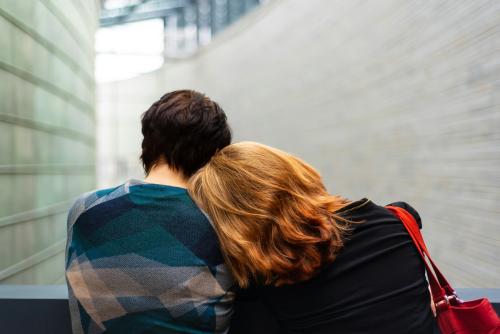 Maybe someone you care about has told you they are experiencing domestic violence. Or you see signs of abuse in their relationship. You may wonder what to say to help—or if you should say anything at all. That’s OK. Domestic violence is a difficult subject to talk about both for people experiencing the violence and those who care about the victims. But reaching out can be a lifeline to someone who probably feels fear, shame, or embarrassment. Here are some practical, safety-focused tips for helping a victim of domestic violence.
 Unscripted: Conversations about Sexual and Domestic Violence is a podcast featuring employees and subject matter experts from Domestic and Sexual Violence Services and partner organizations discussing all aspects of interpersonal violence, while providing prevention strategies, solutions, and resources for support for residents of Fairfax County.
Federal law now requires some changes to Medicaid. These changes might have an impact on domestic violence survivors, who often access Medicaid for themselves and their children to have health care independent of the person who caused harm. On this episode of Unscripted, host Kendra Lee, Domestic and Sexual Violence Services senior victim advocate Vanessa Cullers, and Public Assistance and Employment Services Performance Improvement Manager Patty Fehervari talk about the new rules and the ways they’ll affect domestic violence survivors.
 Domestic and Sexual Violence Services works with communities to transform society’s response to domestic violence, sexual violence, human trafficking, and stalking by challenging oppression, collaborating to inform policy, and providing everybody impacted by violence with equitable access to trauma-informed support, advocacy, education, and a space for healing. Check out this article about the value of working with Fairfax County Domestic and Sexual Violence Division.
 Fairfax County Department of Family Services is on Facebook
Like and Follow us on Facebook at @FairfaxCountyFamilyServices for news, events, tips, stories and training opportunities. We support families and county residents of all ages and stages of life. Join our online community and engage with us through social media. #FairfaxCountyFamilyServices