

Quick Summary
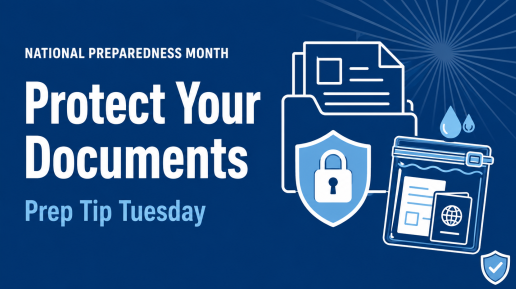
- Protect important documents such as your identification, insurance policies, financial records, property records and contact information
- Make copies, go digital, use a waterproof/fireproof container, and share access to these items
- Organize important documents now to avoid stress during an emergency
We’re in week four of National Preparedness Month, and Prep Tip Tuesday continues. So far, we’ve covered knowing your risk, making a plan and building a kit. This week’s step is one people often skip: protecting the documents and records you’d need most if disaster struck.
Water and food get most of the attention during preparedness planning, but paperwork matters too. If your home floods, burns or you have to evacuate quickly, the last thing you want is to be searching for insurance papers or medication lists in the middle of an emergency. A little organization now saves real stress later.
What to Protect
Focus on the documents that would be hardest to replace or most needed during an emergency:
- Identification. Driver’s license, passport, birth certificates and Social Security cards.
- Insurance policies. Homeowners, renters, auto and health insurance information, including policy numbers and contact info.
- Financial records. Bank account information, a list of credit cards and any loan or mortgage documents.
- Medical information. A list of current medications, dosages, allergies and medical conditions for each household member.
- Property records. Deeds, titles and any documentation you’d need for an insurance claim.
- Contact information. A written list of important phone numbers in case your phone is lost, damaged or out of battery.
How to Protect Them
You don’t need a safe deposit box or a fireproof vault, though those help. A few simple steps go a long way:
- Make copies. Keep originals in one place and copies in another, ideally outside your home.
- Go digital. Take photos or scans of key documents and store them in a password-protected cloud folder or on a flash drive.
- Use a waterproof, fireproof container. A basic document safe or storage bag adds protection if you keep originals at home.
- Share access. Make sure a trusted family member or your out-of-area emergency contact knows where to find copies if you’re unable to.
Your Task This Week
Pick one important document today. Make a physical copy, take a photo of it or scan it into a secure digital folder. Add it to your emergency kit or store it somewhere separate from the original. Repeat with one or two more documents each week until your household records are covered.
And if you haven’t signed up for Fairfax Alerts yet, now is a good time. It’s the fastest way to know when an emergency is developing, which gives you more time to grab your kit and your documents if you need to leave quickly. Sign up for free at www.fairfaxcounty.gov/alerts.
Next Tuesday: We close out the series by covering how to stay informed during an emergency and how to look out for neighbors who may need extra help.