

Your old jeans, torn t-shirts and broken cell phones don’t have to end up in the trash. We're making it easier for residents to recycle these items through two free programs that protect the environment and save landfill space.
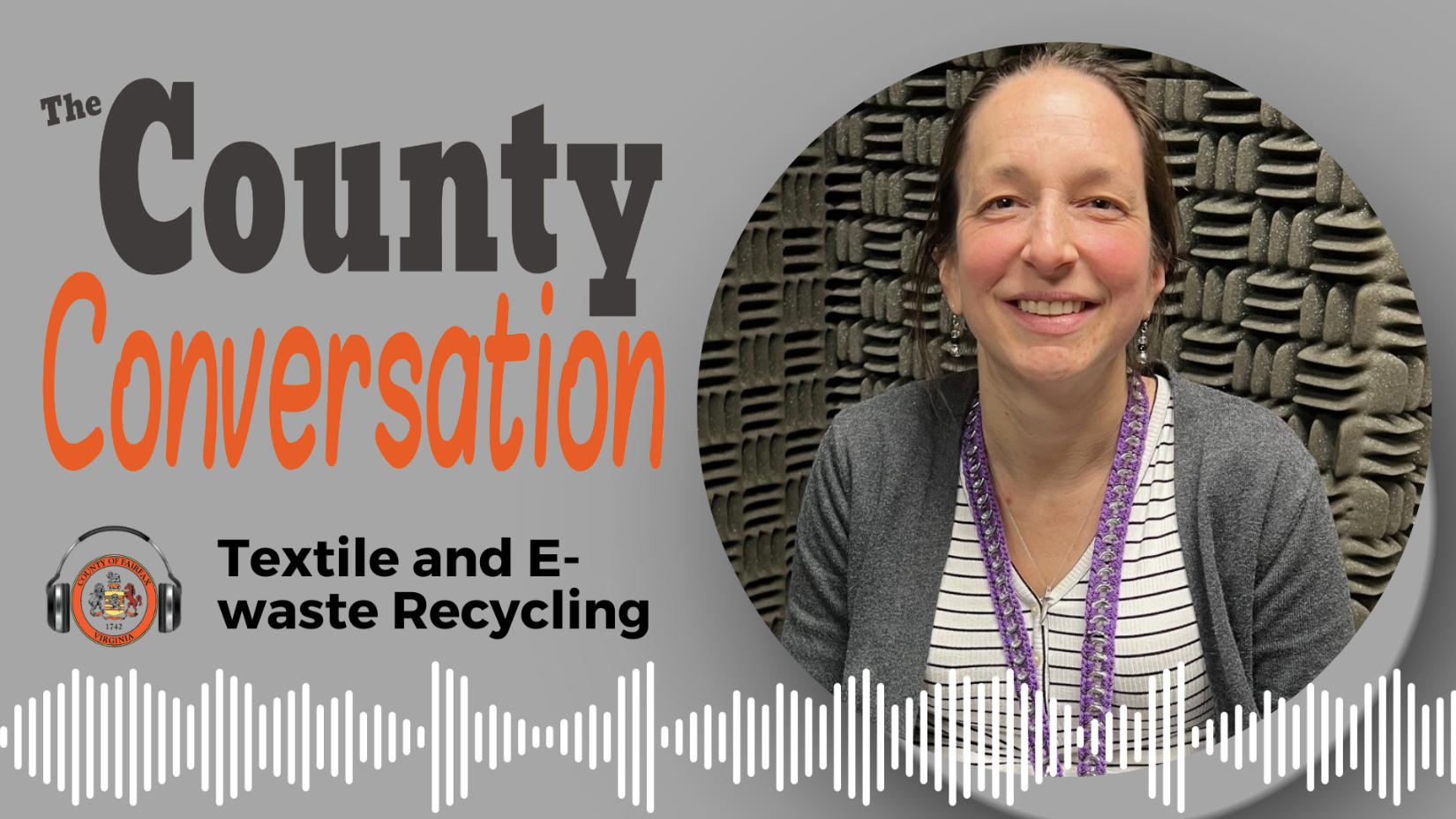
On a recent episode of the County Conversation podcast, Catie Torgersen, sustainability program manager for our Department of Public Works and Environmental Services, shared how residents can take advantage of textile recycling and e-waste programs at two county facilities.
Why This Matters
We send all trash to a waste-to-energy plant, where it’s burned and the ash gets buried at the I-95 Landfill Complex. The problem is the limited space.
“If we run out of space, we’ll have to truck that trash somewhere else," Torgersen said. "Our goal is to help find ways for residents to divert their waste and minimize the amount of waste that we ultimately bring to our ash fill site.”
Fast fashion has made the problem worse, she said. People used to wear clothes more than 14 times before getting rid of them. Now they're tossing items much sooner.
How Textile Recycling Works
Starting last February, we partnered with Helpsy, a for-profit company with a green mission. Residents can drop off textiles at the I-66 Transfer Station in Fairfax or the I-95 Landfill Complex in Lorton. Both locations have big blue bins in which residents can deposit their items for recycling.
“They accept textiles that are clean and dry, but they can be stained, they can be torn, and they find another life for them,” Torgersen said.
Helpsy sorts the materials and sells 45% to 60% to thrift stores. The rest are turned into rags or insulation. Less than 5% ends up in landfills, and only when items are wet or moldy.
We plan to add more drop-off sites at other facilities by spring 2026, making recycling bins accessible to more residents throughout the county.
E-Waste: More Than Just Old Phones
Electronic waste includes computers, TVs, cables, wires, batteries and household appliances. These items contain precious metals that take lots of energy to mine. Recycling them saves natural resources and makes economic sense. Safety is an additional reason to recycle; batteries can cause fires if they end up in regular trash.
“We’ve had trucks that have burned down and facilities that have caught fire from a battery in your electronics,” Torgersen said. “You can remove those batteries, and we accept those as well for recycling.”
Before dropping off devices, wipe your personal data. But it you can’t access the information stored on a broken phone, no need to worry. The county’s vendor follows secure practices to handle electronics properly.
Getting Started
Torgersen recommends starting with e-waste for safety reasons.
“So many things have rechargeable batteries in them, and if you leave those go for a long time, sometimes they can become hazardous,” she said.
Keep a box in your garage for items you’ll take to a facility. Tape any stored batteries to prevent sparking. Then drop everything off the next time you’re near the I-66 Transfer Station or I-95 Landfill Complex.
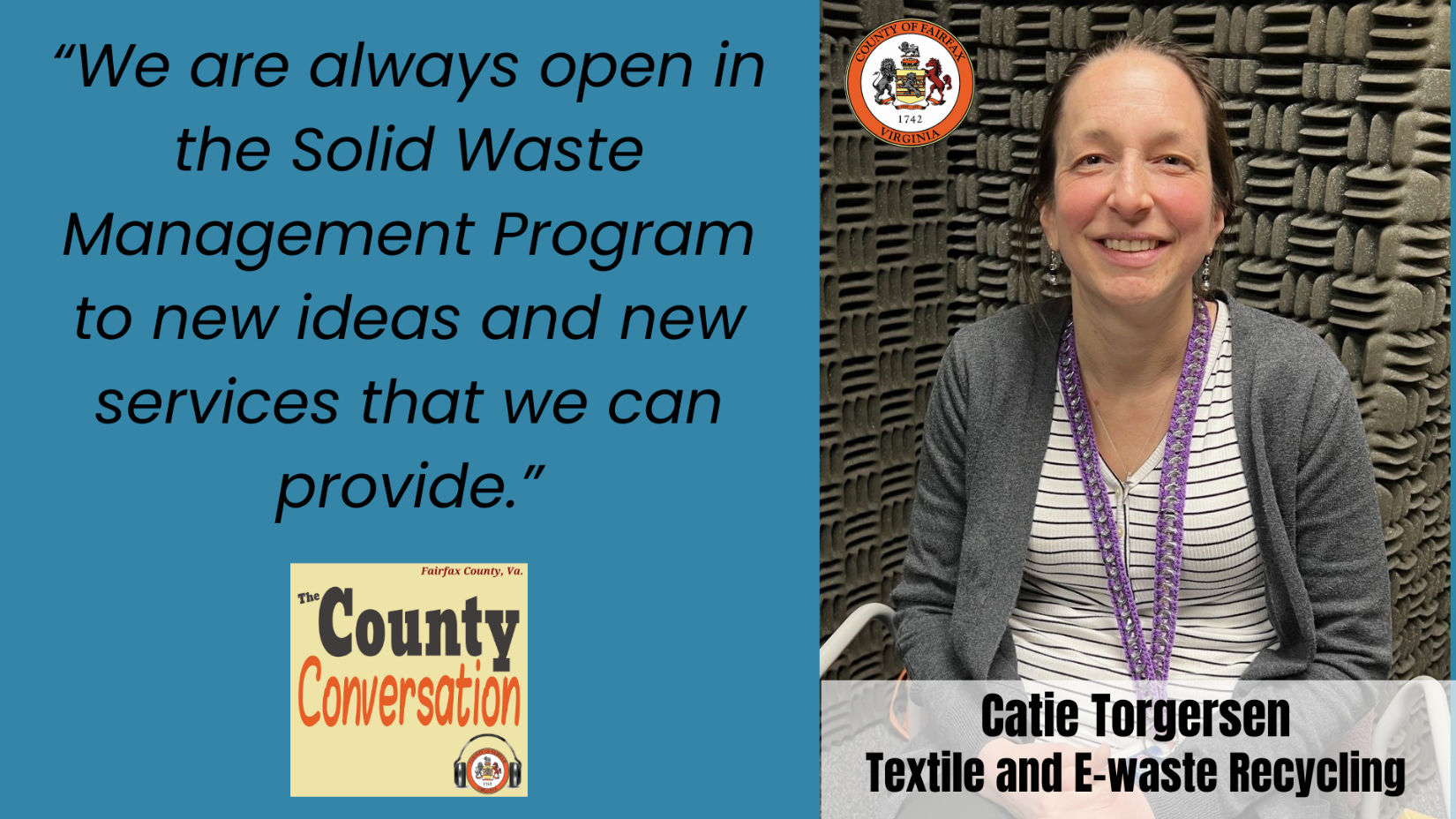
The Solid Waste Management Program wants to hear from residents about recycling needs and ideas for new programs. Email ideas to trashmail@fairfaxcounty.gov.
The County Conversation Podcast
The “County Conversation” is a podcast featuring employees and subject matter experts from the Fairfax County Government discussing programs, services and items of interest to residents of Fairfax County. Listen to past episodes of “County Conversation.” Listen to other Fairfax County podcasts or additional audio content at Fairfax County Government Radio.
 SIGN UP FOR DAILY EMAIL HEADLINES