

Summary
Since 2015, Verizon Virginia LLC and Verizon’s other business units have been engaged in a long-term project to eliminate its traditional copper-based telephone lines in favor of fiber-optic lines. Before retiring any specific copper lines, Verizon is required to provide notice via the Federal Communications Commission (FCC) of its intent to do so. In June 2020, the FCC released a Public Notice indicating that Verizon intended to retire all remaining copper lines in Fairfax County. The change has a number of advantages but will also change the way telephones behave in a power outage.
Although Verizon’s migration from copper to fiber is based on its choice to upgrade its facilities, some customers have reported that Verizon’s marketing arm is telling customers that the migration to fiber optic facilities is required by the FCC and that customers must pay for the switch, neither of which is true. If you’re a Verizon customer and have been given this incorrect information by Verizon, please contact our office so we can address this issue with Verizon.
Background
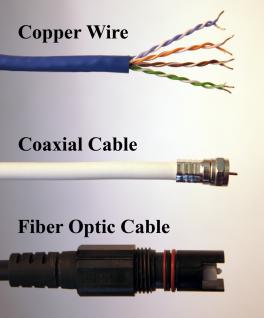
Traditionally, telephone companies such as Verizon provided “plain old telephone service” (POTS) over thin, twisted-pair copper lines. These lines ran from the central office or “wire center” to each home. Multiple telephone extensions were served by copper wiring inside the home.
Because copper conducts electricity, it was possible for the telephone network to provide power to each individual telephone unit from the central office. As a result, if electrical power to the home failed, telephones would still work. This extra reliability was especially important if the customer needed to make a 911 emergency call.
In modern systems, more and more of this copper plant is being replaced with fiber. Fiber-optic lines – a type of glass – transmit light, rather than electricity. Fiber provides vastly greater capacity and reliability than copper. However, it does not conduct electricity.
Traditional cable systems use heavier “coaxial” copper lines, together with fiber, to provide broadband service. Fiber runs from a central headend to a node, which typically serves one to two hundred homes in a neighborhood. Coaxial cable then takes the signals from the node to the individual home in such a “hybrid fiber-coax” (HFC) system.
When Verizon refitted its network for its Fios products (video, Internet access, and voice), it extended fiber all the way to the individual home, rather than merely to a neighborhood node. This design is referred to as “fiber to the home” (FTTH) or “fiber to the premises” (FTTP).
Verizon’s “Network Transformation Project”
Verizon has already implemented its copper-to-fiber “Network Transformation Project” in New York, New Jersey, and Pennsylvania.
Verizon’s network transformation project in Fairfax County initially affected about 11,500 customers in Falls Church, Springfield, and Burke. The project has since progressed to cover additional areas of the County, including Alexandria, Annandale, Mt. Vernon, Fairfax, and Great Falls. According to the FCC’s June 2020 Public Notice, Verizon has indicated that all remaining residential copper customers in the County will eventually be switched to fiber connections. Over a period of time, businesses will be added.
When Verizon installs fiber to a single-family home, the copper line is replaced with fiber up to the side of the house, where an “optical network terminal” (ONT) converts the light signal on fiber to an electrical signal on copper. The existing in-home copper wiring then distributes the signal within the house.
The ONT for an apartment may be installed in the apartment itself, or in a building common area. Verizon installs the new fiber and equipment without charge to the customer.
An FTTP network offers significant benefits. Fiber supports much greater bandwidth (capacity) than copper. It is more reliable and provides higher-quality service. Fiber lines are not subject to water damage and electrical interference the way copper lines are. Communications signals travel farther over fiber than over copper without amplification, so a fiber network requires fewer powered components. Greater reliability – fewer points of failure – means fewer service dispatches, which minimizes fuel consumption and air pollution.
Verizon benefits from these cost savings in its own operating expenses. It also gains the ability to sell additional services to customers, since it is easy to add broadband services once the fiber is in place.
When Verizon switches a customer to fiber, it does not necessarily move the customer to its brand-name “Fios” service. The customer is offered standard telephone service, at the same price, terms, and conditions. According to Verizon, customer service representatives are not supposed to bring up converting to Fios unless the customer asks first.
However, some customers have reported that Verizon representatives are promoting a switch to Fios. Moreover, as noted above, there also have been reports that Verizon’s marketing arm is telling customers that the migration to fiber optic facilities is required by the FCC and that customers must pay for the switch, neither of which is true. Moreover, as noted above, there also have been reports that Verizon’s marketing arm is telling customers that the migration to fiber optic facilities is required by the FCC which isn’t true.
By removing the copper network, Verizon also eliminates DSL Internet service, which runs over the copper lines. Former DSL users have the opportunity to switch to fiber-based Fios Internet access and the associated higher data speeds, but likely at a higher price.
Backup Power
Traditionally, conventional telephones continued to work in a power outage, because they were supplied with power from the central office (unless the phone unit itself required a separate electrical outlet, as with cordless models). This is no longer possible with fiber to the home. Similarly, security alarm systems that depend on connecting to a service center via telephone lines will not work if the phone connection is down. This change in the way power is provided has raised concerns about the ability to make 911 emergency calls in a power outage.
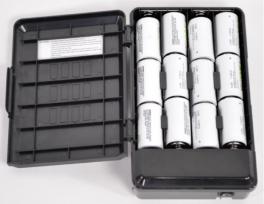
To address this problem, Verizon provides a “battery backup unit” (BBU) that maintains power to the ONT thereby enabling phone service, including calls to 911, to continue for a limited time (from approximately 8-25 hours depending on the type of BBU). For more information about Verizon's BBUs and for general information about what happens to communications networks during a power outage and how to prepare yourself, click here for a more detailed explanation of backup power.
Verizon’s Authority to Switch Customers to Fiber
As a general matter, Fairfax County does not have regulatory authority over telephone or DSL service, which are the primary services offered over copper lines. Those services are regulated by the Virginia State Corporation Commission (SCC) and the FCC.
Virginia state law allows Verizon to change its transmission technology, at least within the category of wireline (as opposed to wireless) methods. “A telephone company may meet its duty to furnish reasonably adequate service and facilities through the use of any and all available wireline and terrestrial wireless technologies; however, a telephone company, when restoring service to an existing wireline customer, shall offer the option to furnish service using wireline facilities.” (Va. Code Ann. § 56-234(A)(2)
FCC Regulations
As noted above, the FCC regulates telephone service, including Verizon’s network transformation project. Over the past several years, the FCC has issued three orders addressing copper-to-fiber migration and backup power.
First, on August 7, 2015, the FCC issued its 911 Continuity Report and Order, FCC 15-98, governing telecom providers’ obligations to provide residential customers with backup power options (¶¶ 3-4). The provider must offer for purchase a backup option that enables 911 calls but need not provide it without charge. At least one option must supply a minimum of eight hours of backup power (matching Verizon’s original BBU capabilities). A 24-hour option was required to be made available within three years (by February 23, 2019). The provider was also required to disclose information about the backup options at the point of sale, and annually thereafter, but was not required to retrofit existing customers. The backup power rule sunsets in 2025. 47 C.F.R. § 12.5. The FCC has not modified these BBU regulations, and they remain in effect.
Also on August 7, 2015, the FCC issued its Technology Transitions Report and Order, FCC 15-97, allowing a communications provider such as Verizon to switch from copper to fiber without FCC approval as long as that change did not “discontinue, reduce, or impair the services provided” (¶ 5). At that time, the provider was required to provide 90 days’ notice to residential customers and 180 days’ notice for businesses (¶ 62). However, the FCC has since changed the rules to be less favorable to consumers.
On November 16, 2017, the FCC adopted an order rolling back consumer protections in connection with the retirement of copper lines and the discontinuance of traditional telephone services. In the Order, the FCC eliminated the requirement that retail customers must be notified 90 days before their copper facilities are retired. As of August 8, 2018, providers like Verizon can transition customers from copper to fiber simply by providing notice to the FCC, not to retail customers.
Consequences for County Residents
As a consequence of the FCC’s regulations, as noted above, residents who still subscribe to copper-based service will need to be prepared for Verizon to move them to fiber without advance notice. Residents will be able to continue paying for the same kind of telephone service at the same price (at least initially), but will need to make decisions about backup power.
The copper migration work probably will involve digging in a homeowner’s yard. Although Verizon will be responsible for obtaining “Miss Utility” markings of the major utilities (gas, water, electricity), residents should mark any sprinkler system invisible fence, or similar underground equipment locations to make sure they are not cut by the dig.
Customers who are absent from their homes for long periods of time – for example, on overseas work assignments – may come home to a disconnected telephone line. However, once they get in touch with Verizon, they should be able to get the same phone number back, rather than having to switch to a new number. Verizon states that it holds a customer’s phone number for at least a year before reassigning the number.
If you are concerned about Verizon transitioning your copper service without notice to you, note that Verizon has already provided the required notice to the FCC that it intends to retire all copper facilities in the County and switch all customers to fiber optic service. This means that the only way to find out when your copper service will be switched to fiber is by calling the Verizon customer service number listed on your bill and asking them about the timing. If you feel particularly aggrieved by Verizon’s conduct, you can file an informal complaint with the FCC.
FCC Filings by Verizon
The following FCC filings through December 2019 relate to Verizon’s copper migration in Fairfax County. (Note that public notices released prior to 2018 refer to § 51.332 of the FCC’s rules, which was removed and replaced by § 51.333 in the 2017 order).
- • Verizon Public Notice of Network Change(s) (10/2/15) Falls Church Phase II
- • Verizon Public Notice of Network Change(s) (2/23/16) Falls Church Phase III
- • Copper Retirement ID No. 2017-01-A-VA (February 28, 2017) (West Springfield)
- • Copper Retirement ID No. 2017-01-B-VA (February 28, 2017) (Arlington, Reston, Falls Church, Merrifield)
- • Copper Retirement ID No. 2017-02-A-VA (June 1, 2017) (West Springfield)
- • Copper Retirement ID No. 2017-02-B-VA (June 1, 2017) (Arlington, Reston, Falls Church, Merrifield)
- • Copper Retirement ID No. 2019-01-A-VA (3/20/19) relates to 67 wire centers and associated addresses in Virginia, including some in Alexandria, Annandale, Mt. Vernon, Fairfax, McLean, Vienna and Great Falls.
- • Copper Retirement ID No. 2019-01-B-VA (3/20/19) (Lewinsville, McLean)
- •Copper Retirement ID No. 2019-01-A-VA (12/27/19) (Annandale, Barcroft, Burgundy Road, Mount Vernon, Fairfax, Great Falls, Lorton, Lewinsville, Vienna)
- •Copper Retirement ID No. 2019-03-A-VA Amended (6/25/20) (All remaining portions of Fairfax County)