


Fairfax County Needs Housing Solutions
Young families and mid-career talent: Since 2018, the region has seen a persistent net loss among 30–44-year-olds, driven largely by housing affordability challenges.
Household income gap: In 2022, households moving out of the region earned $121,875 on average, compared with $99,641 for households moving in. This gap has widened since 2018.
Workforce stability: Northern Virginia saw 158,077 people move out and 128,012 move in during 2022, resulting in a net domestic migration loss of 30,065. Household loss was 13,249, nearly double pre-2019 levels.
The overall need: Fairfax needs 40,000 new homes by 2035.
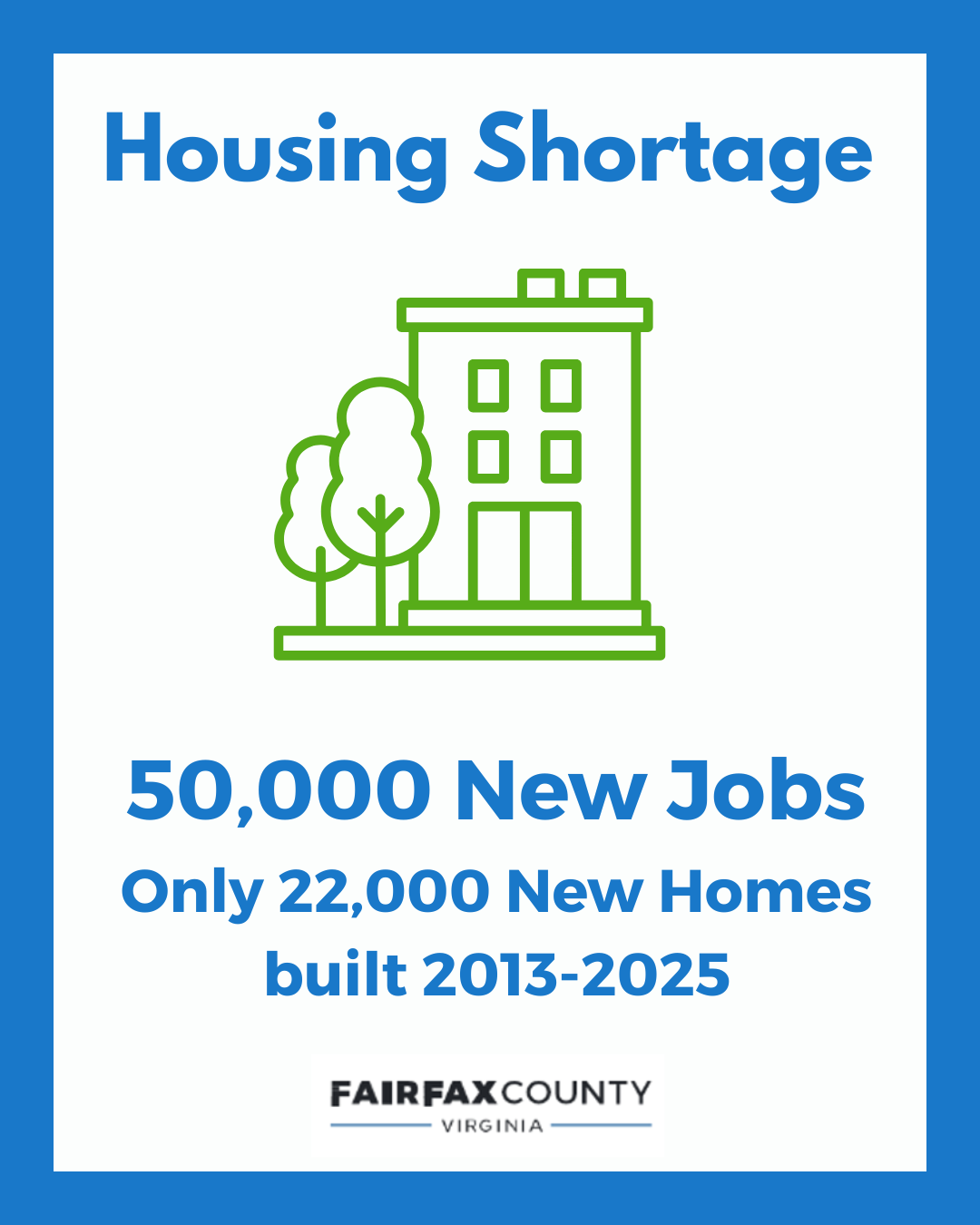
Jobs outpace homes: Fairfax added about twice the number of jobs (50,000) as homes (22,000) between 2013 and 2025.
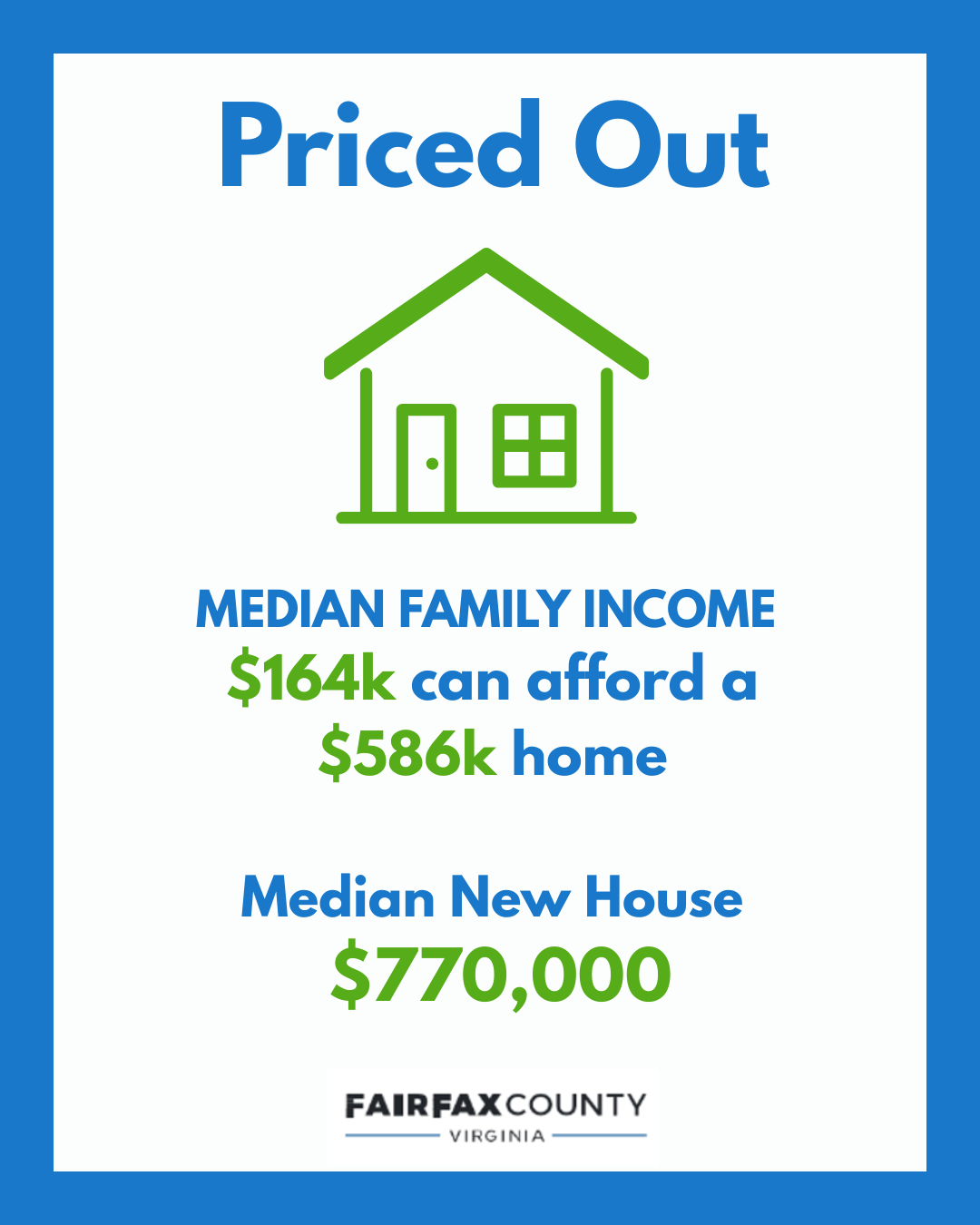
Buying a home: The median income for a family of four is $164,000, which allows them to afford a $586,000 house. However, the median home price is $770,000, requiring a family of four to make $230,000+ to afford it. Only 13% of new homes built in the last four years were under $586,000.
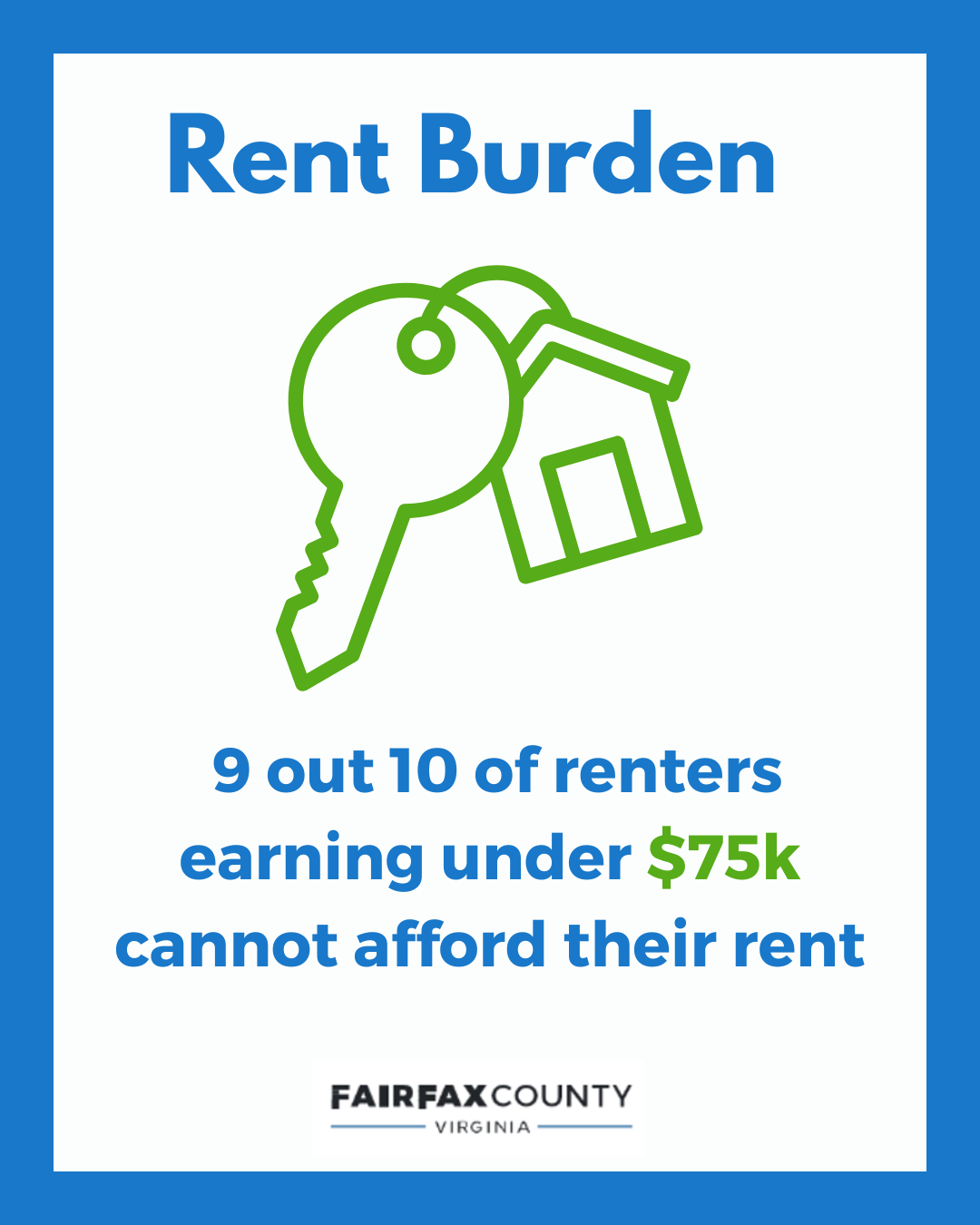
Renting a home: Rents have increased 40% since 2015. Today, 45% of renters are cost-burdened, meaning they spend more than 30% of their income on housing.
Many are feeling the pinch, especially those at lower income levels.

Fairfax County's Top Priority is Housing Solutions
To solve our housing shortage, Fairfax County leaders are working to identify new tools and improvements that we can make to help produce more homes. A Task Force of experts from 13 county departments worked to identify the technical bottlenecks that slow down home building. They created a list of 33 initiatives to help build housing that our community needs.
These projects form our Housing Action Plan, a technical guide to respond to the housing crisis.
Housing Action Plan
- The Focus: Update Planning and Zoning processes so more homes can be built for people with moderate incomes.
- The Work: Increase housing options by allowing more homes in certain areas, creating Suburban Village Centers, supporting mixed-use projects, small “cottage” home communities and removing barriers to Accessory Living Units (ALUs).
- The Focus: Improve and use county policies that help lower the cost of building and running affordable housing.
- The Work: Explore a Special Exception (SE) process that allows more affordable housing to be built without full rezoning. Also make sure the Comprehensive Plan supports and encourages affordable housing.
- The Focus: Strengthen teamwork between county departments, state agencies and applicants.
- The Work: Add a project manager to guide projects and create working groups that address transportation needs early in the process. Work with our faith communities so that they act on opportunities to build housing on their land.
- The Focus: Make housing, planning and zoning rules easier to understand by aligning programs, reducing extra steps and setting clear timelines for everyone involved.
- The Work: Update the Affordable Dwelling Unit Ordinance, streamline the Comprehensive Plan and rezoning process, use clearer more consistent comments during plan review, improve review timelines and follow a transparent 12‑month site‑plan review process.
- The Focus: Build a stronger set of tools that support affordable housing development.
- The Work: Create new loan and financing options, consider tax incentives to reduce costs, start a down payment assistance program for moderate‑income buyers and ensure continued progress toward the goal of 10,000 new affordable homes by 2034.
- The Focus: Help county staff, appointed and elected officials, developers and community members work together toward shared solutions.
- The Work: Improve public engagement so it supports project success and makes collaboration a core part of every step in the process.
- The Focus: Strengthen relationships with employers to better understand workforce housing needs and create housing tools that support both workers and local businesses.
- The Work: Give employers clear ways to connect employees to housing programs, use market data to guide decisions and find ways to strengthen partnership opportunities.
Coming Soon: Communications Toolkit
The Housing Solutions Communications Toolkit is coming soon. In this toolkit, there will be printable handouts in multiple language, social media posts and videos to share.