Content Warning: Graphic wildlife injury photos included.
Glue traps are among the most common pest control methods, but also among the most dangerous. Glue traps don’t discriminate, and that often leads to unintended consequences.
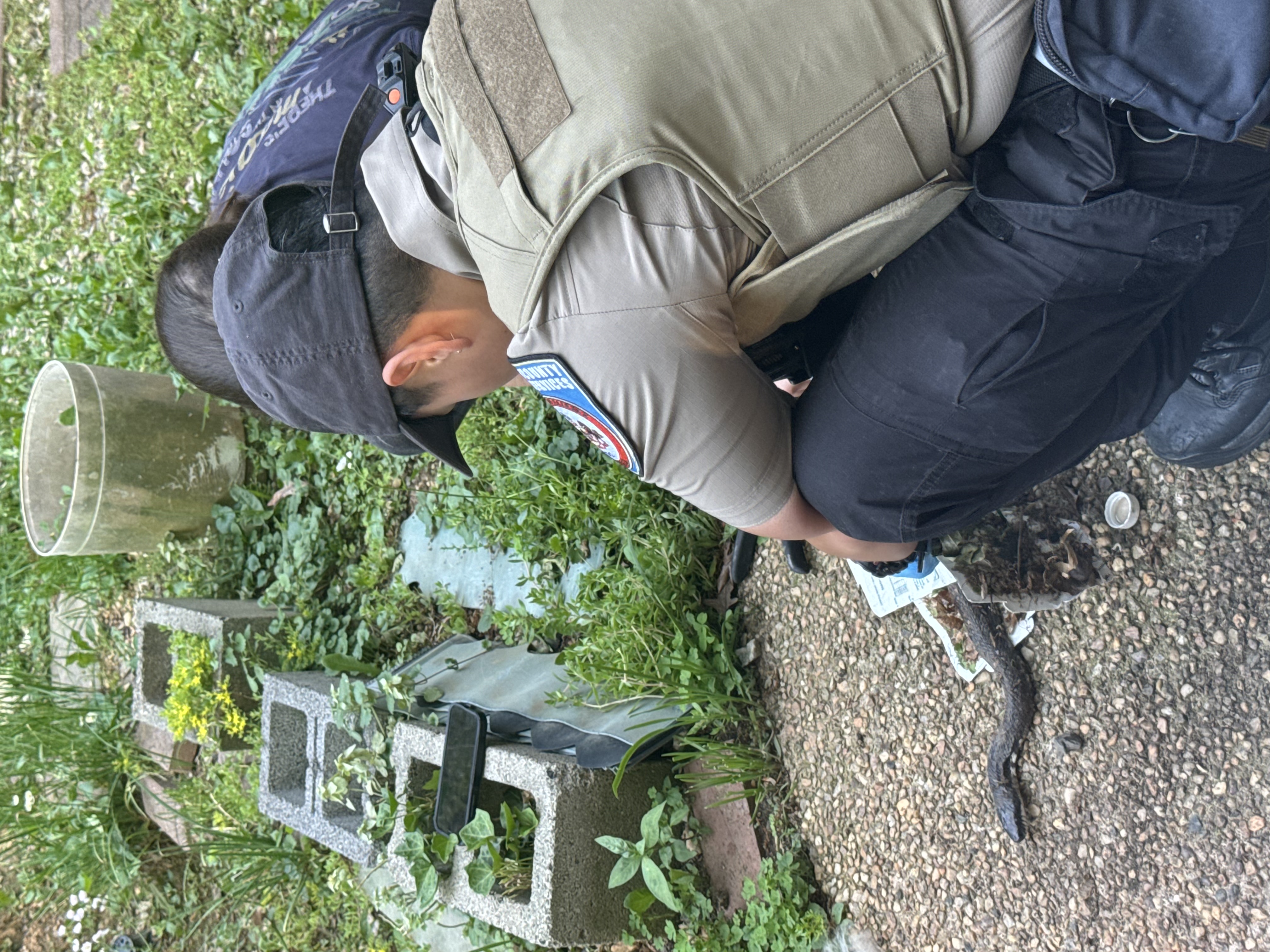
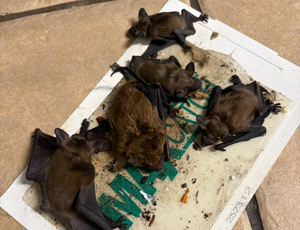
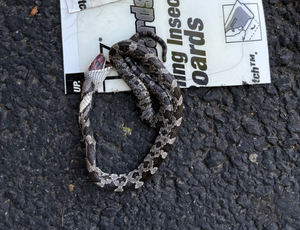
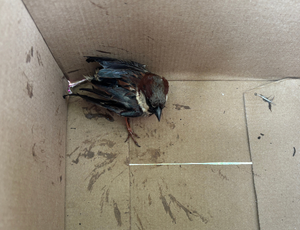
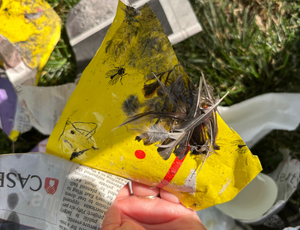
Throughout the year, our Animal Services Officers (ASOs) receive numerous calls regarding animals caught by mistake in glue traps, including songbirds, snakes, bats, baby wildlife, and even pets. In one case, a homeowner placed a glue trap on a tree, hoping to catch invasive spotted lanternflies, but caught a native songbird instead. Another case revealed a family of bats stuck in a trap that had been placed for insects and mice.
Animals caught in traps can panic, pulling feathers, skin, and scales in an attempt to break free. Some are found hours or days later, severely injured or having passed away from starvation and dehydration. Glue traps can also catch high-risk rabies vectors, such as raccoons, risking the well-being of nearby humans and pets.
Glue traps are often a quick fix rather than a permanent solution to a larger problem.
Try these alternative, more permanent solutions instead:
- Seal off potential entry points and remove food sources.
- Use humane traps.
- Clean your home regularly to remove any attractants and deter potential pests.
- Keep all indoor and outdoor trash in closed containers with a secure lid.
If you find an animal stuck in a glue trap, do not attempt to remove it yourself. Any human interaction can potentially spread disease and cause the animal to panic and injure itself further. Using protective gear such as gloves, place the animal (still in the trap) in a cardboard box and keep them in a warm, dark, and quiet area while you call for help.
Call Fairfax County’s non-emergency dispatch at 703-691-2131 for wildlife assistance.
Content Warning: Graphic wildlife injury photos below.