

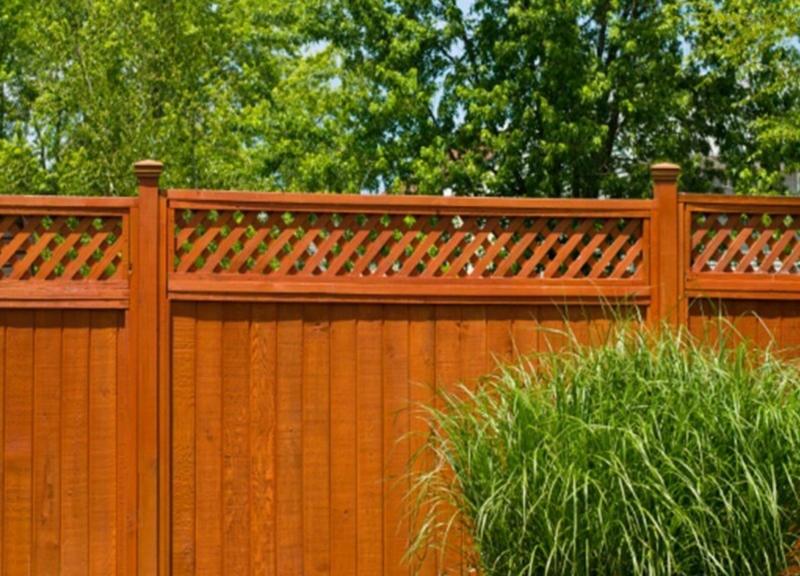
Before you start a fence or wall project, this month’s Code Compliance Corner has the information you need.
Fences – The Zoning Ordinance permits fences as an accessory to principal (i.e. primary) uses such as homes, shopping centers, and warehouses. Below is information on fence height and when a permit is required.
- Fence height is measured from the top of the fence down to the ground below the fence, even if the bottom of the fence does not touch the ground.
- The maximum allowed fence height in a front yard is usually four feet. In side and rear yards, fences may be up to seven feet in height.
- Many properties sit at an intersection of two or more streets - this is called a corner lot and different rules apply:
- The yards between the streets and the principal structure are front yards, where the maximum allowed fence height is typically four feet.
- Parts of the front yards of corner lots have a sight distance area. In this area, the maximum allowed fence height is three and one-half feet.
- While the sight distance area limitations for corner lots must always be met, there are several scenarios for which the standard fence height rules are different:
- On a property of two or more acres in the R-A through R-1 Districts, maximum allowable fence height is seven feet, including in the front yard.
- On properties developed with industrial uses, maximum allowable fence height is eight feet.
- There are other situations where a taller-than-otherwise-allowed fence may be permitted, but typically only in part of a property and only if the property itself meets certain criteria – such as a corner lot that abuts a major roadway and the driveway entrances for that corner lot and any contiguous lot are on a local street (not the major roadway).
- There may be cases when a property owner wants a taller fence, but their property doesn't meet any of the conditions above. In these cases, there are various potential zoning applications to pursue, but the most common is likely a special permit application. This type of application requires meeting specific submission requirements, applicable fees, and a public hearing before the Board of Zoning Appeals (BZA). At the hearing, the BZA determines if the application meets the applicable standards contained in the Zoning Ordinance. The BZA may approve a front-yard fence on a residential lot up to six feet in height, unless the request is for a noise barrier which may be taller.
- The Department of Code Compliance (DCC) Fences and Walls flyer has information about when a fence requires a building permit, along with other information.
So, while a fence is often a simple project, there are many things to consider when deciding where to place your fence, and how tall it may be. Because of the potential complexity, we encourage property owners to ask for information before getting started. Department of Planning and Development (DPD) staff are available to answer any questions and make sure your project stays compliant. Contact the Planner of the Day (POD) for more information.
DCC is here to help – if you have questions, want to make a report, or if you are the subject of enforcement and need to contact us. You can report problems online, learn about what happens during an investigation, reach us via email, phone (703-324-1300 / TTY 711), or visit us in person at 12055 Government Center Parkway, Suite 1016, Fairfax, VA 22035.