

(Posted 2026 June)
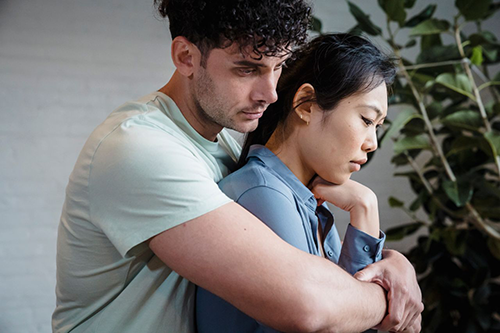
If you or someone you know is in a violent intimate relationship, you may hear (or say yourself), “The abuse is not that bad.” Sometimes the minimizing phrases may sound like:
- They have never actually hit me.
- It doesn’t happen that often.
- It only happens when they’re drinking (or tired, stressed, or having a difficult day).
- Every couple has issues.
Though it might sound like low self-esteem or ignorance, there are likely multiple overlapping reasons for minimizing abuse—and almost all of them are survival strategies. It’s a safety behavior the nervous system and social context reward. Check out some of the most common drivers:
Survival in the relationship. Diminishing what’s happening is a way to reduce threat while the person is still inside a dangerous environment. “If I treat it like it’s not that bad, maybe I can get through today.”
Trauma bonding. When harm is followed by apology, affection, gifts, calm days, the brain learns to protect the attachment. Minimization helps the brain preserve the narrative:
“This person I love can be wonderful.”
Social messages and normalization. We teach people that:
- jealousy = love
- control = protection
- yelling = normal relationship conflict
- enduring = strength
So, the baseline is already warped.
Fear of consequences. Naming violence can trigger the possibility they may have to make a change, retaliation if they speak up, fear no one will believe them, shame if they admit they “allowed” it. Minimization delays these risks.
Cumulative erosion. Abuse escalates gradually; so, too, does their reference point. What feels normal at year 3 would have been unthinkable at month 1.
Self-blame. If I caused it, I can fix it by changing. That’s less terrifying than “This person I love is willing to harm me and I may not be able to stop it.”
The bottom line: Minimizing abuse is not irrational; it’s adaptive. It is a way to make the unbearable bearable until safety becomes possible.
Fairfax County’s Domestic and Sexual Violence Services division supports adults, teens, and children who have been impacted by domestic and sexual violence, stalking, and human trafficking. Services are confidential, free, and provided regardless of race, gender, ethnicity, national origin, age, disability, religion, gender identity, or sexual orientation.
If you or someone you know is experiencing interpersonal violence, call the Domestic and Sexual Violence 24-Hour Hotline at 703-360-7273 for resources and support. If you are in immediate danger, call 9-1-1.
This posting is part of the Department of Family Services' Community Corner where you’ll find timely information about upcoming events, parenting and wellness tips, programs and services, and more! Share these helpful posts with your friends and family. Don't miss out on future postings! Sign up today!