

Fairfax County, Virginia
Fairfax County Virginia

FFX Global Navigation

  • Residents
    • Animals & Pets
      • Adoptions
      • Animal Control & Regulations
      • Guide to Dogs
      • Lost & Found Pets
      • Shelter Support & Supplies
      • Wildlife
      • More
      Courts & Legal
      • Case Information
      • Circuit Court Docket
      • Jury Duty
      • Land Records
      • Magistrate
      • Public Law Library
      • Self-Help Resources
      • Traffic Court
      • Vital Records
      • More
      Environment & Energy
      • Invasive Species
      • Litter
      • Recycle, Trash & Compost
      • Sustain Fairfax
      • Trees
      • Watersheds
      • More
      Health & Human Services
      • Basic Needs & Assistance
      • Disability Services
      • Diseases & Conditions
      • Domestic & Sexual Violence
      • Health Clinics
      • Mental Health
      • Opioids
      • More
      Individuals & Families
      • Children & Youth
      • Federal Workforce
      • Immigrants
      • Military & Veterans
      • New Residents
      • Older Adults
      • Parents
      • People with Disabilities
      • Volunteers
      • More
      Land Use & Planning
      • Comprehensive Plan
      • County Capital Projects
      • Data Centers
      • Land Records
      • Parks Planning
      • Planning Projects
      • Research Tools
      • Transportation Projects
      • Urban Centers
      • More
      Library & Education
      • Adult Education
      • Early Childhood Programs
      • Library Branches
      • Library Catalog Search
      • Public Schools
      • More
      Parks & Recreation
      • Arts
      • Athletic Fields
      • Camps
      • Community Centers
      • Parktakes Classes
      • Rec Centers
      • Senior Centers
      • Teen Centers
      • Trails
      • More
      Permits & Licenses
      • Birth & Death Certificates
      • Building
      • Child Care
      • Dogs
      • Health
      • Marriage
      • Park Use
      • Solicitors
      • More
      Property & Housing
      • Affordable Housing
      • Code & Zoning
      • Neighborhoods
      • Real Estate Values
      • Recycling & Trash
      • Tenant Landlord Issues
      • Utilities
      • More
      Public Safety & Emergencies
      • 9-1-1
      • Emergency Preparedness
      • Fire & Rescue
      • Gun Violence Prevention
      • Police
      • Scams
      • Sheriff
      • Storm Center
      • More
      Roads & Commuting
      • Bike & Walk
      • Connector Bus
      • Metrobus & Metrorail
      • Park & Ride
      • Pedestrian Safety
      • Road Maintenance/VDOT
      • Street Parking
      • Toll Roads
      • Transportation Projects
      • More
      Taxes & Fees
      • Car Taxes
      • Park Fees
      • Real Estate Taxes
      • Tax Relief
      • Trash Disposal Fees
      • More
      Voting & Elections
      • Absentee Voting
      • Early Voting
      • Election Results
      • Polling Places
      • Voter Registration
      • More
      Weather & Climate
      • Air Quality
      • Climate Action Dashboard
      • Extreme Heat
      • Floods
      • Ready Fairfax
      • Resilient Fairfax
      • Snow
      • Tornadoes
      • More
  • Business
    • Business & Construction
      • Building Permits
      • Code & Zoning
      • Land Use
      • More
      Business Services
      • Business Emergency Preparedness
      • Business Taxes
      • Consumer Services
      • Employer Transportation Service
      • Green Business Partners Program
      • Home-Based Business
      • Regulation & Licensing
      • Small Business
      • Starting a Business
      • Workplace Issues
      • More
      Doing Business with Fairfax
      • Contracting and Procurement
      • Current Solicitations
      • Permits
      • Vendor Pitch Portal
      • More
  • Government
    • About
      • Codes & Standards
      • Countywide Strategic Plan
      • Facilities & Locations
      • History of Fairfax County
      • Operating Status
      • More
      Board of Supervisors
      • Auditor
      • Board Members
      • Boards, Authorities & Commissions
      • Clerk Services
      • Committees
      • Meetings & Agendas
      • More
      Budget & Finance
      • Bonds
      • Budget
      • Financial Transparency
      • Unclaimed Money
      • More
      Departments & Agencies
      Jobs & Employment
      • Full-Time Openings
      • Internships
      • Seasonal & Non-Merit
      Maps & Data
      • Countywide Data Analytics
      • Demographics
      • Geographic Information Systems
      • Interactive Data Tools
      • More
      One Fairfax
      • Digital Equity
      • Inclusive Engagement
      • Trust Policy
  • Fairfax County Virginia
  • Services
    • Find
      • Animal Services
      • Health Clinics
      • Jobs
      • Library Resources
      • Lost or Found Pet
      • Mental Health Support
      • Park Classes
      • Real Estate Values
      • Recycling & Trash
      • Volunteer Opportunities
      • More
      Pay
      • Business Taxes
      • Car Taxes
      • Dog Licenses
      • Driving & Parking Fines
      • False Alarm Fees
      • Real Estate/Property Taxes
      • SACC Payments
      • More
      Register/Apply
      • Basic Needs & Assistance
      • Building Inspections
      • Car Registration
      • Fairfax Alerts
      • Permits & Licenses
      • Tax Relief
      • Vote
      • More
      Report
      • Animal Control Issues
      • Consumer Complaints
      • Crime
      • Domestic Violence
      • Financial Crimes
      • Neighborhood Complaints
      • Road Issues to VDOT
      • Street Light Outages
      • More
  • Connect
    • Alerts, Emails & Apps
      • Email Subscriptions
      • Fairfax Alerts
      • Mobile App
      • More
      Community Engagement
      • Surveys & Projects
      Contact
      • Directory
      • Hotlines & Emergency Numbers
      • VDOT
      • VFOIA Requests
      • More
      News & Events
      • Daily Headlines
      • Emergency Information Blog
      • Events Calendar
      • NewsCenter
      • NotiCentro (Spanish)
      • Public Meetings Calendar
      • More
      Social Media
      • Comments Policy
      • Directory of Accounts
      • More
      TV, Video & Podcasts
      • Channel 16
      • Podcasts & Radio
      • YouTube
      • More
  • TRANSLATE
    • Language Selection

      To change the language of this website, click the drop-down list and select the desired language. The Fairfax County Web site is being translated through "machine translation" powered by Google Translate. Disclaimer

Health Department

  1. Home
  2. Health
  3. News

Health Department Alert:

CONTACT INFORMATION: Our administration office at 10777 Main Street in Fairfax is open during regular business hours 8 a.m. - 4:30 p.m., Monday - Friday. Clinic services are not offered at this location.
703-246-2411 TTY 711
health@fairfaxcounty.gov
10777 Main Street
Fairfax, VA 22030
Gloria Addo-Ayensu, M.D., M.P.H.
Director of Health
  1. Nutrition Month Tips From Health Department Nutritionists

    In observance of March as National Nutrition Month, Health Department Nutritionists provide answers to questions they are frequently asked by people in our communities. We decided to share a few of those questions and answers here.  Image of mixed vegetables, fruits, nuts

    What are “Ultra-Processed Foods”? 

    Ultra-processed foods (UPFs) are made mostly from industrial ingredients, not whole foods. They go through many steps, including breaking foods into sugars, oils, proteins, and starches, and often chemically modifying them.

    Manufacturers use industrial techniques and add colors, flavors, sweeteners and emulsifiers to enhance taste and appearance.

    UPFs include sodas, packaged snacks, candies, mass‑produced bread, cookies, cereals, instant soups, nuggets, hot dogs and ready‑to‑eat meals.

    Are ultra-processed foods “bad” for you?

    A growing amount of research shows that eating a lot of ultra-processed foods (UPFs) is linked to poorer diet quality and several negative health outcomes, including:

    • digestive problems
    • wheezing in children and adolescents
    • diabetes
    • weight gain and obesity
    • depression and other mental disorders

    Today, these foods make up a large part of many people’s daily calorie intake, often replacing traditional, home-prepared meals.

    How much protein do I really need in my diet?

    According to 2026-2030 Dietary Guidelines for Americans, one needs 1.2-1.6 grams of protein per kilogram of body weight per day, adjusting as needed based on individual dietary requirements. If your body weight is 60 kg (132 lbs.), you will need between 72 to 96 grams of protein a day.

    What happens if I eat too much protein?

    Studies suggest that extra protein is not used efficiently by the body and may impose a metabolic burden on the bones, kidneys and liver. Moreover, high-protein/high-meat diets may also be associated with increased risk for coronary heart disease due to intakes of saturated fat and cholesterol or even cancer. 

    Where -or how- do I get my protein?

    Traditionally, protein-rich foods offer 21 to 27 grams of protein per 3-ounce portion.

    To help you judge sizes, a 3-ounce portion is:

    • a piece of meat about the size of a deck of cards
    • a small chicken drumstick or thigh
    • 3/4 cup of flaked fish
    • 2 thin slices of lean roast beef 

    Remember, not only nuts and beans add to your daily protein intake, but also rice, oatmeal and veggies. For example, one cup of rice offers 4.5 grams of protein, and you can get 2 grams of protein from a medium potato. Another good protein source is legumes, which provide around 16 grams of protein per cup.

    How important is “fiber” in my diet?

    We all need fiber to keep our internal plumbing humming like a fine-tuned engine. Fiber is a type of carbohydrate found mainly in fruits, vegetables, whole grains, and legumes. It offers several important health benefits:

    • Supports gut health: Fiber feeds the good bacteria in the gut (the microbiome), promoting healthy digestion, stronger immunity, and overall better gut function by protecting the lining of the gut and helping nutrients get absorbed properly.
    • Reduces risk of chronic disease: A high fiber diet lowers the risk of colon cancer and supports heart health by reducing cholesterol.
    • Helps manage diabetes and blood sugar: Fiber slows the absorption of sugar, helping control blood glucose levels and making it valuable for people with diabetes or prediabetes.
    • Aids weight management: Fiber keeps you full longer because it moves slowly through the stomach, helping prevent overeating.
    • Prevents constipation: Fiber adds bulk to stool and keeps the digestive tract moving regularly. 

    How can I add more fiber to my diet?

    The Dietary Guidelines for Americans recommends that adults eat 22 to 34 grams of fiber each day. Try these tips to spread your fiber intake throughout your meals:

    • Have a fiber-friendly breakfast. Try avocado toast topped with chickpeas, or oatmeal with nuts and berries.
    • Choose whole grains. Try options like brown rice, quinoa, or whole wheat pasta. Look for bread that lists whole grain flour as the first ingredient.
    • Focus on non-starchy vegetables. Start dinner with a salad. Or, add spinach, broccoli, or frozen vegetables to your meals for a fiber boost.
    • Add beans or other legumes. Try adding legumes such as lentils and peas or different kinds of beans (pinto, kidney, lima, navy, garbanzo) to salads, soups, stews, or casseroles. You can also puree legumes to make dips and spreads.
    • Eat plenty of fruits, vegetables, nuts, and seeds. Add fruits and vegetables such as apples, pears, bananas, or baby carrots to your meals and snacks. Try almonds, sunflower seeds, or pistachios for a quick fiber-friendly snack.

    Resources used in this article: 

    • CDC - National Center for Health Statistics
    • The Scientific Foundation for the Dietary Guidelines for Americans, 2025–2030: Appendices
    • Dietary Guidelines for Americans, 2025–2030
    • USDA FoodData Central
    • Body Weight Planner - NIDDK
    • Protein: What’s Enough? | American Heart Association
    • Fiber: The Carb That Helps You Manage Diabetes - CDC
    Nutrition Tips text over a layout of fruit vegetables and nuts
  2. Health Department Recognizes Mount Vernon Healthcare Center's Flu Vaccination Efforts

    Getting the flu is terrible for anyone, but can be especially dangerous for people ages 65 and older. While the flu vaccine may not prevent every infection, it plays a critical role in reducing severe outcomes such as hospitalization and death.

    This respiratory season, The Health Department challenged 15 skilled nursing facilities to reach 90% flu vaccination for both residents and staff to provide the strongest protection possible. Mount Vernon Healthcare Center (MVHC) not only reached that goal, but surpassed it, reporting 97% of residents and 93% of staff vaccinated against flu this season. For this achievement, MVHC was recognized by the Fairfax County Health Department.
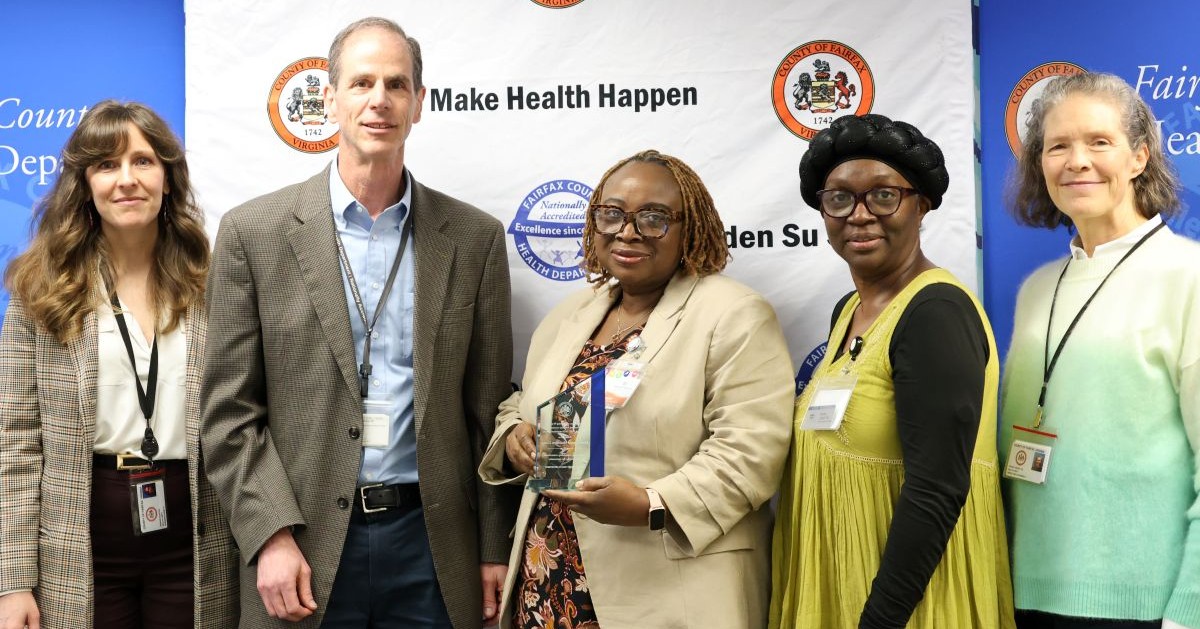
    Health Department presenting award to MVCH
    Pictured L to R: Amanda Burton, Respiratory Epidemiologist, FCHD; Dr. Benjamin Schwartz, Director of Epidemiology & Population Health, FCHD; Mariatu Sangarie, Staff Educator and Infection Preventionist, MVHC; Asiatu Jalloh, RN, Asst. Director of Nursing, MVHC; and Shawn Harper, RN, Public Health Nurse, FCHD


    Mariatu Sangarie, the infection preventionist at MVCH, credits the achievement to one thing above all else: teamwork. “We call ourselves the Dream Team,” Mariatu shared. “I work with very good managers who are willing to jump on any project we have. When we know we have to do something, it’s all hands on deck.” Managers didn’t just support the effort, they led it. They divided responsibilities to make sure every section of the building was covered and for all shifts. “We were at it every day and every night,” Mariatu said. “We got everyone involved.”
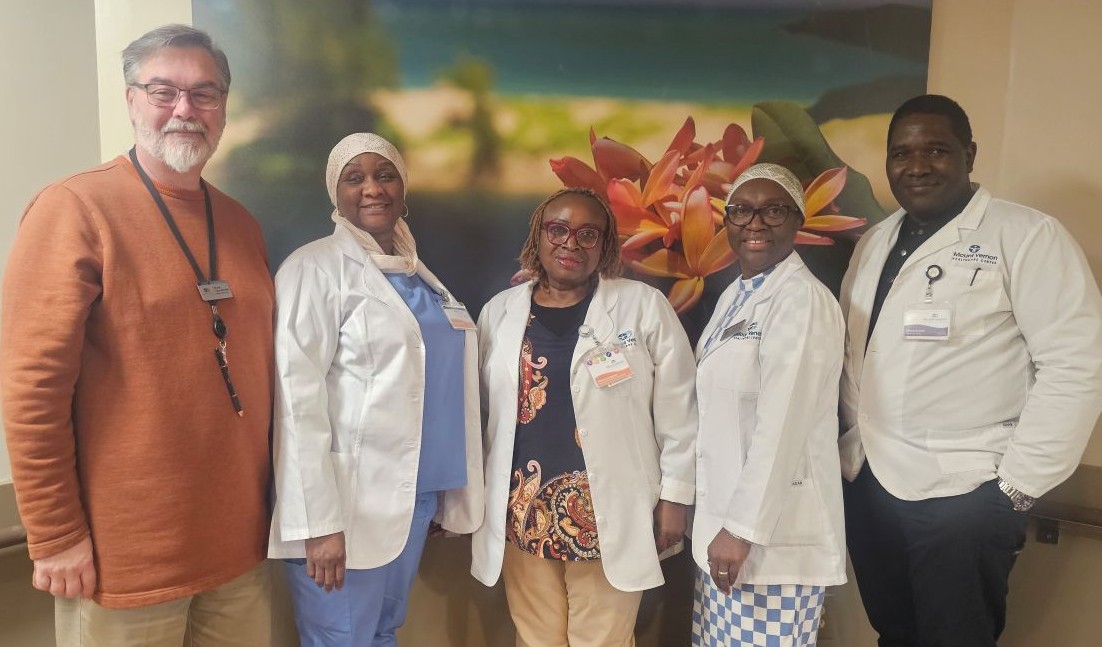
    Mount Vernon Healthcare Center's Clinical "Dream Team"

    Mount Vernon Healthcare Center is also one of the few skilled nursing facilities that have a flu vaccine declination masking policy, meaning staff who choose not to receive the flu vaccine are required to wear a mask during respiratory season (October to May). Leadership consistently enforced the policy, reinforcing clear expectations and emphasizing that vaccination is part of protecting both coworkers and residents.

    Reaching the 90% goal was not without challenges. Some staff were hesitant, while others worried the vaccine would make them sick or cause them to miss work. Mariatu and the management team took time to address misconceptions and continued offering vaccination opportunities throughout the season. When the night staff were getting left behind, Mariatu showed up early to connect one on one with staff who were finishing their shifts. That persistence—respectful, consistent, and rooted in protecting residents and staff—made a difference. Several individuals who initially declined ultimately changed their minds and chose to get vaccinated.

    Reaching 90% flu vaccination coverage doesn’t happen by accident. Mount Vernon Healthcare Center demonstrated that success requires more than a single flu clinic. It takes teamwork, creativity, clear policies, and steady follow-up. To the Dream Team and every staff member who rolled up their sleeves- thank you for your dedication this respiratory season. Your efforts help protect some of the community’s most vulnerable residents.

    Health Department Recognizes Mount Vernon Healthcare Center's Flu Vaccination Efforts
  3. Powerful Partnerships Were the Focus of the Partnership for a Healthier Fairfax Annual Meeting


    Logo image for the Partnership for a Healthier Fairfax program

    On Friday, February 27, the Partnership for a Healthier Fairfax (PFHF) held their Annual Meeting at the Fairfax County Government Center to launch the new Community Health Improvement Plan (CHIP). More than 100 people attended and discussed the importance of working together to achieve the vision of a healthier Fairfax community.

    Members of the Multicultural Advisory Council (MAC) also joined the members of PFHF to meet others working to enhance the health and well-being of Fairfax communities, especially those with the highest levels of health disparities, and to engage in conversations around common goals presented in the new CHIP.

    A panel presentation on the “Power of Partnership” highlighted how different forms of partnership can look, the importance of centering the voices of community members with lived experience and facing health disparities, and that it is ok to start small and refine approaches before implementing on a larger scale. Vinu Ilakkuvan, Founder and Principal, PoP Health, LLC served as panel moderator. 

    Panelist included Sonya Breehey, Northern Virginia Advocacy Director/Operations Coordinator, Coalition for Smarter Growth; Lynette Sappe-Watkins, Executive Director, Culmore Clinic, and Yolonda Earl-Thompson, Executive Director of LAZERA Ministries who shared, “At LAZERA Ministries, we’ve seen firsthand that proximity changes perspective. When we make room for youth voice, family voice, and lived experience, the work becomes more authentic — and more effective.”
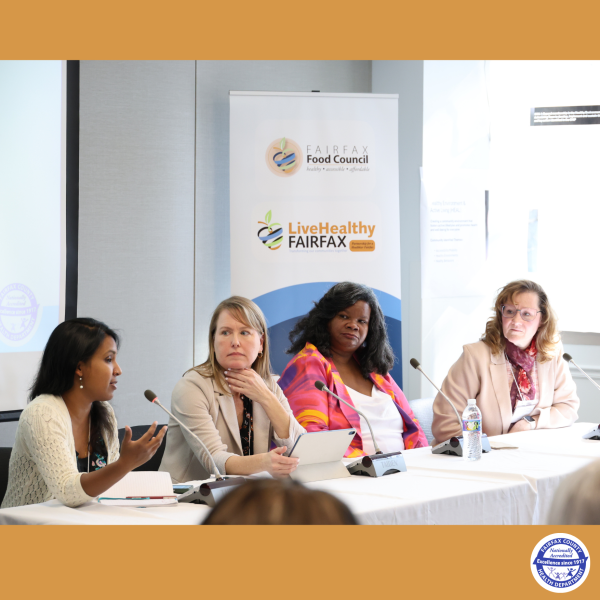
    Panel of presenters during partnership for a healthier fairfax meeting
  4. VDH News Release: Virginia Health Officials Investigating Two Confirmed Measles Cases in Northern Virginia

    From the Virginia Department of Health (VDH)

    The Virginia Department of Health is reporting two confirmed cases of measles in residents of Northern Virginia. The patients are adults who recently traveled together domestically. To protect the patients’ privacy, VDH will not provide any additional information about the patients. Health officials are coordinating an effort to identify people who might have been exposed.

    Listed below are the dates, times, and locations of the potential exposure sites in Virginia:

    • Harris Teeter, located at 10060 Market Circle in Manassas, between 5 p.m. and 7:30 p.m. Friday, February 13
    • Walmart, located at 9401 Liberia Avenue in Manassas, between 5:30 p.m. and 8 p.m. Friday, February 13
    • Marco’s Pizza, located at 9223 Sudley Road in Manassas, between 6 p.m. and 8:30 p.m. Friday, February 13
    • Bull Run Unitarian Universalists, located at 9350 Main Street in Manassas, between 7:30 a.m. and 11:30 a.m. Saturday, February 14
    • Best Buy Outlet, located at 7665 Sudley Road in Manassas, between 2 p.m. and 5:30 p.m. Saturday, February 14
    • Mountaintop Church, located at 9213 Center Street in Manassas
      • Saturday, February 14 between 4:30 p.m. and 11:59 p.m.
      • Sunday, February 15 between 11 a.m. to 4 p.m.
    • Lidl, located at 9795 Liberia Avenue in Manassas, between 2 p.m. and 4:30 p.m. Sunday, February 15
    • Target, located at 9900 Sowder Village Square in Manassas, between 6:30 p.m. to 9 p.m. Sunday, February 15
    • Medical Center, located at 7051 Heathcote Village Way in Gainesville, between 1 p.m. and 4 p.m. Monday, February 16
    • Office Building, located at 2800 Eisenhower Avenue in Alexandria, between 10 a.m. and 1 p.m. Tuesday, February 17

    To date in 2026, Virginia has 10 reported cases of measles. Any additional exposure sites identified in Virginia will be posted to the VDH Measles website.

    What to Do If You Have Been Exposed to Measles

    Most people in Virginia have immunity to measles through vaccination, so the risk to the general public is low. However, anyone who was at the potential exposure sites at the times listed should:

    • Report your exposure to VDH by completing this short survey. Public health officials will follow up with respondents if additional actions are needed.
    • Find out if you have been vaccinated for measles or have had measles previously. Make sure you are up to date with the recommended number of measles (MMR) vaccinations.
      • To check your immunization status, call your healthcare provider or request records through the VDH Record Request Portal.
      • If you have received two doses of a measles-containing vaccine, or were born before 1957, you are considered protected and do not need to seek post-exposure treatment at this time.
    • People who are not fully vaccinated or otherwise immune to measles should contact their healthcare provider or call their local health department promptly to discuss any questions they might have. If you have already completed the above survey, your local health department will reach out to you to provide recommendations if additional actions are needed.
    • Watch for symptoms of measles for 21 days after the potential exposure. Monitoring for symptoms is especially important for people who are not fully vaccinated or otherwise immune to measles.
      • If you notice symptoms of measles, immediately isolate yourself by staying home. Contact your healthcare provider right away. If you need to seek healthcare, call ahead before going to your healthcare provider’s office or the emergency room to notify them that you may have been exposed to measles and ask them to call the local health department. This call will help protect other patients and staff.
      • The most likely time you would become sick from these exposures is by February 18 and March 10.
      • Contact your local health department or email epi_response@vdh.virginia.gov to discuss any additional recommendations.

    General Measles Information

    Measles is a highly contagious illness that can spread easily through the air when an infected person breathes, coughs, or sneezes. Measles symptoms usually appear in two stages. In the first stage, most people have a fever of greater than 101 degrees, runny nose, watery red eyes, and a cough. These symptoms usually start seven to 14 days after being exposed. The second stage starts three to five days after symptoms start, when a rash begins to appear on the face and spreads to the rest of the body. People with measles are contagious from four days before the rash appears through four days after the rash appeared.

    Measles is preventable through a safe and effective MMR vaccine. Two doses of the vaccine are given to provide lifetime protection. Virginia has high measles vaccination rates, with approximately 95% of kindergarteners fully vaccinated against measles. However, infants who are too young to be vaccinated, and others who are not vaccinated, are at high risk of developing measles if they are exposed. Infants six months through 11 months of age who will be traveling internationally, or to an outbreak setting, should receive one dose of MMR vaccine prior to travel. Talk to your healthcare provider if you have questions about the MMR vaccine.

    For more information about measles visit www.vdh.virginia.gov/measles/.
    Virginia Health Officials Investigating Two Confirmed Measles Cases in Northern Virginia
  5. VDH News Release: Virginia Health Officials Investigating Confirmed Measles Case in Northern Region

    From the Virginia Department of Health (VDH)

    The Virginia Department of Health is reporting a confirmed case of measles in a resident of Northern Virginia. The patient is an adult who recently traveled internationally. To protect the patient’s privacy, VDH will not provide any additional information about the patient. Health officials are coordinating an effort to identify people who might have been exposed.

    Listed below are the dates, times, and locations of the potential exposure sites in Virginia:

    • Giant Food, located at 8941 Ox Road in Lorton, between 3:30 p.m. and 5:45 p.m. Wednesday, February 11.
    • Inova-GoHealth Urgent Care – Lorton Marketplace, located at 9427 Lorton Market St. in Lorton, between 9:30 a.m. and 1:30 p.m. Friday, February 13.
    • Inova HealthPlex Lorton Emergency Room, located at 9321 Sanger St. in Lorton, between 10 a.m. and 12:30 p.m. Saturday, February 14.

    To date in 2026, Virginia has eight reported cases of measles. Any additional exposure sites identified in Virginia will be posted to the VDH Measles website.

    What to Do If You Have Been Exposed to Measles

    Most people in Virginia have immunity to measles through vaccination, so the risk to the general public is low. However, anyone who was at the potential exposure sites at the times listed should:

    • Report your exposure to VDH by completing this short survey. Public health officials will follow up with respondents if additional actions are needed.
    • Find out if you have been vaccinated for measles or have had measles previously. Make sure you are up to date with the recommended number of measles (MMR) vaccinations.
      • To check your immunization status, call your healthcare provider or request records through the VDH Record Request Portal.
      • If you have received two doses of a measles-containing vaccine, or were born before 1957, you are considered protected and do not need to seek post-exposure treatment at this time.
    • People who are not fully vaccinated or otherwise immune to measles should contact their healthcare provider or call their local health department promptly to discuss any questions they might have. If you have already completed the above survey, your local health department will reach out to you to provide recommendations if additional actions are needed.
    • Watch for symptoms of measles for 21 days after the potential exposure. Monitoring for symptoms is especially important for people who are not fully vaccinated or otherwise immune to measles.
      • If you notice symptoms of measles, immediately isolate yourself by staying home. Contact your healthcare provider right away. If you need to seek healthcare, call ahead before going to your healthcare provider’s office or the emergency room to notify them that you may have been exposed to measles and ask them to call the local health department. This call will help protect other patients and staff.
      • The most likely time you would become sick from these exposures is by February 19, 2026.
      • Contact your local health department or email epi_response@vdh.virginia.gov to discuss any additional recommendations.

    General Measles Information

    Measles is a highly contagious illness that can spread easily through the air when an infected person breathes, coughs, or sneezes. Measles symptoms usually appear in two stages. In the first stage, most people have a fever of greater than 101 degrees, runny nose, watery red eyes, and a cough. These symptoms usually start seven to 14 days after being exposed. The second stage starts three to five days after symptoms start, when a rash begins to appear on the face and spreads to the rest of the body. People with measles are contagious from four days before the rash appears through four days after the rash appeared.

    Measles is preventable through a safe and effective MMR vaccine. Two doses of the vaccine are given to provide lifetime protection. Virginia has high measles vaccination rates, with approximately 95% of kindergarteners fully vaccinated against measles. However, infants who are too young to be vaccinated, and others who are not vaccinated, are at high risk of developing measles if they are exposed. Infants six months through 11 months of age who will be traveling internationally, or to an outbreak setting, should receive one dose of MMR vaccine prior to travel. Talk to your healthcare provider if you have questions about the MMR vaccine.

    For more information about measles visit www.vdh.virginia.gov/measles/.
    VDH News Release: Virginia Health Officials Investigating Confirmed Measles Case in Northern Region
  6. VDH News Release: Recreational Water Advisory for the Potomac River

    From the Virginia Department of Health (VDH)

    Due to reports of sewage spills in the Potomac River and the anticipated timeline for repairs, the Virginia Department of Health (VDH) is issuing a recreational water advisory for Virginia residents. For the safety of people and pets, VDH is advising Virginia residents to avoid recreational water activities in the Potomac River, such as swimming, wading, tubing, white-water canoeing or kayaking, where full-body submersion is more likely to occur.

    The advisory is being issued out of an abundance of caution due to a sewage spill in the Potomac River that occurred on Jan. 19, and subsequent reports of a sewage discharge Feb. 7. The timeline for the repair is estimated to be four to six weeks.  The advisory area extends for 72.5 miles from the American Legion Memorial Bridge (I-495) in Fairfax County to the Governor Harry W. Nice Memorial Bridge (Route 301) in King George County.

    VDH has observed no evidence of impacts to drinking water at this time. 

    For updates on the repair status, visit DC Water. For updates on Virginia impacts and to find links to the Maryland and DC agencies responding to this incident, please visit the VDH Sewage Spill page.

    To prevent recreational water illnesses due to exposure to sewage spill events, people should:

    • Avoid contact with water in the advisory area and observe advisory signage posted at waterbody access points.
    • Avoid any area of the water body where water has a foul odor, dead or dying fish, or discolored water.
    • Promptly wash skin with soap and water if you cannot avoid contact with water in the vicinity.
    • Rinse or wash items that come into contact with the water, including clothing, fishing gear, life vests, ropes and paddles.
    • Seek medical care and notify your practitioner of the waterbody exposure if you experience adverse health effects after contact with the waterbody.
    • When harvesting fish or crabs, discard skin, organs, cook the meat to proper temperature, and clean cutting boards and cutting implements with warm soapy water.

    For more information on recreational water safety, visit SwimHealthyVA.com.

    ###
    VDH Issues Recreational Water Advisory for the Potomac River
  7. VDH News Release: Virginia Health Officials Investigating a Confirmed Measles Case and an Exposure in Northern Region

    From the Virginia Department of Health (VDH)

    The Virginia Department of Health (VDH) is reporting a confirmed case of measles in a resident of the Northern Region. The patient is a pre-school age child (0-4 years). Additionally, VDH was notified of a confirmed case of measles that is a resident of another state and traveled through Ronald Regan Washington National airport on January 26. To protect the patients’ privacy, VDH will not provide any additional information about the patients. Health officials are coordinating an effort to identify people who might have been exposed.

    Listed below are the dates, times, and locations of the potential exposure sites in Virginia:

    • Heathcote Health Center, located at 15195 Heathcote Blvd. in Haymarket between 1:15 p.m. and 4:15 p.m. Thursday, January 29.
    • Ronald Reagan Washington National Airport, Terminal 2, located at 2401 Smith Blvd, Arlington between 12:30 pm and 10:30 pm Monday, January 26.
    • Washington Area Metro on Monday, January 26:
      • Red Line Train from Brookland – CUA station transferring at the Gallery Place – Chinatown station to the Yellow Line Train heading towards the Huntington Station between 11:30 a.m. and 2 p.m.
      • Yellow Line Train from Ronald Reagan Washington National Airport station transferring at the Gallery Place – Chinatown station to the Red Line Train heading towards the Glenmont station between 8:30 p.m. and 11:30 p.m.

    To date in 2026, Virginia has reported six cases of measles. Any additional exposure sites identified in Virginia will be posted to the VDH Measles website.

    What to Do If You Have Been Exposed to Measles

    Most people in Virginia have immunity to measles through vaccination, so the risk to the general public is low. However, anyone who was at the potential exposure sites at the times listed should:

    • Report your exposure to VDH by completing this short survey. Public health officials will follow up with respondents if additional actions are needed.
    • Find out if you have been vaccinated for measles or have had measles previously. Make sure you are up to date with the recommended number of measles (MMR) vaccinations.
      • To check your immunization status, call your healthcare provider or request records through the VDH Record Request Portal.
      • If you have received two doses of a measles-containing vaccine, or were born before 1957, you are considered protected and do not need to seek post-exposure treatment at this time.
    • People who are not fully vaccinated or otherwise immune to measles should contact their healthcare provider or call their local health department promptly to discuss any questions they might have. If you have already completed the above survey, your local health department will reach out to you to provide recommendations if additional actions are needed.
    • Watch for symptoms of measles for 21 days after the potential exposure. Monitoring for symptoms is especially important for people who are not fully vaccinated or otherwise immune to measles.
      • If you notice symptoms of measles, immediately isolate yourself by staying home. Contact your healthcare provider right away. If you need to seek healthcare, call ahead before going to your healthcare provider’s office or the emergency room to notify them that you may have been exposed to measles and ask them to call the local health department. This call will help protect other patients and staff.
      • The most likely time you would become sick from these exposures is by February 19, 2026.
      • Contact your local health department or email epi_response@vdh.virginia.gov to discuss any additional recommendations.

    General Measles Information

    Measles is a highly contagious illness that can spread easily through the air when an infected person breathes, coughs, or sneezes. Measles symptoms usually appear in two stages. In the first stage, most people have a fever of greater than 101 degrees, runny nose, watery red eyes, and a cough. These symptoms usually start seven to 14 days after being exposed. The second stage starts three to five days after symptoms start, when a rash begins to appear on the face and spreads to the rest of the body. People with measles are contagious from four days before the rash appears through four days after the rash appeared.

    Measles is preventable through a safe and effective MMR vaccine. Two doses of the vaccine are given to provide lifetime protection. Virginia has high measles vaccination rates, with approximately 95% of kindergarteners fully vaccinated against measles. However, infants who are too young to be vaccinated, and others who are not vaccinated, are at high risk of developing measles if they are exposed. Infants six months through 11 months of age who will be traveling internationally, or to an outbreak setting, should receive one dose of MMR vaccine prior to travel. Talk to your healthcare provider if you have questions about the MMR vaccine.

    For more information about measles visit www.vdh.virginia.gov/measles/.
    VDH News Release: Virginia Health Officials Investigating a Confirmed Measles Case and an Exposure in Northern Region
  8. VDH News Release: Virginia Health Officials Investigating Confirmed Measles Case in Northern Region

    From the Virginia Department of Health (VDH)

    The Virginia Department of Health is reporting a confirmed case of measles in an adult resident of Northern Virginia. To protect the patient’s privacy, VDH will not provide any additional information about the patient. Health officials are coordinating an effort to identify people who might have been exposed.

    Listed below are the dates, times, and locations of the potential exposure sites in Virginia:

    • The Ian Apartment Complex, located at 2249 Woodland Grove Place in Herndon, any time between Friday, January 23 and Saturday, January 31.
    • Kumo Sushi, located at 2338 Woodland Crossing Drive in Herndon, between 7 p.m. and 10 p.m. Saturday, January 24.
    • Target, located at 12197 Sunset Hills Road in Reston, between 11 a.m. and 2 p.m. Sunday, January 25.
    • Harris Teeter, located at 12960 Highland Crossing Drive in Herndon, between 2 p.m. and 5 p.m. Sunday, January 25.
    • Fairfax County Animal Shelter – West Ox Campus, located at 4500 West Ox Road in Fairfax, between 3 p.m. and 6 p.m. Saturday, January 31.

    To date in 2026, Virginia has reported five cases of measles. Any additional exposure sites identified in Virginia will be posted to the VDH Measles website.

    What to Do If You Have Been Exposed to Measles

    Most people in Virginia have immunity to measles through vaccination, so the risk to the general public is low. However, anyone who was at the potential exposure sites at the times listed should: 

    • Report your exposure to the Fairfax County Health Department by completing this short survey. Public health officials will follow-up with respondents if additional actions are needed.
    • Find out if you have been vaccinated for measles or have had measles previously. Make sure you are up to date with the recommended number of measles (MMR) vaccinations.
      • To check your immunization status, call your healthcare provider or request records through the VDH Record Request Portal.
      • If you have received two doses of a measles-containing vaccine, or were born before 1957, you are considered protected and do not need to seek post-exposure treatment at this time.
    • People who are not fully vaccinated or otherwise immune to measles should contact their healthcare provider or call their local health department promptly to discuss any questions they might have. If you have already completed the above survey, your local health department will reach out to you to provide recommendations if additional actions are needed.  
    • Watch for symptoms of measles for 21 days after the potential exposure. Monitoring for symptoms is especially important for people who are not fully vaccinated or otherwise immune to measles.
      • If you notice symptoms of measles, immediately isolate yourself by staying home. Contact your healthcare provider right away. If you need to seek healthcare, call ahead before going to your healthcare provider’s office or the emergency room to notify them that you may have been exposed to measles and ask them to call the local health department. This call will help protect other patients and staff.
      • The most likely time you would become sick from this exposure is by February 21, 2026.
      • Contact your local health department or email epi_response@vdh.virginia.gov to discuss any additional recommendations.

    General Measles Information

    Measles is a highly contagious illness that can spread easily through the air when an infected person breathes, coughs, or sneezes. Measles symptoms usually appear in two stages. In the first stage, most people have a fever of greater than 101 degrees, runny nose, watery red eyes, and a cough. These symptoms usually start seven to 14 days after being exposed. The second stage starts three to five days after symptoms start, when a rash begins to appear on the face and spreads to the rest of the body. People with measles are contagious from four days before the rash appears through four days after the rash appeared. 

    Measles is preventable through a safe and effective MMR vaccine. Two doses of the vaccine are given to provide lifetime protection. Virginia has high measles vaccination rates, with approximately 95% of kindergarteners fully vaccinated against measles. However, infants who are too young to be vaccinated, and others who are not vaccinated, are at high risk of developing measles if they are exposed. Infants six months through 11 months of age who will be traveling internationally, or to an outbreak setting, should receive one dose of MMR vaccine prior to travel. Talk to your healthcare provider if you have questions about the MMR vaccine. 

    For more information about measles visit www.vdh.virginia.gov/measles/.
     

    VDH News Release: Virginia Health Officials Investigating Confirmed Measles Case in Northern Region
  9. VDH News Release: Virginia Health Officials Investigating a Potential Measles Exposure in Northern Virginia

    From the Virginia Department of Health (VDH)

    The Virginia Department of Health (VDH) was notified of a confirmed case of measles that traveled through Washington Dulles International Airport Saturday, January 24. The person is a resident of another state. To protect the patient’s privacy, VDH will not provide any additional information about the patient. Health officials are coordinating an effort to identify people who might have been exposed, including contacting potentially exposed passengers on specific flights.

    Listed below are the dates, times, and locations of the potential exposure sites in Virginia:

    • Dulles International Airport (IAD): in Concourse B, on transportation to the International Arrivals Building (IAB) and in the baggage claim area between 5 a.m. and 9 a.m. Saturday, January 24.
    • Dulles shuttle bus to the rental car facilities between 7 a.m. and 9:30 a.m. Saturday, January 24.

    Any additional exposure sites identified in Virginia will be posted to the VDH Measles website.

    What to Do If You Have Been Exposed to Measles

    Most people in Virginia have immunity to measles through vaccination, so the risk to the general public is low. However, anyone who was at the potential exposure sites at the times listed should:

    • Report your exposure to the Loudoun County Health Department by completing this short survey. Public health officials will follow up with respondents if additional actions are needed.
    • Find out if you have been vaccinated for measles or have had measles previously. Make sure you are up to date with the recommended number of measles (MMR) vaccinations.
      • To check your immunization status, call your healthcare provider or request records through the VDH Record Request Portal.
      • If you have received two doses of a measles-containing vaccine, or were born before 1957, you are considered protected and do not need to seek post-exposure treatment at this time.
    • People who are not fully vaccinated or otherwise immune to measles should contact their healthcare provider or call their local health department promptly to discuss any questions they might have. If you have already completed the above survey, your local health department will reach out to you to provide recommendations if additional actions are needed.
    • Watch for symptoms of measles for 21 days after the potential exposure. Monitoring for symptoms is especially important for people who are not fully vaccinated or otherwise immune to measles.
      • If you notice symptoms of measles, immediately isolate yourself by staying home. Contact your healthcare provider right away. If you need to seek healthcare, call ahead before going to your healthcare provider’s office or the emergency room to notify them that you may have been exposed to measles and ask them to notify the local health department. This call will help protect other patients and staff.
      • The most likely time you would become sick from this exposure would be between January 31 and February 14.

    Contact your local health department or email epi_response@vdh.virginia.gov to discuss any additional recommendations.

    General Measles Information

    Measles is a highly contagious illness that can spread easily through the air when an infected person breathes, coughs, or sneezes. Measles symptoms usually appear in two stages. In the first stage, most people have a fever of greater than 101 degrees, runny nose, watery red eyes, and a cough. These symptoms usually start seven to 14 days after being exposed. The second stage starts three to five days after symptoms start, when a rash begins to appear on the face and spreads to the rest of the body. People with measles are contagious from four days before the rash appears through four days after the rash appeared.

    Measles is preventable through a safe and effective MMR vaccine. Two doses of the vaccine are given to provide lifetime protection. Virginia has high measles vaccination rates, with approximately 95% of kindergarteners fully vaccinated against measles. However, infants who are too young to be vaccinated, and others who are not vaccinated, are at high risk of developing measles if they are exposed. Infants six months through 11 months of age who will be traveling internationally, or to an outbreak setting, should receive one dose of MMR vaccine prior to travel. Talk to your healthcare provider if you have questions about the MMR vaccine.

    To date in 2026, Virginia has four reported cases of measles. For more information about measles visit www.vdh.virginia.gov/measles/.
    Virginia Health Officials Investigating a Potential Measles Exposure in Northern Virginia
  10. Partnership Seeks Nominations for 2026 Live Healthy Fairfax Awards

    Do you know someone or an organization who deserves to be celebrated for their efforts in improving the health of the Fairfax community? The Partnership for a Healthier Fairfax seeks nominations for its 2026 Live Healthy Fairfax Award. This award recognizes individuals, businesses, agencies, and organizations that have demonstrated outstanding leadership and action to improve the health and well-being of the Fairfax community.

    graphic logo for the Live Healthy Fairfax program

    The Live Healthy Fairfax Award recognizes those who go “above and beyond” in three priority areas:

    • Promoting Behavioral Health: Promoting social and emotional wellness for all.
    • Healthy Eating (Fairfax Food Council): Promoting the accessibility, availability, and affordability of healthy eating for all.
    • Healthy Environment and Active Living: Improving the community environment to support active living and good health for all.

    Nominees may include people who volunteer to lead health-related activities, businesses that help their employees and customers stay healthy, or organizations that address social determinants of health. The intention is to recognize efforts that improve community health in lasting and meaningful ways.

    Live Healthy Fairfax Award Eligibility Criteria:

    1. Nominees can be individuals, businesses, nonprofit and faith-based organizations, government programs/agencies, schools and other educational organizations.
    2. All nominees must be nominated for actions that impact the health of individuals and/or populations in the Fairfax Health District. The Fairfax Health District is defined as Fairfax County (including the incorporated towns of Clifton, Herndon and Vienna), Fairfax City, and the City of Falls Church.
    3. The achievement must have occurred during the period of eligibility or over a period of years including a portion of the eligibility period. It may be for a specific service, a particular accomplishment, or an accumulation of accomplishments.
    4. The award recognizes those who have provided service(s) as paid employees as well as volunteer commitments.
    5. Eligible nominees cannot have been awarded a Live Healthy Fairfax Award in the previous five years. After five years, renominations of past winners are welcome. Nominees who have previously won an individual award may be included in a group award nomination. And those who have been a part of a group award remain eligible for an individual award.

    Nominations can be submitted by completing this online nomination form.

    The application process to nominate a person or entity for a Live Healthy Fairfax Award is now open. The deadline to submit a nomination is Monday, March 2. Award winners will be notified no later than Friday, May 1. Awards will be presented at the Partnership for a Healthier Fairfax’s spring meeting. 

    For any questions about the awards or the nomination process, contact Gillian Kimura, Partnership for a Healthier Fairfax Program Coordinator, by email at Gillian.Kimura@fairfaxcounty.gov or phone 571-595-5096.

    image announcing award nomination process now open

Pagination

  • First page « First
  • Previous page ‹ Previous
  • Page 1
  • Page 2
  • Page 3
  • Current page 4
  • Page 5
  • Page 6
  • Page 7
  • Page 8
  • Page 9
  • Next page Next ›
  • Last page Last »

Recent Interactions

    Ask Fairfax

    Terms & Conditions
    Live chat available Search our site
    • Translate
    • Awards
    • Site Feedback
    • PRIVACY POLICY & COPYRIGHT
    Main Address

    12000 Government Center Pkwy
    Fairfax, VA 22035

    Phone

    703-324-7329

    TTY 711

    Site Tools
    • Website Accessibility
    • Translate
    • Download Mobile App
    Support
    • ADA Accessibility
    • FOIA Requests
    • Website Administrator
    Additional Resources
    • Fairfax County Public Schools
    • Economic Development Authority
    • Visit Fairfax
    • Council of Governments
    • Commonwealth of Virginia
    • USA.gov
    • Calendar
    • Channel 16
    • Mail
    • Security
    • WIFI
    • Facebook
    • Twitter
    • Instagram
    • YouTube
    • Mobile

    The Official Site of Fairfax County