Unmanned Aircraft Systems

571-350-1000 TTY 711
4890 Alliance Drive
Fairfax, VA 22030
Department of Emergency Management and Security

About the UAS Program

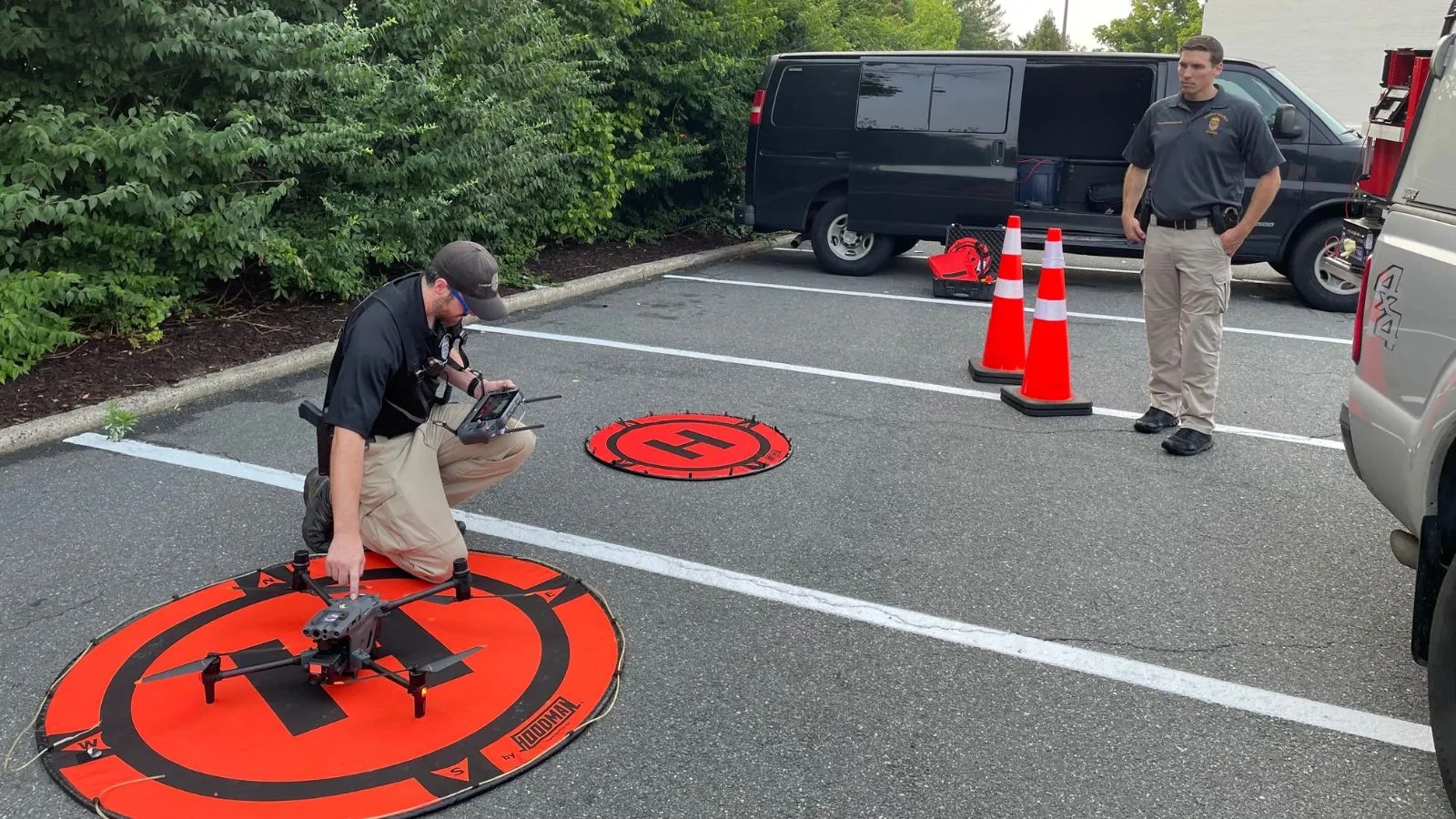
multiple drone helo pads in parking lotUnmanned Aircraft Systems (UAS) provide enhanced operational capability, safety, and situational awareness for first responders, other staff or volunteers, affiliated partners, and the community.  They can operate in many types of environments (natural or manmade), or other critical incidents which might be hazardous to the safety of first responders or others. UAS provides:

  • A unique, viable, safe, versatile, supplemental tool for incident commanders and first responders
  • A cost benefit compared to manned aircraft
  • A viable, safe, and supplemental asset to other manned aircraft assets

Though UAS is not a replacement for manned aircraft, which have a different set of capabilities, for some missions, they provide first responders with a tool that can access areas where manned aircraft cannot fly due to weather or other safety regulations. 

FAQs - Frequently Asked Questions

A UAV is an unmanned aerial vehicle and differs from an unmanned aerial/aircraft system (UAS) in one major way: a UAV is referring to the aircraft itself, not the ground control and communications units.

The word drone is the most popular synonym for an unmanned aerial vehicle (UAV) or unmanned aerial/aircraft system (UAS).  UAV and UAS are terms that originated with the military and now, because of all the public access to these types of aircraft platforms, the term “UAS” has emerged as a replacement for "UAV” and “drone”.

We have created a detailed mission profile page within the UAS Program Manual (starting on page 9). A few examples include:

  • Pre- and post-disaster assessments
  • Search and rescue
  • Situational awareness
  • Fire scene management
  • Traffic, crash and highway management

Our program is authorized for 24-hour operations.

To ensure the highest standards of safety and public trust, all Fairfax County remote pilots exceed federal requirements through a rigorous internal certification process.

  • Beyond Part 107: Every pilot must hold an FAA Remote Pilot Certificate and complete an additional, specialized departmental ground school.
  • Comprehensive Evaluation: Candidates must pass multiple written examinations focusing on Jurisdictional RPIC Protocols and Privacy & Civil Rights.
  • Proven Proficiency: Initial certification requires successful completion of practical flight evaluations and simulator-based scenario training.
  • Continuous Readiness: Maintaining active flight status requires ongoing recurrent training, mission-based proficiency checks, and regular policy updates.

The Board of Supervisors approved the “public safety” UAS program on May 21, 2019, and adopted the UAS Program Manual authorizing the Fire and Rescue Department, Department of Emergency Management and Security (then the Office of Emergency Management), Police Department and Sheriff’s Office to participate. 

On June 25, 2019, the Board of Supervisors approved non-public safety County agencies to enter the program after they complete a formal process.

If you would like to talk with the UAS Program Manager or schedule a presentation, you can either email them at UAS@fairfaxcounty.gov or call 571-350-1000, TTY 711.

You must register your UAS with the Federal Aviation Administration (FAA) for recreational use.

If you are going to fly as a Part 107 commercial pilot, you must take an additional FAA test.

Fairfax County has the most restricted airspace in the United States and because of that, there are limitations as to where you can legally fly

Is it legal for a drone to fly over my house?

Yes. Under Federal Aviation Administration (FAA) regulations, the National Airspace System begins at the ground. Simply transiting over a residential area is not a crime and does not inherently violate privacy laws.

When should I contact the police?

While most drone flights are legal, please contact the Fairfax County Police Department if you witness any of the following criminal or hazardous activities:

  • Reckless Operation: A drone flying in a manner that poses an immediate danger to people on the ground or other aircraft.
  • Harassment or Peeping: A drone hovering at low altitudes (generally under 50 feet) near windows or private entryways with the apparent intent to spy, intimidate, or harass (VA Code § 18.2-130.1).
  • Weaponized Drones: Any drone equipped with a weapon or dangerous payload.
  • Interference with First Responders: Any flight that obstructs emergency services, firefighting, or law enforcement activity.

What if I have a general safety concern?

If you believe a drone is violating FAA safety rules (e.g., flying too high or near an airport) but does not pose an immediate criminal threat, you should report it to the FAA via the DroneZone portal or the Washington Flight Standards District Office.

Under federal law, drones are legally classified as aircraft. It is a federal felony to willfully damage, destroy, or disable any aircraft in flight (18 U.S.C. § 32). Attempting to "shoot down" or otherwise interfere with a drone—even if it is over your private property—can result in significant federal prison time and civil liabilities. If you have a grievance with a drone operator, please contact the proper authorities rather than taking personal action.


Fairfax Virtual Assistant