

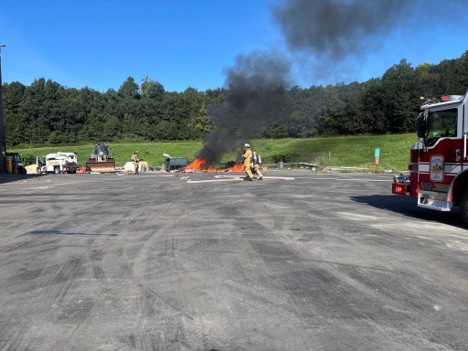
FAIRFAX COUNTY, Va. – Due to the potential for serious fires and explosion risks, the Fairfax County Solid Waste Management Program is reminding residents that pressurized gas containers and rechargeable lithium-ion batteries must never be placed in household trash or recycling. When crushed during collection or disposal, compressed gas cylinders and lithium-ion batteries can create sparks or even explosions. Improper disposal poses a safety risk in which workers can be seriously injured or killed. There also is the potential for costly damage to facilities and dangerous situations for the community.
Anthony Tindall, director of sustainability for the County’s Solid Waste Management Program notes, “Trash unloaded on the I-66 Transfer Station Complex’s tipping floor has a lot of flammable material, like paper products and waste wood. Improperly disposed of lithium-ion batteries and propane tanks are a threat to the safety of the building and to our employees.”
Fires and explosions caused by improper disposal of pressurized containers and batteries have already had serious impacts on Fairfax County operations. “Throwing away pressurized tanks in a rear load trash truck is extremely hazardous,” said Shonpaul Truss, who oversees the County’s waste collection service. Truss explained, “When compacted, these tanks can rupture or explode, creating a serious risk of injury, equipment damage, or fire. This danger was clearly seen last week when an exploding tank caused injuries to staff.”
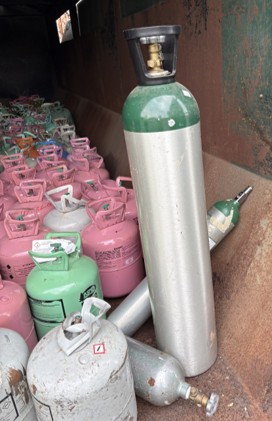
Residents must bring pressurized gas canisters to designated disposal facilities. Fairfax County’s I-66 Transfer Station and I-95 Landfill Complex can accept some materials, including helium tanks under 20 pounds, nitrogen cartridges, and camping-size propane canisters. Residents should check the Household Hazardous Waste page for all accepted materials. Items that County facilities cannot accept, like refrigerant and oxygen tanks, should be returned to the supplier or equipment provider.
Rechargeable lithium-ion batteries are a big fire risk, and they’re found everywhere- cell phones, laptops, power tools, electric toothbrushes, wireless headphones, rechargeable toys, portable chargers, e-bikes, vapes, and even musical greeting cards. If the battery label reads "Alkaline" or "Carbon Zinc," they can be placed in household trash. Any other battery type must be taken to a special drop-off location. To find a battery drop off near you, visit locator.batterynetwork.org. Residents also can recycle batteries at the I-66 Transfer Station and I-95 Landfill Complex Household Hazardous Waste areas. If you don’t know the battery type or cannot remove the battery from the item, bring them to the County’s household hazardous waste staff.
Businesses must return compressed air cylinders to the supplier or equipment provider. They should work with a hazardous waste company to safely dispose of lithium-ion batteries.
For more information about Fairfax County solid waste and recycling, visit https://www.fairfaxcounty.gov/publicworks/recycling-and-trash.