Actuarial Reports and Information

Actuarial valuations, conducted by an independent professional actuary, are key to maintaining the health of our three retirement systems. On this page are the following types of documents:

  1. Actuarial Valuation Reports for Each System
  2. Most-Recent Asset/Liability Stress Test
  3. Actuarial Experience Studies

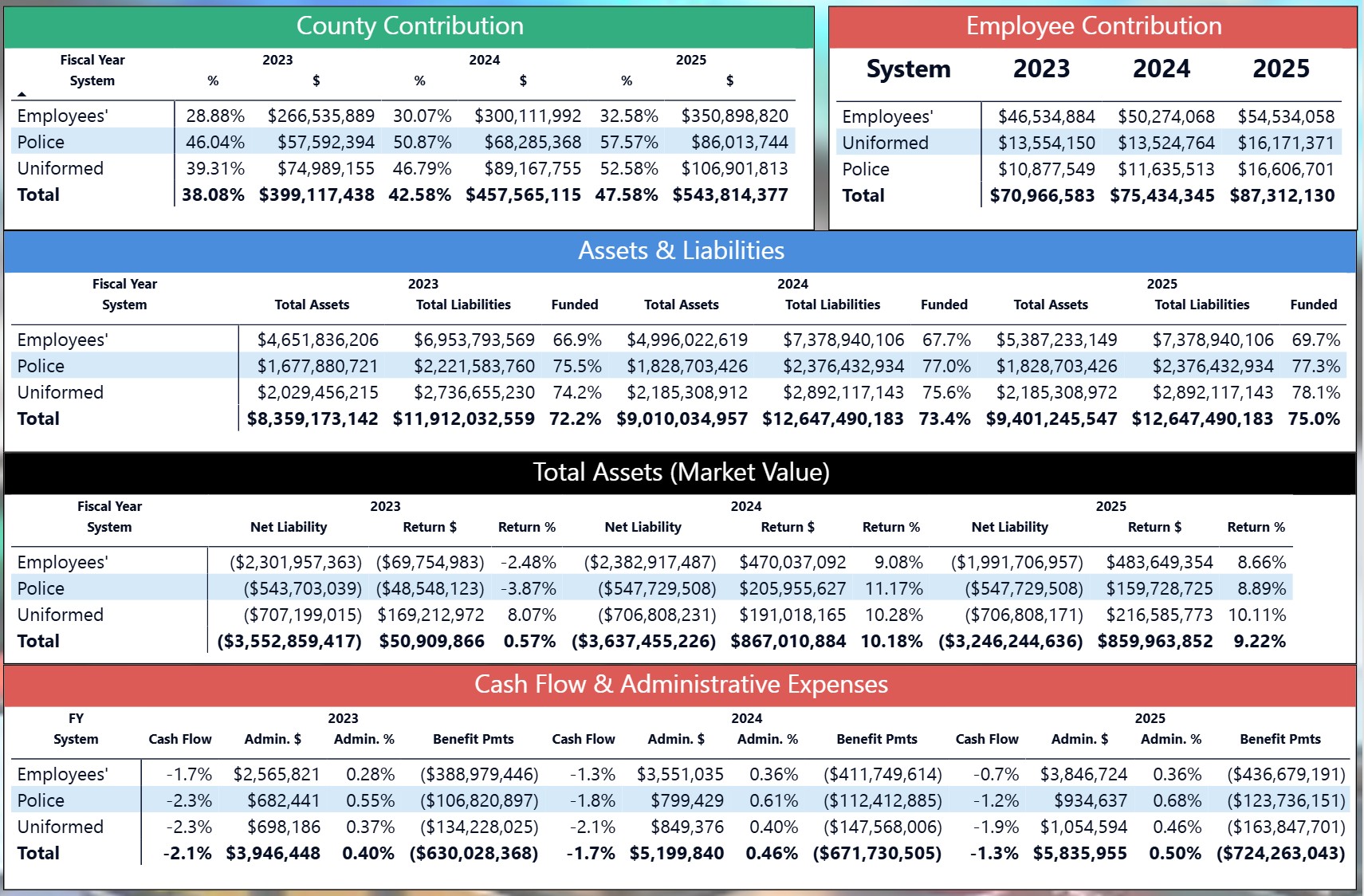
This is a summary of various actuarial measures, as of the latest (June 30, 2025) valuations.

Actuarial Valuation Reports

Every year the systems' actuary performs an actuarial valuation for each of the three retirement systems. It compares actual experience for the year against actuarial assumptions adopted by the Boards of Trustees. The actuary looks at all the economic, investment, and demographic assumptions used to determine the actuarial health of each system. Specifically, the actuary looks at:

  • - Inflation
    - Rate of investment return
    - Non-merit salary increases
    - Retiree Cost of Living Adjustments (COLAs)
    - Administrative expenses
  • - Merit Salary Increases
    - Retirement and DROP Rates
    - Termination Rates
    - Disability Rates
    - Mortality Rates

The end result being to determine what the County's Contributions will need to be for the upcoming budget.

The actuarial valuation presentations and reports are in the links below.


Asset Liability Stress Test

In June 2024, the Retirement Systems engaged Agilis to perform an asset-liability stress test for each of the three retirement systems. Agilis has performed similar analyses for the Virginia Retirement System (VRS) and several other public pension plans. Agilis was tasked with (for each plan):

  • Reviewing the current strategic asset allocation
  • Examining expected future rates of return
  • Examining outcomes in different market scenarios
  • Examining outcomes on different measures, such as funding and contributions, in addition to asset-only returns.

They completed their work in late 2024 and presented the results to each system's Board of Trustees in January 2025. 

Agilis simulated possible future investment returns, funded status, and County contributions under eight different market scenarios. The scenarios range from a most favorable Base Case (using current long-term economic assumptions) to a worst-case Japan scenario (based on Japan’s economic collapse in the 1980s). The chances that a Japan or worst-case scenario will occur, economists say, is low, as current financial regulations and economic structures are different. The Japan scenario is based on very pessimistic economic conditions, including that:

  • The economy collapses into an extended low-growth, deflationary equilibrium similar to Japan's experience beginning in the 1990's. 

  • Risk assets such as public equity and real assets return near zero over the long term.

  • Short-term rates fall to near zero, with long-term US Treasury yields at 1.25%.

The full report from Agillis is available at this link.


Actuarial Experience Studies

Every 5 years the systems' actuary conducts an actual experience study for each of the three systems. This analysis looks at actual experience over the prior 5 years and compares it to the actuarial assumptions established after the last 5 year study. These studies look at a broad range of assumptions, including:

  • Inflation
  • Retiree COLAs
  • Rate of Investment Return
  • Non-merit salary increases
  • Administrative Expenses

From this the actuary makes recommendations to the retirement Boards of Trustees regarding which of the assumptions need to be updated going forward, based on prior experience.


Fairfax Virtual Assistant