
Burke Microburst Incident
National Weather Service Determines Microburst Hit Burke
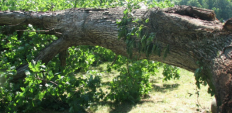
A severe thunderstorm produced a strong downburst one mile northwest of Burke with peak winds estimated 90 mph around Lake Royal. Through this area, many, though not all, of the trees were snapped midway, uprooted, or had large branches snapped off. Trees fell onto cars, powerlines, roads, and homes with substantial damage.
Support for Residents
Updated July 14
From July 15-29, any individual resident impacted by the June microburst storm incident may bring materials for disposal at no charge to the I-66 Transfer Station or I-95 Landfill. All disposal fees have been waived by the Board of Supervisors for individual residents who identify themselves as being impacted by the storm to county staff at the facility scales. The fee waiver does not apply to contractors, junk haulers, or solid waste collection companies with a certificate to operate from Fairfax County.
Households experiencing issues can call Fairfax County Coordinated Services Planning at 703-222-0880 for assistance with emergency food, resources and possible financial assistance.
Residents displaced by the recent storm in Fairfax County can also call the American Red Cross at 1-800-RED-CROSS (1-800-733-2767) for immediate assistance with shelter, food and other support.
Disaster Recovery Resources
After a disaster, there is typically a lot of work to be done to aid in the cleanup and reconstruction of the affected area.
During this time, there are many different types of scams that can trick you. Some examples of fraud following a disaster include contractor solicitation, insurance fraud, and charity scams.
- File insurance claims as soon as possible
- Contact your insurance company and file a claim before applying for any government individual assistance.
- Photograph or video all damage sustained and create lists of damaged items, including model numbers, estimated value, and photos.
- File your insurance claims before you start any repairs.
- Keep receipts for any disaster-related expenses you have made, such as lodging, medical, repair, and cleaning supplies, etc.
REPORT FRAUD:
National Center for Disaster Fraud: 1-866-720-5721 (Disaster Fraud Hotline)
The National Center for Disaster Fraud seeks to improve and further the detection, prevention, investigation, and prosecution of fraud related to natural and man-made disasters, and to advocate for the victims of such fraud.
Fairfax County Police: 703-691-2131, TTY 711 (Non-Emergency Line)
Damage Assessment Placards
Our Land Development Services team inspects homes following incidents like microbursts. Here's what the color-coded placards mean:
- White: structure has not yet been inspected or cannot be accessed safely
- Green: structure can be occupied safely
- Yellow: use is limited to safe parts of the structure or for temporary clearing of belongings
- Red: no entry is permitted because the structure is unsafe or permanently uninhabitable
- 1. Disaster Recovery Process
- 2. Initial Actions
- 3. Property Assessment
- 4. Project Scope Determination
- 5. Permits and Construction
As Burke-area residents begin the clean up, recovery and the rebuilding process, use this guide from our Land Development Services. We are here to help you get safely back into your home or business. Call Land Development Services at 703-222-0801 if you have questions about the post-disaster recovery process.
If the property damage is caused by natural disasters or structural impacts, Land Development Services will investigate. Once an investigation is complete, the structure will be released to the occupant/owners of the property.
- If the building is unsafe to occupy, the Fairfax County Fire Official or Fairfax County Building Official will leave a “no trespassing” post on the property. Once the property is ready for restoration, the occupant or contractor may submit a request to the fire or building official to remove the “no trespassing” post.
- If utilities have been shut off, the owner or contractor will need to contact the individual utility companies to restore service. Utilities may include gas, electricity, water and propane.
- If there are structural damages that are a danger to the public, the structure must be remediated as soon as possible as recommended by a third party structural engineer.
Property owners should contact their insurance company immediately to report storm damage and for details on claims processing and other insurance-related requirements.
Request a Damage Assessment Report from LDS to identify the scope of damage and identify the work needed to rebuild. Some reconstruction will require permits and/or building plans. The LDS Permits Applications Center can help you identify which permits will be required to rebuild.
Even if you plan to rebuild the same structure that was damaged or destroyed, permits may be required. Submit any necessary plans and permit applications to LDS. You may need to hire a Virginia licensed registered design professional such as an engineer or architect.
Obtain permits and proceed with construction. A licensed contractor may be required.
Obtain final inspections and an occupancy permit before returning to the building. Depending on the project, inspections may be required from multiple agencies including LDS.
Q&A
Based on the damage assessments completed and all available information, the impacts from this storm do not currently meet the federal criteria for a disaster declaration that includes FEMA Individual Assistance (IA). Such assistance is authorized only when the severity and magnitude of a disaster exceed the combined capabilities of local and state resources. At this time, the documented impacts do not meet that threshold.
Does homeowners insurance cover tree damage?
Coverage depends on your policy. Residents should contact their insurance provider to find out what is covered and whether tree damage to the home or other insured structures is included.
Will parks clean-up trails?
Work around Lake Royal Park is ongoing with all trails back open. To report a problem, contact Fairfax County Park Operations at FCPAParkMaintenance@fairfaxcounty.gov or 703-324-8594.
Will insurance cover debris removal?
Some policies may cover debris removal, but coverage varies. Residents should review their policy and contact their insurance provider to understand what debris removal expenses may be eligible for reimbursement.
If a neighbor's tree fell on my property, whose insurance pays?
Insurance coverage and liability depend on the specific circumstances of the incident and the terms of the applicable insurance policies. Residents should document the damage and contact their insurance provider for guidance on filing a claim.
Will this impact the value of my home?
Homeowners can request an inspection of Land Development Services (LDS) building inspectors when they have experienced property damage to their homes caused by natural disasters or presents structural impacts, such as a fallen tree, flood or fire. Request an inspection for damage assessment.
How do I document damage for insurance claims?
Contact your insurance company as soon as possible to begin the claims process and determine what documentation may be required. If it is safe to do so, take photos and videos of all damage before beginning cleanup. Document the date, time, and location of the damage, and create a detailed inventory of damaged property. Keep notes of any actions taken, save receipts for emergency repairs, debris removal, temporary lodging, and other storm-related expenses, and retain copies of communications with your insurance provider.
Should I hire an arborist before removing damaged trees?
If a tree is damaged but not posing an immediate hazard, consider consulting a certified arborist to assess its condition and determine whether it can be saved or should be removed. If a tree is in contact with power lines, stay away and contact the utility company immediately. Do not attempt to remove trees entangled in electrical equipment.
How do I get a new damage assessment?
If you would like a new or updated damage assessment report, you can submit a report through the Department of Land Development Services.
Why wasn't there more warning before the damage occurred?
This type of storm can develop very quickly, and damaging winds from a microburst may occur with little advance notice even when thunderstorms are already in the forecast. To help receive weather warnings and emergency updates in the future, residents are encouraged to sign up for Fairfax Alerts.
How do I report a downed tree in a park, along a trail, or on county property?
Report the tree using the county’s tree resources page so the issue can be routed to the agency that maintains that property.
Who is responsible for tree removal and clean up?
Responsibly of tree removal is dependent on the location of the tree. For any trees in Homeowner Association common areas, the responsibility will fall onto the designated HOA. For any trees within private property, the responsibility falls unto that land or homeowner. For public roads Virginia Department of Transportation (VDOT) is responsible and is continuing clean-up efforts. Please note that some roads may be privately owned and belong to the HOA. For any County owned land or areas responsibility may fall across multiple agencies. Find information about downed trees here.
Can the County help with dumpsters for clean-up efforts?
Find location, hours, resources, or information on trash, dumpsters or general waste details here.
How can I report scammers?
Consumer Affairs aids with filing consumer complaints, understanding solicitor law and spotting scams. Visit our Consumer Affairs webpage.
Where can I find mental health resources?
If you or someone you know is experiencing a mental health crisis, Emergency Services are available at the Sharon Bulova Center, or a Mobile Crisis Unit may be able to respond. You can contact the Mobile Crisis Unit at their number 703-573-5679 TTY 711 or online via the Mobile Crisis Unit webpage.
The American Red Cross remains committed to supporting the community in the aftermath of this event and is available to provide emotional support and spiritual care through trained and licensed responders. If you or your loved ones would like to speak to someone, you can reach out at 1-800-REDCROSS.
For ongoing mental health services, start by contacting your primary care provider or health insurance company to learn what services are covered. If you do not have insurance or aren’t sure where to turn, contact the Fairfax-Falls Church Community Services Board (CSB) to discuss available options and community resources at 703-383-8500 TTY 71, csb@fairfaxcounty.gov, or the Community Services Board webpage.