

Health Department Alert:
The federal COVID-19 Public Health Emergency that has been in place since early 2020 will end on May 11, 2023. The Public Health Emergency will end because we have made progress in addressing COVID-19 and can transition away from the emergency phase. It does not mean that the virus that causes COVID-19 is no longer a threat.
Public health emergencies allow the government more flexibility to quickly develop new programs to support the public’s well-being. During the COVID-19 Public Health Emergency, vaccines and tests were made available at no charge to the public. When the public health emergency ends, commercial insurance companies and providers will be able to bill patients for vaccines and testing. It does not affect the emergency use authorizations (EUAs) issued for COVID-19 vaccines, tests, or treatments.
Private health insurance will no longer be required to provide free over the counter COVID-19 antigen (home tests) or laboratory-performed tests. Some plans may continue to voluntarily cover testing. The cost of testing will depend on the insurance provider.
Those enrolled in Medicare Part B will no longer be eligible for free home COVID-19 tests, but will continue to have coverage for laboratory performed tests when ordered by a provider. State Medicaid programs will continue to provide both free home and laboratory performed COVID tests through September 2024, at which point coverage may vary by state.
People who do not have insurance will have to pay for home and laboratory-performed tests or find free or reduced priced tests at places like community health centers.
Free home test resources are available in Fairfax Health District until July 2024 for libraries enrolled in the STACC program.
Act Now: Those with Medicare and private insurance can still get free home tests before May 11. One option, while supplies last, is to order free tests by mail at COVIDtests.gov if you have not already reached the order limit.
COVID-19 vaccines will largely be covered if you have insurance — including private insurance, Medicare, and Medicaid. Vaccines recommended by the Advisory Committee on Immunization Practices (ACIP) are a preventative health service for most private insurance, Medicare, and Medicaid and will be fully covered without a copay or cost sharing for most.
Those without insurance will incur costs to get vaccinated but can take advantage of free or reduced cost clinics. Moderna and Pfizer have indicated that they will use patient assistance programs to provide free vaccine for uninsured and underinsured individuals while the federal government’s supply of vaccine lasts.
At Fairfax County Health Department clinics, free testing and vaccination will continue to be available after May 11 by appointment for people who have no insurance or cannot otherwise get those procedures. The COVID-19 Call Center will no longer be operational after May 19, but people may call the Health Department for an appointment at 703-246-7100.
The Fairfax County Health Department continues to monitor COVID-19 outbreaks and will keep residents informed. The health department monitors and investigates outbreaks of illness, including COVID-19, in a variety of settings. These include schools, daycares, businesses, universities, long term care centers, skilled nursing centers, detention facilities, and facilities that serve people experiencing homelessness, among others. We also use hospital and urgent care data. The health department maintains two public facing dashboards with case and vaccine data and will continue to provide timely updates.
The end of the public health emergency does not mean that COVID-19 is over. COVID-19 is still making people sick in our community. We continue to encourage you to take steps to protect yourself, your family, and those around you.
Continue to stay informed about COVID-19 by visiting our web page and following us on social media.
On April 19, the Centers for Disease Control and Prevention (CDC) announced simplified COVID-19 vaccine recommendations. Today, the Virginia Health Department (VDH) announced it is immediately implementing the new COVID-19 vaccination guidance that now allows individuals who are at higher risk for severe illness to receive an optional additional dose of the updated (bivalent) mRNA vaccine. Additionally:
Novavax and Johnson & Johnson/Janssen currently do not have authorized bivalent vaccines and will remain available in their current formulations on their current schedules.
Find a vaccine near you at vaccines.gov. The Fairfax County Health Department is expected to start administering vaccines according to this new guidance early next week. Updates will be shared on the COVID-19 vaccine website.
The virus that causes COVID-19 is still with us. We continue to encourage vaccination and actions such as staying home when sick, covering coughs and sneezes, knowing when to test, masking, and other healthy habits, especially for those who are vulnerable to severe illness.
If you have questions about the vaccines available to you, please speak with your health care provider or call our call center at 703-267-3511 (Monday–Friday, 9am–5pm).
The updated (bivalent) Pfizer-BioNTech COVID-19 vaccine is now available as a booster dose for children 6 months – 4 years old who completed their primary series of three doses with the original (monovalent) Pfizer-BioNTech COVID-19 vaccine. Here are two important things for parents to know about this new authorization:
Parents and caregivers are encouraged to contact their health care provider about getting vaccinated or to search vaccines.gov to find a location near you. Most pharmacy locations only vaccinate children aged 3 years or older. If you are unable to find a COVID-19 vaccine, call the Fairfax County Call Center at 703-267-3511 to make an appointment at a Health Department district office clinic.
Young children infected with COVID-19 can get very sick, have both short- and long-term health problems, and spread COVID-19 to others. COVID-19 vaccines teach the body’s immune system how to respond to the virus. Over time, and when new variants emerge, the protection from the vaccine can decrease. A booster dose helps restore that protection.
In the Fairfax Health District, only 13% of children under 5 years old have completed their primary vaccine series, and about 2% of children in that age group have received an updated booster dose. Everyone 6 months and older is encouraged to stay up to date and get the most recent booster dose recommended for them to prevent the worst outcomes from COVID-19, even if they have already had COVID-19.
Before authorizing or approving COVID-19 vaccines, scientists conducted clinical trials to establish their safety and effectiveness, and they continue to be monitored. More information for parents and caregivers about COVID-19 vaccines as well as how to prepare your child for getting a vaccines is available online from the CDC. We encourage you to speak with your health care provider if you have questions about getting your child vaccinated.
The virus that causes COVID-19 is still with us and actions such as staying home when sick, covering coughs and sneezes, knowing when to test, masking, and other healthy habits remain important to protecting us all, and especially those who are vulnerable to severe illness.
The opioid crisis had a devastating impact on people of all age groups in recent years and, tragically, infants, too, have not been spared. Opioid use disorder (OUD) is a substance use disorder described as a problematic pattern of opioid use that causes significant impairment or distress that can affect anyone regardless of race, gender, income or social class. OUD can cause many negative health outcomes for mothers and babies, during pregnancy and after delivery. According to national data, there are 59 newborns diagnosed with neonatal abstinence syndrome (NAS) — a withdrawal syndrome that can occur in newborns exposed to substances, including opioids — every day in the U.S.
The Fairfax County Health Department has added an opioid nursing position to their Maternal Child Health nursing team as part of their overarching strategy to prevent opioid overdoses, the harms they cause, and provide support and interventions that a new mother needs after delivering a child with neonatal abstinence syndrome.
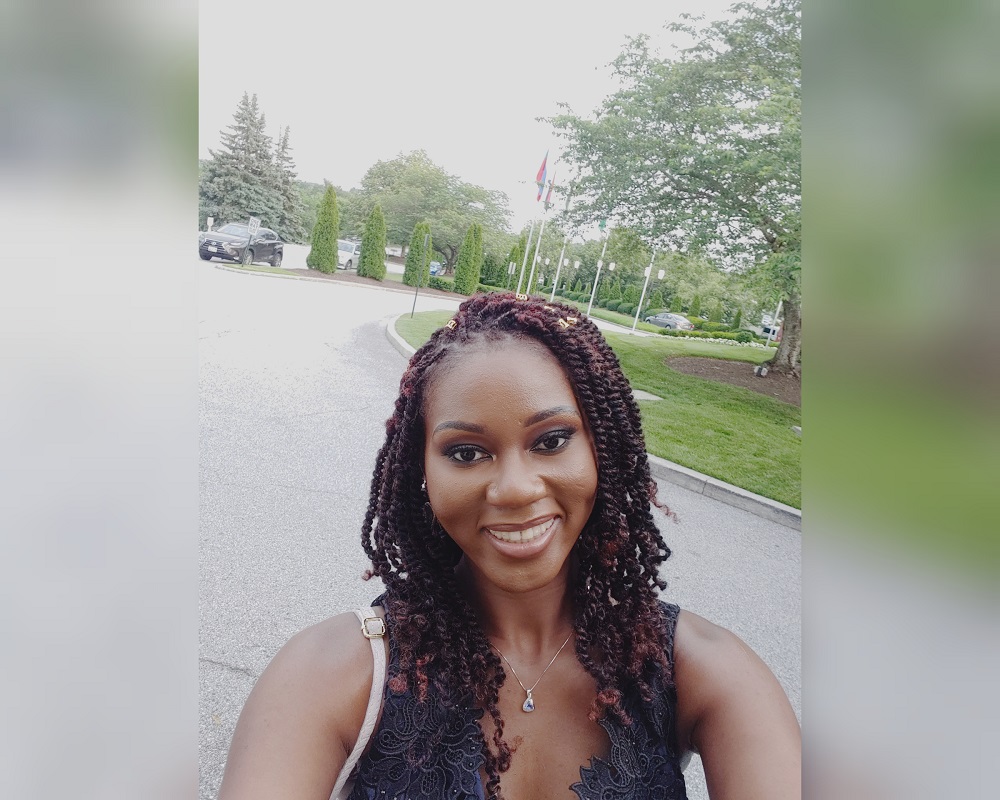 Opioid use during pregnancy has been linked to harmful birth outcomes, including early birth, low birth weight, as well as breathing and feeding problems for the child. A mother experiencing OUD, too, is at risk of overdose or withdrawal, poor or delayed prenatal care, poor self-care and nutrition, mood disorders, and many others. Providing a nursing plan of care for families affected by substance use disorder is a key action provided by the new Maternal Child Health Public Health Nurse Specialist, Asenath Ndamukong.
Ms. Ndamukong recently presented information about her role to the Fairfax County Opioid and Substance Use Task Force and shared that her unique, role will:
Ms. Ndamukong is suited for the job. As a former Nurse-Family Partnership home visiting nurse, with a newborn of her own, she relates to mothers and the issues surrounding being a new parent.
“There are so many complex issues involving infants; attachment, safety, health concerns, and childcare. Babies do not come with manuals,” she said. “Parenting is not easy — and when a parent is experiencing financial and/or health struggles, it is even harder to stay informed about basic ways to provide a healthy home environment. Also, navigating the health care system presents an added stress for pregnant and parenting individuals.
The Maternal Child Health Home Visiting Nurses provide compassionate and trauma informed care to all pregnant and parenting individuals. During home visits, clients are educated about many topics, including, practices that can help them thrive, such as how to help them stop smoking, breastfeeding, parenting skills and connecting clients to resources, where to find food or housing, when needed.
“Every child deserves a parent who can provide for their needs, emotional as well as physical, and that is what I am here to support. Every pregnant and parenting individual deserves to be provided with evidence-based information and education so that they can make informed decisions for themselves and their families. I am honored to be part of this important, innovative Fairfax County Health Department program.”
For more information, or to make a referral to the Fairfax County Health Department Maternal and Child Health Home Visiting Programs, leave a message on the referral line at 703-246-8450 or call 571-396-1947.
This Fairfax County Health Department position is an initiative of Fairfax County’s Opioid and Substance Use Task Force. Learn more about the continuing initiatives.
Following the Centers for Disease Control update concerning a national rise in cases of Candida auris (C. auris) infections, the Virginia Department of Health shared information with the statewide medical community to be aware of increases, which are mostly seen in the Northern and Central regions of the state. Locally in the Fairfax Health District, C. auris infections are uncommon but with the increases seen in Virginia and nationally, health officials view this drug resistant condition as an expanding and concerning public health threat.
C. auris is a form of yeast that is usually not harmful to healthy people but can cause significant health concerns to fragile hospital and nursing home patients. It generally spreads in healthcare settings and can cause outbreaks by spreading through direct contact or by touching contaminated surfaces. Some candida strains are resistant to all three classes of antifungal drugs used to treat fungal infections.
The Fairfax County Health Department is working with all nursing homes, long-term health care facilities, and hospitals in the Health District to prevent the spread of drug resistant infections, including C. auris, by improving infection control (handwashing and the use of other precautions), and to investigate cases when they occur and work with facilities to prevent further spread to others.
The health department urges thorough hand washing when visiting a loved one at a nursing home or medical setting. Additionally, patients and their family members should follow their doctor’s advice about when antibiotic treatment is needed or not; unnecessary antibiotics increase the risk of a resistant infection.
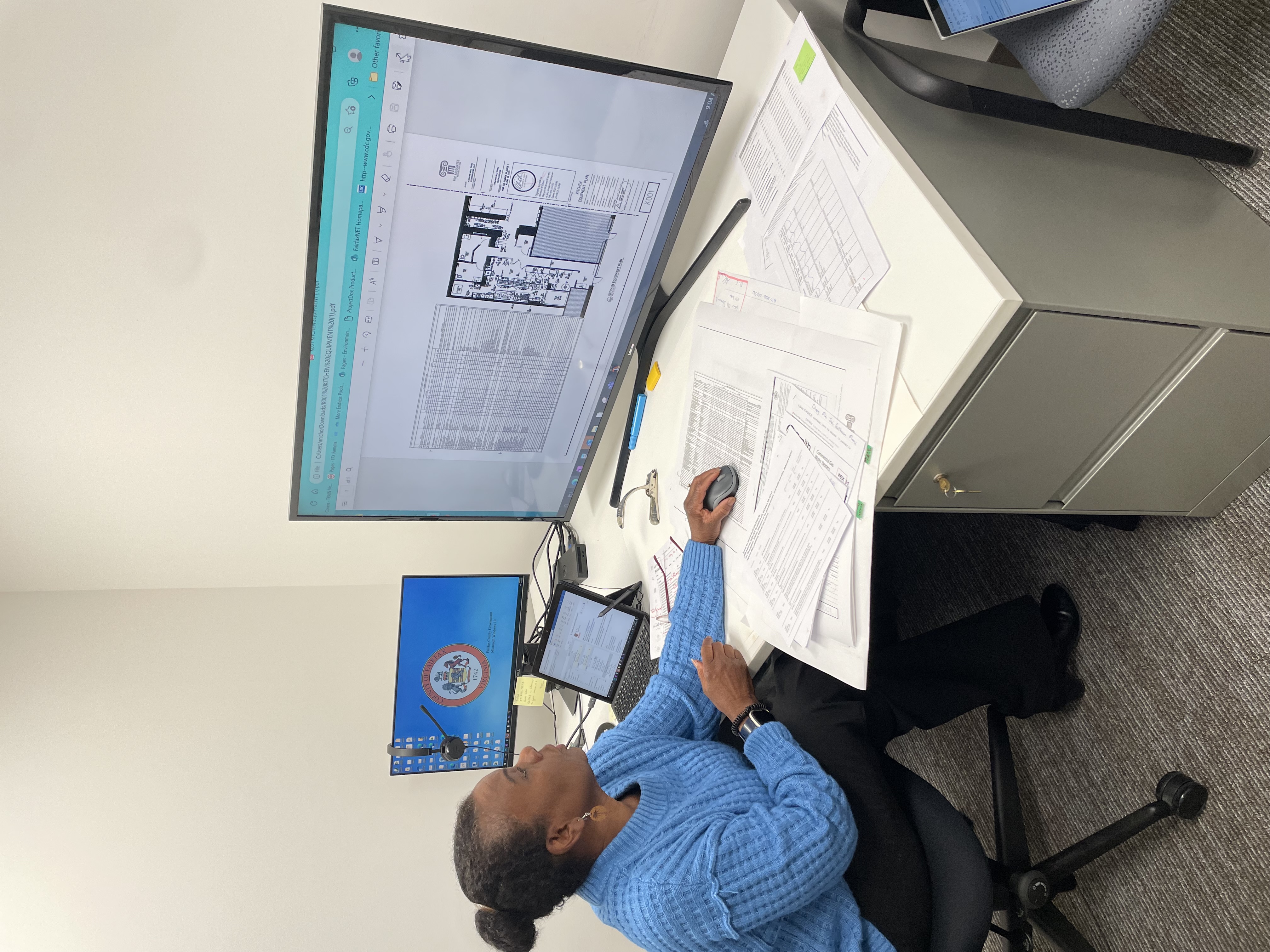 Did you ever think that the design of a restaurant kitchen can make a difference in how safe your dining experience may be? Annette Nicholls knows this. She’s worked in Plan Review at the Fairfax County Health Department for more than 20 years. Annette knows that if a hand sink is placed where employees prepare, cook and serve food, it can impact how often kitchen staff wash their hands – which is the best way to prevent food borne illness.
Before a new restaurant can open in Fairfax County, whether a new build or taking over a prior restaurant’s space, plans must be submitted for review and approval. This allows Environmental Health staff to review plans to ensure the design maximizes food safety. For example, reviewers evaluate if the water heater is correctly sized so hot water is always available during operation, hand sinks are appropriately located, enough hot and cold holding units are provided to keep food at proper temperatures, and appropriate finishes are used for easy cleaning.
Annette noted that Plan Review consists of a close collaboration among the reviewers, architects, and owners to provide a well-designed, cost effective, and safe environment. “Proper design is one of the keys to food safety,” said Annette. “A well-designed kitchen with the correct placement of hand sinks, prep sinks, approved finishes, adequate dry storage space, refrigerators and freezers, all contribute to an environment that provide safe food to the public.”
In addition to reviewing plans for restaurants, grocery stores that provide dine-in areas, food trucks, and breweries and wineries, Annette also has a hand in the design of swimming pools, spas, and saunas. 
While a pool is under construction, Annette does a site visit called a plumbing pipe layout inspection. It is during this inspection where Annette will conduct a pipe pressure test to ensure the right size pipes for skimmers, returns, main drains, and other accessory piping are installed according to submitted plans. “This inspection can often be a muddy and somewhat precarious adventure traversing across a large hole over mounds of dirt and makeshift wooden walkways,” said Annette.
And if ever wondered why you must walk through the bathhouse when visiting a pool, it’s to encourage you to use the restroom and shower before entering the pool. “We don’t want your urine, lotion, or sweat to contaminate the pool, thus reducing the effectiveness of the sanitizer,” said Annette.
Originally from Trinidad and Tobago, Annette attended the University of Miami on a full scholarship majoring in Marine Science and Marine Biology. Shortly after graduating, Annette returned to Trinidad to work as a fisheries officer managing an aquaculture unit. But it wasn’t too long before she ultimately made the decision to immigrate to the United States, moving to New York City.
Finding a job in fisheries was more challenging in the Big Apple, so Annette took a job working as a Sanitarian for the New York City Health Department. Her first assignment: Rikers Island.
“We wore big badges which were similar to those that were worn by the commissioner, which afforded me some respect from the prisoners and thus made my life a bit easier as I traveled the halls,” said Annette. “There were a total of five inspectors or sanitarians as we were called, for the 10 facilities on the island. We inspected the kitchens, checked air temperatures and air quality in the cells, we also reviewed medications of patients with TB [tuberculosis] to ensure there were no contraindications with other medicines… we were very much generalists.” Annette shared that initially working on Rikers Island was scary, then mundane, except when they had total lockdowns and could not leave for hours.
 Getting her start at the New York City Health Department helped prepare Annette for coming to Fairfax County and working in a male dominated field. Over the years, not only has Annette witnessed her department become more diverse, but she’s also seen the change occur within the county.
“Working in Plan Review has provided me with the unique opportunity of interacting with people from diverse background and cultures,” said Annette. “My understanding and appreciation of the broader community has greatly expanded – and that’s what I love – it is never dull, and I get to see it all!”
This story is shared in honor of National Women's History Month. The National Women’s History Alliance, which spearheaded the movement for March being declared National Women’s History Month, declared the theme for 2023 as “Celebrating Women Who Tell Our Stories.”
Strep throat is currently spreading in the Fairfax Health District. Data from emergency departments and urgent care centers in the community have shown an increase in the number of people who have been diagnosed with strep throat since late January 2023. For the week of March 5-11, there were more visits to ED and urgent care facilities for strep throat than at any time in the past 3 years (since December 2019).
Strep throat is an infection in the throat and tonsils cause by bacteria called group A Streptococcus (group A strep). It is very contagious and is spread to other by direct contact (such as sharing silverware or kissing) as well as by respiratory droplets (sneezes or coughs).
Crowded, or close settings, increase the risk of strep throat, including schools, childcare, or other places where people gather. According to the Centers for Disease and Control and Prevention (CDC), strep throat is more common in children ages 5 years and older than in children ages 3 years and younger and that up to 3 in 10 children with a sore throat have strep throat while that figure for adults is 1 in 10. There is no vaccine for strep throat, and someone can get it again even if they have been sick with strep throat in the past.
Common symptoms may include:
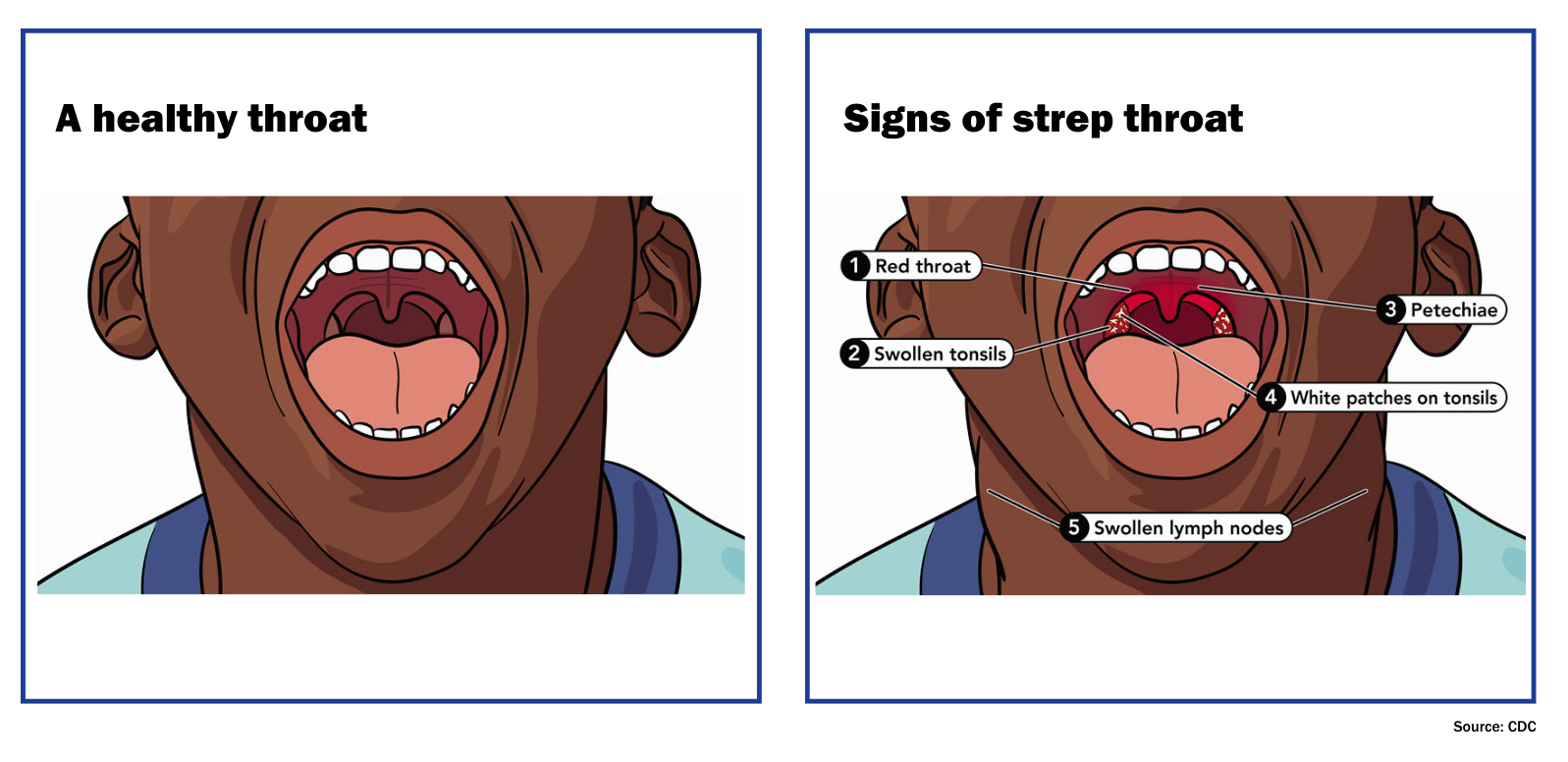
Doctors can easily test to determine if you or your child has strep throat. Because viruses also can cause a sore throat, seeing your doctor and getting a test is important to know whether a sore throat is strep throat. After testing, they may prescribe antibiotics to help patients feel better and prevent spread to others. People with strep throat should stay home from school, childcare or work until they no longer have a fever and have taken antibiotics for at least 12 hours. It is important to complete the full course of antibiotics prescribed by your doctor, even if you (or your child) feel better before you are done taking them.
Practice healthy hygiene habits to reduce the chance of strep throat.
Get more information about strep throat.
The Fairfax County Health Department has updated their COVID-19 Vaccine Data Dashboard to better align with current vaccine recommendations and new measures reported by the Virginia Department of Health (VDH). The Fairfax Health District includes Fairfax County and the cities of Fairfax and Falls Church.
Updates include:
See the updated COVID-19 Vaccine Data dashboard.
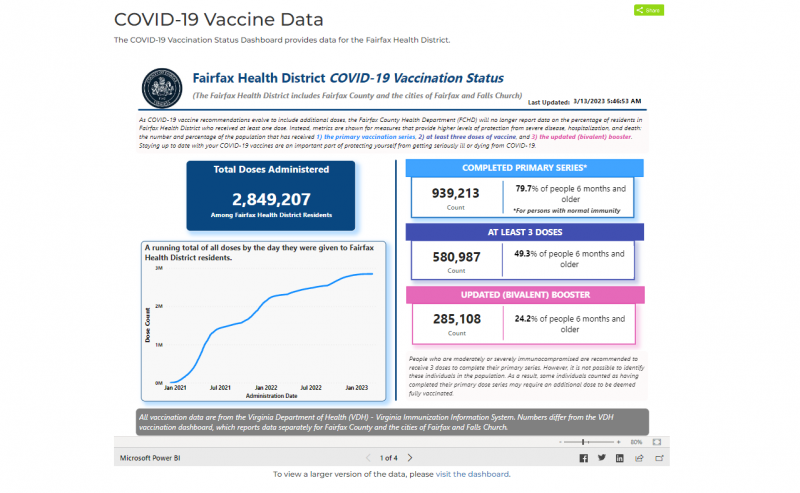
In the Fairfax Health District, about 24% of people 6 months and older have received an updated booster dose. Nationally, about 16% of the population has received an updated booster dose.
Adults over 50 years old are most at risk of severe illness, and most COVID-19 deaths occur in people 65 years old and older. In the Fairfax Health District, more than half of adults 65 years old and older have received an updated booster dose. This percentage varies by age, with 53% of those 65-74 years, 64% of those 75-84 years, and 52% of those 85+ years having received this booster.
The percent of people who have received an updated booster is lower in younger age groups, ranging from 11% of children 5-11 years old to 35% of adults 55-64 years old.
Only 13% of children under 5 years old have completed their primary vaccine series, and 1% of children in that age group have received an updated booster dose.
We continue to encourage everyone aged six months and older to stay up to date with their COVID-19 vaccinations, even if you have had COVID-19.
You are up to date with your COVID-19 vaccines when you have completed a COVID-19 vaccine primary series and got the most recent booster dose recommended for you by CDC. For everyone who completed their primary series of vaccinations more than two months ago, being up to date means having received the bivalent (updated) booster which is more effective against the COVID-19 viruses currently found in our community. Visit our website to learn more.
You are best protected from severe illness, hospitalization, and death when you stay up to date with vaccination. Research shows that people who are vaccinated but get COVID-19 are less likely to report post-COVID conditions (long COVID), compared with people who are unvaccinated.
If you need a COVID-19 vaccine, please visit vaccines.gov to find a location near you.
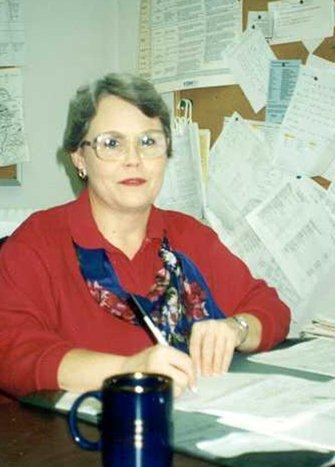 In 1965, Edwyna Wingo was as a field nurse, working clinics and providing health services to students at three elementary schools for the Fairfax County Health Department. Back then, public health nursing centered on teaching new mothers how to care for their babies, assessing young students for possible developmental delays, stopping the spread of communicable diseases, and administering vaccinations against childhood diseases.
Today, Edwyna is still going strong, and while she no longer wears her nursing hat, she continues to proudly serve the health department as a coordinator of the Virginia Department of Health’s car seat program that supplies car seats to families in need. .jpeg)
Over her career, Edwyna has been a part of some big changes in public health nursing. In 1974, she was asked by then Director of Health, Dr. Harold Kennedy, to start a school aide clinic program. She hired 128 new health aides. Edwyna served as a nursing supervisor at the Herndon office and a nurse manager at the former Seven Corners district office, she developed a skin-deep tattoo removal program for youth, and managed clinic services at the Joseph Willard District Office. She also saw public health nursing grow to offer increased opportunities in specialized services. Nurses can now work in specific fields, such as clinic services, maternal child health, immunizations, communicable disease, and school health.
When asked if her gender could have possibly affected her career choices, Edwyna said no but shared, “back then, women felt they had three choices: earn an education to become a teacher, enter business school to become a secretary, or go to college to be a nurse.”
.jpeg) However, Edwyna said she knew she wanted to be a nurse from an early age, most likely the result of an aunt who left her nursing books at Edwyna’s house when she was a child.
However, Edwyna said she knew she wanted to be a nurse from an early age, most likely the result of an aunt who left her nursing books at Edwyna’s house when she was a child.
“Before the age of 8, I knew where babies came from,” shared Edwyna. “I also had an opportunity to volunteer as an aide at UVA hospital during summers as a teenager and this gave me an introduction to patients who were truly sick.”
“And it didn’t change my mind,” Edwyna said while laughing.
Edwyna earned her BSN from UVA’s nursing school and very soon after, took a nursing position at UVA hospital. But according to Edwyna, the schedule was grueling. She’d work days, go home to nap, and return the same evening for her night shift. While she loved working with patients, she also learned that she loved teaching others about their health and decided to give public health nursing a try.
Edwyna soon realized that she had found her calling. In public health, she could care for patients and teach them how to stay healthy.
“Back then, a lot of our communicable disease outbreaks were because of diseases that spread easily among children, like polio, measles, chicken pox, rubella, and whooping cough,” shared Edwyna. “Even though there was a vaccine, polio was still prevalent. As a child, I lived through measles, I got chicken pox and rubeola in the first grade, I got the German measles (rubella)… Children got very sick and some even died. I remember it all too well.”
“Immunizations were a big part of our program and still are today,” said Edwyna. “I saw how devastating these diseases can be and I’m afraid it can happen again. When I hear people say that vaccines aren’t important, it bothers me not only as a nurse but as a human. I remind them that vaccines have been tested and they are safe. They ensure children can stay healthy and grow up to become adults without the lasting effects of a preventable disease.”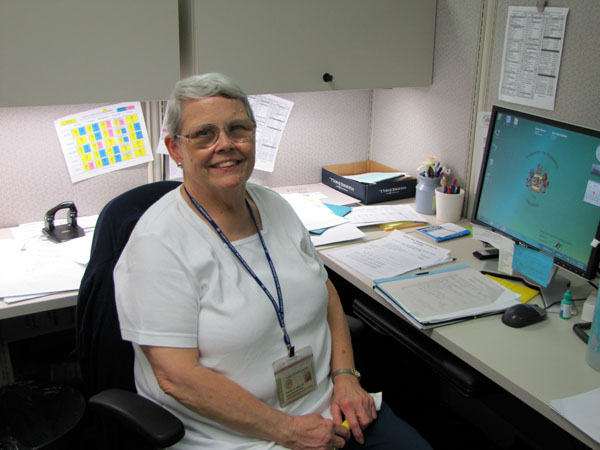
Edwyna’s advice to young women is to take advantage of the opportunities that come along. Know your strengths and weaknesses, seek guidance, and ask for help from people who are experienced in their chosen field, whether it’s nursing or engineering. These guiding principles worked well for Edwyna and her 58 years in public health. When asked if she has plans to hang up her nursing shoes any time soon, she laughed and said “I’ve never worked a day in my life. This is my calling and all I ever wanted to do.”
This story is shared in honor of National Women's History Month. The National Women’s History Alliance, which spearheaded the movement for March being declared National Women’s History Month, declared the theme for 2023 as “Celebrating Women Who Tell Our Stories.”
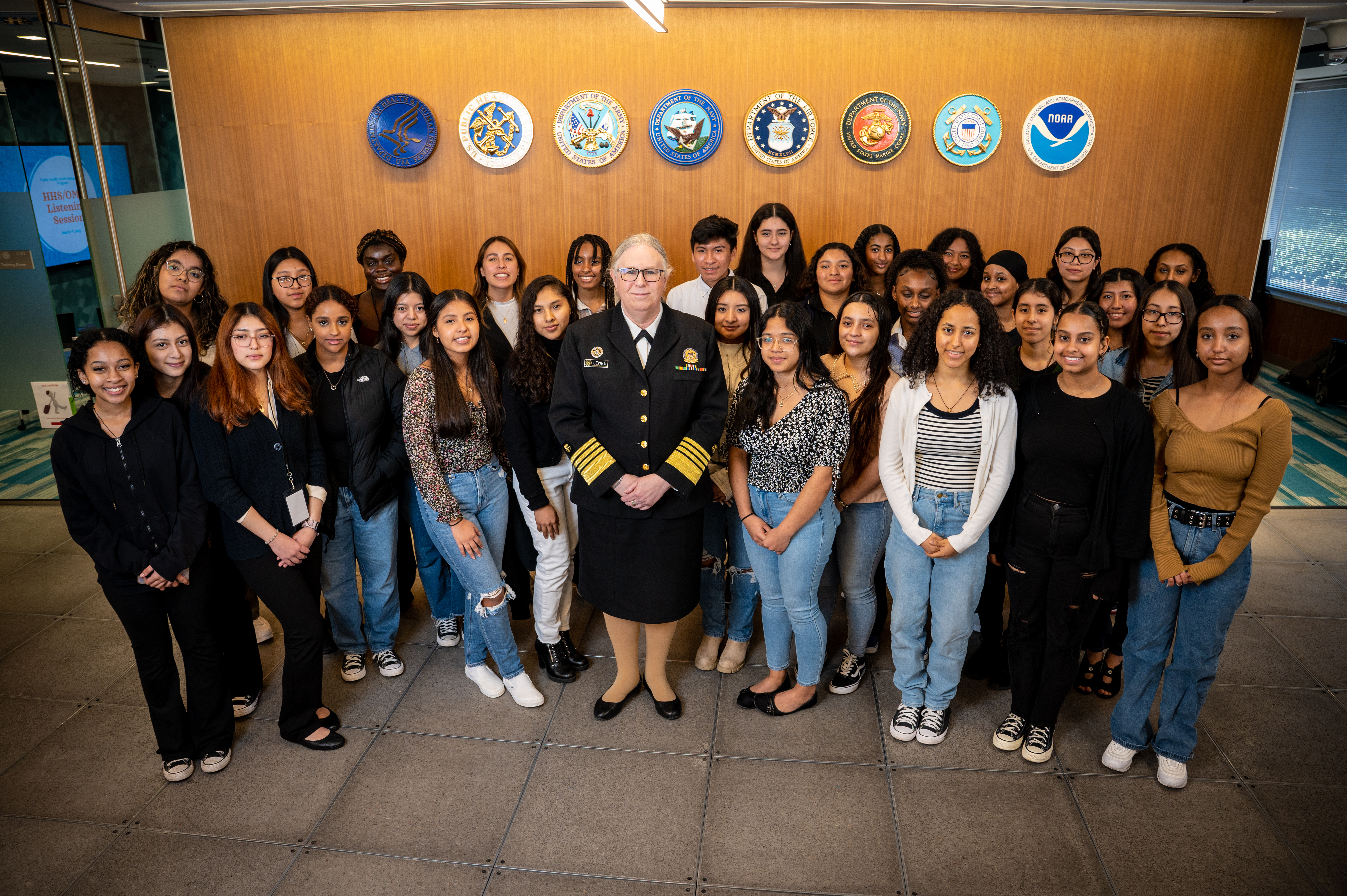
Graduates of the Fairfax County Health Department’s Public Health Youth Ambassador Program were honored on Wednesday, March 1, by the U.S. Department of Health and Human Services Office of Minority Health at their headquarters in Rockville, MD.
Admiral Rachel L. Levine, M.D., Assistant Secretary for Health, RDML Felicia Collins, M.D., M.P.H., F.A.A.P., Director of the Office of Minority Health, Roslyn Holliday Moore, M.S., Deputy Director for Programs of the Office of Minority Health, Sonsiere Cobb-Souza, Division Director for Program Operations of the Office of Minority Health, and Rashmita Subedi, Project Officer, Division of Program Operations, Office of Minority Health, each shared remarks and recognition with the students.
“We need to note the amazing strength, resilience, and power of young people today. Young adults play a critical role in creating a better future for all of us,” said Admiral Rachel L. Levine, M.D.
Three Fairfax County’s student attendees were brought on stage to participate in a panel discussion with Admiral Levine, who thanked them with commemorative coins that read, “Diversity, Equity, Inclusion and Compassion.” All graduates received congratulatory certificates from RDML Collins and Deputy Director Moore.
The Public Health Youth Ambassador Program was created to help students who face additional barriers to achieving their higher education goals, which includes, students who are the first in their family to attend college in the U.S., English language learners, students who are economically disadvantaged, and students with disabilities. Upon completion, ambassadors receive a certificate of completion from Morehouse School of Medicine’s High School Community Health Worker Program, a scholarship, and a laptop. Students keep the medical supplies they received as part of their training.
The Fairfax County Health Department honored 23 Public Health Youth Ambassadors during a graduation ceremony at Justice High School, Falls Church, on Saturday, February 25. The new graduates join 14 previous program graduates; all 37 graduates attended Wednesday’s recognition at the U.S. Department of Health and Human Services Office of Minority Health headquarters.
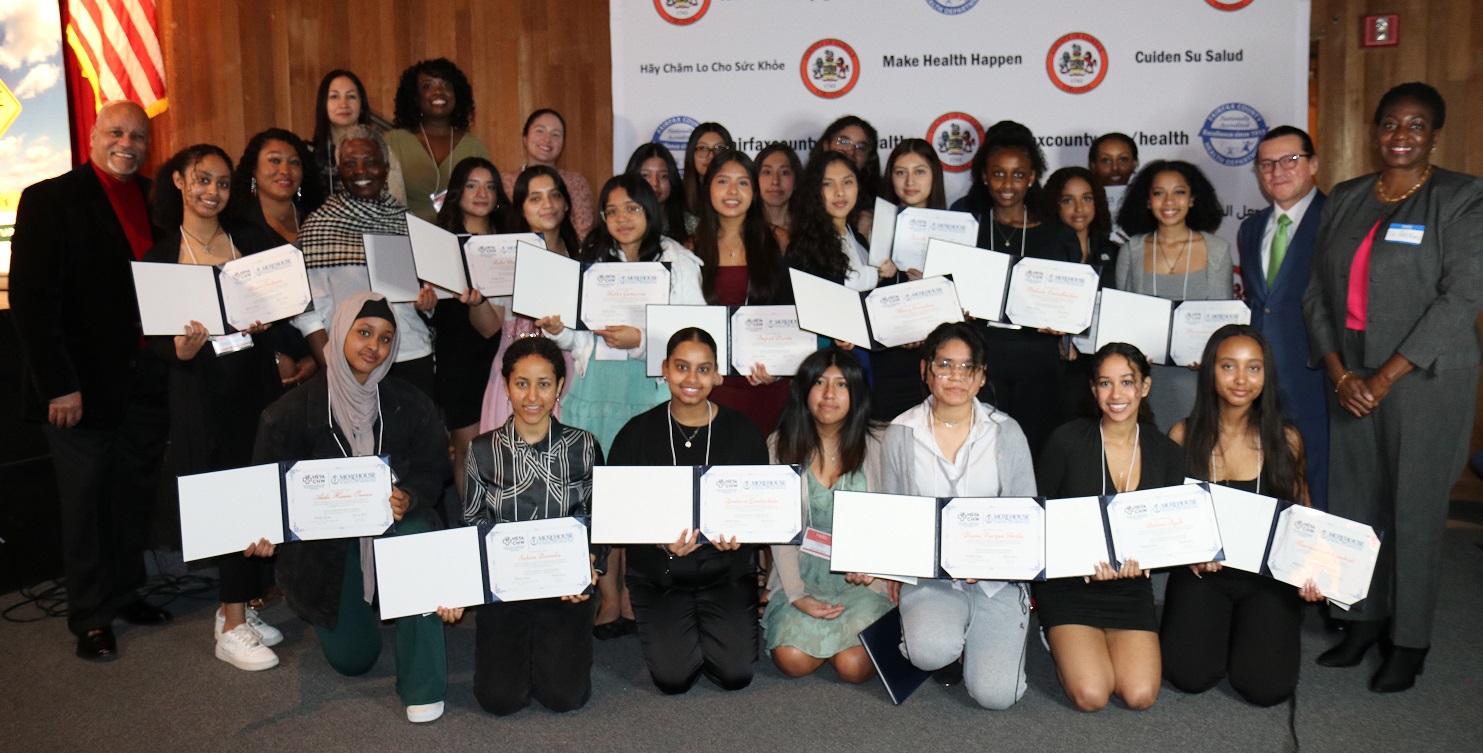
“The work you have done that we celebrate today will pay dividends to your future,” said Anthony J. Mingo, Sr., Director, Community Health Development, Fairfax County Health Department.
The ceremony’s keynote address was provided by Dr. Tonya Adkins, CEO of HealthWorks of Northern Virginia.
Nanci Bernal Aguirre, Justice High School
Omar Gabriel Lorenzo Alvarez, West Springfield High School
Vivian Araia, Justice High School
Diana Vargas Avila, Justice High School
Ashley Luna Cerrato, Justice High School
Mary Coimbra, Justice High School
Selam Demeke, Justice High School
Makeda Endalkachew, Justice High School
Mariamawit Ezechiel, Annandale High School
Yeabsra Guetachew, Justice High School
Marilyn Aguilon Gomez, Justice High School
Keilin Gutierrez, Justice High School
Janet Arana-Hoyos, Justice High School
Delina Iyob, Justice High School
Yalda Jimenez, Justice High School
Rubi Medrano, Justice High School
Aisha Hussein Osman, Justice High School
Bianca Rojas-Quinteros, Justice High School
Mariamawit Shibabaw, Justice High School
Hiwot Tadesse, Justice High School
Janeth Morales Trejo, Justice High School
Winta Yemane, Justice High School
Ingrid Zurita, Justice High School
The Public Health Youth Ambassador program trains local Fairfax County high school students as public health workers. Upon completion, Ambassadors receive a certificate of completion from Morehouse School of Medicine’s High School Community Health Worker Program, a scholarship, and a laptop. Students keep the medical supplies they received as part of their training. The program is made possible through a $3.875 million award to the Fairfax County Health Department from the U.S. Department of Health and Human Services (HHS) Office of Minority Health (OMH). Stronger Partnership, Stronger Community: Using Health Literacy to Increase Resilience (Stronger2) member Edu-Futuro serves as the implementation partner of the Public Health Youth Ambassador Program. For more information including enrollment, please visit the website.