
Health Department Alert:
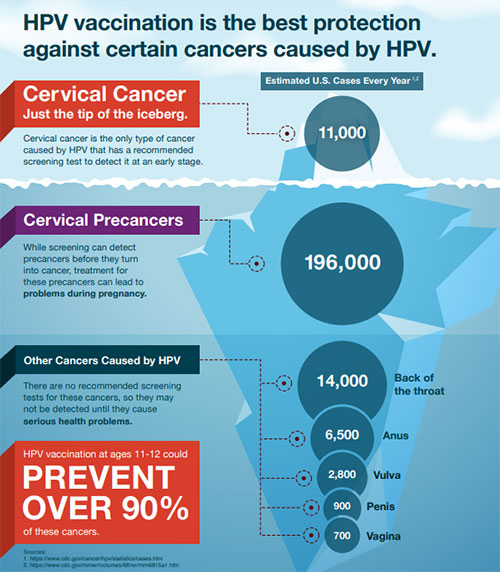 Cervical cancer is a significant threat to the health and well-being of Americans with roughly 13,000 cases diagnosed each year. Cervical cancer can however be prevented with vaccination and screenings.
Almost all cervical cancers are caused by human papillomavirus (HPV). HPV is a common a sexually transmitted infection. However, anyone with a cervix is at risk for cervical cancer. Cervical cancer risk factors include:
To reduce risk of cervical cancer:
HPV infections are common and can cause other cancers in both women and men. The HPV vaccine is recommended for all children long before they ever have contact with the virus. Children ages 9-14 are given two doses of vaccine, 6-12 months apart. People who obtain their first dose on or after their 15th birthday will receive three doses.
The Fairfax County Health Department provides HPV vaccinations, on a sliding scale fee, for residents in our community and urges them to get vaccinated against HPV. This vaccine is one of three that are required for public school entry. The Health Department only vaccinates people through 26 years old, but people up to the age of 45 are eligible to get the vaccine from their medical provider.
Find out more about cervical cancer and HPV vaccination:
14 Fairfax County High Schoolers Onboard to Potential Careers in Public Health
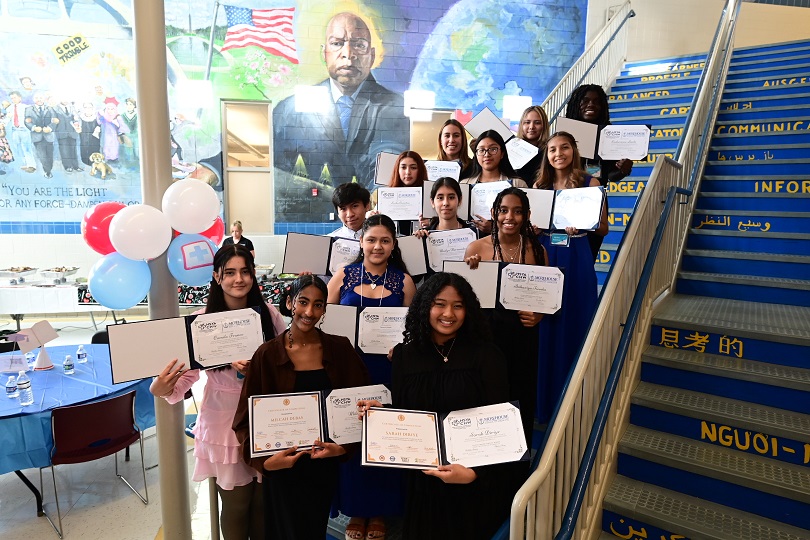
The Fairfax County Health Department, together with Edu-Futuro and Stronger2, honored 14 Fairfax County high school students as the inaugural graduates of the Public Health Youth Ambassador Program.
The Public Health Youth Ambassador Program was created to help students who face additional barriers to achieving their higher education goals, which includes, students who are the first in their family to attend college in the U.S., English language learners, students who are economically disadvantaged, and students with disabilities.
During the graduation ceremony at John R. Lewis High School on December 17, fourteen graduates received a certificate of completion from Morehouse School of Medicine’s High School Community Health Worker Program, and a scholarship. Students also receive a laptop and keep the medical supplies they received as part of the curriculum.
“Public health needs you. We are cheering for you. Think about returning to your community and giving back to your community. Hold dear the flame in your heart that made you achieve this accomplishment, and allow it to feed you in your future,” said Anthony J. Mingo, Sr. division director, community health development, Fairfax County Health Department.
The keynote commencement address was delivered by Roslyn Holliday Moore, deputy director for programs, Office of Minority Health, U.S. Department of Health and Human Services. Additional remarks were delivered by Fairfax County Executive Bryan Hill, Health Director Dr. Gloria Addo-Ayensu, Franconia District Supervisor Rodney L. Lusk, Edu-Futuro Executive Director Jorge Figueredo, Edu-Futuro Program Manager Andrea Scott, Assistant Principal of John R. Lewis High School Christopher Thompson, program graduate, Nayla Bonilla, and Ramon Gilberto Aguilar, who is a parent of one of the graduates.
Nayla Bonilla, Justice H.S.
Bithaniya Fieseha, West Springfield H.S.
Endurance Larbi, John R. Lewis H.S.
Allison Orozco de Paz, John R. Lewis H.S.
Amy Aguilar-Lopez, Chantilly H.S.
Aylen Amargo, John R. Lewis H.S.
Erika Cerritos, John R. Lewis H.S.
Katie Chavarria, John R. Lewis H.S.
Milcah Debas, John R. Lewis H.S.
Sarah Diriye, John R. Lewis H.S.
Camila Franco, John R. Lewis H.S.
Mailyn Hernandez, John R. Lewis H.S.
Alexandra Jarquin, John R. Lewis H.S.
Aryton Uriona, Falls Church H.S.
The graduates were required to complete a practicum that spanned classroom learning, at-home practicum, and community field projects.
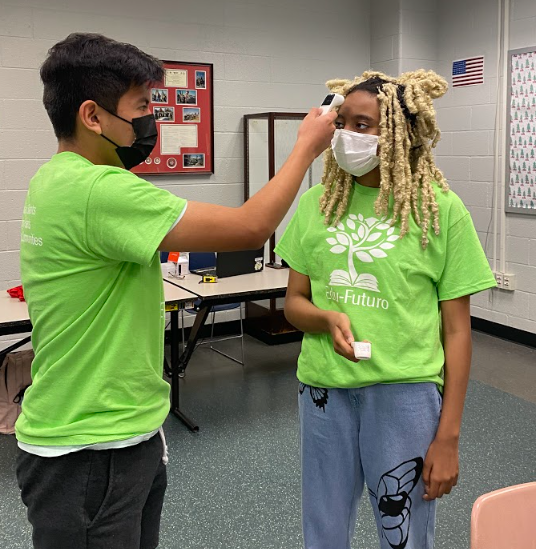
The Fairfax County Health Department’s Public Health Youth Ambassador Program (PHYAP) is a free educational program that trains local high school students as community health workers. Students of all backgrounds and experiences are encouraged to apply.
The Public Health Youth Ambassador Program was created to help students who face additional barriers to achieving their higher education goals, which includes:
Graduates of the Public Health Youth Ambassador Program receive a certificate of completion from Morehouse School of Medicine’s High School Community Health Worker Program, a scholarship, resources they need to participate in the program, like a laptop and medical supplies, and professional connections. As a result, students will be highly competitive using their experience and completion certificates to secure paid community health worker positions and as part of their college applications.
Training program gives students tools to build generational health in the community
“In public health, we seek to improve foundational, non-medical factors that will influence health outcomes. The knowledge and experience students gain in this program is paid forward in their communities, as program graduates have new skills to serve and invest in their neighborhood – creating more opportunities for the generations that will follow theirs,” said Anthony Mingo, Sr., “Mingo”, community outreach and engagement manager with the Fairfax County Health Department.
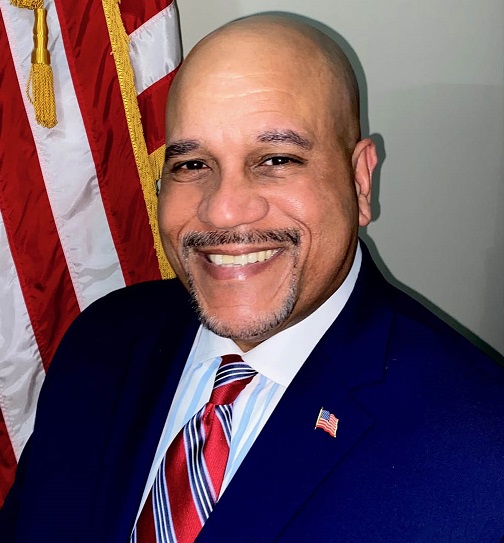
Mingo leads the Fairfax County Health Department’s design and coordination of the Youth Ambassador program. Local non-profit Edu-Futuro is the implementation partner, executing the program in local high schools.
A culturally competent practicum that permeates school, health, community, and home
Andrea Scott is the Public Health Youth Ambassador Program Manager with Edu-Futuro. She is bilingual and works to make her class accessible to everyone by presenting the information in both Spanish and English. “Some of the students have great GPAs but do not speak as much English. I give translations so everyone can participate equally,” she said. “Cultural competency is foundational as we require students to incorporate health practices into their lives, so they, in turn, can promote health to those around them.”
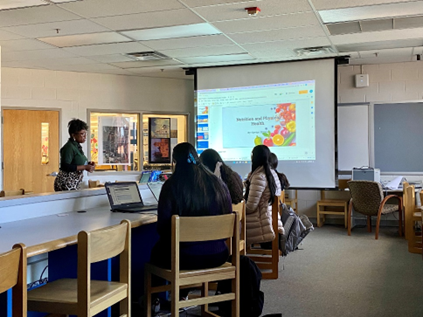
The Public Health Youth Ambassador Program training permeates school, community and home:
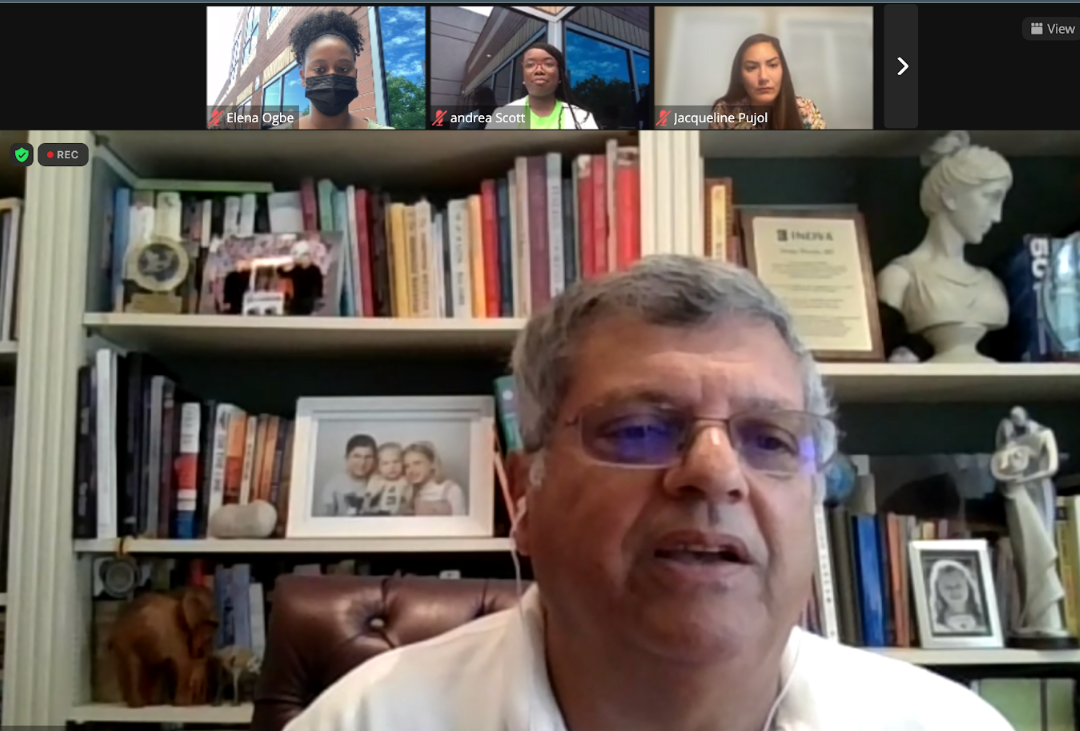
Training requires students to implement public health action in the community
Recently, while leading her class at John R. Lewis High School, Andrea advised, “Work on a target you know you can have an impact on.”
“The students aren’t just making a plan of what they would do in theory. They are actually doing it,” she said.
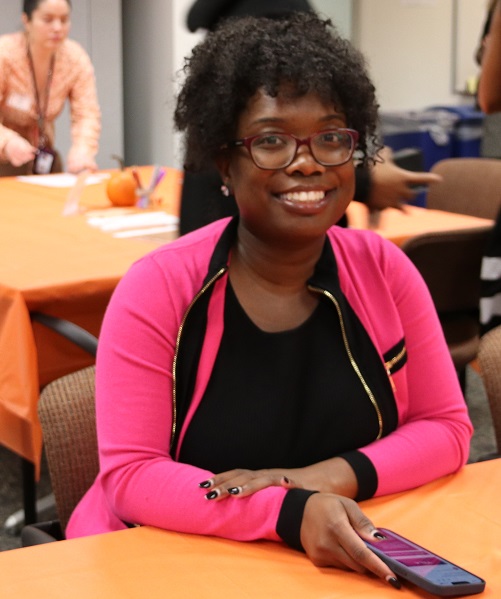
Examples from the last graduating class include one student holding regular health fairs at her school and another student working with a local community center to provide healthy snacks to kids after school.
High school students in the Fairfax Health District are encouraged to apply
Learn more about the Public Health Youth Ambassador Program by emailing Anthony Mingo, Sr.. Additionally, local high school students interested in the Public Health Youth Ambassador program can inquire about joining the next class by emailing Andrea Scott. The practicum includes classroom time either during a student’s advisory period during the school day, or during the evening.
Learn more about the program by watching this brief video.
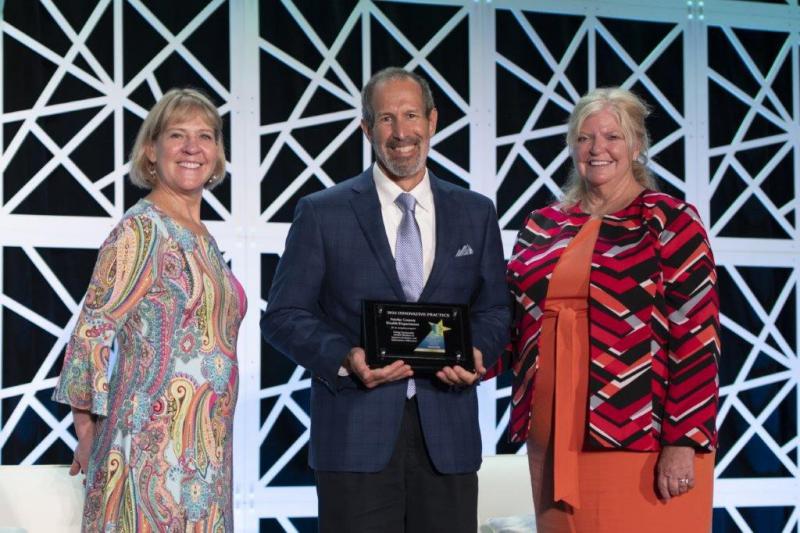
The Fairfax County Health Department was honored with the 2022 Gold Innovative Practice Award by the National Association of County and City Health Officials (NACCHO), representing the country’s nearly 3,000 local health departments at their national meeting in Atlanta, Georgia last week. The award recognizes local health departments for developing innovative programs to meet the needs of their community during the COVID-19 pandemic. The designation as a Gold Innovative Practice demonstrates the highest level of program innovation, and reflects the collaboration, adaptability, and resilience of the program.
Leveraging Community Health Workers to Improve Isolation and Quarantine Adherence was one of only four local health department programs in the country to receive NACCHO’s Gold Innovative Practice Award. The award was presented during the 2022 NACCHO360 Annual Conference in Atlanta on July 20, 2022.
The Fairfax County Health Department partnered with the Institute for Public Health Innovation to hire and train Community Health Workers (CHW) to support residents who needed support to successfully adhere to isolation or quarantine protocols. The CHW located and delivered resources, such as food, medications, and necessities to the residents, provided COVID-19 guidance, and made connections to human services providers in the community. Since August 2020, CHW helped over 46,000 adults and children across Fairfax County. As one resident expressed, ‘having this help was a blessing.’
“We are honored and humbled to be recognized by our peers, in receiving NACCHO’s Innovative Practice Gold Award. The award is evidence of our commitment to developing responsive and culturally appropriate public health programs that improve the health of our diverse community,” said Gloria Addo-Ayensu, MD, MPH, Health Director, Fairfax County Health Department. “We saw a 73% reduction in the number of times residents left the home, per individual, if they were supported by a Community Health Worker during isolation or quarantine periods. This significant improvement in adherence is especially meaningful because of its impact on preventing disease transmission among residents in higher risk communities with the greatest challenges maintaining isolation or quarantine.”
“Community health workers are an essential part of the public health workforce,” said Michael Rhein, MPA, President & CEO, Institute for Public Health Innovation. “We applaud the Fairfax County Health Department for understanding the value of community health workers as compassionate trusted professionals supporting the needs of residents in neighborhoods and populations most affected by the COVID-19 pandemic. We are proud to be a partner in this award-winning public-private initiative.”
“Local health departments have demonstrated remarkable innovation and resilience to better the health of their communities during the pandemic, and the 2022 Innovative Practice Awards highlight the very best practices,” said NACCHO’s Chief Executive Officer Lori Tremmel Freeman. “NACCHO is very proud to join them in honoring the outstanding work done by local health departments in response to the COVID-19 pandemic.”
Innovative Practices are exciting approaches and strategies to local public health issues that were developed in response to the COVID-19 pandemic and were creatively adapted to meet the circumstances of the pandemic. The Innovative Practices honors are awarded to local health departments across the country for implementing programs that are exemplary adaptable programs with replicable outcomes. Leveraging Community Health Workers to Improve Isolation and Quarantine Adherence is one of a select group of successful public health practices. Learn more about this award-winning practice. The Fairfax County Health Department also received a second national award for Achieving Vaccine Equity through Data and Collaboration, selected as a Promising Practice for demonstrating exemplary and replicable initiative in response to a local public health need.
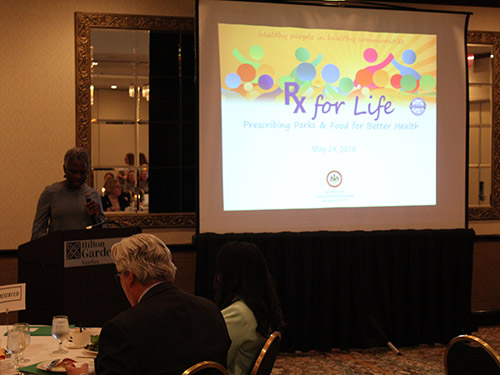
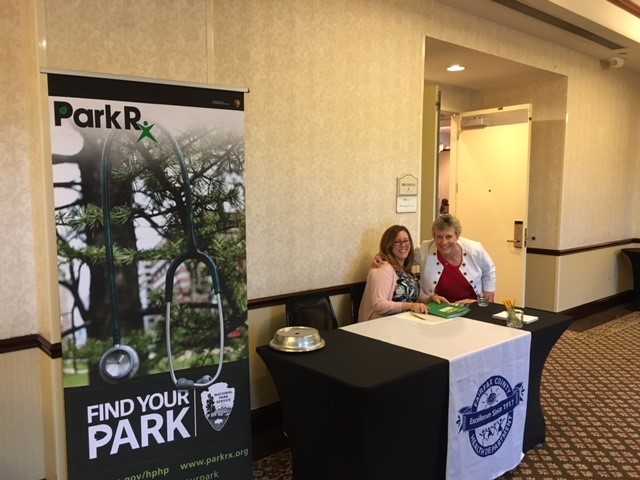 Local health care providers learned how to integrate a food and parks prescription program into their practices to help their patients achieve better health at a conference hosted by the Fairfax County Health Department.
The event, Rx for Life, was held on May 24 at the Hilton Garden Inn in Fairfax and featured two of the leading experts on parks prescribing and food insecurity: Robert Zarr, MD, Founder and Medical Director for Parks Rx America, and Kofi Essel, MD, attending physician with the Children’s Health Center in Anacostia and Assistant Professor of Pediatrics at George Washington School of Medicine and Health Sciences.
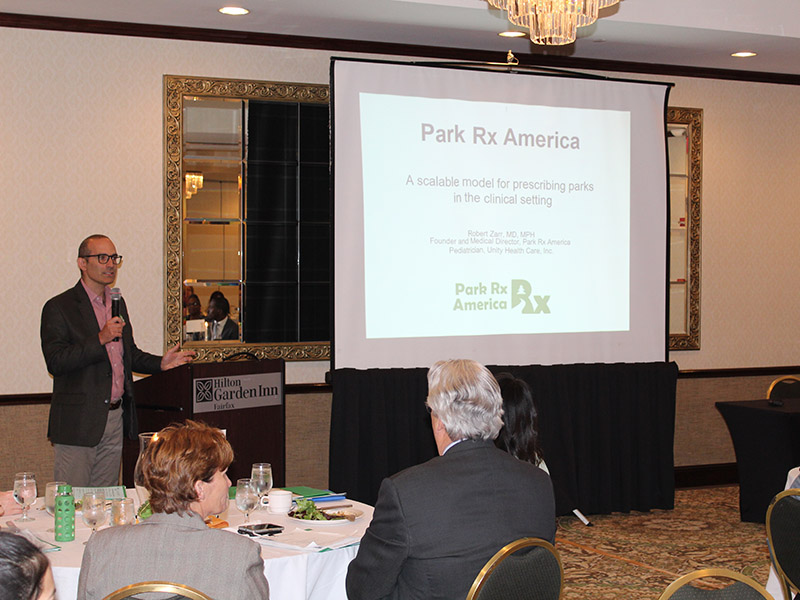
Dr. Zarr discussed how viewing and spending time in nature can improve mental and physical wellbeing by lowering blood pressure, reducing stress and anxiety, and boosting attention and physical activity. His presentation made it easy for attendees to start prescribing nature to their patients in real time during routine office visits.
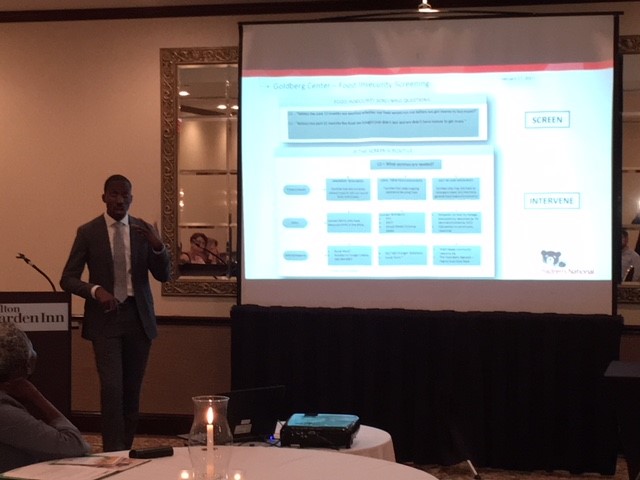
Dr. Essel explained the use of a screening tool called Hunger Vital Signs to identify patients who experience food insecurity and recommend interventions to improve their nutrition, physical and mental health. One in six children in the U.S. lives in a food-insecure household, which means there is limited or uncertain access to enough food. His presentation showed attendees how to implement an Rx for Food program in their practice and connect patients to local food resources and programs.
“We need new approaches if we are going to reduce the burden of chronic disease in our communities, and the parks and food prescribing programs are just what the doctor ordered,” says Fairfax Health Director Gloria Addo-Ayensu, MD, the event sponsor. “We are so grateful to our expert panelists and to our local providers for making time for this important event.”
Other panelists included: Kirk Kincannon, Executive Director of the Fairfax County Park Authority; Cindy Walsh, Resources Management Division Director with the Fairfax County Park Authority; Annie O’Neill, Outdoor Recreation Planner with the National Park Service; Matthew Scribner, Chief Technology Officer with Park Rx America; Terri Siggins, Project Manager for the Fairfax Food Council; Carmen Gill Bailey, Fairfax County Health Department School Health physician; Annie Turner, Executive Director of Food for Others; and Cecelia Vergaretti, Senior Director of NOVA Region Capital Area Food Bank.
Attendees could earn Virginia Commonwealth University continuing medical education credits.
For more information on prescribing parks, visit ParksRx. To learn about other community health initiatives in Fairfax County, go to www.fairfaxcounty.gov/health.
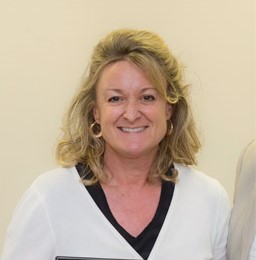 Maria Stock has made a career of helping families experience healthy pregnancies, deliver healthy babies, and ensure all have opportunities to thrive. Maria is the Maternal Child Health Coordinator for the Fairfax County Health Department dedicated to ensuring maternal and child health services are accessible to all within our community.
With a focus on researching and implementing best practices, Maria strives to find effective ways to reach families who lack access to care. It’s a passion that drives the direction of the program. “It goes back to a tug I felt in nursing school,” said Maria. “I want to see populations who are under-resourced cared for just like families who have health insurance. I always feel like I need to be their champion.”
One area Maria and her team are passionate about is championing the impact of immunizations. Keeping up to date with required and recommended vaccinations remains a critical component of staying healthy from vaccine-preventable diseases. Yet, over the years, there has been a decline in the number of babies, school-aged children and young adults who are current on their vaccinations. With August being National Immunization Awareness Month, the Maternal Child Health team are making a concerted effort to remind families, community partners and health-care providers the importance of staying on schedule with vaccines.
“We recognize that beliefs and attitudes toward immunizations have shifted since the pandemic,” said Maria. “In prior years, most people relied on nurses’ or doctors’ recommendations. Now we see pushback, we see social media misinformation, and because of the success of vaccines, many people have no recollection of how terrible some of these vaccine-preventable diseases can be.”
Maria specifically cites the resurgence of pertussis as an example. “Right now, we’re looking into the DTaP and Tdap rates among children and adolescents, and for the segment of the population we have data on, those rates are not as high as we’d like to see,” said Maria.
Another project Maria is supporting is a program to prepare healthcare providers to offer stronger recommendations for the HPV vaccine.
“We’re not seeing a large enough percentage of parents opting in for this vaccine in Fairfax County,” said Maria. “We want to help enhance the understanding that this vaccine is an important way to prevent certain cancers later in life, and that the best results occur when this vaccine is given in the early teen years. So, we’re developing an information module to help educate clinic and school nurses, and other providers on how to have those conversations with parents.”
And if past performance is an indicator of future success, Maria points to the massive response to Covid-19 as illustration of the ability to help protect public health through vaccinations.
“Covid was a game changer for the immunization program,” said Maria. “It took so much work, so much planning, so much cooperation and collaboration, and so much education, even before we could open vaccine sites. It was an immense and overwhelming experience. But I’m proud to say that we did our best, and I think we met the challenge.”
For more information about the Maternal Childhood Health program, visit the Maternal and Child Health page on the Fairfax County Health Department website.
To learn more about keeping your family safe from preventable illnesses, visit the Immunization and Vaccinations page on the Fairfax County Health Department website.
 The Fairfax County Health Department has announced the winners of its 14 Carrot Gold Food Safety Excellence Award for 2017.
Ten local food service operations, including two catering companies, two fast-casual Mexican restaurants, a local high school, a Fortune 500 company café, a grocery store, and a group home for girls, are being recognized for maintaining outstanding food safety practices and employee education. This year’s winners were selected from the more than 3,400 permitted establishments inspected each year by environmental health specialists with the Health Department.
The 2017 recipients of the Fairfax County Health Department’s 14 Carrot Gold Food Safety Excellence Award are:
We instituted this awards program to recognize food service facilities that place a high importance on food safety practices and policies,
said Environmental Health Director Pieter Sheehan. While every food service facility is required to meet minimum food safety requirements, these ten establishments are to be commended for going above and beyond to safeguard their patrons from the risks of foodborne illness.
In receiving the award, Robert Henry with Wegman’s Food Markets noted: Food safety is more than our mission — it is the beacon that guides our day.
Food service establishments can be nominated for the award by members of the food service industry, the public, or from health inspectors. An awards team from the Health Department reviews the nominations and selects winners. Awardees receive a plaque and recognition in the Department’s newsletter and website.
To be eligible for consideration, recipients of the 14 Carrot Gold awards cannot have any critical violations during inspections conducted in the last 24 months, and no more than six non-critical violations in the past year. The facility must also have a valid permit to operate and be in good standing with the Health Department.
The Health Department’s Environmental Health division conducts close to 8,500 site visits at more than 3,400 restaurant and food service establishments annually in Fairfax County and the cities of Fairfax and Falls Church. Health inspectors look for potential risk factors that contribute to foodborne illness, such as an unapproved food source, poor food employee hygiene, improper cooking temperatures, inadequate cold and hot holding of food, and cleanliness of food contact surfaces.
The department also reviews food establishment plans; responds to citizen complaints and inquiries; investigates foodborne illness outbreaks to determine the source and to minimize the spread of disease; provides food safety information; and holds food safety trainings and workshops.
For more information about the food safety program or to review inspection reports, visit https://www.fairfaxcounty.gov/health/food or call 703-246-2444, TTY 711.