

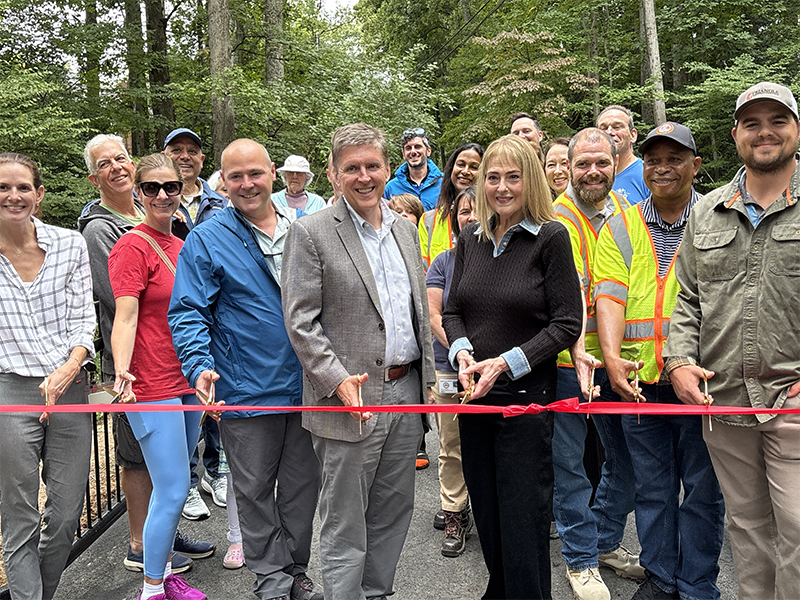
Yesterday, Fairfax County Supervisor Walter Alcorn joined with residents, Westwood Village President Claudia Diamond and county staff to celebrate the restoration of the Old Courthouse Spring Branch and Ashgrove Trail.
Located over a half mile from the Spring Hill Metro Station in Tysons, this project stabilized the stream channel, improved stream ecology, replaced the damaged stream crossing with a new concrete culvert and rebuilt the Ashgrove Trail with new hand railings.
“This is an amazing stretch of forest right here on the edge of Tysons,” Supervisor Walter Alcorn said. “This is not something that you would see adjacent to a lot of urban areas. But this is a real milestone, a big step, toward sustainability and something that actually the community can enjoy.”
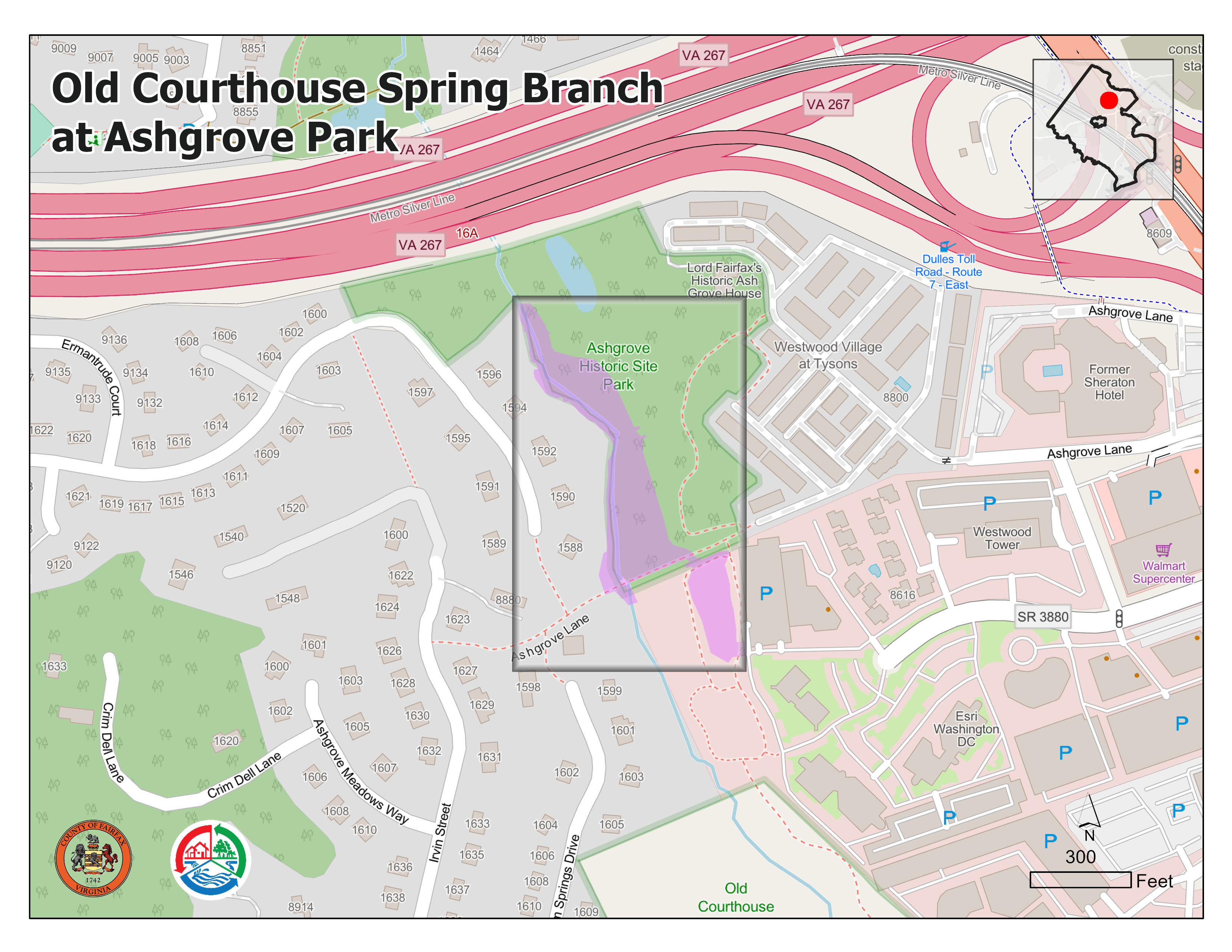
Before the restoration work, the stream regularly overtopped the trail crossing, causing significant soil erosion downstream, said Fairfax County Department of Public Works and Environmental Services Project Manager Justin Pistore. Erosion gouged out the stream’s banks, making it overly wide and leading to potentially further instability along its bed and banks.
“Projects like this take a tremendous coordination, patience and collaboration,” said Westwood Village President Claudia Diamond. “The result is not just a restored stream and improved trail but a lasting investment in our environment and community. On behalf of Westwood Village, thank you for everyone that got us to where we are today.”
Restoration Maximized Tree Preservation
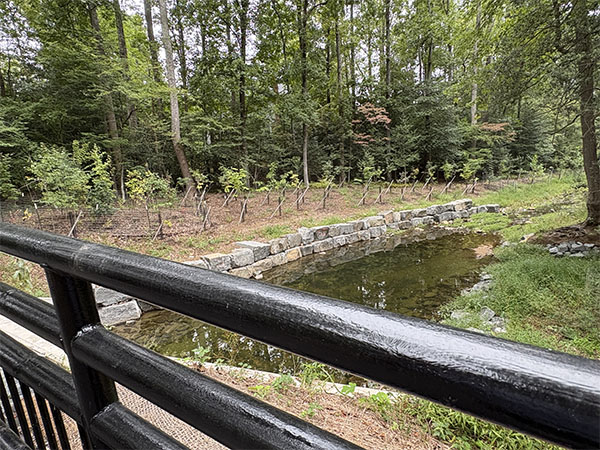
Supervisor Alcorn worked with residents, neighboring homeowners associations, Tysons Forest Community Task Force and county staff to maximize tree preservation.

“We spent a lot of time on preserving as many trees as possible and ensuring the wildlife were protected in the meantime,” Diamond said before construction work began.
To replace trees that were lost, the county planted more than double the required number of overstory, midstory, and understory trees and shrubs. Several thousand native trees, shrubs and grasses were planted, including fruit-bearing pawpaw and persimmon trees, Pistore said.
Reflecting on the long project, Diamond offered her thanks to Supervisor Alcorn and his staff.
“I also want to thank Supervisor Alcorn and Amanda who got us through this project. They stayed with us,” she said. “They got involved when things got a little rough and they smoothed them out. And they kept the project going.”
Restoration Work’s Environmental Benefits
In addition to stabilizing about 1,000 feet along the waterway, the restoration project also aimed to improve the stream’s water quality and ecosystem:
- Improving water quality through the removal of nutrients (nitrogen and phosphorous) and sediment
- Protecting the high-quality forest upstream of the Ashgrove Lane Trail
- Protecting the upstream forested area that would have suffered tree loss and erosion if the culvert wasn’t repaired
- Creating a healthy ecosystem by restoring the channel and planting native trees and herbaceous plants
Fairfax County’s Stormwater Division says every year the restoration project will remove:
Phosphorous: 66.79 pounds annually
Nitrogen: 763.36 pounds annually
Suspended Sediment: 21,448.25 tons annually
This water quality improvements are important to meet federal clean water laws commonly called an MS4 permit (Municipal Separate Storm Sewer System). These laws help protect the Chesapeake Bay and local waters from pollution.
Project Results Worth the Wait
Initiated in FY 2019, the $3.14 million project took a number of years to complete. The project design was finished in May 2024 with construction completed this July.
While it took time, it was worth the wait according to Westwood Village President Claudia Diamond.
“It’s hard to believe it’s been seven years we’ve been doing this,” she said. “Now, that’s not to say we didn’t have any delays along the way, but I can speak for our community and say the end result is absolutely amazing.”
For more information about this project, contact Justin Pistore with the Department of Public Works and Environmental Services Stormwater Planning Division at 703-324-5685, TTY 711.