

Juvenile and Domestic Relations District Court - Court Services Unit Alert:
Children charged with a crime will receive a petition, which lists the criminal charge.
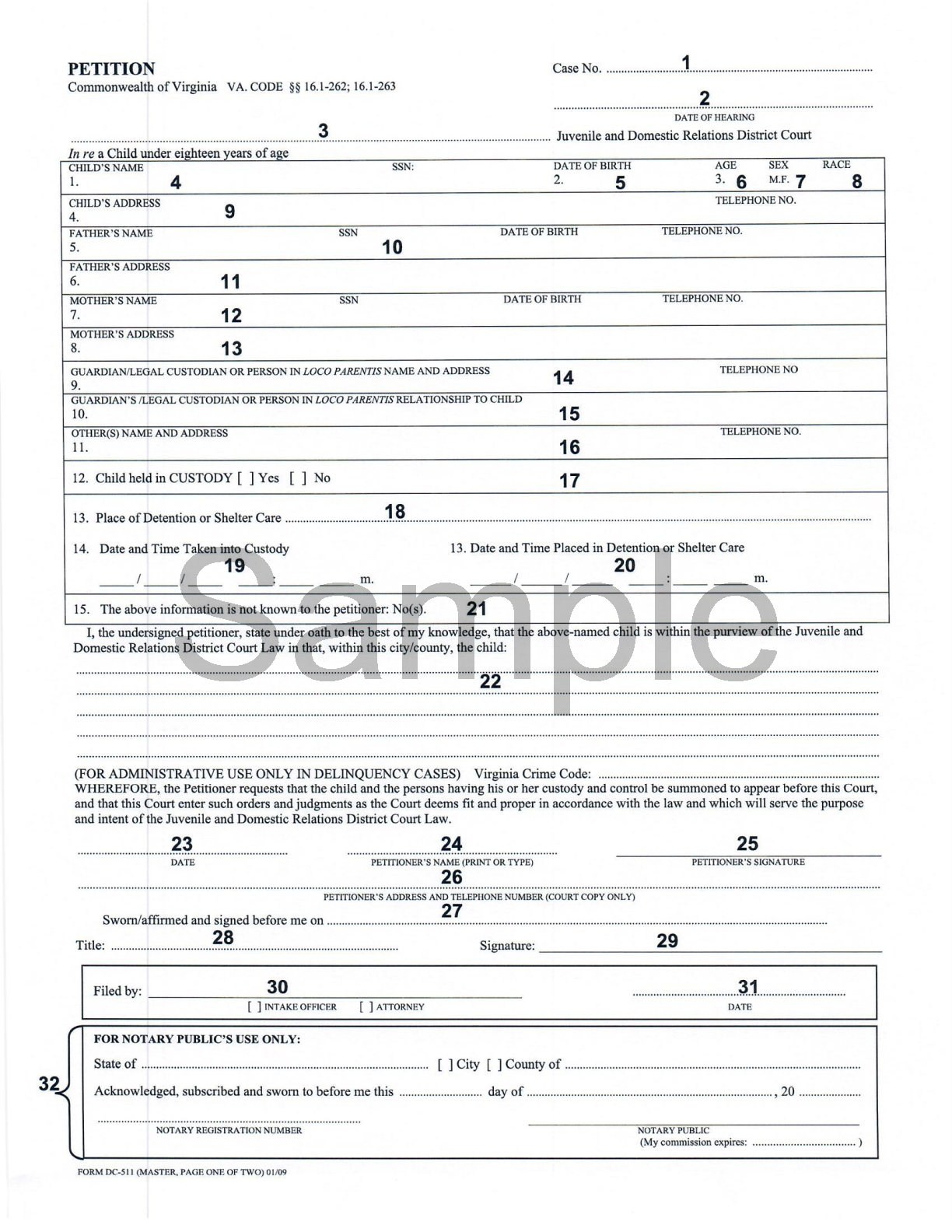
If a child is charged with a criminal offense and detained in the juvenile detention center, the child will come before a judge for a detention hearing. If they are not held in the detention center, they will appear before a judge for advisement.
At the detention hearing, the judge will read the petition and advise the child of their constitutional rights. The judge will also listen to a narrative describing the alleged facts and decide whether there is “probable cause” to support the charge. A judge finds “probable cause” if the child’s alleged actions are a crime, and it is more likely than not that the child committed the crime. The judge will then decide whether the child can be released from the detention center. If the court does not find probable cause, the child must be released from detention. Finally, the judge will provide the trial date and appoint an attorney for the child, if requested.
At the advisement, the judge will read the charge listed in the petition to the child, advise the child of their constitutional rights, and provide the trial date. The child will also be able to request a court appointed attorney during the advisement.
Detention Review: If the court did not release the child from the juvenile detention center at the detention hearing, the child can file a motion for detention review, requesting to be released. The Motion for Detention Review can be found on the Court Forms page of the Court's Website.
Discovery: The child can ask the court to order the prosecutor to provide information about the case prior to the trial so that the child can be prepared. The Discovery Order can be found on the Court Forms page of the Court's Website.
The court will conduct a trial. Based on the evidence, at the end of the trial this court can find the child not guilty and dismiss the charge, or find the child committed the offense and find them delinquent.
Instead of a trial, the prosecutor and child can reach an agreement. The parties will submit their agreement to the judge for approval. The judge can approve or reject the agreement. If the judge rejects the agreement, the case will be transferred to another judge. If the agreement is approved, the judge will refer the case to the Court Services Unit for investigation and preparation of a report reflecting the probation officer's investigation, (“I&R”).
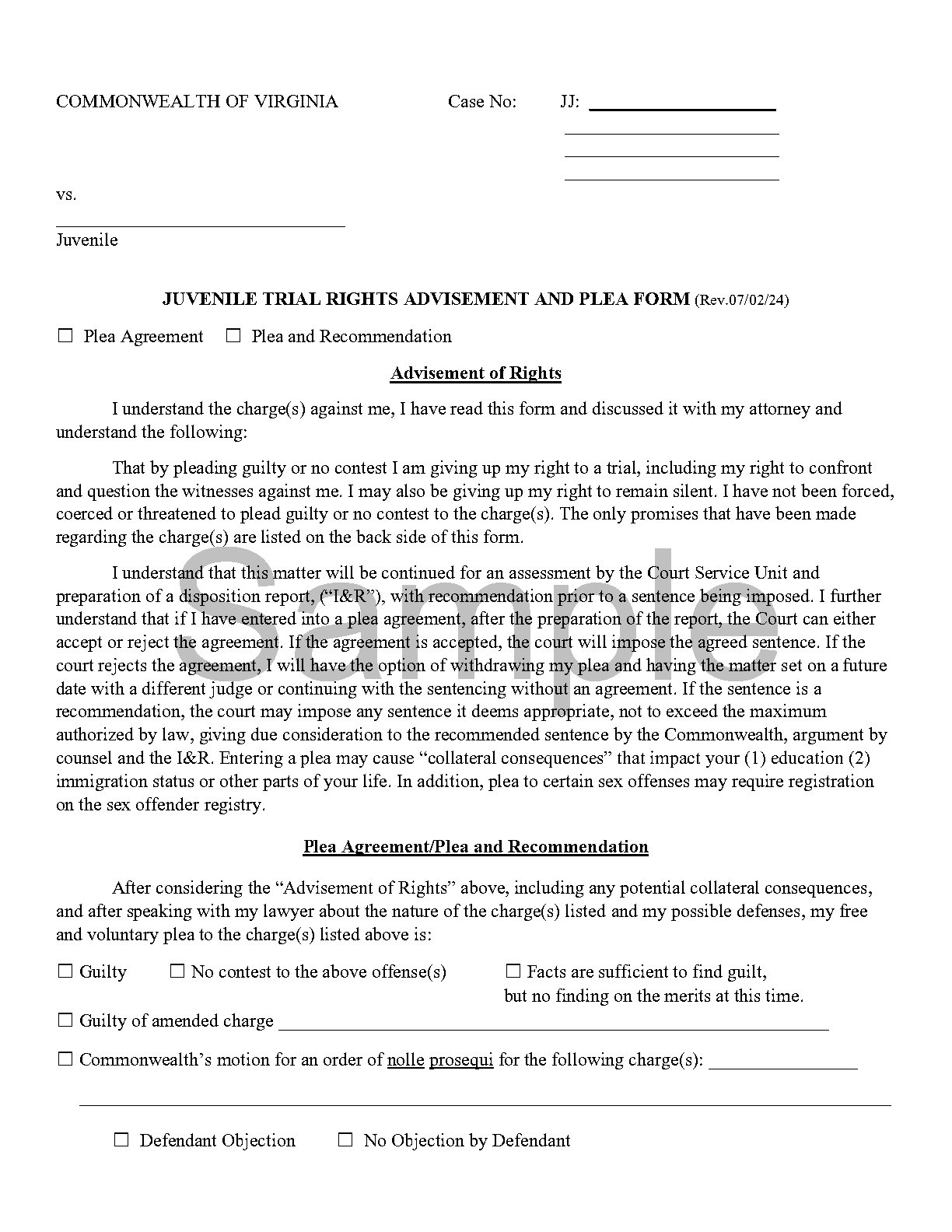
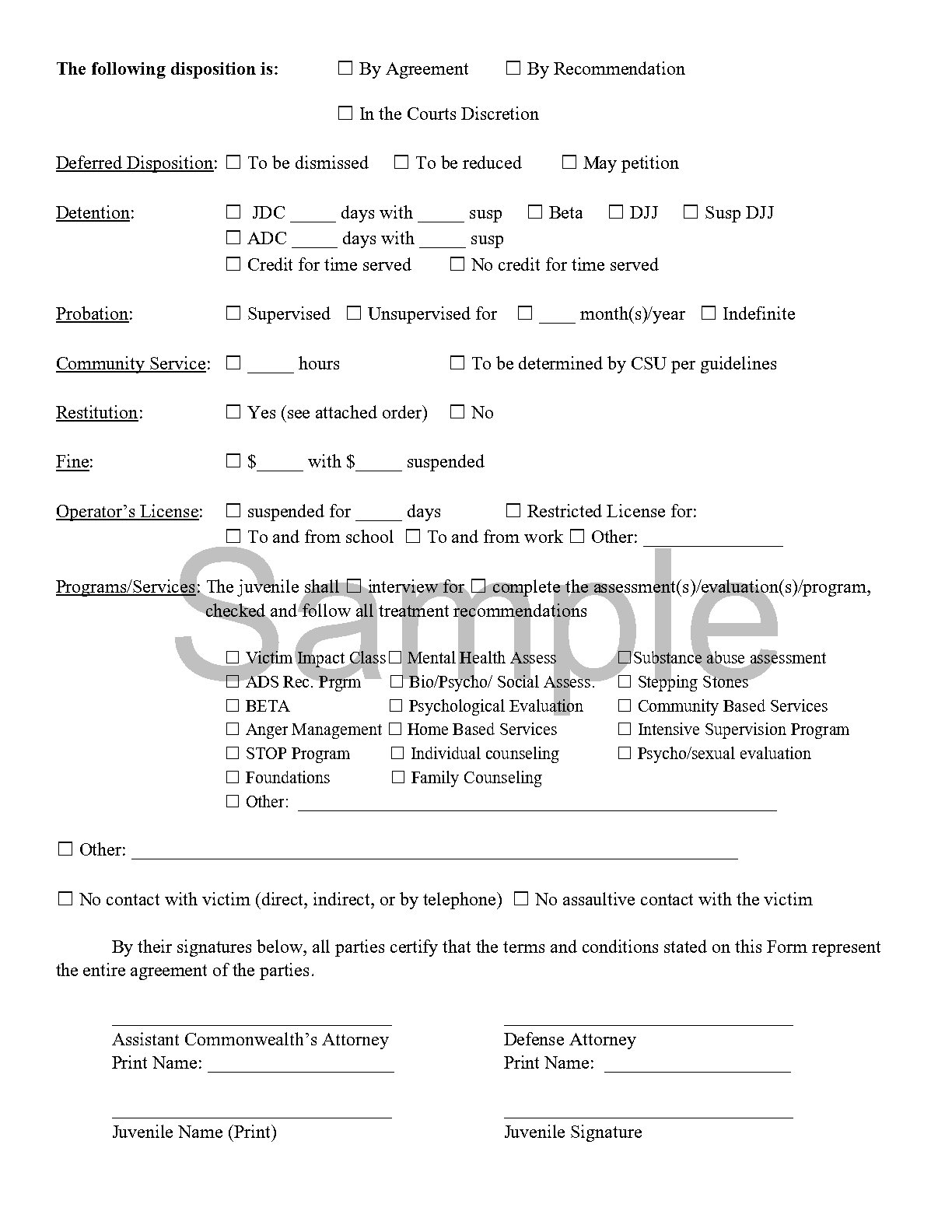
If a child is found delinquent, a separate hearing will be scheduled for “disposition.” At the dispositional hearing the judge will impose punishment and implement rehabilitative services for the child and their family. In preparation for the dispositional hearing, the child and their parent or guardian will be referred to a probation officer through the Court Services Unit, at trial. A probation officer with meet with the family and gather information about the child’s family, education, health and prior court involvement, if any. The probation officer will prepare a report that will be filed in the clerk’s office and kept confidential. Before the dispositional hearing, all parties will receive a copy of the report to review. At the dispositional hearing the judge will impose a punishment and order the services, based upon the report.
As part of a plea agreement, or the judge’s sentence following a trial, the child may be placed on probation and/or be required to complete certain conditions, with the goal of rehabilitating the child. All children on probation, (with or without a probation officer), must be of “general good behavior” for the probationary period. That means, they cannot violate the law while on probation. Some children will also be required to complete programs like anger management, a Victim Impact Class, and individual or family counseling. Children may also be required to submit to a substance use or mental health assessment or evaluation and to follow the recommendations of the evaluator. Finally, a child can be placed in a residential treatment program such as Stepping Stones or BETA, where the child will participate in rehabilitative programs while living in a facility rather than at home.
When a child does not follow conditions imposed by the court, probation or the residential facility, a probation officer or the judge may cause the child to be charged with a separate offense called a “criminal rule to show cause” or a “criminal capias.” If the child violates the rules of a residential placement, the child can be removed from the program.