
Fairfax County, Virginia
Fairfax County Virginia

FFX Global Navigation

  • Residents
    • Animals & Pets
      • Adoptions
      • Animal Control & Regulations
      • Guide to Dogs
      • Lost & Found Pets
      • Shelter Support & Supplies
      • Wildlife
      • More
      Courts & Legal
      • Case Information
      • Circuit Court Docket
      • Jury Duty
      • Land Records
      • Magistrate
      • Public Law Library
      • Self-Help Resources
      • Traffic Court
      • Vital Records
      • More
      Environment & Energy
      • Invasive Species
      • Litter
      • Recycle, Trash & Compost
      • Sustain Fairfax
      • Trees
      • Watersheds
      • More
      Health & Human Services
      • Basic Needs & Assistance
      • Disability Services
      • Diseases & Conditions
      • Domestic & Sexual Violence
      • Health Clinics
      • Mental Health
      • Opioids
      • More
      Individuals & Families
      • Children & Youth
      • Federal Workforce
      • Immigrants
      • Military & Veterans
      • New Residents
      • Older Adults
      • Parents
      • People with Disabilities
      • Volunteers
      • More
      Land Use & Planning
      • Comprehensive Plan
      • County Capital Projects
      • Land Records
      • Parks Planning
      • Planning Projects
      • Research Tools
      • Transportation Projects
      • Urban Centers
      • More
      Library & Education
      • Adult Education
      • Early Childhood Programs
      • Library Branches
      • Library Catalog Search
      • Public Schools
      • More
      Parks & Recreation
      • Arts
      • Athletic Fields
      • Camps
      • Community Centers
      • Parktakes Classes
      • Rec Centers
      • Senior Centers
      • Teen Centers
      • Trails
      • More
      Permits & Licenses
      • Birth & Death Certificates
      • Building
      • Child Care
      • Dogs
      • Health
      • Marriage
      • Park Use
      • Solicitors
      • More
      Property & Housing
      • Affordable Housing
      • Code & Zoning
      • Neighborhoods
      • Real Estate Values
      • Recycling & Trash
      • Tenant Landlord Issues
      • Utilities
      • More
      Public Safety & Emergencies
      • 9-1-1
      • Emergency Preparedness
      • Fire & Rescue
      • Gun Violence Prevention
      • Police
      • Scams
      • Sheriff
      • Storm Center
      • More
      Roads & Commuting
      • Bike & Walk
      • Connector Bus
      • Metrobus & Metrorail
      • Park & Ride
      • Pedestrian Safety
      • Road Maintenance/VDOT
      • Street Parking
      • Toll Roads
      • Transportation Projects
      • More
      Taxes & Fees
      • Car Taxes
      • Park Fees
      • Real Estate Taxes
      • Tax Relief
      • Trash Disposal Fees
      • More
      Voting & Elections
      • Absentee Voting
      • Early Voting
      • Election Results
      • Polling Places
      • Voter Registration
      • More
      Weather & Climate
      • Air Quality
      • Climate Action Dashboard
      • Extreme Heat
      • Floods
      • Ready Fairfax
      • Resilient Fairfax
      • Snow
      • Tornadoes
      • More
  • Business
    • Business & Construction
      • Building Permits
      • Code & Zoning
      • Land Use
      • More
      Business Services
      • Business Emergency Preparedness
      • Business Taxes
      • Consumer Services
      • Employer Transportation Service
      • Green Business Partners Program
      • Home-Based Business
      • Regulation & Licensing
      • Small Business
      • Starting a Business
      • Workplace Issues
      • More
      Doing Business with Fairfax
      • Contracting and Procurement
      • Current Solicitations
      • Permits
      • Vendor Pitch Portal
      • More
  • Government
    • About
      • Codes & Standards
      • Countywide Strategic Plan
      • Facilities & Locations
      • History of Fairfax County
      • Operating Status
      • More
      Board of Supervisors
      • Auditor
      • Board Members
      • Boards, Authorities & Commissions
      • Clerk Services
      • Committees
      • Meetings & Agendas
      • More
      Budget & Finance
      • Bonds
      • Budget
      • Financial Transparency
      • Unclaimed Money
      • More
      Departments & Agencies
      Jobs & Employment
      • Full-Time Openings
      • Internships
      • Seasonal & Non-Merit
      Maps & Data
      • Countywide Data Analytics
      • Demographics
      • Geographic Information Systems
      • Interactive Data Tools
      • More
      One Fairfax
      • Digital Equity
      • Inclusive Engagement
      • Trust Policy
  • Fairfax County Virginia
  • Services
    • Find
      • Animal Services
      • Health Clinics
      • Jobs
      • Library Resources
      • Lost or Found Pet
      • Mental Health Support
      • Park Classes
      • Real Estate Values
      • Recycling & Trash
      • Volunteer Opportunities
      • More
      Pay
      • Business Taxes
      • Car Taxes
      • Dog Licenses
      • Driving & Parking Fines
      • False Alarm Fees
      • Real Estate/Property Taxes
      • SACC Payments
      • More
      Register/Apply
      • Basic Needs & Assistance
      • Building Inspections
      • Car Registration
      • Fairfax Alerts
      • Permits & Licenses
      • Tax Relief
      • Vote
      • More
      Report
      • Animal Control Issues
      • Consumer Complaints
      • Crime
      • Domestic Violence
      • Financial Crimes
      • Neighborhood Complaints
      • Road Issues to VDOT
      • Street Light Outages
      • More
  • Connect
    • Alerts, Emails & Apps
      • Email Subscriptions
      • Fairfax Alerts
      • Mobile App
      • More
      Community Engagement
      • Surveys & Projects
      Contact
      • Directory
      • Hotlines & Emergency Numbers
      • VDOT
      • VFOIA Requests
      • More
      News & Events
      • Daily Headlines
      • Emergency Information Blog
      • Events Calendar
      • NewsCenter
      • NotiCentro (Spanish)
      • Public Meetings Calendar
      • More
      Social Media
      • Comments Policy
      • Directory of Accounts
      • More
      TV, Video & Podcasts
      • Channel 16
      • Podcasts & Radio
      • YouTube
      • More
  • TRANSLATE
    • Language Selection

      To change the language of this website, click the drop-down list and select the desired language. The Fairfax County Web site is being translated through "machine translation" powered by Google Translate. Disclaimer

  1. Home
  2. Public Works and Environmental Services
  3. Sustainability Hub
  4. Waste - Sustainability Sector

Public Works and Environmental Services Alert:

Waste - Sustainability Sector

The Department of Public Works and Environmental Services’ (DPWES) Solid Waste Management Program (SWMP) oversees the collection, recycling, and disposal of solid waste in Fairfax County.

SWMP provides trash and recycling collection to over 45,000 county residences and vacuum leaf collection to about 25,000 residences. They operate and maintain a waste transfer station, two closed municipal solid waste landfills, a regional ashfill, and two recycling and disposal facilities. In addition, SWMP implements the county’s 20-year Solid Waste Management Plan, which is required by the Commonwealth to be reviewed and updated every five years. 

DPWES has three primary waste streams- trash, recycling, and organics. Private collectors collect all three waste streams. DPWES trash generally goes to an energy resource recovery facility. There it is burned to generate energy. Private regional Materials Recovery Facilities and businesses sort and process the recyclables for sale to end markets. Some DPWES facilities have organics collection. A private collector takes the organics to a regional commercial composting facility. 

Waste Reduction Progress

Waste Reduction Progress

Waste Reduction Progress

Waste reduction trend

 Waste reduction trend

Waste reduction trend

Waste diversion progress

Waste diversion progress

Waste diversion progress

Waste diversion trend

Waste diversion trend

Waste diversion trend

SUSTAINABILITY TOPICS

Energy
Design and Construction
Waste
Natural Resources
Sustainability Hub

ON THIS PAGE

Waste Reduction
Waste Diversion
Waste Reduction

WASTE REDUCTION

Waste Reduction strategies, programs and services deal with waste at the source. It starts with using less and/or reusing materials. There are many ways to reduce waste, including sustainable purchasing, repurposing or donating items and buying in bulk. 

Scope

The Waste Reduction area of focus includes county government waste reduced and is measured and reported as a % of total tons of waste generated. 

Sources

Solid waste at Fairfax County government facilities includes trash, recyclables and compost material. 

Target(s)

Reduce the overall waste generated to 25% below 2018 levels by 2030. 

Benefits

By addressing waste at its source, we prevent trash, cut down on greenhouse gas emissions, and protect the environment. 

Progress

In 2023, the county government as a whole reduced the waste it generated by nearly 39% from 2018 levels. 

In 2025, DPWES studied the trash at each of its facilities to find out how much waste was being made and what kinds of materials were in it. The study set a baseline and included recommendations to improve waste reduction and diversion. Future yearly self-checks will help DPWES track how much waste they are keeping out of the incinerator and landfill. 
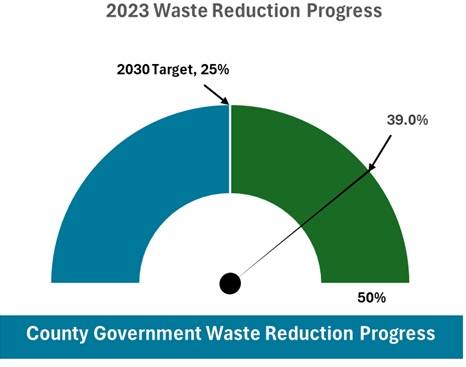
Waste Reduction Progress
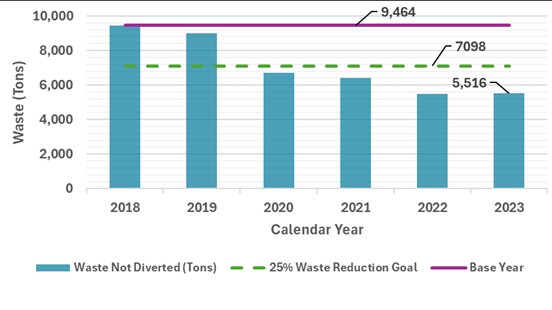
Waste Reduction Progress

 Waste reduction trend

Waste Reduction trend

Click on figures to enlarge.

Highlights

  • Textile Recycling Pilot Program
  • Solid Waste Drop Off Facilities
  • Household Hazardous Waste
  • How to Recycle...
    • Electronics
    • Yard Waste
    • Fats, Oils and Grease (FOG)
    • Glass

DPWES participates in county implemented programs and other efforts aimed at preventing waste at its source. For example, many DPWES facility bathrooms replaced paper towels with hand dryers. Where funded, DPWES facility kitchens have water filters and coolers to support reusable water bottle use. Some DPWES facilities have kitchens stocked with reusable dishes and containers, and some of the kitchens have dishwashers available. 

DPWES also participates in the county’s extensive reuse program to manage excess and surplus property. Surplus property is material that is no longer needed due to factors such as condition, age, cost to repair, changing operational needs, and facility renovations. The Reuse, Sale, and Recycling Program includes items like surplus office supplies, furniture, appliances, equipment and tools, industrial machinery, fleet vehicles, and anything else ‘beyond the bin.’ The pool of surplus county material is first made available via an online shopping portal to staff which helps maximize reuse. Items that are not internally reused are offered for sale via public e-auctions before being routed to recycling contractors.
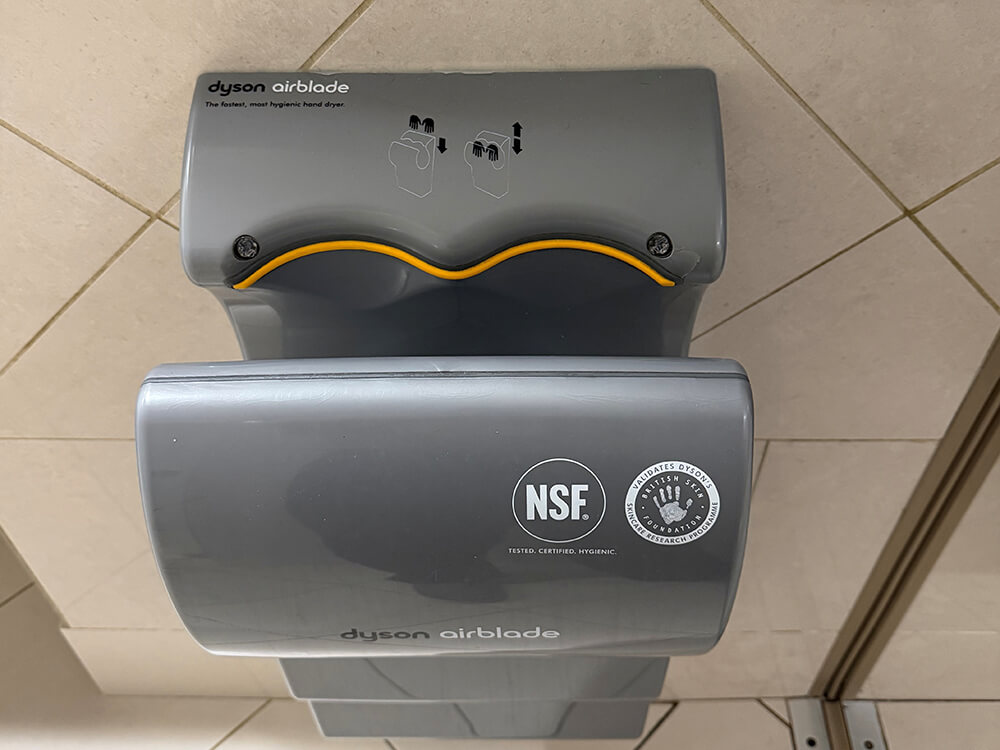
Dryer

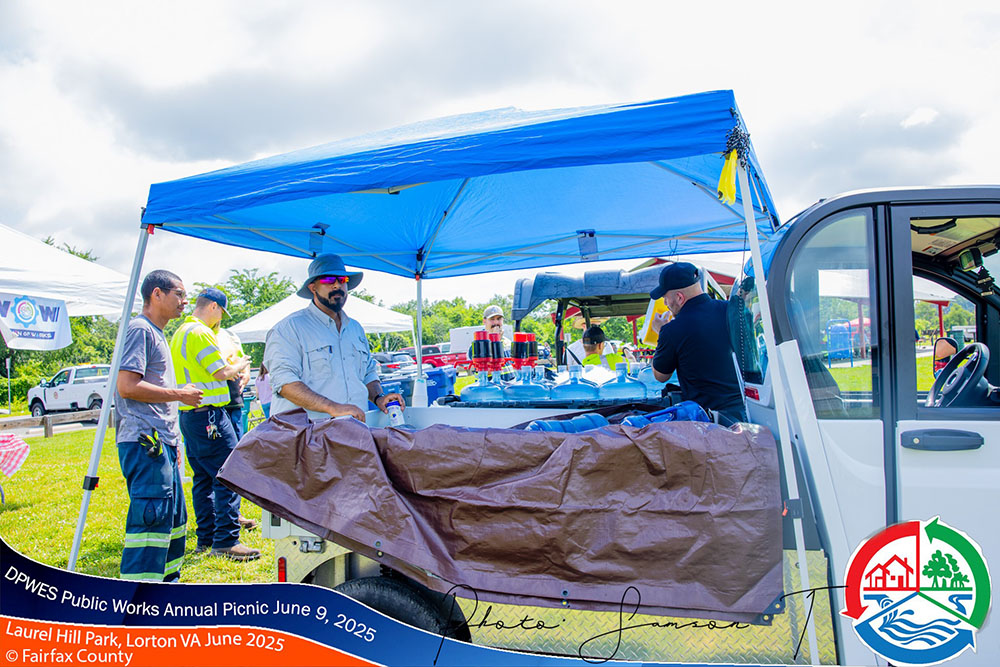
Department-wide events, like the ROADeo and department picnic, focus on reducing single-use plastic. Staff bring their own water bottles to fill at water filling stations or select from drinks in aluminum cans. Food is served on compostable plateware so that all leftover scraps can be collected for composting. Smaller business area or team events use reusable partyware. Staff make an effort to select reusable party decorations, like cloth tablecloths and seasonal items that are saved for future events.
Compost
Waste Diversion

WASTE DIVERSION

Waste Diversion strategies focus on reuse, recycling and composting what you can to reduce trash. 

Scope

The Waste Diversion area of focus includes DPWES waste diverted and is measured and reported as a % of total tons of waste generated. 

Sources

Solid waste management at Fairfax County government facilities include trash, recyclables and compost material. 

Target(s)

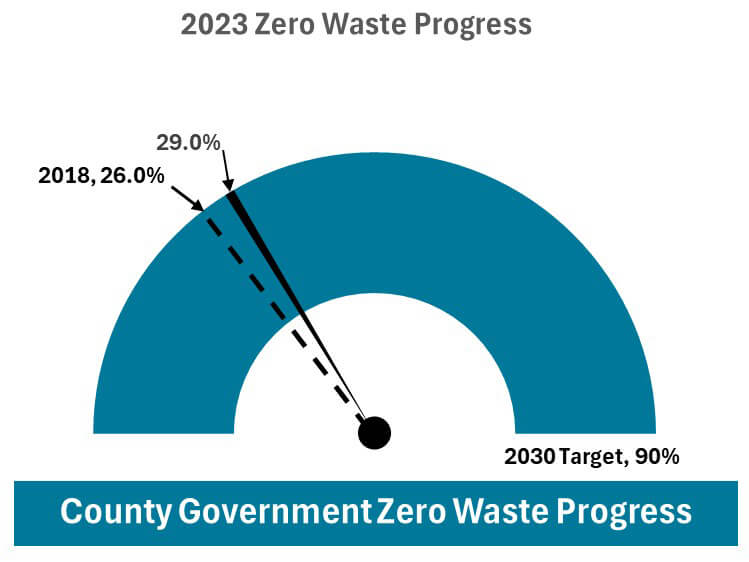
Divert 90% of waste generated from trash disposal by 2030. 

Benefits

By reusing, recycling, and composting, we decrease solid waste disposal and prevent litter. We also reduce carbon emissions and other pollution that are caused by the extraction of raw materials.

Progress
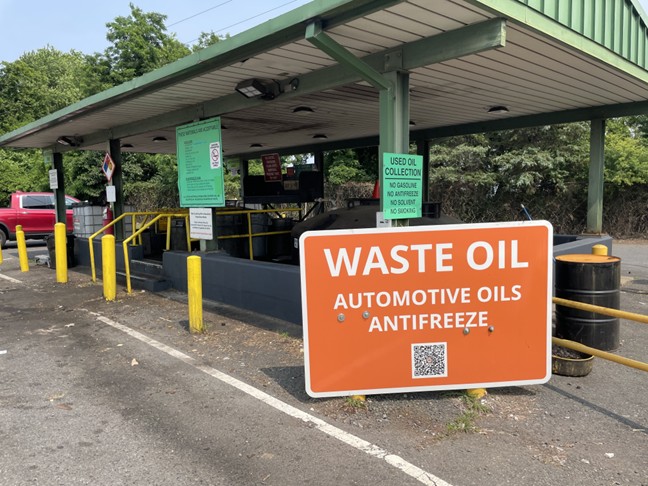
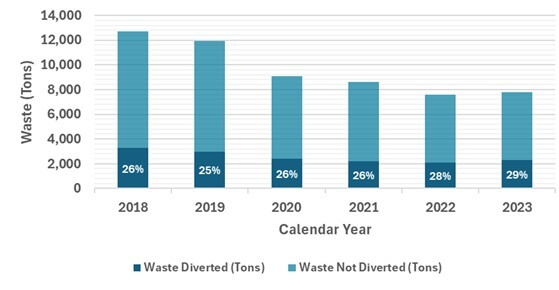
Waste Oil disposalIn 2023, 29% of county government waste was reused, recycled, composted or otherwise diverted from trash disposal.

In 2025, DPWES studied the trash at each of its facilities to find out how much waste was being made and what kinds of materials were in it. The study set a baseline and included recommendations to improve waste reduction and diversion. Future yearly self-checks will help DPWES track how much waste they are keeping out of the incinerator and landfill.

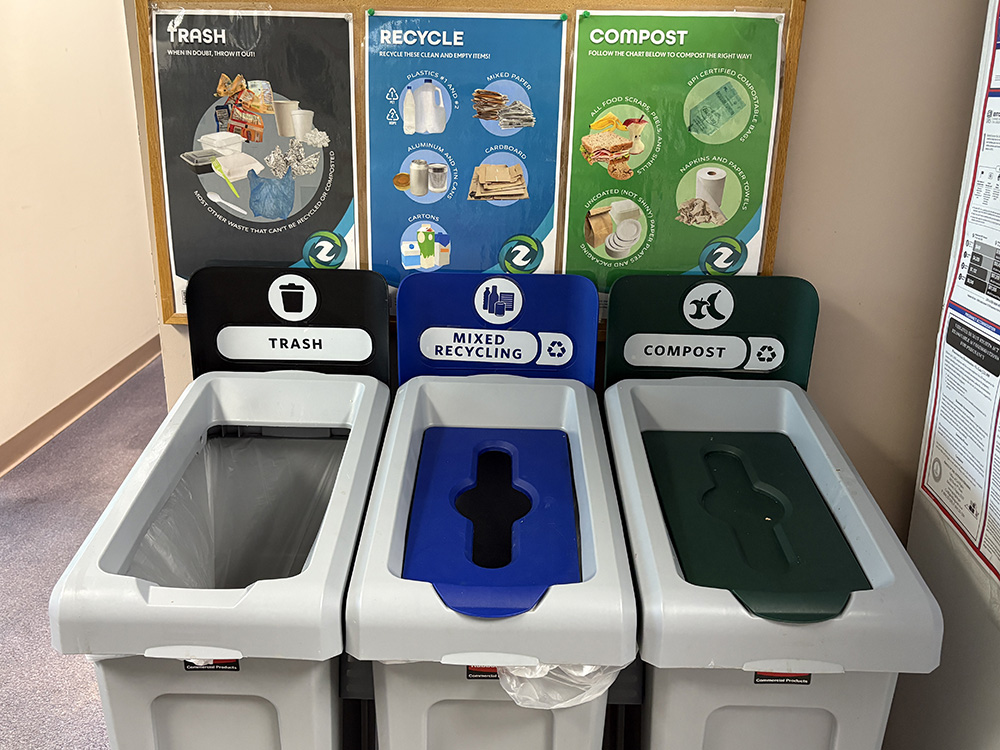
DPWES operations recycle antifreeze and oil used in their vehicles and equipment. Wastewater Management also recycles scrap metal from their operations. Many DPWES offices include three-bin systems to help staff separate organics, recyclables, and trash.
Waste diversion progress

Waste Diversion progress

Waste diversion trend

Waste Diversion trend

Click on figures to enlarge.

Highlights

To facilitate waste diversion at DPWES facilities, staff sort their waste using three-bin recycling stations. The three-bin containers separate recycling, composting, and trash into individual containers. The stations were first piloted in kitchenettes at the Government Center. The pilot was successful and the stations continue to expand to other DPWES locations. 

Composting reduces greenhouse gas emissions, expands the county’s sustainability efforts and supports the county’s Zero Waste Policy. A vendor takes the food scraps collected at DPWES facilities to a commercial composting facility where they are turned into high-quality compost. 
3-bin recycling

Get Involved

  • Use the Waste Wizard to find ways to recycle or trash waste items.
  • Visit Reduce, Reuse, Recycle to learn more about managing waste other than throwing it in the trash.
  • Find ways to manage Yard Waste.
  • Learn more about Litter and find Volunteer clean up events.
  • Stay informed. Subscribe to the Fairfax Recycles e-newsletter.
  • Follow the Tips for Food Waste Reduction.
  • Read Solid Waste Management Planning documents.
  • What is Sustainability? Fairfax County Government and Schools Zero Waste Plan

What is Sustainability?

Sustainability in DPWES is a team-based, cross‑disciplinary effort to protect the environment, support social equity, and strengthen the local economy so communities are healthy, diverse, and resilient.

The Waste focus area—and its supporting programs and practices are in support of County adopted policies and goals, as shown in:

  • 2021 Operational Energy Strategy (OES)
  • 2022 Communitywide Energy and Climate Action Implementation Plan (CECAP)
  • Zero Waste Plan

Energy
Design and Construction
Waste
Natural Resources
Sustainability Hub

Recent Interactions

    Ask Fairfax

    Terms & Conditions
    Live chat available Search our site
    • Translate
    • Awards
    • Site Feedback
    • PRIVACY POLICY & COPYRIGHT
    Main Address

    12000 Government Center Pkwy
    Fairfax, VA 22035

    Phone

    703-324-7329

    TTY 711

    Site Tools
    • Website Accessibility
    • Translate
    • Download Mobile App
    Support
    • ADA Accessibility
    • FOIA Requests
    • Website Administrator
    Additional Resources
    • Fairfax County Public Schools
    • Economic Development Authority
    • Visit Fairfax
    • Council of Governments
    • Commonwealth of Virginia
    • USA.gov
    • Calendar
    • Channel 16
    • Mail
    • Security
    • WIFI
    • Facebook
    • Twitter
    • Instagram
    • YouTube
    • Mobile

    The Official Site of Fairfax County