

Health Department Alert:
Original article posted in Fairfax County's Golden Gazette.
Fairfax County Health Department staff member Mamata shared her antibiotics expertise with older adults in the February 2026 edition of Golden Gazette.
Standing in the middle of my kitchen one morning, my husband asked me a simple question: “What do you actually do at work?”
I had been in my new role for four months and I tried to explain it in everyday terms.
“My role,” I explained, “is to support antibiotic stewardship in skilled nursing facilities. I help people use antibiotics carefully and only when they’re truly needed.”
He laughed and said, “Isn’t that what you’ve been saying for years?”
He was right, and that moment reminded me how closely my work aligns with what I’ve always believed: antibiotics are powerful medicine, and they should be used wisely.
Antibiotics are one of the greatest medical discoveries of our time. They have saved millions of lives and prevented countless complications. But like all medications, antibiotics come with risks. They can’t tell the difference between harmful bacteria and “good” bacteria, like the ones that help us digest food and keep our bodies in balance. When those helpful bacteria are wiped out, tougher germs like Clostridioides difficile (often called C. diff) can take over. C. diff may cause severe diarrhea, dehydration, hospitalization, and even death, and because it survives for a long time in the environment, may spread to others.
So when people ask, “What’s the harm in taking an antibiotic just to be safe?” The answer is sometimes: quite a lot.
Antibiotics are frequently prescribed in long-term care facilities, often inappropriately. Up to 70% of nursing home residents receive one or more courses of antibiotics in a year, and an estimated 40-75% of those prescriptions are unnecessary or inappropriate according to the Centers for Disease Control and Prevention.
Not long ago, I faced the same dilemma many families experience when caring for an older loved one. My mother, who has diabetes and other chronic conditions, came to visit us. Like many older adults abroad, she travels with her medications and worries about the cost and stress of seeking medical care while away from home.
One morning, she told me she thought she might have a urinary tract infection and asked whether she should start an antibiotic she had brought “just in case.” She said she was going to the bathroom more often than usual and felt a little confused. When I checked on her, she was alert, answering normally, and had no fever. While her symptoms were uncomfortable, nothing clearly pointed to an infection.
Testing her urine wasn’t the best option either. Up to half of older adults have bacteria in their urine without having an infection. These bacteria live there harmlessly. Treating someone for bacteria that is not causing an infection doesn’t help them. It can actually increase the risk of developing an antibiotic-resistant infection later.
Instead of rushing to start antibiotics, we chose to monitor her closely. I checked on her throughout the day, encouraged her to drink fluids, and kept a careful eye on her symptoms. By the next day, she felt completely fine. We realized her symptoms were caused by too much caffeine, not by an infection.
This small moment reflects a much bigger issue. When antibiotics are used when they’re not needed, bacteria can learn to resist them. Over time, this makes infections harder to treat. In the United States, more than 2.8 million antibiotic-resistant infections occur each year, and more than 35,000 people die as a result, according to the CDC's 2019 Antibiotic Resistance (AR) Threats Report.
We all play a role in keeping antibiotics effective and keeping our loved ones safe. So, the next time you or a loved one considers taking an antibiotic “just in case,” consider the potential harms and see a healthcare provider who can do a complete evaluation to see whether an antibiotic is needed. Perhaps keeping a close watch (active monitoring) is a better choice. Understanding the “why” behind a healthcare provider’s recommendation can help you feel confident that they are making the safest choice.
There will always be times when antibiotics are necessary but using them only when they’re truly needed helps ensure they will continue to work when we depend on them most.
Resources and References
With extremely cold temperatures and the possibility of snow accumulation in the forecast, now is the time to prepare for Winter Storm Fern. Taking proactive steps today will help keep you and your loved ones warm, healthy, and injury-free when the snow begins to fall.
1. Keep an Emergency Supply Kit in Your Car

When winter storms are forecasted, the safest choice is to avoid driving altogether to reduce your risk. If driving is unavoidable, keep an emergency supply kit in your car so that you have resources to keep you safe. Your car’s emergency supply kit should include:
Keep your gas tank full whenever winter storms are forecast.
2. Dress for the Weather
During extreme cold and winter storms, it's best to stay indoors. If you must go outside, dress appropriately by layering your clothing to preserve body heat. Wear a warm hat, layers, gloves, a warm outer layer, waterproof boots, and a warm face mask. The National Oceanic and Atmospheric Administration (NOAA) recommends wearing three top layers, with one layer being insulating, and at least two bottom layers. Limit your time outdoors as much as you can and return inside as soon as possible.
3. Shovel Smartly to Avoid Illness and Injury
Snow can be heavy and wet, making shoveling a physically strenuous activity, potentially causing heart attack and injury. Avoid shoveling if you have a cardiovascular condition; instead, recruit the help of neighbors or friends to shovel. When shoveling, dress warmly, stay hydrated, and take frequent breaks. Only move small amounts of snow at a time to avoid overexertion. Be mindful of slippery or icy spots; falls are a common injury during winter storms.
4. Have a Power Outage Plan
In the event of a power outage, retain heat by closing your blinds or curtains, and closing off unused rooms. Stuff towels or rags in the cracks under doors to prevent heat from escaping. Dress in warm layers. Only use generators outside, away from windows and doors. Portable generators produce deadly carbon monoxide, which can kill within minutes. Keep a working, battery-powered carbon monoxide detector in your home. Food is safe as long as the fridge stays below 40°F. Use coolers with ice to preserve perishable items if necessary and keep an eye on any temperature-sensitive medications you may have.
5. Plan for Medical Needs, including Durable Medical Equipment (DME)
If you or a family member relies on medical equipment requiring electricity, contact your utility company to register for priority restoration and have a backup power source. Refill prescriptions before severe weather arrives to ensure you don’t run out. Maintain a list of emergency contacts, including your health care provider and local emergency services.
Visit Fairfax County’s Guide to Snow for more information on winter preparedness, snow removal, the county’s operating status, and more.
Additional resources:
From the Virginia Department of Health (VDH)
The Virginia Department of Health is reporting a confirmed case of measles in a resident of the Northern Region. The patient is a preschool-age child (0-4 years) who recently traveled internationally. This case is unrelated to a recent measles case reported on January 11. To protect the patient’s privacy, VDH will not provide any additional information about the patient. Health officials are coordinating an effort to identify people who might have been exposed and appreciate the active collaboration of affected health care facilities.
Listed below are the dates, times, and locations of the potential exposure sites in Virginia:
To date in 2026, Virginia has three reported cases of measles. Any additional exposure sites identified in Virginia will be posted to the VDH Measles website.
What to Do If You Have Been Exposed to Measles
Most people in Virginia have immunity to measles through vaccination, so the risk to the general public is low. However, anyone who was at the potential exposure sites at the times listed should:
General Measles Information
Measles is a highly contagious illness that can spread easily through the air when an infected person breathes, coughs, or sneezes. Measles symptoms usually appear in two stages. In the first stage, most people have a fever of greater than 101 degrees, runny nose, watery red eyes, and a cough. These symptoms usually start seven to 14 days after being exposed. The second stage starts three to five days after symptoms start, when a rash begins to appear on the face and spreads to the rest of the body. People with measles are contagious from four days before the rash appears through four days after the rash appeared.
Measles is preventable through a safe and effective MMR vaccine. Two doses of the vaccine are given to provide lifetime protection. Virginia has high measles vaccination rates, with approximately 95% of kindergarteners fully vaccinated against measles. However, infants who are too young to be vaccinated, and others who are not vaccinated, are at high risk of developing measles if they are exposed. Infants six months through 11 months of age who will be traveling internationally, or to an outbreak setting, should receive one dose of MMR vaccine prior to travel. Talk to a health care provider if you have questions about the MMR vaccine.
For more information about measles, visit www.vdh.virginia.gov/measles/.
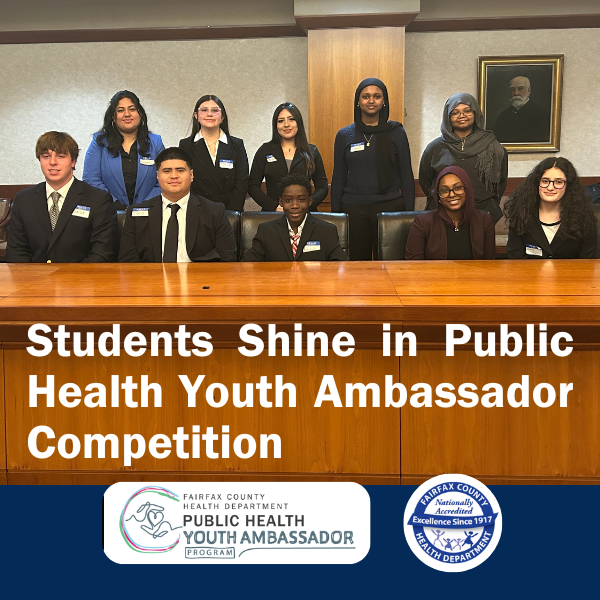
Ten Fairfax County Health Department Youth Ambassadors (PHYA) traveled to Georgetown University to present their community health projects to faculty members of the School of Medicine’s Department of Family Medicine on Monday, January 12. The program marked the final competition for students from Justice and Mount Vernon High Schools who participated in the Youth Ambassador program during the fall semester.
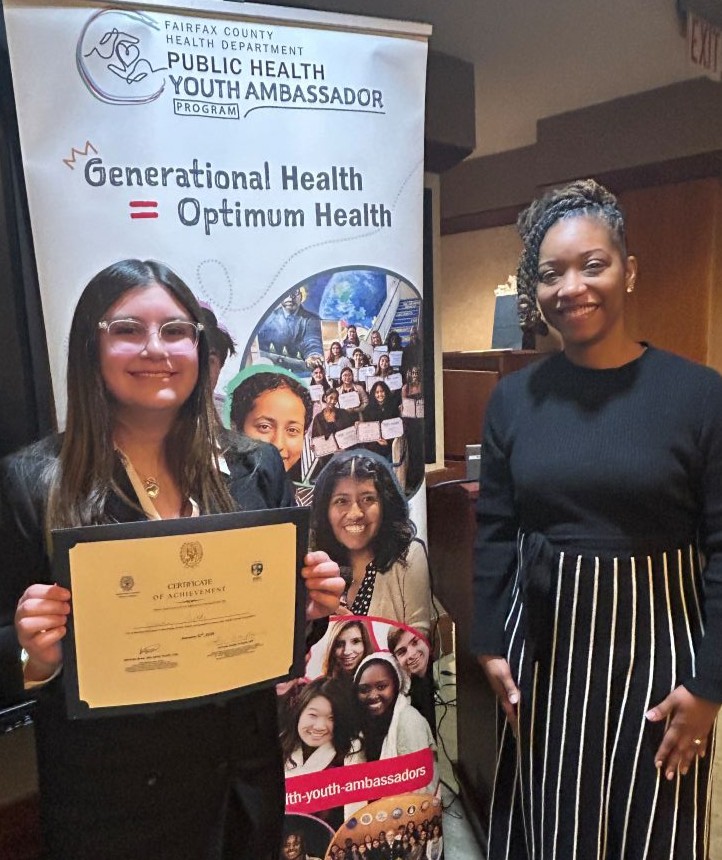
Top Awardees were:
Students in the PHYAP are required to develop a community health project to successfully complete the program. Participants select health issues that are relevant or meaningful to their communities and create actionable plans on how to address the issue. Projects are judged on originality, cultural relevance, and feasibility.
After two rounds of preliminary judging by Fairfax County Health Department staff, 10 students advanced to a final round. Issues that students addressed included: Elder nutrition and physical activity, green spaces for stress management, gun violence, mindfulness strategies, and cancer.
The panel of judges included Georgetown University staff: Dr. Khaseem Davis, MD, Senior Associate Dean of the Department of Family Medicine; Dr. Kim Bullock MD, Associate Professor; Lady Nwadike, Adjunct Faculty Advisor; and Dr. LaTasha Seliby-Perkins, Assistant Professor of Family Medicine and Director of Community-Based Learning at the School of Medicine.
At the conclusion of the competition, students received a tour of the Georgetown University School of Medicine facilities. The event was coordinated by Dr. Seliby-Perkins, who also served as MC and host of the event.
This is the second straight year the Georgetown University School of Medicine has welcomed PHYAP’s students, while playing an equally important role as a partner to the program. Throughout the Fall cohort, medical students from their program served as mentors to the ambassadors, while providing in-class instruction that helped re-enforce some of the curriculum’s medicine-based modules. PHYAP’s goal is that its high school students will develop mentor relationships with the med students that will continue to blossom as they seek careers in medicine, education, and other related professional fields.
For anyone interested in joining the program for the Spring 2026 semester, applications are open now. Learn more about the Public Health Youth Ambassador Program, including how to submit an application.
From the Virginia Department of Health (VDH)
The Virginia Department of Health (VDH) is reporting the state’s second measles case of 2026. The patient is a preschool-age child (0-4 years) in the Northern Region who recently traveled internationally. To protect the patient’s privacy, VDH will not provide any additional information about the patient. Virginia health officials are coordinating an effort to identify people who might have been exposed.
Listed below are the date, times, and location of the potential exposure site in Virginia:
In addition to the above location in Virginia, there is a potential exposure on a train that traveled through several nearby states and Washington, D.C. as listed below:
Additional exposure sites related to this case have been identified in other states.
To date in 2026, Virginia has reported two cases of measles. Any additional exposure sites identified in Virginia will be posted to the VDH Measles website.
What to Do If You Have Been Exposed to Measles
Most people in Virginia have immunity to measles through vaccination, so the risk to the general public is low. However, anyone who was at the potential exposure sites at the times listed should:
General Measles Information
Measles is a highly contagious illness that can spread easily through the air when an infected person breathes, coughs, or sneezes. Measles symptoms usually appear in two stages. In the first stage, most people have a fever of greater than 101 degrees, runny nose, watery red eyes, and a cough. These symptoms usually start seven to 14 days after being exposed. The second stage starts three to five days after symptoms start, when a rash begins to appear on the face and spreads to the rest of the body. People with measles are contagious from four days before the rash appears through four days after the rash appeared.
Measles is preventable through a safe and effective MMR vaccine. Two doses of the vaccine are given to provide lifetime protection. Virginia has high measles vaccination rates, with approximately 95% of kindergarteners fully vaccinated against measles. However, infants who are too young to be vaccinated, and others who are not vaccinated, are at high risk of developing measles if they are exposed. Infants six months through 11 months of age who will be traveling internationally, or to an outbreak setting, should receive one dose of MMR vaccine prior to travel. Talk to your healthcare provider if you have questions about the MMR vaccine.
For more information about measles, visit VDH measles website.
As the new year begins, now is the perfect time to make a plan for a healthier 2026. Healthy habits don’t have to be complicated or expensive. Even small changes can make a big difference.
Here are 6 tips to help you be healthier in 2026:
Get Active:
Try to move more and sit less. Aim for about 150 minutes of exercise each week. Exercise doesn’t have to be long workouts at the gym. Find options that fit into your life, such as taking the stairs or going on brief walking breaks throughout your workday. Find fun ways to be active, like walking, biking, yoga, dancing, or even playing ball outside with your kids. Activities that fit into your life and are enjoyable will be the most sustainable over time.
Eat Well:
Eating a nutritious diet gives your body the energy it needs to function well. It also helps to reduce the risk of chronic diseases, such as heart disease and diabetes. Eat more foods like fruits, vegetables, whole grains, and lean meats. Swap sugary drinks for water and stay hydrated.
Build a strong community:
Strong social connections can reduce the risk of chronic disease and serious illness, and improve the ability to manage stress, healthy eating habits, physical activity, and sleep quality. Engage with your community and those around you. Spend time with friends and family or join a local club. Check in on your elderly neighbors and those you think might be feeling lonely.
Schedule Screenings:
Preventative care, including annual checkups and routine screenings, is one of the best ways to take care of your health. Keeping up with these appointments allows potential health concerns to be identified earlier, when they are often easier to treat. Don’t put off getting care. Visit your doctor and dentist for regular checkups and screenings.
Quit Smoking:
Now is a good time to quit bad habits. Smoking and vaping can have a serious impact on both your physical and mental wellbeing. Quitting can be challenging, but there are resources that can help. Quit Now Virginia is a free service that helps people quit smoking, using tobacco, or vaping. Visit Quit Now Virginia to learn more.
Stay informed:
It’s important to be aware of what is going on in our community. You may want to know if respiratory illness levels are high so you can take the appropriate preventions. You may want to know if a rabid racoon was found in your neighborhood and what you should do if you come in contact with the animal. Or you may want to know about interesting community events. Keep up with all this and more by subscribing to the Public Health in Action (PHIA) monthly e-newsletter. Click to subscribe.
Are you already subscribed to PHIA? Take this short survey and let us know what other type of content you want to see.
Tips from our health department nutritionists
As 2026 approaches, practice some healthy eating habits and get ready to enter the new year on a nutritious note.
1. Plan meals ahead
Just like you might plan dishes for your holiday gatherings, try planning your meals for the week ahead of time. Make a grocery list: start by listing ingredients and quantities for the meals you plan to make and cross off items you already have. Be sure to add beverages and snacks to your list as well. Not only does planning meals ahead make it easier to eat nutritiously, but it also saves time and money by decreasing last-minute cooking stress and reducing food wasted. Learn how to make a meal plan.
2. Make your food exactly how you want it by cooking at home
When you make your meals at home, you can choose the best ingredients and cooking methods. Choosing baking over frying, adding more dry fruits and less sugar, and using more spices and less salt are just a few ways to increase the nutritious value of your home-cooked meals.
3. Get the whole family involved
During holiday celebrations, family members love to get involved in the meal planning and prepping. Make meals a group activity year-round. Children who help plan and prepare meals are more likely to try new foods and prioritizing family mealtime improves healthy eating behaviors.
4. Use online resources
It can feel hard to meet your nutrition goals and keep meals flavorful and fun. Meals should include five food groups: fruits, vegetables, grains, protein, and dairy or fortified soy products. MyPlate can you help you achieve this by providing options for each food group and creative ways to use them. Visit MyPlate to find nutrition information. recipes and more.
5. Practice mindfulness
With so many food options, mealtime can feel overwhelming. By taking time to explore the color, smell, taste, texture and temperature of each bite and paying attention to how your body feels, you can make mealtime more enjoyable and prevent yourself from eating too much or too little. Follow this script to practice mindful eating.
6. Keep mealtime a distraction-free zone
Mealtime is a great opportunity to relax, reset, and refuel your body. Take full advantage of this by making mealtime a screen-free, stress-free zone. Whether you use the time to catch up with loved ones around the dinner table or practice mindful eating on your own, remember the purpose of mealtime: to nourish your body and soul.
7. Love your safe leftovers
When cooking large holiday meals or doing weekly meal-planning, you will likely find yourself with leftovers. Remember to refrigerate promptly and follow food safety every step of the way. Learn more about the four steps to food safety: clean, separate. cook, chill.
8. Reduce food waste and give back to the planet
Food waste can be harmful to both the environment and your wallet. You can reduce your food waste by selecting fruits and vegetables wisely, storing produce properly, preparing fruits and vegetables cleverly, and composting the scraps.
9. Enjoy and repeat!
Practice these healthy eating habits all year-round.
Nutrition Resources
Woman, Infants, and Children (WIC) Program
MyPlate
EatRight
SNAP-Ed Connection
American Heart Association
Virginia Cooperative Extension
 Are you passionate about creating healthier communities and driving meaningful change? The Partnership for a Healthier Fairfax (PFHF) is seeking its next Co-Chair—and it could be you (or someone you know)!
Established in 2010, the PFHF is a dynamic coalition of leaders and changemakers from government, business, nonprofits, healthcare, academia, community organizations and residents, working together to improve health and well-being for all in the Fairfax community. The PFHF oversees a multi-year Community Health Improvement Plan (CHIP), a roadmap to address the most pressing health challenges in the Fairfax community.
As PFHF Co-Chair, you’ll have the unique opportunity to:
✔ Be a Change Leader: Guide strategy and inspire action to improve health outcomes for all in the Fairfax community.
✔ Collaborate with Diverse Partners: Work closely with a dedicated network of multi-sector community partners and residents.
✔ Shape the Future of Public Health: Play a significant role in advancing health equity and addressing root causes of health disparities.
This is an unpaid position. However, the impact you’ll make as a leader in the Fairfax community is priceless.
If you are a dedicated, motivated leader with a commitment to community health, we invite you to step forward and help shape the future of the Partnership for a Healthier Fairfax. Together, we’ll create a healthier, more equitable tomorrow for the Fairfax community.
Are you interested in this position? Read the full role description to learn more about what the position entails.
Email us at LiveHealthy@fairfaxcounty.gov to learn more or submit an application by Friday, February 27, 2026, at: Partnership Co-Chair Application.
 Applications are now open for the Spring 2026 cohort of the Public Health Youth Ambassador Program (PHYAP), offering high school age students across Fairfax County a flexible and meaningful way to build real-world skills and connections in health care and community health.
The program’s Evening and Weekend option, held at the Fairfax County Government Center, is open to all 10th–12th grade students who live in Fairfax County—whether they attend public, private, faith-based, or home schools. This flexible schedule is ideal for teens with full daytime calendars, extracurricular activities, or part-time jobs, and gives families multiple ways to make the program work. Evening sessions run Monday through Thursday, and a weekend class meets each Saturday morning. Students can choose between two hands-on tracks: the High School & Young Adult Opioid Reduction Training Program or the Young Adult Mental Health Worker Program. Both options help students develop practical skills they can use right away in their schools and communities while strengthening college and career readiness.
PHYAP also continues to offer daytime programs through its long-standing partnerships with John R. Lewis High School, Justice High School, and Mount Vernon High School. At these schools, eligible students participate in Community Health Worker training during their advisory periods three days a week, gaining experience through lessons and hands-on activities led by trained facilitators.
Students in both programs also earn certifications from the Morehouse School of Medicine and George Mason University’s School of Public Health. These nationally recognized institutions guide the curriculum, helping to ensure that students receive high-quality training grounded in real public health needs.
Becoming a Public Health Youth Ambassador gives students far more than classroom knowledge. PHYAP offers a chance to build confidence, develop leadership skills, and explore real career pathways in a growing field. Teens walk away with nationally recognized certifications, hands-on experience that stands out on college and scholarship applications, and a deeper understanding of issues that directly affect their friends, families, and communities.
Applications for the Spring 2026 cohort are now open, and space is limited. Interested students are encouraged to apply early to increase the chances of being selected. The application deadline is Thursday, Jan. 15, 2026.
Follow the link to learn more about the Public Health Youth Ambassador Program, including how to submit an application.

The Fairfax County Health Department has confirmed rabies in a cat located in Belle Haven/Alexandria at approximately 13th and H Street. If you, someone you know, or a pet was touched, bitten, or scratched by the cat between Nov. 20 and Nov. 28, 2025, you are urged to call the Fairfax County Health Department Rabies Program at 703-246-2433, TTY 711.
The cat attacked multiple people and pets on the evening of Nov. 28 near the intersection of 13th and H Streets in the Belle Haven neighborhood of Alexandria. During the time it was sick, the cat may have had contact with other people or pets. The cat is described as a domestic shorthair male with orange/white coloring and a tipped ear. The cat has been captured, and the purpose of this notice is for notification and to identify any additional potential exposures.
Rabies is a serious disease caused by a virus that can infect wildlife (e.g. foxes, raccoons, skunks and bats), as well as domestic animals, such as dogs and cats. The rabies virus is found in the saliva, brain and spinal tissue of an infected animal. People may get infected with rabies when they are bitten or scratched by an animal that is sick with the disease. The virus can also be passed along when an infected animal’s saliva or central nervous tissue enters an open wound, mouth, nose or eyes of another mammal. To date, 32 animals have been diagnosed with rabies in Fairfax County in 2025.
Animals with rabies may act normally during the early stages of the disease, making it difficult to know if the animal is infected. As the disease progresses, animals often show changes in behavior. For example, wild animals may act very docile, and domestic animals may become aggressive. Rabid animals may stagger, drool, or become paralyzed.
Here are some important steps to protect yourself and your pets from rabies:
If bitten or scratched by an animal that might have rabies, wash the wound thoroughly with soap and water and seek medical attention right away. When vaccinations are provided in time and appropriately, rabies treatment is 100% effective in preventing the disease. If not treated, rabies is 100% fatal.
More information about rabies can be found on the rabies webpage.
