

This is a Virginia Department of Health (VDH) news release. To access this information in other languages, visit the VDH Fish Consumption Advisory page.
Effective immediately, the Virginia Department of Health (VDH) is issuing a fish consumption advisory for the Occoquan watershed due to elevated perfluorooctane sulfonate (PFOS) levels in specific fish species. The affected species include largemouth bass and bluegill sunfish.
This advisory includes the Occoquan River, the Occoquan Reservoir, Broad Run, Bull Run, Cub Run and South Run.
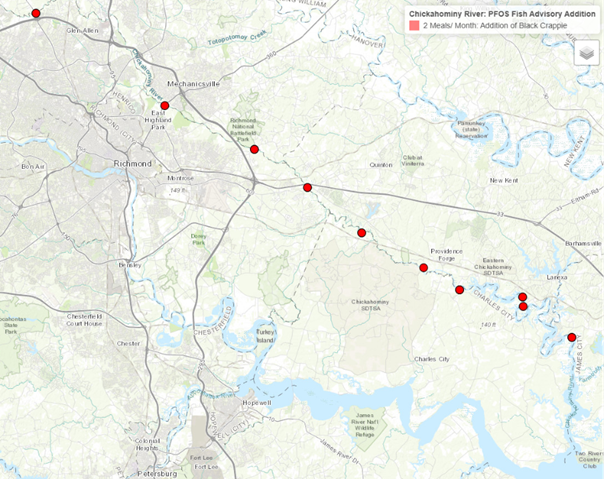
Fish tissue sample results collected from March 2024 through September 2025 show PFOS levels in largemouth bass and bluegill sunfish exceed the amount considered safe for long-term human consumption.
VDH advises not eating largemouth bass from the Occoquan River and Occoquan Reservoir. The advisory covers the tidal portion below the Occoquan River from the Occoquan Reservoir dam downstream to Occoquan Bay including Belmont Bay and the backwaters of the Occoquan Reservoir on the Bull Run arm near Hemlock Overlook Regional Park and just upstream of Davis Ford Road on the Occoquan River arm down to the water supply dam of the Fairfax County Water Authority. Localities impacted are Fairfax and Prince William.
VDH advises eating no more than two fish meals per month of largemouth bass from Broad Run from the outlet of Lake Manassas downstream to the confluence with Cedar Run; Bull Run from the I-66 bridge downstream to the backwaters of the Occoquan Reservoir on the Bull Run arm near Hemlock Overlook Regional Park; and South Run from the outlet of Lake Brittle downstream to the confluence with Lake Manassas (Broad Run). Localities impacted are Fairfax, Fauquier, Manassas, and Prince William. A meal is defined as eight ounces of fish.
VDH advises eating no more than two fish meals per month of bluegill sunfish from the Occoquan Reservoir from the backwaters of the Occoquan Reservoir on the Bull Run arm near Hemlock Overlook Regional Park and just upstream of Davis Ford Road on the Occoquan River arm down to the water supply dam of the Fairfax County Water Authority; Broad Run from the outlet of Lake Manassas downstream to the confluence with Cedar Run; Bull Run from the I-66 bridge downstream to the backwaters of the Occoquan Reservoir on the Bull Run arm near Hemlock Overlook Regional Park; Cub Run from the confluence with Elklick Run downstream to the confluence with Bull Run; and South Run from the outlet of Lake Brittle downstream to the confluence with Lake Manassas (Broad Run). Localities impacted are Fairfax, Fauquier, Manassas, and Prince William.

The health effects of PFOS exposure can include increased cholesterol or changes in liver enzymes. It can also lower antibody response to some vaccines. It can cause pregnancy-induced hypertension and preeclampsia, and a decrease in birth weight.
Fish consumption advisories alert people to contaminants present in affected fish species. They do not prohibit people from eating fish. Children and women who are pregnant or who may become pregnant have an increased health risk. Nursing mothers and young children should not eat fish from this advisory area.
Currently, this advisory area poses no health risk for recreational activities. Swimming, water skiing, and boating can continue in the advisory area.
Cleaning or cooking fish does not remove or reduce PFOS. To reduce potential harmful effects, VDH recommends the following precautions:
- Eat smaller, younger fish (within the legal limits). Younger fish are less likely to contain harmful levels of contaminants.
- Eat fewer or smaller servings of fish.
- Try to eat different species of fish from a variety of sources (i.e., different creeks, rivers and streams).
For more information, visit the VDH Fish Consumption Advisory page.