

As climate-related hazards become more common and severe, our communities are facing longer and more intense pollen seasons, more pollution in the air, and wildfire smoke from faraway places. These changes can worsen air quality and affect our health.
The American Lung Association recently released its 27th annual “State of the Air” report based on air quality data across the country. Fairfax County received a “D” grade for air pollution, ranking among the worst in the Commonwealth of Virginia.
As we observe National Air Quality Awareness Week from May 4-8, 2026, take a few minutes to learn how to protect your health and the health of your loved ones from poor air quality.
How Does Air Quality Affect Health?
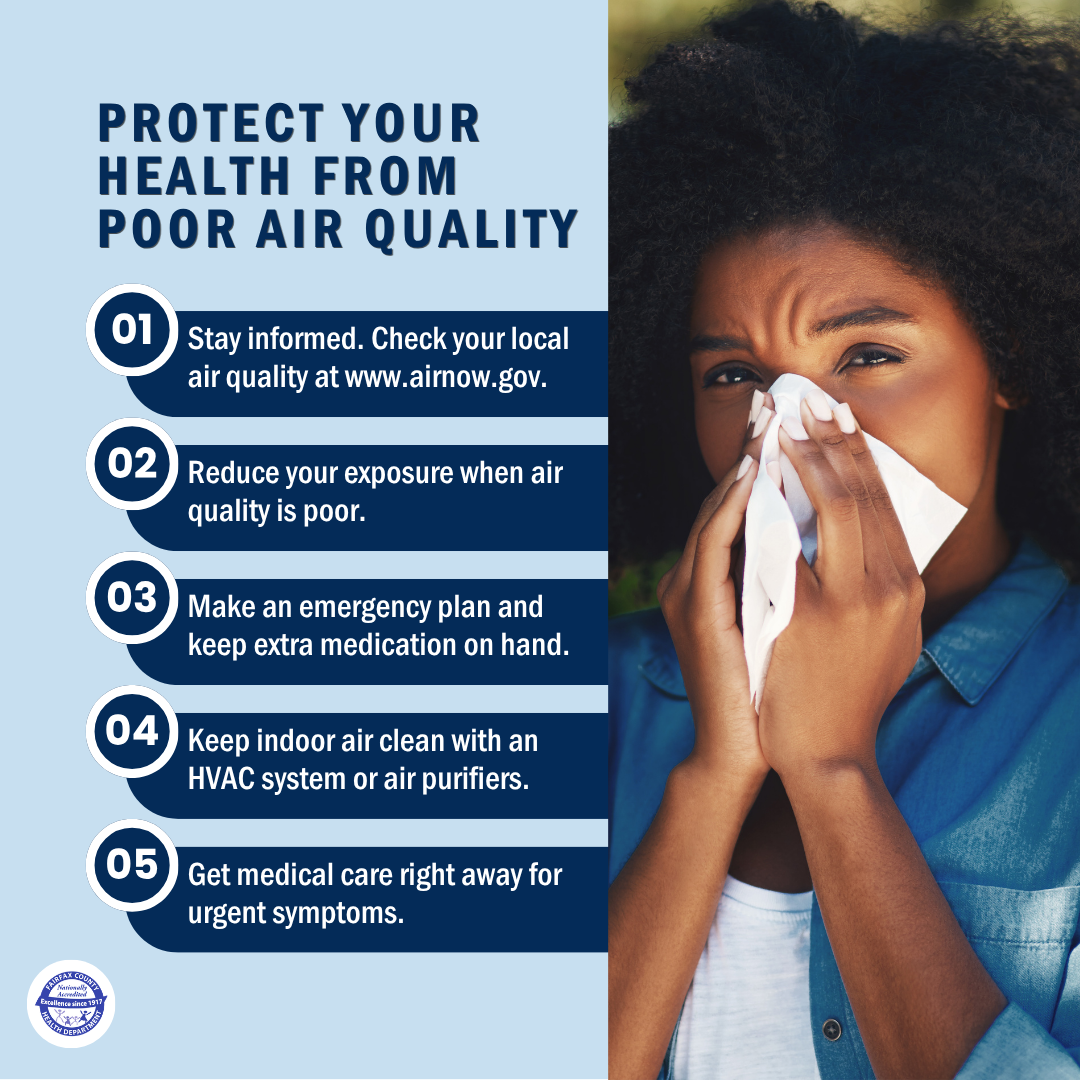
Poor air quality can cause:
- More severe or frequent allergy symptoms, such as red or itchy eyes, congestion, scratchy throat, sneezing, headaches, and fatigue
- Worse or more frequent asthma attacks
- Worsening of respiratory illness, heart disease, kidney disease, and other conditions
- Higher risk of new health issues, like heart attacks, asthma, allergies, and raised blood pressure
Who Is at Risk?
Everyone can be affected by poor air quality, but some groups are more at risk than others.
- Older adults, children, and people who are pregnant, because they can be more affected by air pollution, pollen, wildfire smoke, and other environmental conditions.
- People with medical conditions, such as heart disease, respiratory disease, or asthma, because poor air quality can worsen health conditions and increase strain on the body.
- People who work or exercise outside, such as construction workers, landscapers, emergency responders, and student athletes, because they often perform strenuous activity while outdoors.
- People of color, due to higher rates of asthma, chronic obstructive pulmonary disease (COPD), and heart disease, and higher chance of living in areas with heavy pollution.
- Socially or economically disadvantaged communities, because they are more likely to lack access to quality housing, transportation, and affordable healthcare, and are often located in areas with more pollution.
- People experiencing homelessness, due to amount of time spent outside and lower access to affordable healthcare.
How Can You Protect Your Health?
Protect your health from poor air quality by taking the following actions:
1. Stay informed:
- Check your local air quality at www.AirNow.gov and learn what the different colors mean.
- Keep an eye on local pollen forecasts using a weather app or trusted news source.
- Sign up for emergency alerts with Fairfax Alerts.
2. Reduce your exposure when air quality is poor:
- Stay inside as much as possible and keep windows and doors closed.
- When outside, choose shorter or less intense activities and take more breaks.
- When you get home, wash your hands, take a shower, and change your clothes to remove pollen and other substances from your hair, skin, and clothing.
- When driving, use your car’s air recirculation mode to keep pollution and allergens outside.
3. Make an emergency plan:
- Keep a month’s supply of important medicines, especially if you have asthma, allergies, or a lung disease such as COPD.
- Make sure prescribed breathing aids, such as inhalers, oxygen, and CPAP/BiPAP, are accessible and working correctly.
- Keep an updated list of medications, dosages, allergies, and medical conditions for each member of your household.
- Learn more emergency preparedness tips at fairfaxcounty.gov/health/emergency.
4. Protect your home to keep indoor air clean:
- If your home has an HVAC system, use high-efficiency filters and change them regularly.
- If you don’t have an HVAC system, consider portable air purifiers or box fans to help filter and keep air circulating.
- Use caulk to seal cracks around windows and doors to limit pollution from getting in.
5. Seek medical care:
- Talk to your doctor about medications and treatment options for your health conditions so you can be prepared year-round.
- Get medical care right away for urgent symptoms such as shortness of breath, chest tightness, or heart palpitations.
Take proactive steps to safeguard your health and the well-being of your loved ones by staying informed, reducing exposure, and preparing for emergencies.
Learn more and stay updated using the resources below.