

Juvenile and Domestic Relations District Court - Court Services Unit Alert:
Adults charged with a crime will receive a warrant or summons from the police.
If charged with a misdemeanor, the accused will receive a summons or warrant.
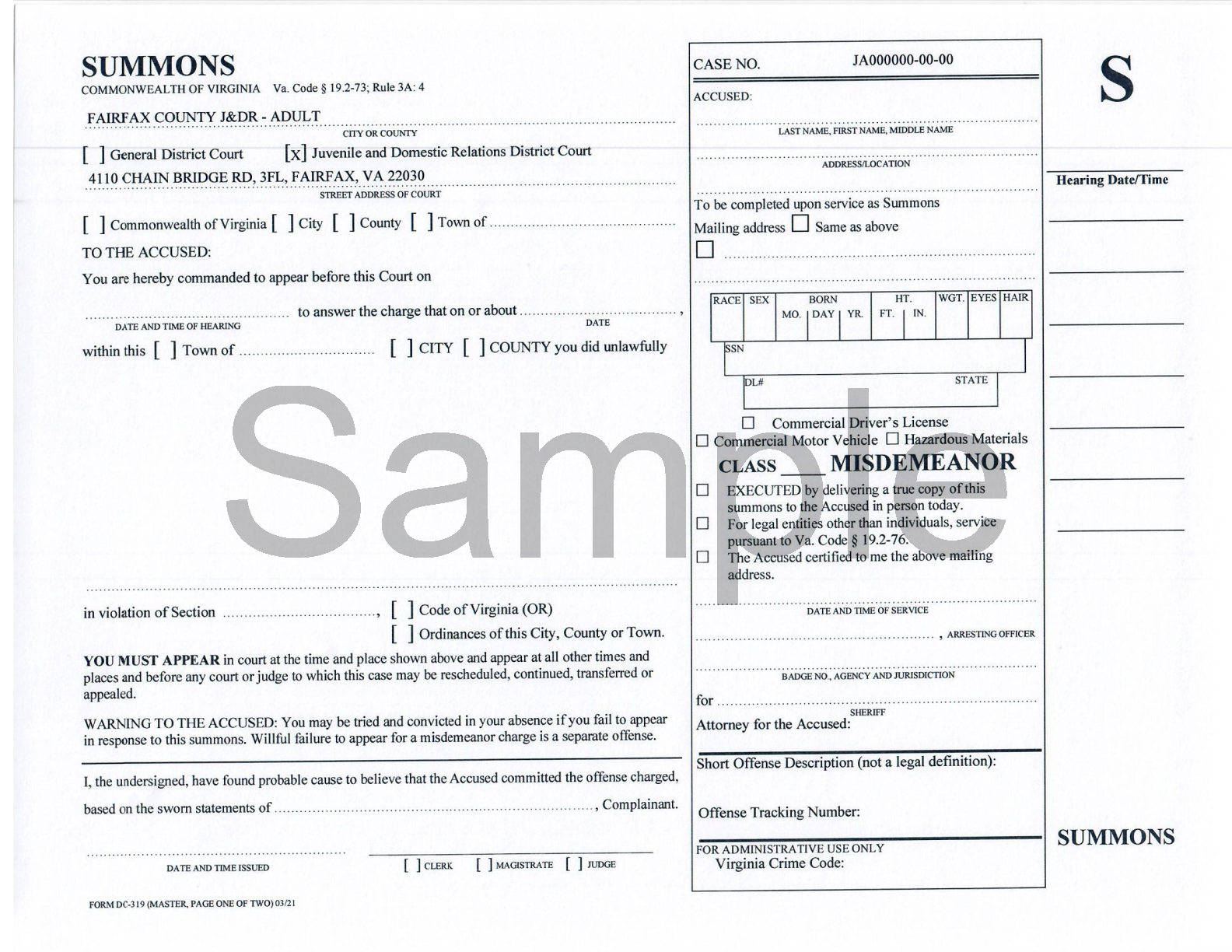
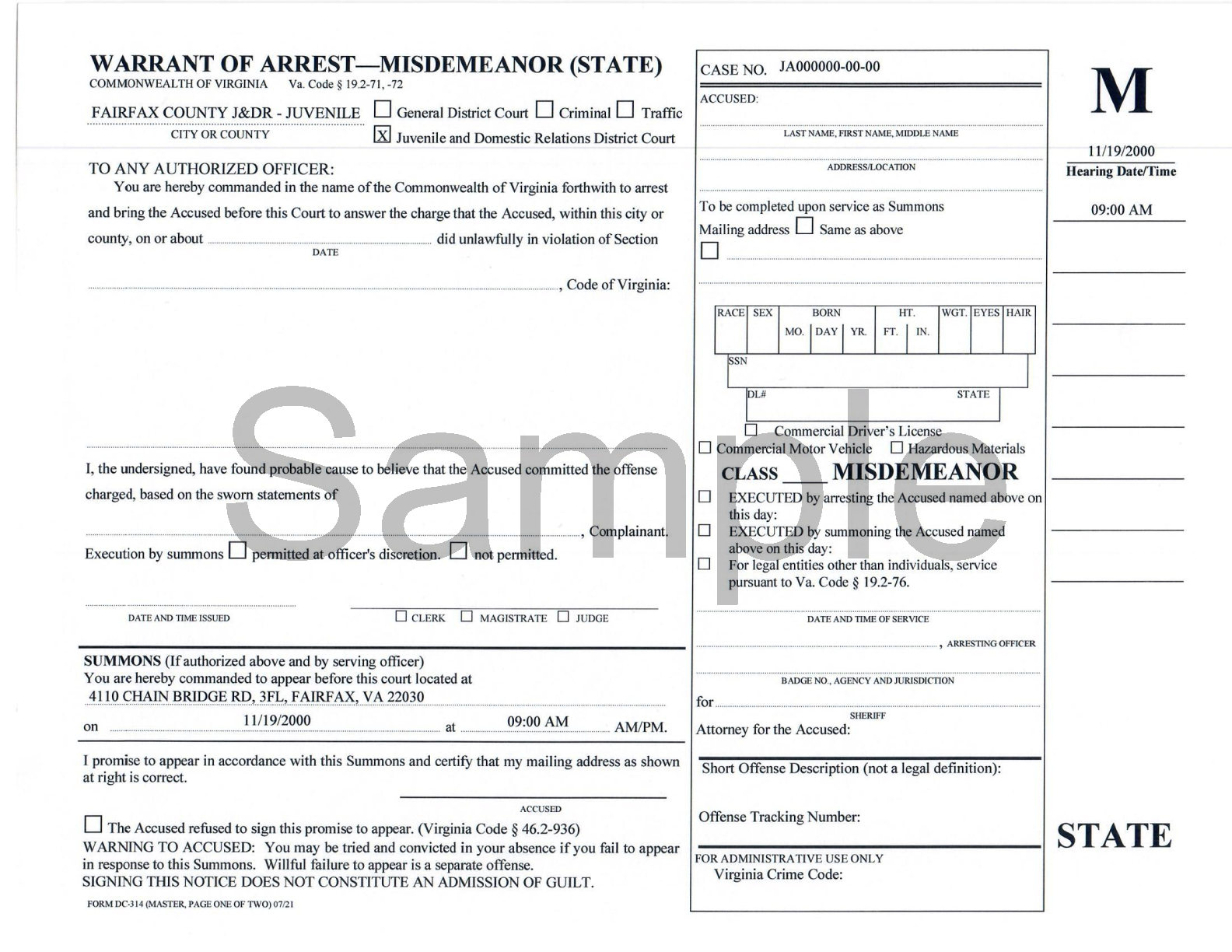
If charged with a felony, the accused will receive a warrant only.
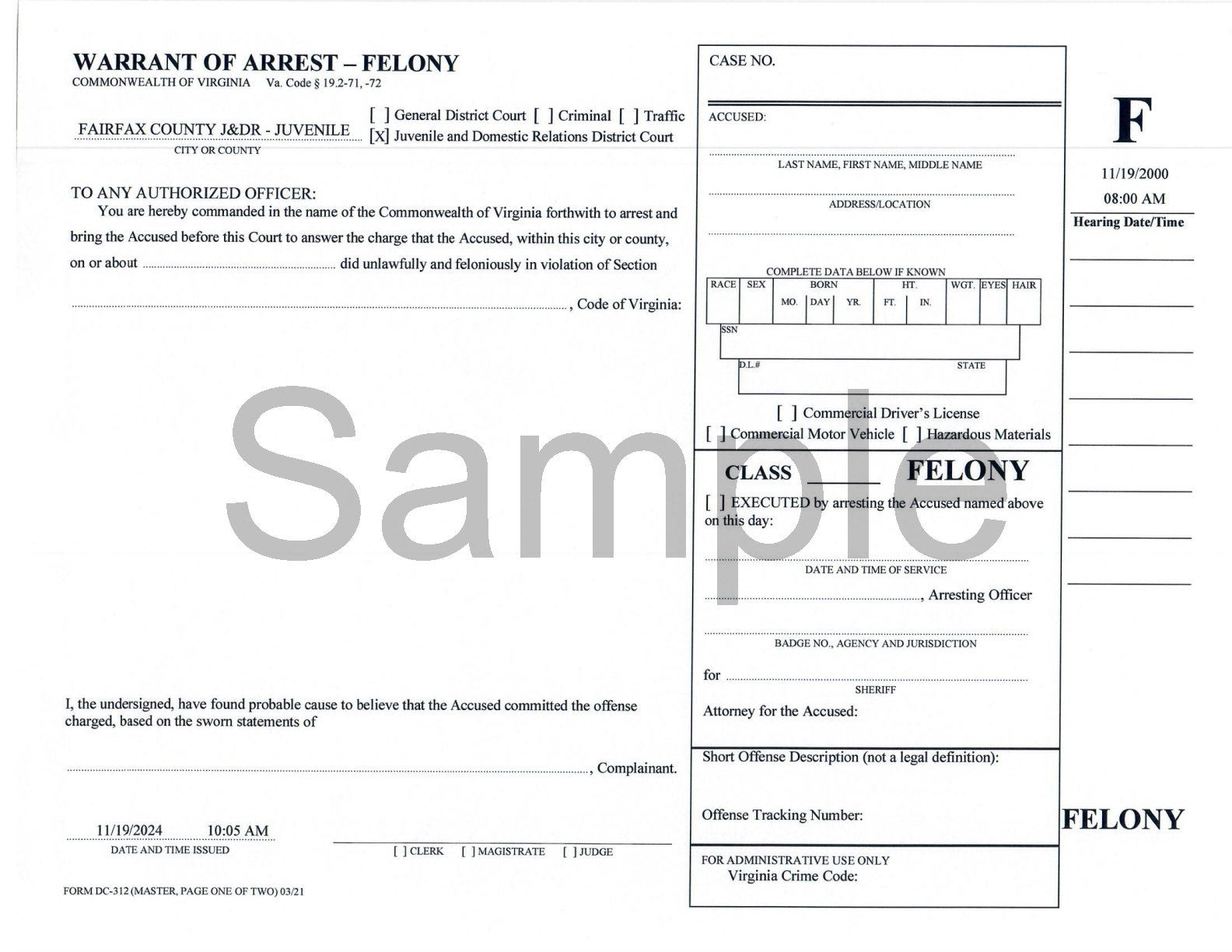
If arrested and held in jail, the accused will come before a judge for arraignment. If arrested and released from the jail, the accused will appear before a judge for advisement.
At the arraignment, the accused will appear before a judge by video from the jail. The judge will read the charges, advise the accused of their constitutional rights, provide the preliminary hearing or trial date, and decide whether the accused can be released from jail. The accused will also be able to request a court appointed attorney during the arraignment.
At the advisement, the accused will appear before the judge in person. The judge will read the charges, advise the accused of their constitutional rights, and provide the preliminary hearing or trial date. The accused will also be able to request a court appointed attorney during the advisement.
Bond: If not released from jail at the arraignment, the accused can file a bond motion requesting to be released. If the juvenile court denies the bond motion, the accused can immediately appeal the decision to the circuit court, where a new judge will consider the bond motion. The bond motion can be found on the Court Forms page of the Court's Website.
Discovery: the accused can ask the court to order the Commonwealth to provide information about the case prior to the trial or preliminary hearing so that the accused can be prepared. There is one order for misdemeanor charges and one order for felony charges. These orders can be found on the Court Forms page. of the Court's Website.
If the accused is charged with a misdemeanor, the court will conduct a trial and decide whether the accused is guilty or not guilty. The decision of the judge and sentence will be recorded on the warrant/summons. If the judge sentences the defendant to serve a jail sentence, they will be taken to jail on the trial date, after the judge announces the sentence.
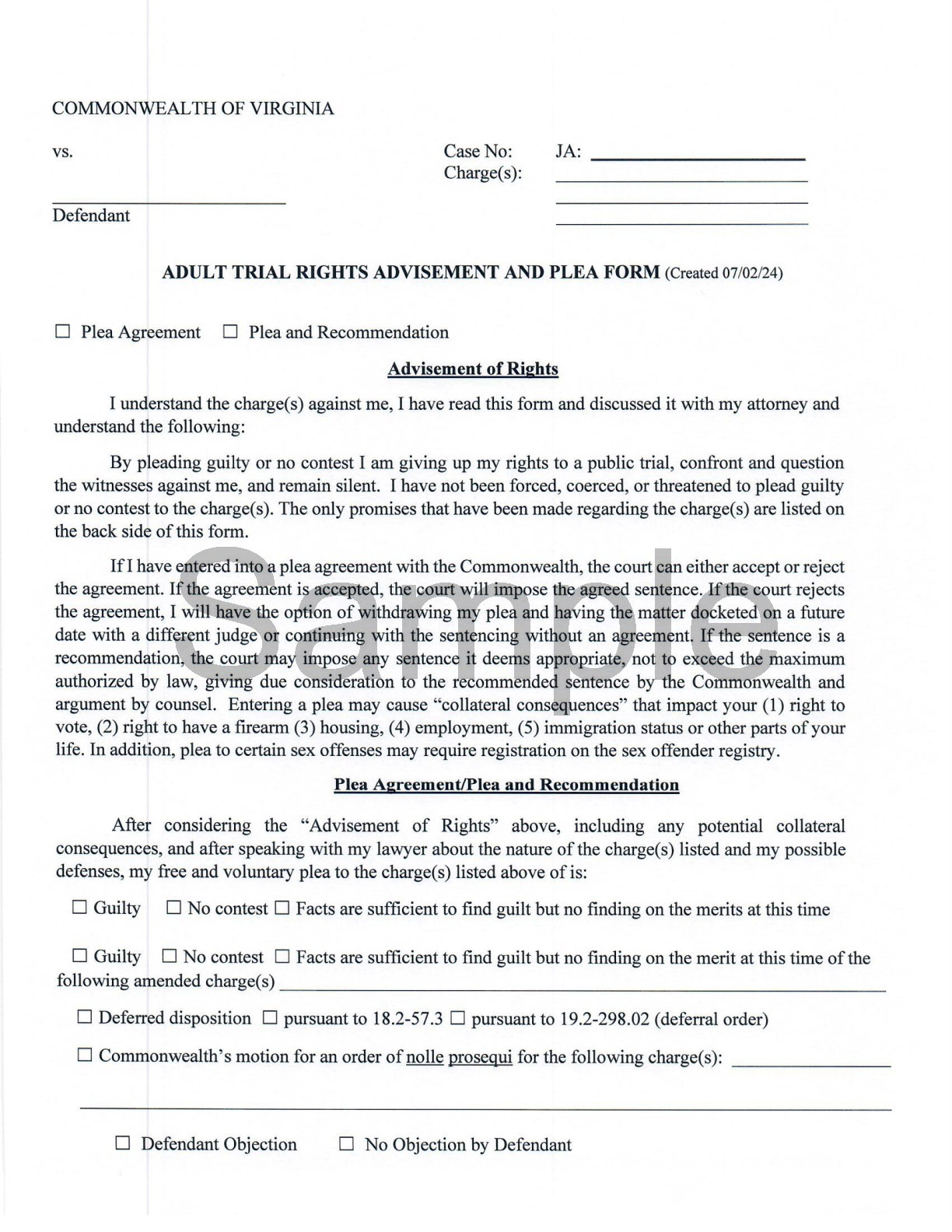
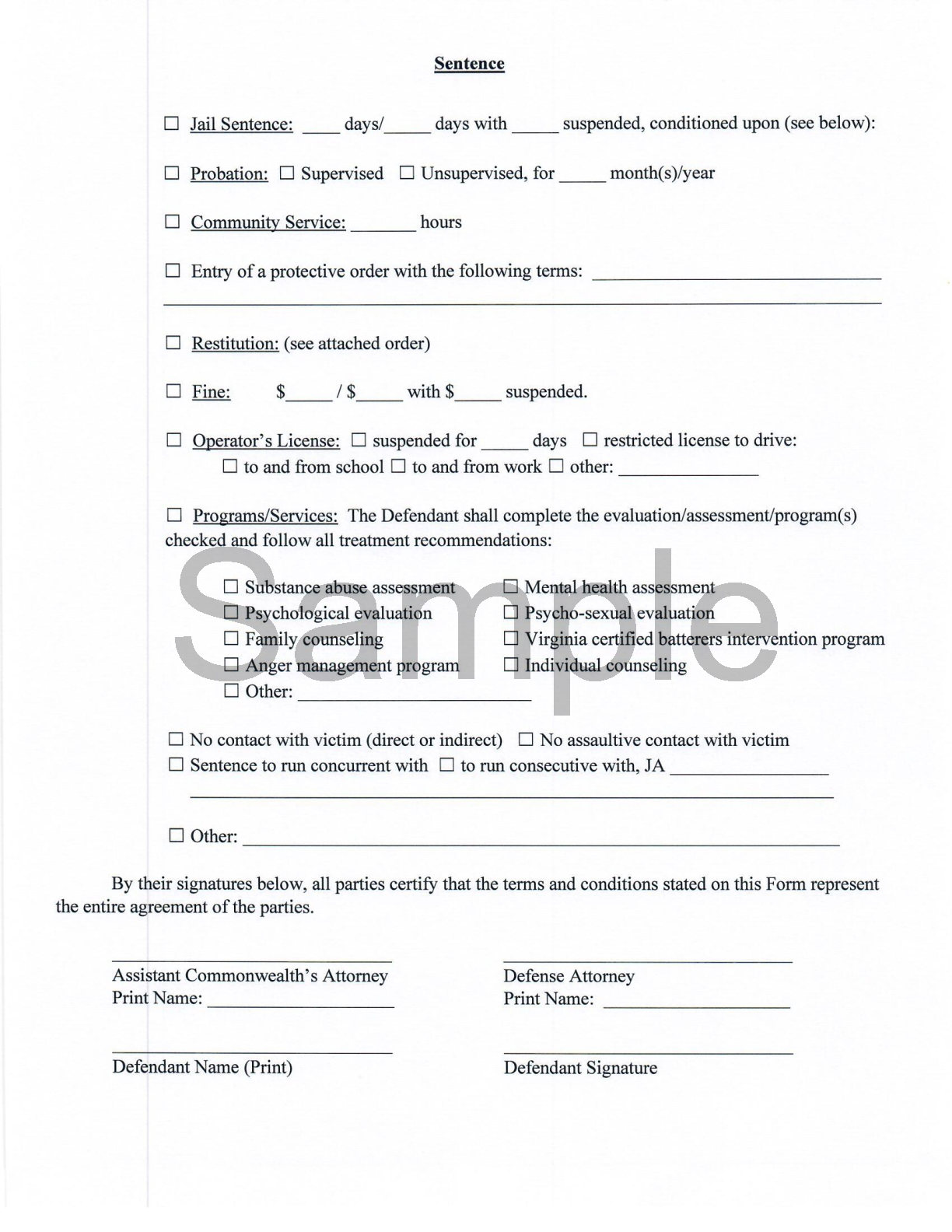
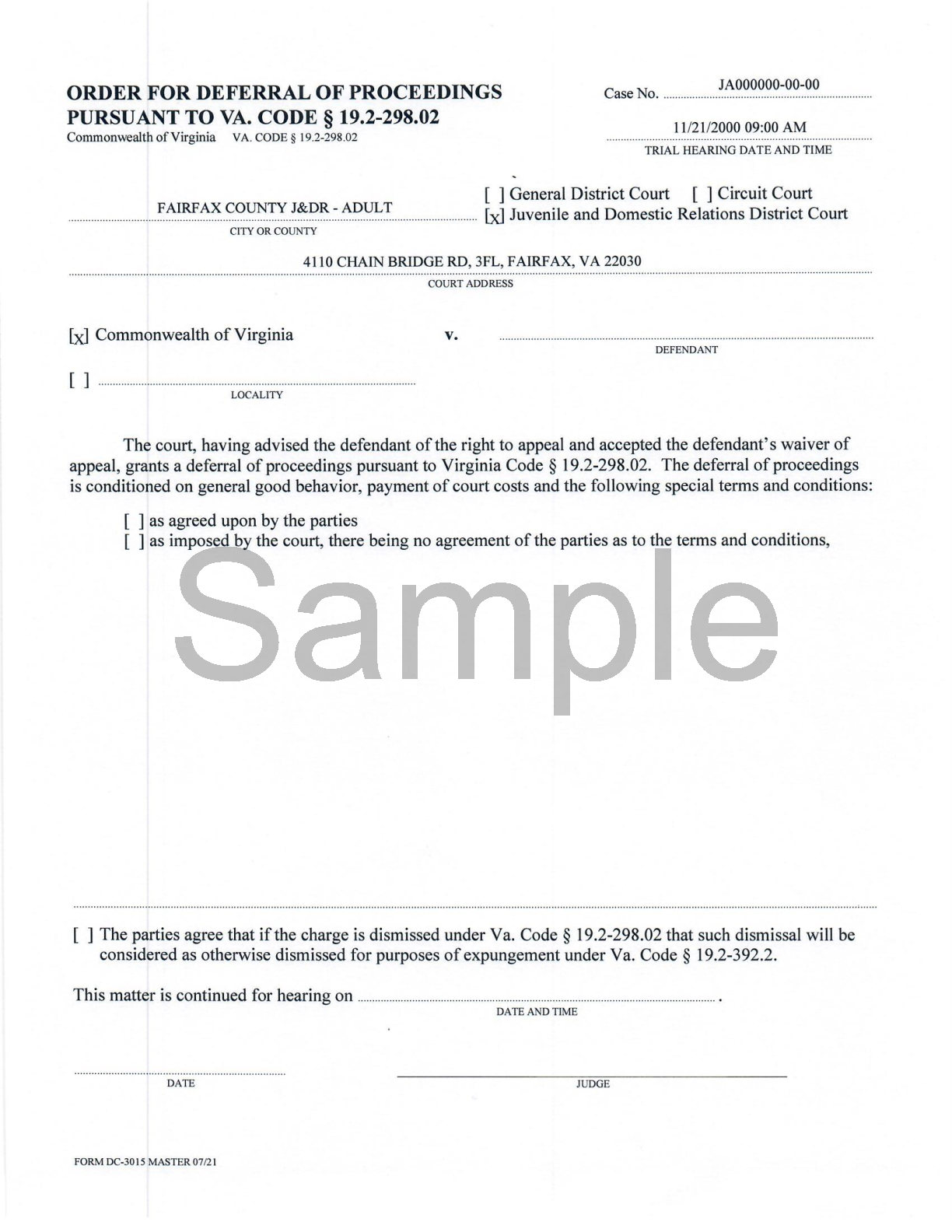
In the alternative, instead of a trial, the Commonwealth and accused can reach an agreement about the outcome of the misdemeanor charge. The parties will submit their agreement to the judge for approval. The judge can approve or reject the agreement. If the judge rejects the agreement, the case will be transferred to another judge. A common agreement involves the court finding that there are facts sufficient to support the charge, but the judge will dismiss the charge after a period of months or years if the accused obeys the judge’s conditions. This is called a deferred disposition.
If the accused is charged with a felony, the court will consider the allegation and determine whether the charge proceeds to trial in the circuit court. This process is called the preliminary hearing. The court will decide if there is probable cause to support the charge. Probable cause is found when the facts alleged constitute a crime and it is more likely than not that the accused committed the crime. At the end of the hearing, if the judge finds that there is probable cause, the case is transferred to circuit court for a trial. If the judge does not find probable cause, the charge will be dismissed. Finally, while the accused has a constitutional right to a preliminary hearing, they can waive the hearing by signing the waiver portion of the warrant.
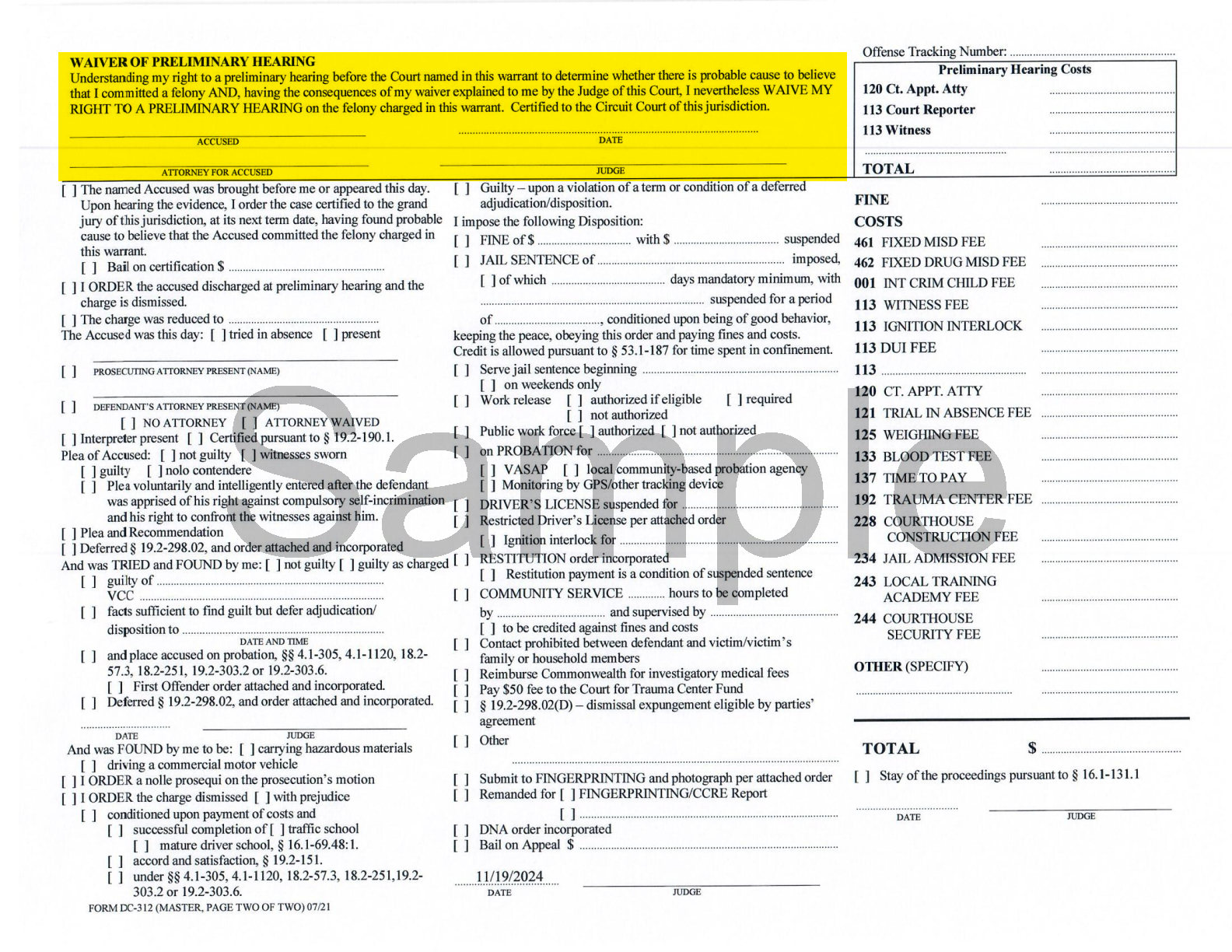
If the court transfers the charge to the circuit court, the court will complete a certification form that you will be asked to review and sign.
As part of a plea agreement, or the judge’s sentence following a trial, the defendant may be placed on probation and/or be required to complete certain conditions. Specifically, all defendants on probation, (with or without a probation officer), must be of “general good behavior” for the probationary period. That means, they cannot violate the law while on probation. Some defendants will also be required to complete programs like anger management, a certified batterers intervention program, or parenting classes. Defendants may also be required to submit to a substance use or mental health assessment or evaluation and to follow the recommendations of the evaluator.
It is important for defendants to read the court’s order carefully and follow all conditions. When defendants do not follow conditions imposed by the court, a probation officer or the judge may charge the defendant with a separate offense called a “criminal rule to show cause” or a “criminal capias.” The punishment for the capias or rule to show cause can range from a jail sentence, fine, extension of probation or another conviction.