Juvenile and Domestic Relations District Court - Court Services Unit Alert:
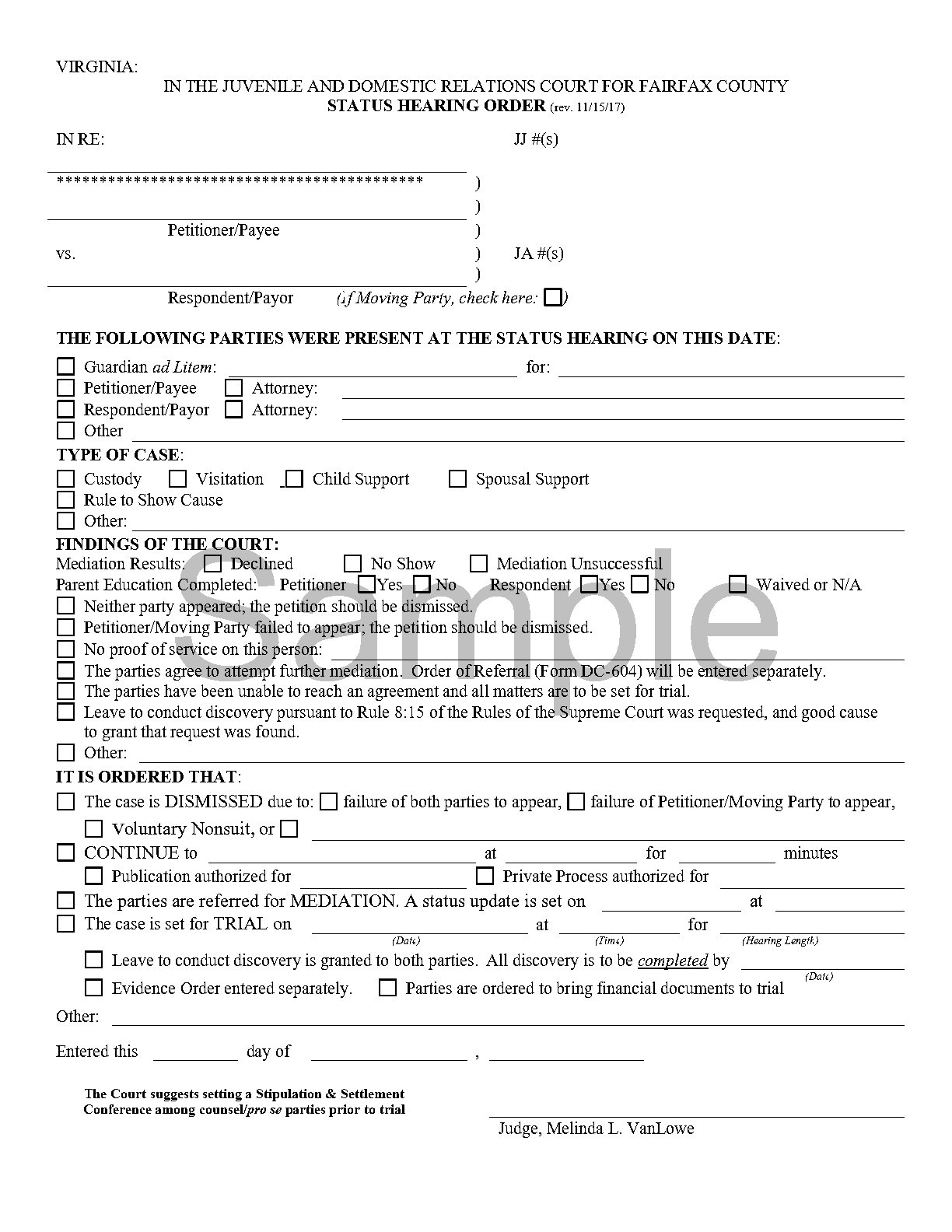
After a petition for custody, paternity, or visitation is filed, the parties will receive a summons to appear before the court for a status hearing. At the status hearing, the judge will review the matters before the court. If the parties have already reached an agreement, a final order can be entered that day. If the parties have not reached agreement, they will be referred to a neutral mediator so that they can attempt to resolve the case, instead of having a trial. If the parties attempted mediation or mediation is deemed inappropriate, the court will schedule a trial. At the end of the status hearing, the court will provide the parties with an order summarizing what happened.
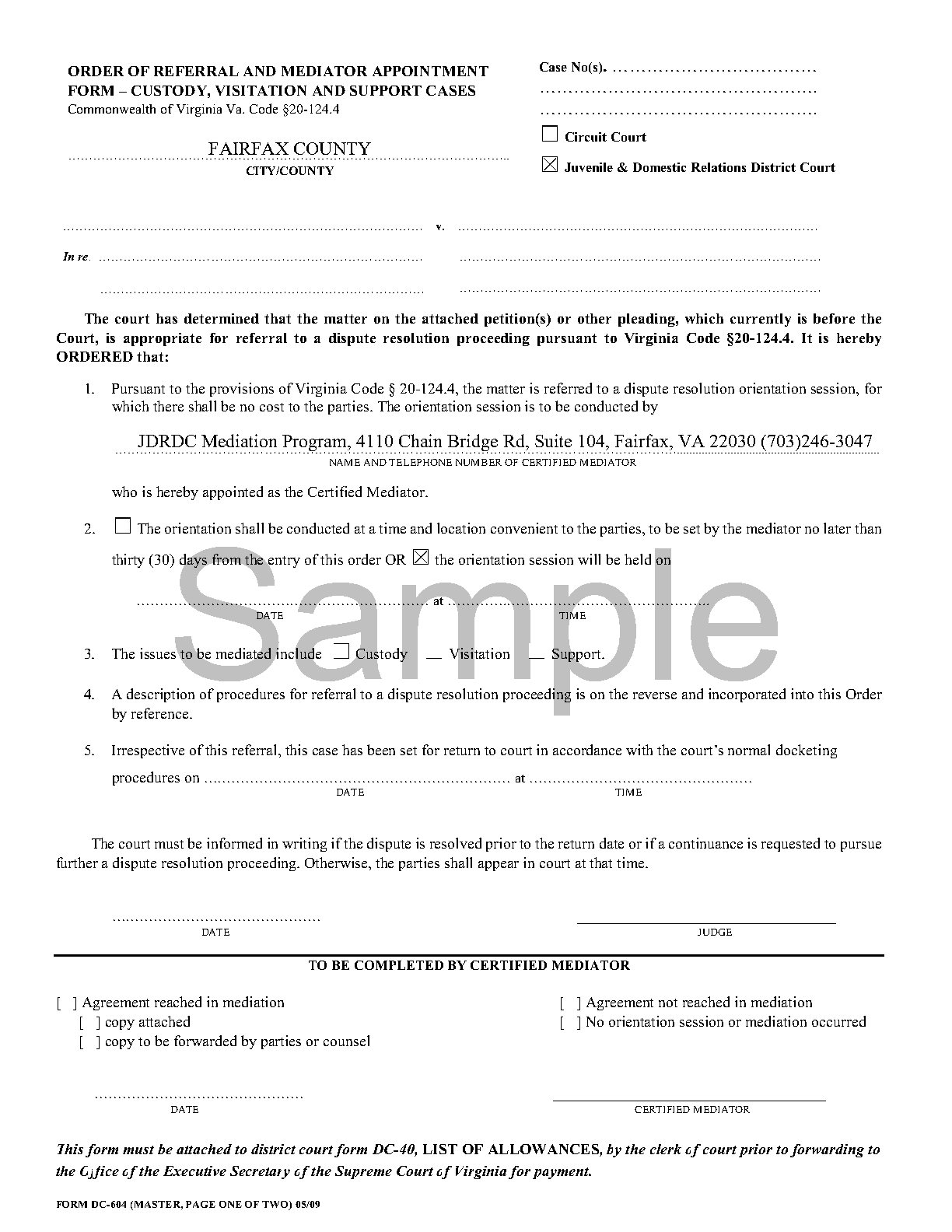
Before trial is scheduled, the parties will be referred to mediation, (unless the court finds that mediation is not appropriate). Mediators work for the court and are there to work with both parties to resolve their custody and visitation dispute. They are provided by the court at no cost. At the status hearing, when the judge refers parties to mediation, they will receive a referral to the mediation office that includes a phone number to call to start the mediation process. If mediation is successful an order that includes the agreement reached will be sent to the judge for entry. The parties will not return to court again. If mediation is not successful, the parties will return to court for another status hearing, and the judge will schedule a trial date.
Before trial, a motion can be filed requesting that the parties follow certain conditions during the period after a petition has been filed and the final trial date. Examples are motions for temporary custody and visitation, and a motion for discovery.
If a party believes that a child is in danger such that the child will suffer physical and/or mental injury or their life is in danger, a party can file a Request for Emergency Hearing with the clerk's office. A judge will review the motion on the day of filing. If the judge determines that there is an emergency, the motion will be scheduled for a hearing. If the judge concludes that an emergency does not exist, the emergency motion will be denied. The parties can then schedule the motion for a hearing on the Wednesday Motions Docket or through the Calendar Control Judge.
The parties can ask the court to order visitation between parents and the child or to determine the parents’ legal and physical custody of the child while waiting for the trial date. If the motion involves visitation and a hearing on the motion will take less than thirty (30) minutes, the motion can be heard on the Wednesday Motions Docket.
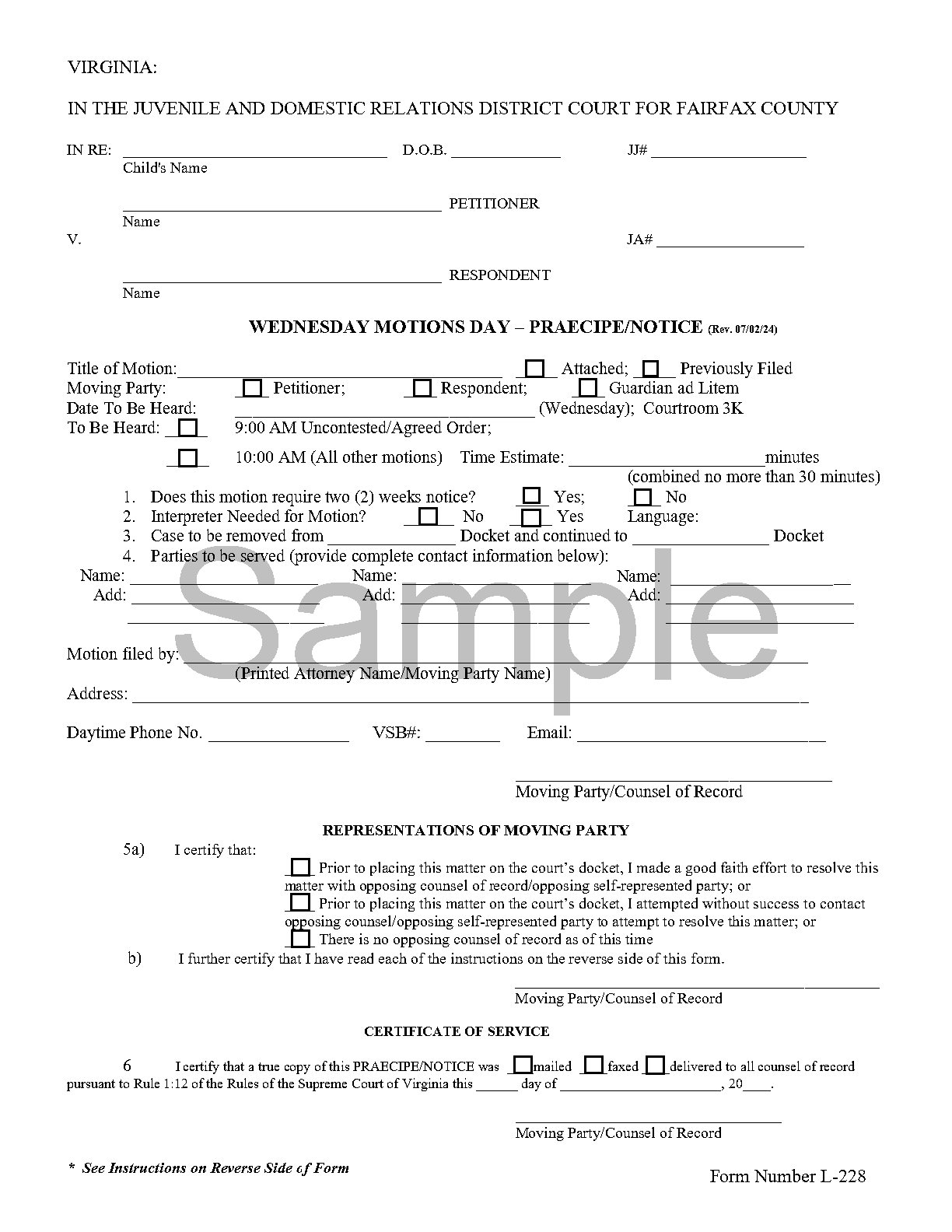
To schedule a motion on this docket, the party shall complete a Yellow Motions Day Praecipe and follow the instructions on the back of the form.
If the motion involves custody or it will take more than thirty (30) minutes for the court to conduct a hearing regarding the motion, the parties will need to appear before the Calendar Control Judge to schedule the hearing.
Trials may not exceed three (3) hours. After hearing all of the evidence, the judge will decide custody and visitation, giving primary consideration to the best interests of the child. There is no presumption in favor of either parent, therefore, when appropriate, the court should ensure that minor children have frequent and continuing contact with both parents.
The judge considers the following factors to decide what is in the child’s best interest:
The judge can award parents a combination of legal and physical custody. There are two types of legal and physical custody:
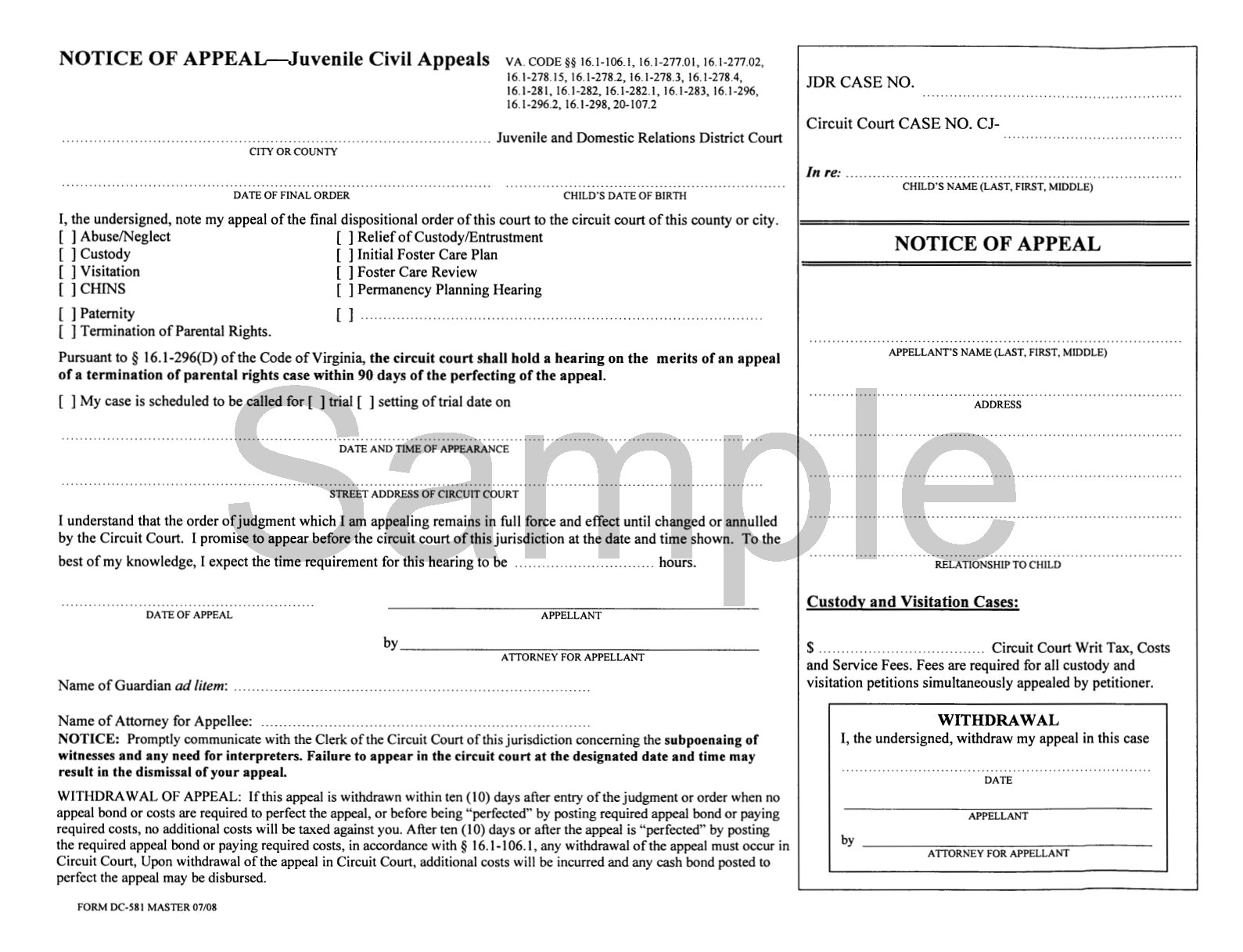
The judge will write and sign an order that tells the parties the court’s custody and visitation decision and shall tell the parties the basis of the decision either orally or in writing. If a party disagrees with the court’s order, they may file a Notice of Appeal form with the clerk’s office within ten (10) days of the date of the order. The case will then be transferred to the circuit court for a new trial.