

Alert:
| Title | Body | Field Image |
|---|---|---|
| Discover Ways to Save Energy and Build a Sustainable Future | Fairfax County officially recognizes Energy Efficiency Week on October 1–7, 2026! Read the proclamation. Energy Efficiency Week highlights the powerful role that simple, cost-saving energy practices can play in protecting household and business budgets and reducing the carbon emissions that contribute to climate change. With utility costs rising nationwide, energy efficiency remains one of the most effective ways for residents and business owners to lower monthly expenses. At the same time, reducing energy waste improves air quality, eases strain on the electric grid, and makes homes and shared spaces more comfortable. 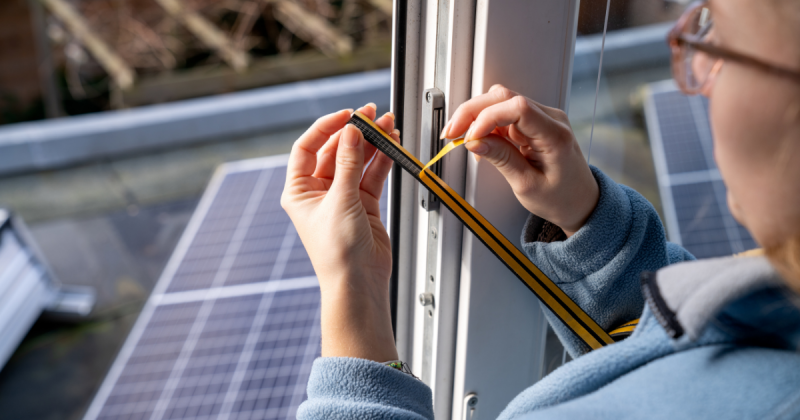 |
|
| Sandoli to Lead Office of Environmental and Energy Coordination | 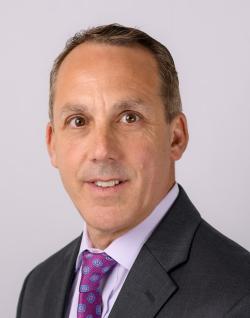 Robert Sandoli has been appointed director of the county's Office of Environmental and Energy Coordination (OEEC), effective Monday, July 20. He succeeds John Morrill, who is retiring after serving with the department since 2020. Sandoli brings more than two decades of executive leadership experience in energy, environmental policy and program management across local and federal government. He holds a Master of Public Policy from the University of Maryland, a Master of Science in microbiology from Cornell University and a Bachelor of Science in biotechnology from Rutgers University.
|
|
| Fairfax County Earns Charging Smart Silver Designation for EV Readiness | Fairfax County, Va. has received a Silver designation from the national Charging Smart program for achieving policies that facilitate the expansion of electric vehicles (EVs) and EV charging infrastructure.  As a Charging Smart Silver designee, Fairfax County has adopted nationally recognized best practices to accelerate the purchase and use of EVs in the community. The county worked with Charging Smart's no-cost technical assistance team to increase local knowledge of EV infrastructure for the benefit of economic development and clean energy goals. Charging Smart, part of the Energy Ready suite of programs, is led by partners including the Interstate Renewable Energy Council (IREC) and Virginia Clean Cities, and funded by the U.S. Department of Energy Vehicle Technologies Office. Fairfax County received a SolSmart Gold designation in 2019 for its efforts to increase adoption of clean energy. “Achieving Charging Smart Silver is a strong affirmation that Fairfax County is turning its clean transportation and alternative fuel vehicle goals into real progress on the ground,” said John Morrill, Director of the Office of Environmental and Energy Coordination. “This designation reflects our commitment to making it easier for residents, businesses, and county government itself to transition to cleaner vehicles and the infrastructure they need. It also underscores that this is truly a team effort.” Reaching this milestone required close collaboration across county government led by OEEC, in partnership with Land Development Services, the Department of Vehicle Services, and the Department of Planning and Development, Morrill noted. 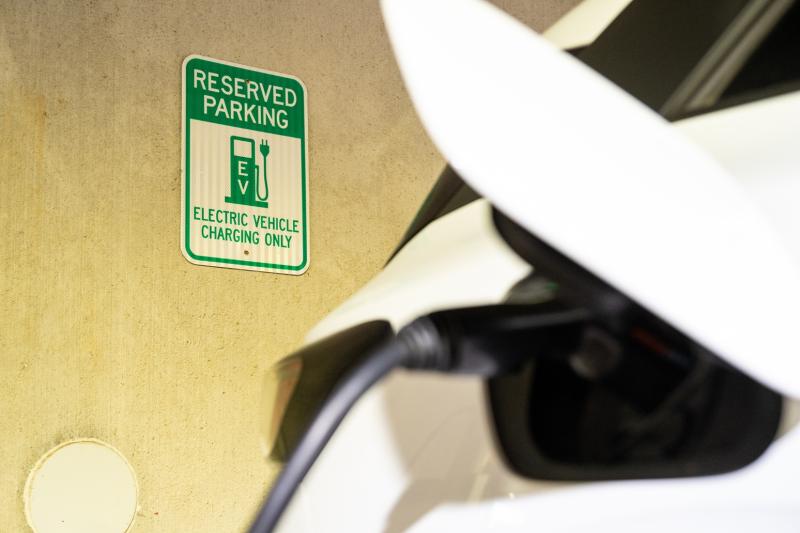 The Charging Smart Silver designation was earned by Fairfax County for actions the county has taken to make it faster, easier, and more affordable for local residents, businesses, and nonprofit organizations to install EV infrastructure and adopt EVs, including:
Local governments achieve Charging Smart designation by meeting established criteria that are based on national best-practices for building EV-friendly communities. The Charging Smart team of experts offers no-cost technical assistance and resources to help communities put these practices into action. Those that meet the criteria are designated Charging Smart Gold, Silver, or Bronze. Any city, town, county, and regional organization is eligible to join the Charging Smart program. Interested communities can learn more at Charging Smart.org. To learn more about Fairfax County’s efforts to prepare for an EV-friendly future, visit the Fleet Electrification webpage. |
|
| Podcast with OEEC Director Highlights Progress on Climate Action and Clean Energy | County residents may not be familiar with the Office of Environmental and Energy Coordination (OEEC), but many are already benefiting from its work — through more comfortable, energy efficient homes, cleaner air and expanded climate friendly transportation options. In a recent episode of the County Conversation podcast, OEEC Director John Morrill explains how the office was created in 2019 to coordinate the county’s major climate and energy efforts. He highlights key plans, including the Communitywide Energy and Climate Action Plan (CECAP), Operational Energy Strategy, and Resilient Fairfax, and notes that communitywide greenhouse gas emissions are already down 28% from 2005 levels.  Morrill also discusses several OEEC programs that directly serve residents, businesses, and nonprofits, such as Fairfax Energy Compass, Charge Up Fairfax, and the Sustain Fairfax Challenge, all designed to help people save energy, reduce costs and build a more sustainable and resilient community. He also highlights the AC Rescue program, which provides free air conditioning units and repairs to residents who don’t have a way to cool their home. As local summers become “warmer, wetter, and weirder,” AC Rescue is helping protect vulnerable households from dangerous extreme heat. Looking ahead, Morrill — who is retiring in August — shares why he remains optimistic about the “relentless” shift toward clean energy and how Fairfax County can work with partners to align economic growth with its climate goals. To learn more about OEEC and its programs, visit www.fairfaxcounty.gov/environment-energy-coordination. Listen to the County Conversation Podcast with John Morrill
|

|
| Teamwork, Creativity and Community: Inside My Internship with OEEC | Written by Sophia Eames, OEEC Spring 2026 Communications Intern What does it actually take to make a county more sustainable? Before this internship, I would have given you a textbook answer. After a season with Fairfax County’s Office of Environmental and Energy Coordination (OEEC), I can give you a real one, and it involves a lot more teamwork, creativity, and community than I ever expected. 
Translating Policy into Plain LanguageMy first major assignment was ensuring that the office's web content was both readable and accessible — a task that sounds straightforward until you realize just how much thought it requires. So, what does that actually mean? In 2024, the Department of Justice finalized a rule under Title II of the Americans with Disabilities Act (ADA), requiring state and local governments to make their websites and mobile apps accessible to people with disabilities. In practice, this means digital content must work for everyone, regardless of ability, device, or circumstance. This challenge pushed me to rethink how information is written and presented — removing all the jargon and translating technical concepts into clear, digestible language. But in order to simplify something, you first need to understand it. In the process, I learned about electric vehicle types and chargers, solar panel tax credits, environmental leadership opportunities, and how the county has achieved measurable success with green building practices. The accessibility work became an unexpected deep dive into the very topics I care most about, and it reinforced just how important it is for local government to communicate clearly with all of its residents. Energy Audits: Lessons from the FieldOne of the most memorable experiences of the internship was accompanying the team on energy audits at two Metro adjacent facilities: Herndon Yard and the Wiehle Metro Station garage. Did you know that a poorly ventilated parking garage can develop its own miniature weather system, complete with clouds forming along the ceiling? I certainly didn't and I was completely shocked when I learned that at the audits. Following the engineers and analysts at Herndon Yard, I was able to understand what factors go into the installation of solar panels and industrial machinery. 
The questions they asked were ones I'd never thought to consider: What material are the walls and supporting beams made from? What direction does the structure face? What's the facility's daily electricity consumption? Each answer determined whether and how renewable energy infrastructure could be incorporated. At Wiehle, on the other hand, the team was investigating a suspected energy leak. Hearing engineers debate the possible causes made me realize the economic and legal aspects of this work. What I appreciated the most though, especially coming from a person with a social science background, was that no one was dismissive of questions; everyone was collaborative, curious, and genuinely committed to solving the problem. I never once felt out of place asking something basic, and the generosity of the team made it an incredibly enriching experience. Talking Climate Action with Pre-K and Skeptics AlikeThis was exemplified at the Building Safety Month Resource Fair, where I joined two colleagues at an OEEC table for a full day of community engagement. The event attracted a wide range of visitors — curious passersby, engaged residents, and, at one delightful and unexpected moment, an entire Pre-K class. No one is too young (or too old!) to learn about solar power, as it turns out. Explaining the concept of renewable energy to four-year-olds was simultaneously one of the most creative and most tiring communication challenges I've faced. I also witnessed meaningful conversations with residents who came in skeptical about electric vehicles or renewable energy, and it was genuinely powerful to see how a simple, honest conversation could shift someone's perspective. That kind of direct community engagement is something I won't forget. 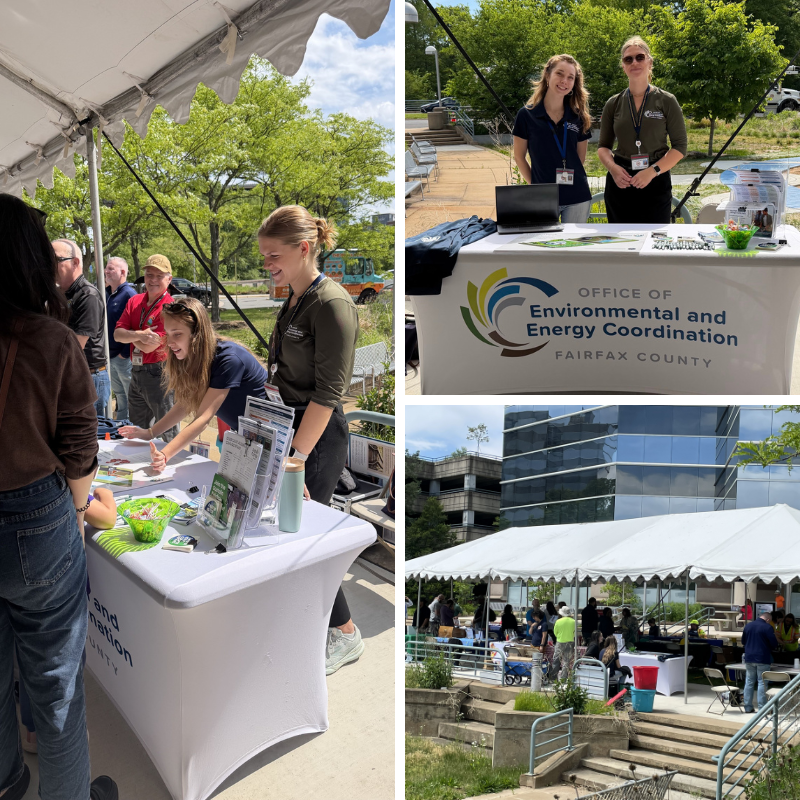
Another project I thoroughly enjoyed was producing a "Day in the Life" social media video designed to give our audience a look at what it's actually like to work at OEEC. The first iteration of this series features Kevin Smith, our Division Manager for Energy Programs. As I worked through the editing process, sorting footage, deciding what to keep and what to cut, I realized how much storytelling is involved in even short-form video content. The skills I applied here weren't so different from the skills behind a well-written article or essay: know your audience, lead with something compelling, and make every word count. It was a great reminder that communications work spans far more formats than I initially expected, and that adaptability is just as important as any other technical skill. What This Internship Taught Me That Classrooms Can’tBeing part of the OEEC communications team this spring taught me things no classroom fully could. I learned about office dynamics, the importance of teamwork, and the genuine interdependence required between agencies and people to make local government function well. I discovered that the work that sometimes looks “boring” from the outside, like updating websites, writing emails, or staffing tables, often carries real meaning when you understand its purpose and its audience. Yes, there were quieter days at my cubicle; yes, it looked like the typical “office”, but the majority of the time the room was full of laughter, collaboration and people who truly care about the environment and what they do. I'm leaving this experience with technical knowledge I didn't have before, professional skills that will serve me in graduate school and beyond, and admiration for the talented people at OEEC who show up every day to make Fairfax County a more sustainable place to live. I have no doubt this internship has set me up well for the next chapter ahead. 
Sophia Eames is a recent graduate of The George Washington University, where she studied International Affairs and Public Policy with coursework in climate regulation, global energy markets, and GIS. She served as OEEC’s Communications Intern for the Spring 2026 term and will be pursuing an M.S. in Environment and International Affairs at Georgetown’s School of Foreign Service in the fall.
Climate Matters is the blog of Fairfax County’s Office of Environmental and Energy Coordination, where we share stories, insights and information related to climate change and environmental sustainability. Posts are written by knowledgeable and passionate OEEC staff members and guest authors. To read all blog posts, visit Climate Matters. |
|
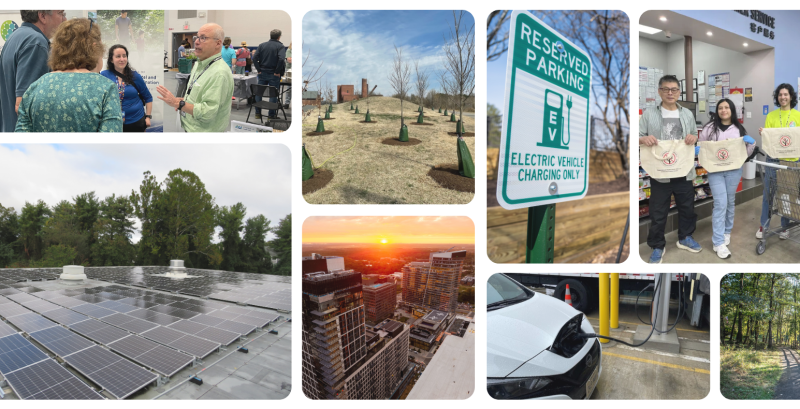
| OEEC Releases 2025 Climate Action Progress and Highlights Report | 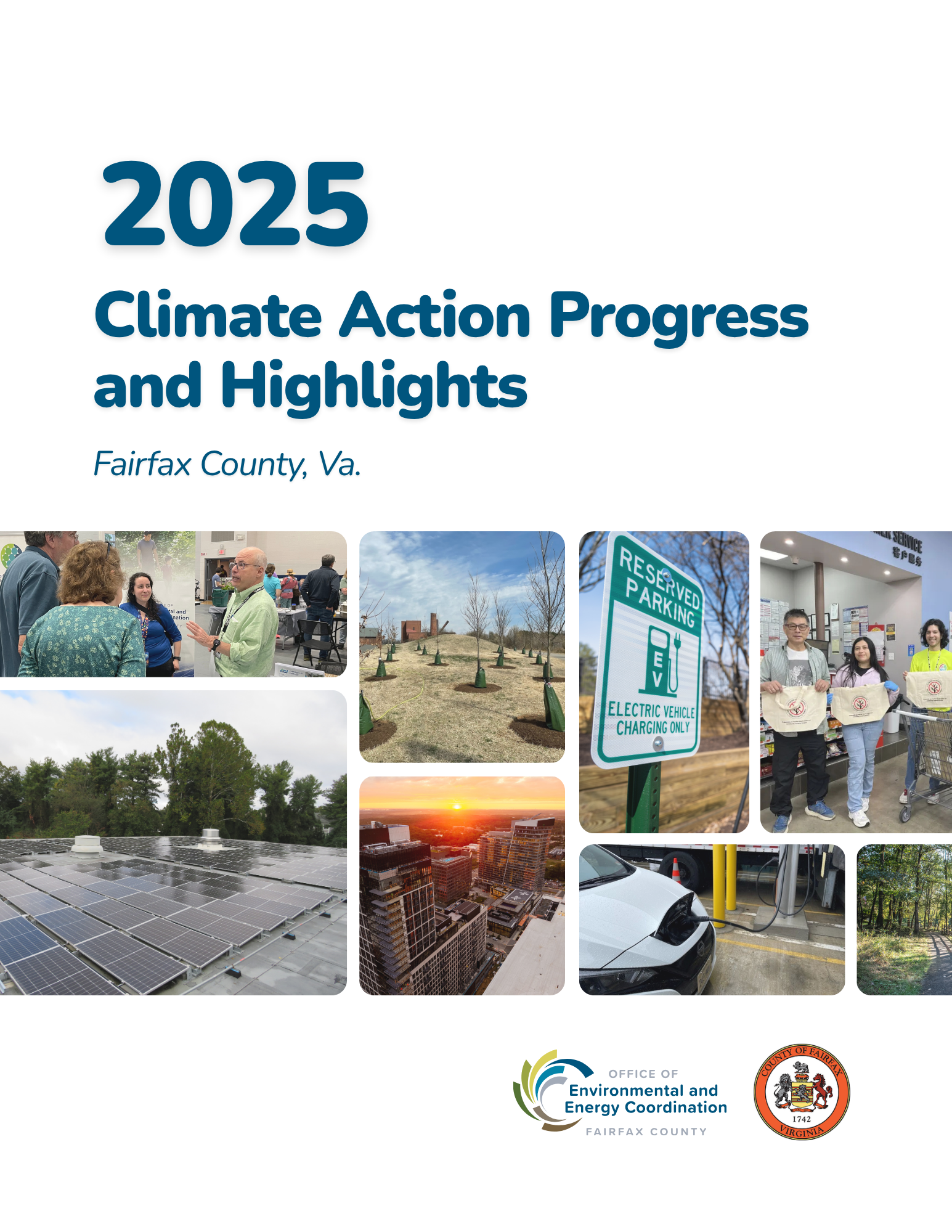 The Office of Environmental and Energy Coordination (OEEC) has released the 2025 Climate Action Progress and Highlights Report, documenting another year of significant gains toward reducing greenhouse gas emissions and building a more climate-resilient Fairfax County. The report outlines progress across county operations and the broader community, including major steps forward in clean energy, sustainable development, climate-ready infrastructure, and support for residents most vulnerable to the impacts of “warmer, wetter and weirder” weather. While overall greenhouse gas emissions in Fairfax County have decreased by 4.2 million metric tons, or 28%, since 2005, emissions rose slightly between 2020 and 2023, according to the latest inventory from the Metropolitan Washington Council of Governments. This uptick is largely due to vehicle travel bouncing back from the reduced levels seen during the 2020 pandemic. “Despite a challenging policy and funding environment at the federal and state levels, Fairfax County continues to move forward on climate action,” said OEEC Director John Morrill. “The progress we’ve made is the product of strong partnerships across county agencies and alongside community organizations, businesses, and residents.” |
|
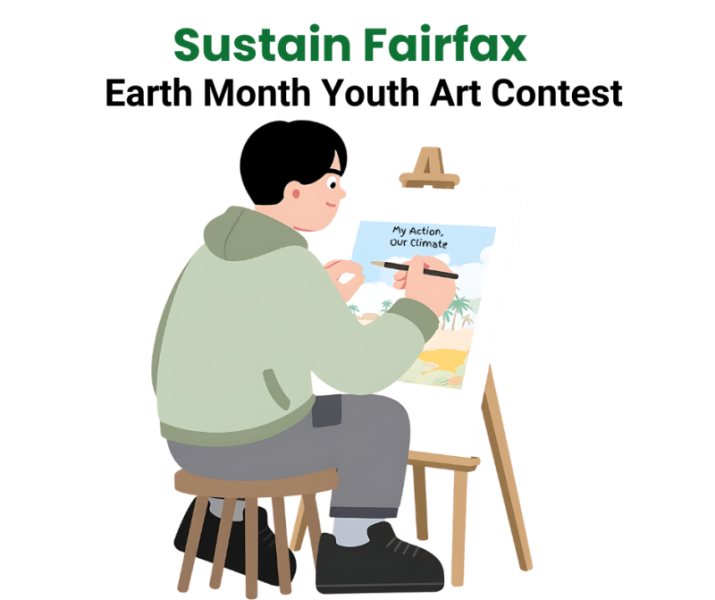
| Show Your Climate Action: Enter the Sustain Fairfax Earth Month Youth Art Contest | Fairfax County’s Office of Environmental and Energy Coordination is proud to announce the winners of the 2026 Sustain Fairfax Earth Month Youth Art Contest, celebrating student creativity and real-world climate action. See a full gallery of the Sustain Fairfax Earth Month Youth Art Contest Entries. Fairfax County’s Office of Environmental and Energy Coordination (OEEC) invites students to showcase how they are taking action for our planet in the Sustain Fairfax Earth Month Youth Art Con Participants will fall into one of three categories, grades 4-6, grades 7-8, and grades 9-12. Students can submit original artwork, including designs, photographs, or drawings, to inspire residents to complete climate actions in our community. The winning artwork will be used on OEEC’s marketing and promotional materials and may be shared in places such as on social media, websites, in email, and on in-person platforms (i.e. flyers, posters, giveaways, etc.). Students can submit original artwork reflecting the theme: “My Actions, Our Climate.” Posters should be submitted digitally or mailed to the OEEC office by May 15 at 4 p.m. Winners will be notified in May or early June 2026.
Let your creativity shine and show how your actions make a difference—submit your artwork and help inspire climate action across Fairfax County. For more information about the contest, including submission guidelines and entry requirements, go to Sustain Fairfax Earth Month Youth Art Contest. Please contact OEEC Staff at 703-324-7136, TTY 711 or email OEECInfo@fairfaxcounty.gov for assistance. |
|
| Two Programs Help Residents Go Solar with Confidence and Savings | Editor's Note: The deadline to sign up for the Solarize Virginia program has been extended to August 15, 2026 and the deadline to sign up for the Switch Together program has been extended to November 18, 2026. Two regional group purchasing programs, Solarize Virginia and Switch Together, are making it easier and more affordable for homeowners to go solar while navigating a rapidly changing energy landscape. Solarize Virginia is a long-running, education-focused campaign led by local nonprofit Local Energy Alliance Program (LEAP) that helps Virginians explore rooftop solar through free assessments, trusted information, vetted installers and pre-negotiated pricing. Switch Together is a group buying program offered by national nonprofit Solar United Neighbors that secures discounted solar, battery storage, and EV chargers through a competitive reverse auction, giving residents below-market pricing and free, no-obligation recommendations.  Residents who join either program can get a free assessment and take advantage of discounted rates, access to trusted installers, educational events and ongoing support throughout the process to ensure a seamless experience — from the initial consultation to installation. Registration is free and there’s no obligation to accept an offer. “Solar is one of the most practical tools we have to help households lower their bills, strengthen the reliability of our energy system, and cut greenhouse gas emissions at the same time,” said John Morrill, Director of the Fairfax County Office of Environmental and Energy Coordination. “Group purchasing programs take the guesswork out of going solar. They give residents trusted information, vetted installers, and real cost savings — all while helping Fairfax County and the region move toward a cleaner, more resilient energy future.” Solarize Virginia
Homeowners who sign up are paired with vetted installers who offer discounted prices. For the first time, participants will have the option this year to purchase their system outright or lease the system to get the benefit of lower energy bills with little to no upfront costs. This year’s campaign will also place special emphasis on addressing common questions about incentives, financing options amid federal changes, grid policies and the long-term benefits of solar energy systems. Throughout the campaign, LEAP will host informational webinars, community events, and one-on-one consultations on how solar works, financing and ownership options and net metering policies. “Homeowners are hearing a lot about solar right now, from changing federal incentives to evolving utility policies,” said Deborah Arenstein, Solar Program Manager at LEAP. “Our goal with this year’s Solarize Virginia campaign is to cut through the noise and help residents understand what their options are.” From April 15 through July 15, Fairfax County residents can sign up for free solar assessments and get information about webinars and other educational opportunities by visiting www.solarizeva.org. Switch Together Switch Together is a group buying program which not only makes rooftop solar installations more affordable but also makes home battery storage and EV chargers easier to access. A companion Switch Together Heat Pumps program launched this year to give residents another opportunity to save money and be more energy efficient. To date, over 16,600 households have accepted an offer through Switch Together. Through the current program, the average household is expected to save $6,323 on a solar installation — 21% lower than the market average. The program organizes a reverse auction with qualified installers who compete to offer their most competitive prices, ensuring participants receive a discount on a high-quality solar installation. Participants in the program also have the option to lease rather than buy the system. The program also offers robust solar education through online resources and in-person events. "With utility rates rising across the country, many families are feeling the squeeze on their monthly budgets," said Sukrit Mishra, Solar United Neighbors DC Program Director. “Switch Together is designed to give neighbors a way to fight back. By going solar as a group, residents can lock in lower energy costs and protect themselves from the unpredictability of future rate hikes." Fairfax County homeowners can register or learn more at SwitchTogether.com/Solar/FairfaxCounty. The final day to register and accept a personal recommendation is August 19. Fairfax County also offers incentives for solar, such as waived permit fees and a 5-year solar energy equipment property tax exemption. Visit Going Solar in Fairfax County to learn more. About the Local Energy Alliance Program About Solar United Neighbors |
|
| New Program Aims to Cut Costs for Households Switching to Heat Pumps | Note: The final day to register and accept a personal offer through Switch Together has been extended to July 15, 2026. Fairfax County is promoting a new way for area homeowners to save money on their electric bills: Switch Together Heat Pumps. Known for their successful solar programs, Switch Together is now helping Fairfax County residents electrify their homes with efficient heat pump technology. Heat pumps provide energy‑efficient heating and cooling year-round, helping lower your bills, modernize your home, and improve reliability and performance — making them a smart choice for sustainable living. If your HVAC system or water heater is at or near end of life, it is worth exploring a heat pump replacement. The Switch Together Heat Pump program is provided by national nonprofit Solar United Neighbors and promoted by Fairfax County and other cities and counties in the DMV area and throughout the United States. Switch Together also offers a group buying program for high-quality solar panels and battery storage. “Heat pumps are a great way to use the electricity solar panels generate,” said Sukrit Mishra, Solar United Neighbors DMV Program Director. “Working through Switch Together, participants can learn about both technologies, how they can lower energy bills, and if making the switch is right for them.” How Does it Work? The program organizes qualified contractors who compete to offer their most competitive prices for installing an efficient heat pump system. Households that participate in the current heat pump program are expected to receive an average discount of 15% compared to the standard market price for heat pump installations. In addition to this group discount, households may qualify for available heat pump incentives, further increasing potential savings. How You Can Participate Visit SwitchTogether.com/HeatPumps/FairfaxCounty to register or learn more. Participants will receive a free personal offer upon registering. It is free to register and there is no obligation to accept an offer. The final day to register and accept a personal offer is Wednesday, May 27, 2026. |

|
| 2026 State of the County: Advancing Environmental Sustainability and Resilience | In 2025, Fairfax County continued its efforts to reduce greenhouse gas emission, lower energy use, and build resiliency to changing climate conditions, including completing seven energy retrofits at public facilities, welcoming 20 new members to the Green Business Partners program, and helping residents floodproof their homes. Join Chairman Jeffrey C. McKay as he looks back on some major milestones in environmental sustainability as well as other significant accomplishments county government made in 2025. Watch the 2026 State of the County VidEO  |
|
 Solarize Virginia is back for its 12th year, offering a simple path forward for homeowners to learn about and go solar. Since 2014, more than 1,700 systems have been installed through the program — adding over 16,000 kilowatt hours of clean energy to the grid.