

Written by Kevin Smith, Division Manager, Office of Environmental and Energy Coordination
Switch Together Heat Pump Program: Fairfax County has partnered with Solar United Neighbors to offer Switch Together Fairfax County, a group buying program for heat pump installations. Upgrading to a modern electric heat pump can help residents increase home comfort and savings. Residents switching from oil or propane to an energy-efficient heat pump can expect the highest savings, but the program is open to all homes, including those switching from natural gas or electric furnaces.
As electricity has become cleaner through renewable energy and more efficient power generation, heat pumps have been heavily promoted by government and private sector organizations and for good reason: widespread adoption of heat pumps is a key component to reducing greenhouse gas emissions and fighting climate change. Even more, because they are so efficient they can save you a lot of money on utility bills compared to other technologies.
Because this buzz around heat pumps started recently, you might think that they are a relatively new technology. On the contrary, heat pumps have been in widespread use in Europe, Asia, and southern United States for decades. The technology has improved significantly recently in terms of both efficiency and effectiveness.
What is the science behind heat pumps?
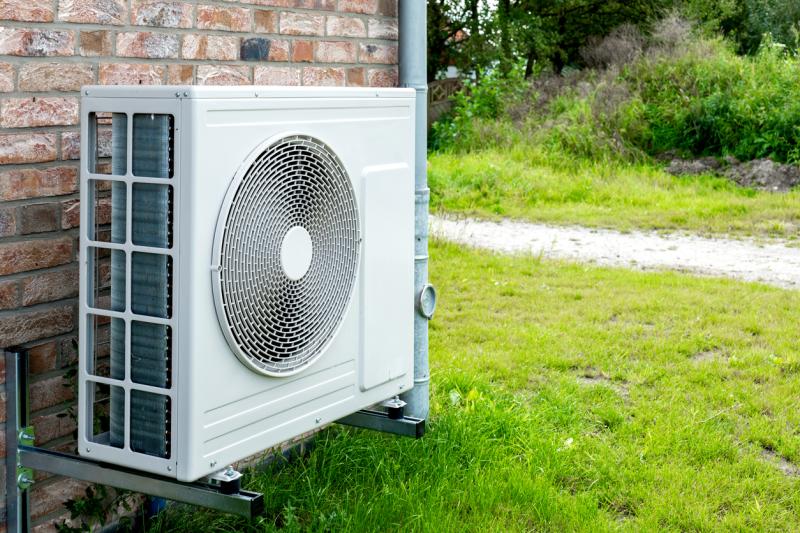
Heat pumps work based on the second law of thermodynamics, which states that heat naturally flows from hotter to colder areas1. By applying work to the system — using a compressor powered by electricity — heat pumps can reverse the flow of heat, moving it from inside your house to the outside (or vice versa). This process allows them to efficiently heat or cool your home without breaking the laws of physics.
How does a heat pump actually work?
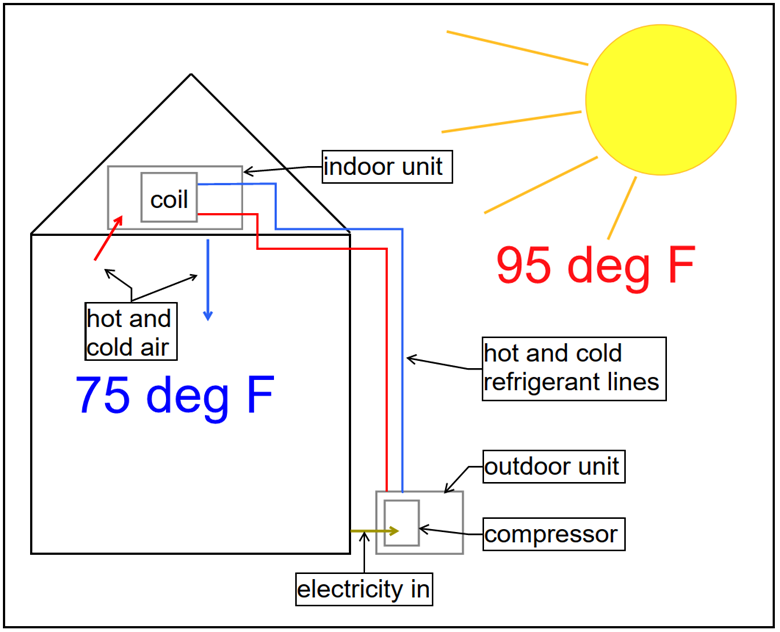
The diagram below shows how a heat pump cools a house by moving heat from inside to outside through a system of refrigerant lines, an indoor unit, and an outdoor unit. The compressor in the outdoor unit increases the pressure of the refrigerant, driving its flow through the system. As the refrigerant absorbs heat from indoor air, the cooled air is circulated back into the house, while the refrigerant carries the heat outside, where it is released. This process works efficiently by applying work through the compressor, enabling heat to move from a colder to a warmer area.
What kinds of heat pumps are there today?
Heat pumps are most commonly used for heating and cooling in both residential and commercial buildings, such as homes, schools, and offices. Some water heaters also use heat pump technology to provide hot water for everyday needs like sinks and showers. Beyond HVAC systems, heat pumps are used in certain clothes dryers, electric vehicles, pools, and industrial processes.
Heat pumps can transfer heat from either air or water, depending on the system type. While most residential systems in the U.S. use air as the heat source, water-source heat pumps, common in commercial settings, offer even greater efficiency. These systems can transfer heat using cooling towers, ground loops (geothermal), or bodies of water like lakes. Ground-source heat pumps, though more common in larger-scale applications, are among the most efficient options and are increasingly being adopted for residential use.
How have heat pumps improved over time?
Older models struggled in extreme temperatures, but modern heat pumps effectively heat and cool homes year-round and specialty cold climate heat pumps can work in temperatures as low as 5°F. If performance issues arise, they are often due to poor insulation or overly ambitious indoor temperature settings.
Advancements like multi-speed and variable-speed compressors and fans allow heat pumps to better match heating or cooling needs, improve humidity control, and operate more quietly. Additionally, modern residential heat pumps are two to three times more efficient than gas furnaces, helping reduce electricity costs — especially when replacing older air conditioning systems. 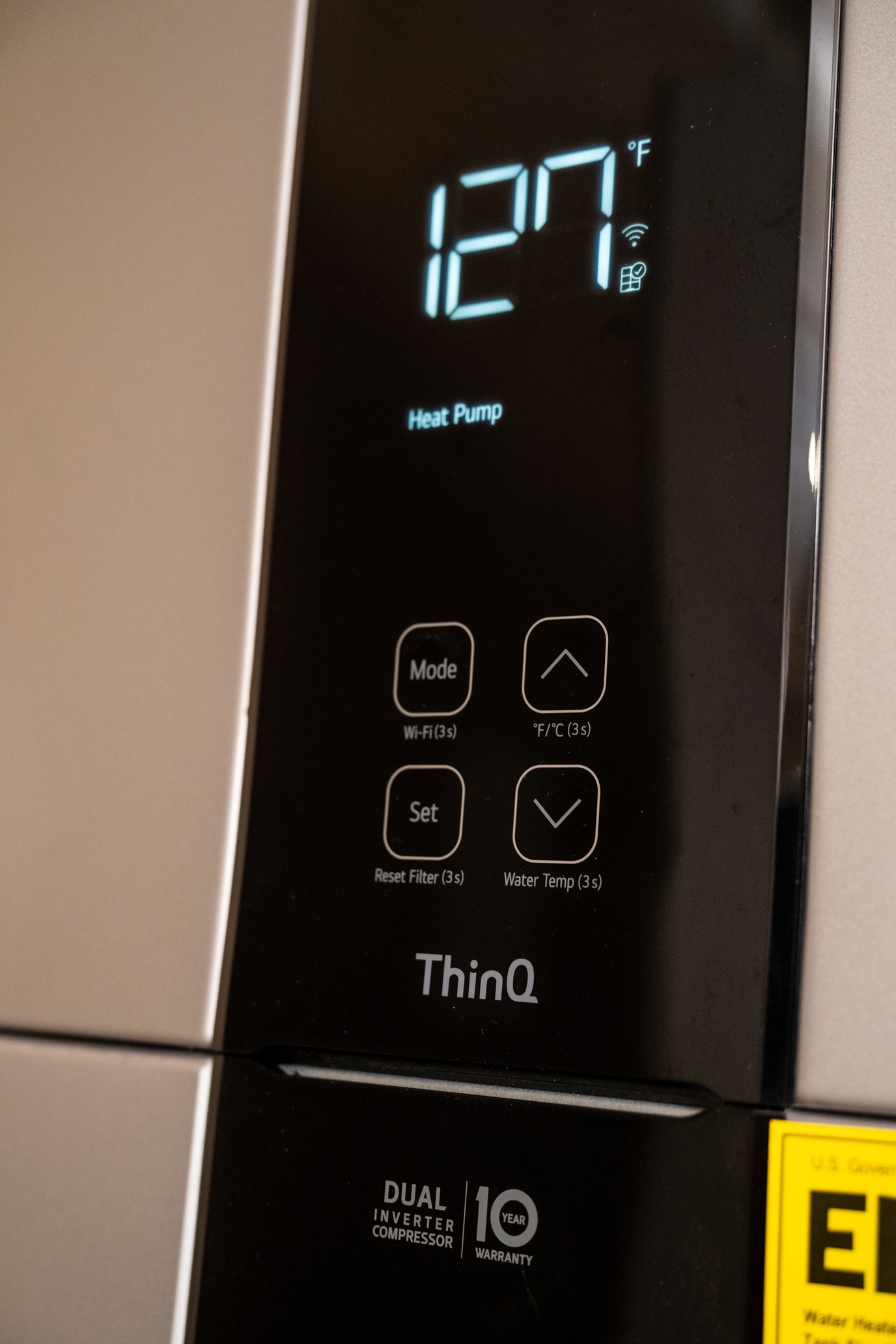
Heat pumps today offer improved reliability, performance, and energy savings, making them a smart choice for sustainable living.
Should you consider a heat pump for your home?
If your HVAC system or water heater is at or near end of life, it is worth exploring heat pump replacement options. While the initial price might be higher than natural gas or electric resistance options, you could expect to reduce your utility bills by as much as $200 to $300 per year. The ongoing cost savings plus the other benefits described above might make a heat pump the ideal solution. If your HVAC system or water heater was recently replaced, you’ll likely not see a financial return on investment, but the other benefits still apply.
As with any home equipment upgrade decision, the best place to start is often with a home energy audit (Check out our recent blog post on energy audits). If you are not familiar with the process and don’t know where to find an energy auditing professional, the Fairfax Energy Compass program may be a valuable resource to help you get started. Dominion Energy’s Home Energy Evaluation Program can also be a helpful option to Dominion customers as well.
Heat pumps are undoubtedly an important part of the global fight against climate change and installing one can be a significant action you can take to lower your own impact.
Want to learn more? Visit the U.S. Department of Energy’s page on Heat Pump Systems.
Sources:

Kevin Smith has been with OEEC since 2022 serving as the division manager for energy programs, leading the implementation of the county’s Operational Energy Strategy. He is a licensed mechanical engineer with over a decade of experience in building design & construction, and facilities optimization.
Climate Matters is the blog of Fairfax County’s Office of Environmental and Energy Coordination, where we share stories, insights and information related to climate change and environmental sustainability. Posts are written by knowledgeable and passionate OEEC staff members and guest authors. To read all blog posts, visit Climate Matters.