Office of Environmental and Energy Coordination

CONTACT INFORMATION: Our office is open to visitors by appointment only. Please call or email from 8:00 a.m. - 4:30 p.m., Monday through Friday.
703-324-7136 TTY 711
12000 Government Center Pkwy, Suite 533
Fairfax, VA 22035
John Morrill
Director

STAY CONNECTED

To sign up for updates or to access your subscriber preferences, please enter your contact information below.

OES: Fleet Electrification

Considering transportation accounts for the second largest share of greenhouse gas emissions in Fairfax County, the Operational Energy Strategy has a goal to achieve 100 percent fleet electrification by 2035. Electric vehicles, or EVs, are better for the environment and less expensive to fuel and maintain than gas or diesel-powered vehicles.

On this page, you’ll find more information about Fairfax County’s efforts to electrify its fleet.
 

Target: County buses and fleet vehicles will be electric or a non-carbon emitting alternative by 2035. By 2035, 99% of Connector bus fleet miles traveled will be with non-carbon emitting vehicles. Note: In November 2025 staff informed the Board of Supervisors that the 2035 target appears unattainable due to limited electric vehicle choices, specifically the lack of suitable electric vehicles for specialty county needs (such as public safety vehicles and medium and heavy-duty equipment). Staff continue to monitor the market and will pursue suitable electric alternatives when available. 

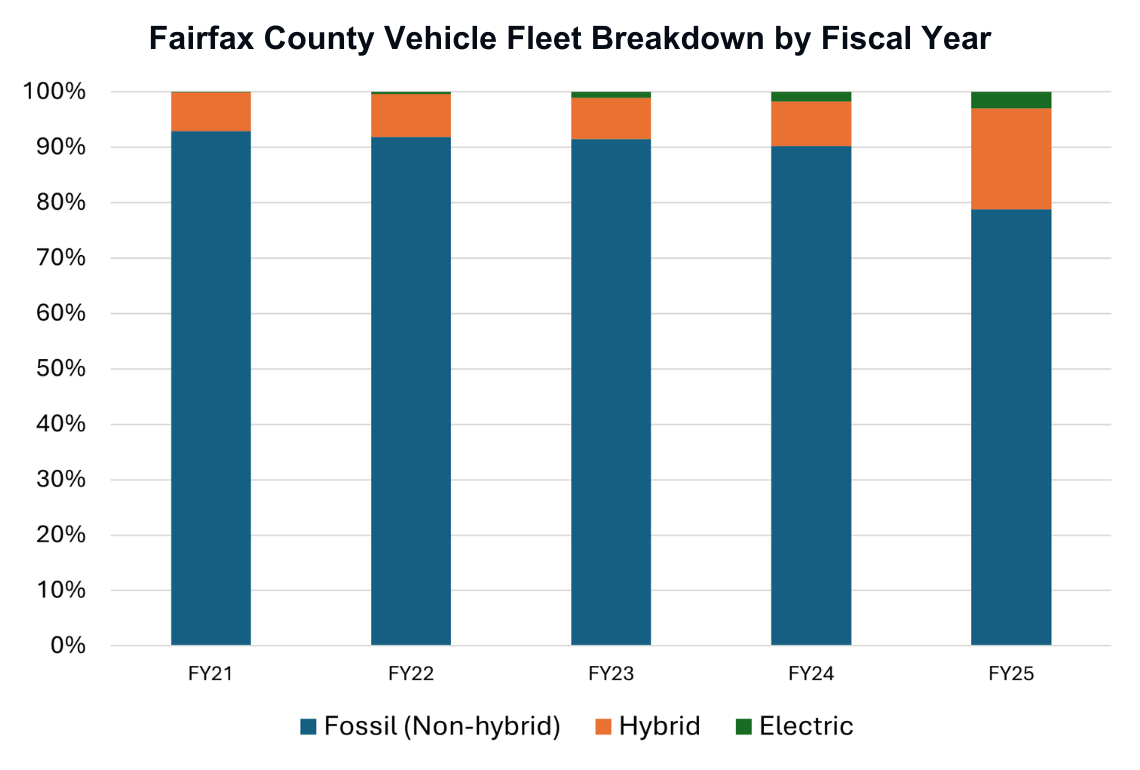
Progress: 13% of the Connector buses and vehicle fleet are electric.


Operational Energy Strategy in Action: Fleet Electrification

The Fairfax County Government vehicle fleet is going green. Watch the Operational Energy Strategy in Action video to see how the county is moving away from diesel- and gas-powered vehicles to ones powered by clean energy.


Learn About Fleet Electrification

Fairfax County continually seeks opportunities to green the county fleet, reduce fossil fuel consumption and use alternative fuel vehicles that emit fewer greenhouse gas emissions and harmful pollutants.

The Department of Vehicle Services (DVS) is responsible for providing a comprehensive fleet management program that incorporates environmental stewardship and sustainability. See the chart below for a breakdown of the county’s vehicle fleet.

The Department of Transportation (DOT) is committed to sustainability and green innovation by launching a battery-electric bus pilot program and transitioning its support vehicles to electric and hybrid versions. Electric buses have fewer moving parts, require less maintenance and lower fuel costs when fully charged, and are quieter than traditional diesel or gasoline powered buses.

The county remains committed to transitioning its fleet to EVs or hybrid vehicles as aggressively as possible. However, this transition is influenced by several factors, including the number of vehicles eligible for replacement each year, the availability of EV or hybrid models for specific vehicle needs, and vendor supply limitations due to demand and supply chain issues.
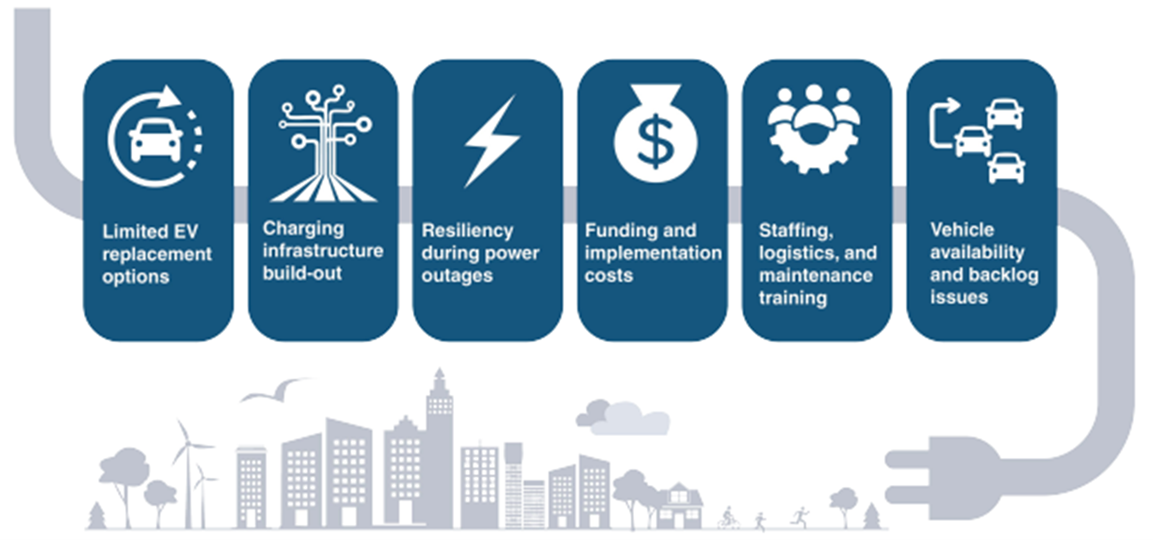
Current challenges to fleet transition include:

  • Limited electric alternatives for specialized county needs, such as public safety vehicles, large vans, and heavy-duty equipment. 

  • High capital costs for vehicle purchases and the development of charging infrastructure.

  • Charging infrastructure must account for fleet emergency operations, ensuring resiliency and reliability during power outages and other emergency events.

Fairfax County, in collaboration with consulting firm AECOM, conducted an analysis of electric vehicle infrastructure and future EV registration growth. This analysis identified current gaps and strategies to enhance charging opportunities, alongside assessing potential funding and financing options. The project included both a transition study for the county’s vehicle fleet and a Community EV readiness strategy. A final report was submitted to the Board of Supervisors in November 2025.

Find out more about the Electric Vehicle Readiness Strategy.

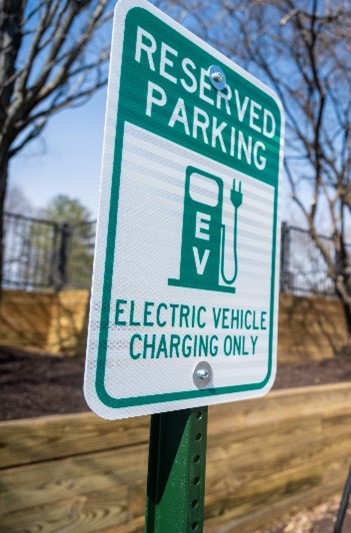
EV charging sign in parking lot

DVS and FCDOT are also continuously expanding the electric vehicle charging infrastructure to support county fleet use as well as charging options for the public.

There are over 100 Level 2 charging ports at various county government facilities, including community centers, parking garages, and government office buildings. . EV charging stations at county-owned facilities are available for public use for a fee on a first-come, first-served basis.

To locate EV charging stations at county facilities, visit the ChargePoint website and use their "Find Stations" feature.

Getting to a Green Fleet: Connector Buses

12 battery-powered buses are now part of the Fairfax Connector fleet, with another four on the way by 2025.


Commuting & Telework Policies

Fairfax County offers incentives and green commuting options to reduce employee commutes. Where feasible, the county allows alternative schedules and teleworking to reduce the need for vehicle travel.


Operational Energy Strategy (OES)

The Operational Energy Strategy promotes cost-effective solutions and an energy-conscious culture for county government operations, buildings and fleet vehicles. The plan sets goals, targets and actions across major focus areas - including building energy and water use, fleet electrification, and waste management.


Fairfax Virtual Assistant