Health Department Alert:
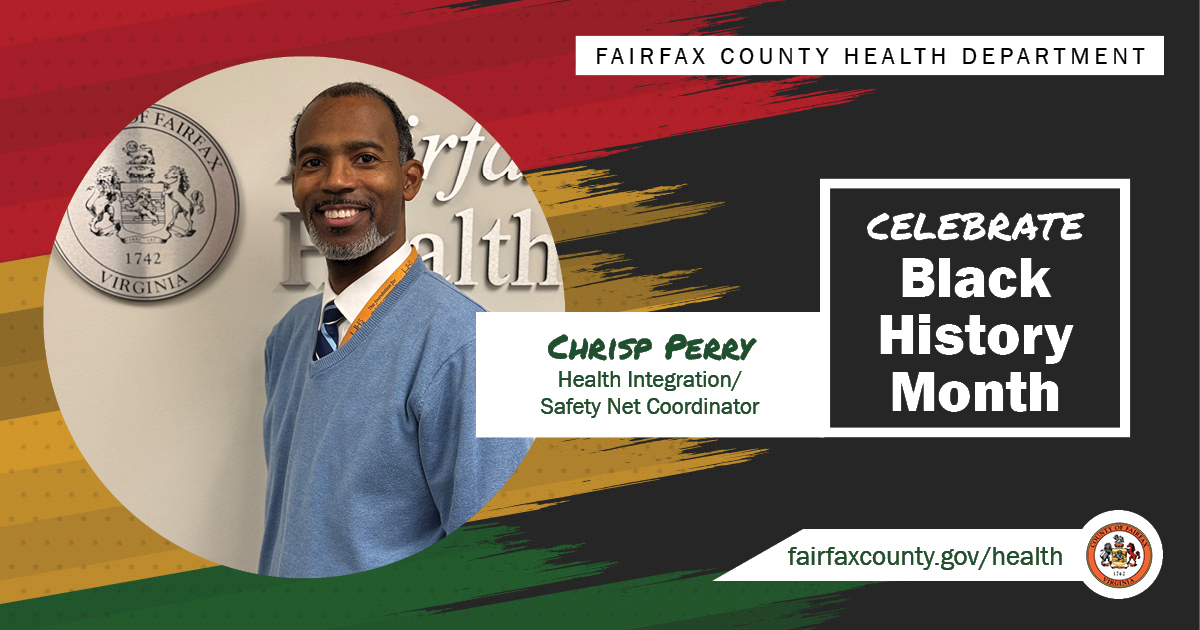 How did you come to work at the Health Department? How long have you been at the Health Department?
I have been with the Fairfax County Health Department for 4 years, but I have been working with the county for 5 years. After 10-years as a Public Health Analyst in the United States Department of Health and Human Services, I transitioned to local government and have not looked back.
What is your role at the Health Department?
I am the Health Safety Net Coordinator for the Fairfax County Health Department. It is a small but mighty team that works to engage, develop, support, provide subject matter expertise, technical assistance, and leverage existing relationships with safety net community providers (e.g., Federally Qualified Health Centers (FQHCs)), free clinics, local health systems (e.g., INOVA), and other Fairfax County government agencies (e.g., Community Services Board, Department of Family Services, and others) to expand access, foster service integration among its various partnerships, improve population health, and increase equity across patient populations.
What inspired you to work in public health?
It was a combination of academic and life experience. I have always wanted a career in healthcare, but also wanted to have an impact on communities, especially places where socioeconomic factors impede the ability of residents to live optimal lives. As a kid, I wanted to be a dentist. In high school, that changed when I injured my knee playing football as I was inspired when the orthopedic surgeon showed me pictures of the procedure and I learned that he was a former NFL doctor! In college, I majored in sports medicine, aspiring to be an orthopedic surgeon. However, the arrow pointing toward public health changed during my Senior year in one of my health studies classes. While studying the top chronic conditions in the U.S., we looked at a CDC chart highlighting AIDS cases over time that showed African American cases rising while other racial/ethnic populations declined or remained steady. This stark disparity planted a mustard seed of inquiry to look further into population health disparities (a burgeoning topic at the time), which eventually led to learning more about public health. What finally sold me into public health was the multidisciplinary platform it utilizes to improve population health. Keyword: multidisciplinary. It takes more than one discipline, more than one person, more than one approach. It’s a shared responsibility. It wasn’t just about chronic conditions but the underlying factors, largely socioeconomic, that impact optimal health and well-being. My desire to work in healthcare and experiences growing up as a "city-kid” felt like a natural fit into a field where I could be a team player contributing to the greater well-being of society.
What is something that you wish people knew or understood better about your job?
It is a challenge to obtain understanding that we do not provide direct client services or manage a specific program, like chronic disease intervention. Our work is primarily in engagement, relationship, and partnership building. We support our partners financially and non-financially (e.g., technical assistance, subject matter expertise). Yes, we have goals, objectives, and support our work with data as well as utilize evidence-based studies. On the other hand, we are also guided by values recognizing systemic inequities experienced by individuals with limited resources and/or circumstances.
Can you describe a time when our community has inspired you/your work?
I am inspired by learning from individuals with more experience, knowledge, and insight. As a kid, I always loved listening to stories because you get to learn about others. For me this is a lifelong journey, so watching, listening, and learning from, people that I work with (directly or indirectly), is inspiring enough
 Valentine’s Day - the holiday of love and indulging in sugary, sweet treats. Whether you're treating yourself or someone special, there are plenty of ways to celebrate the season’s sweetness with nutrition in mind.
5 Facts About Sugar:
Sugar Myths and Truths
Myth 1: Sugar-Free Products Are Always Healthy
Truth: Just because something is sugar-free doesn’t mean it’s healthy. Many sugar-free items still contain unhealthy fats, artificial sweeteners, and preservatives. Always check the nutrition label to understand what you're consuming.
Myth 2: Sugar Causes Diabetes on Its Own
Truth: Sugar doesn’t directly cause diabetes, but a high intake of added sugars can contribute to insulin resistance, which is a key factor in developing type 2 diabetes. Focus on a balanced diet and limiting sugar to reduce your risk.
Myth 3: All Sugars Are the Same
Truth: The sugar found in whole fruits is different from the added sugar in processed foods. Fruits provide fiber, vitamins, and antioxidants, which balance the impact of their natural sugars on your body.
Myth 4: Honey and Agave Are Healthier Than Sugar
Truth: While honey and agave syrup are less processed than refined sugar, they still have a similar effect on blood sugar. Moderation is important with all types of sweeteners.
Myth 5: Fruits Are Too Sugary and Should Be Avoided
Truth: Fruits are an excellent source of vitamins, fiber, and antioxidants, and their natural sugars are absorbed more slowly than the sugar in processed sweets. Enjoying fruit as part of a balanced diet is both healthy and satisfying.
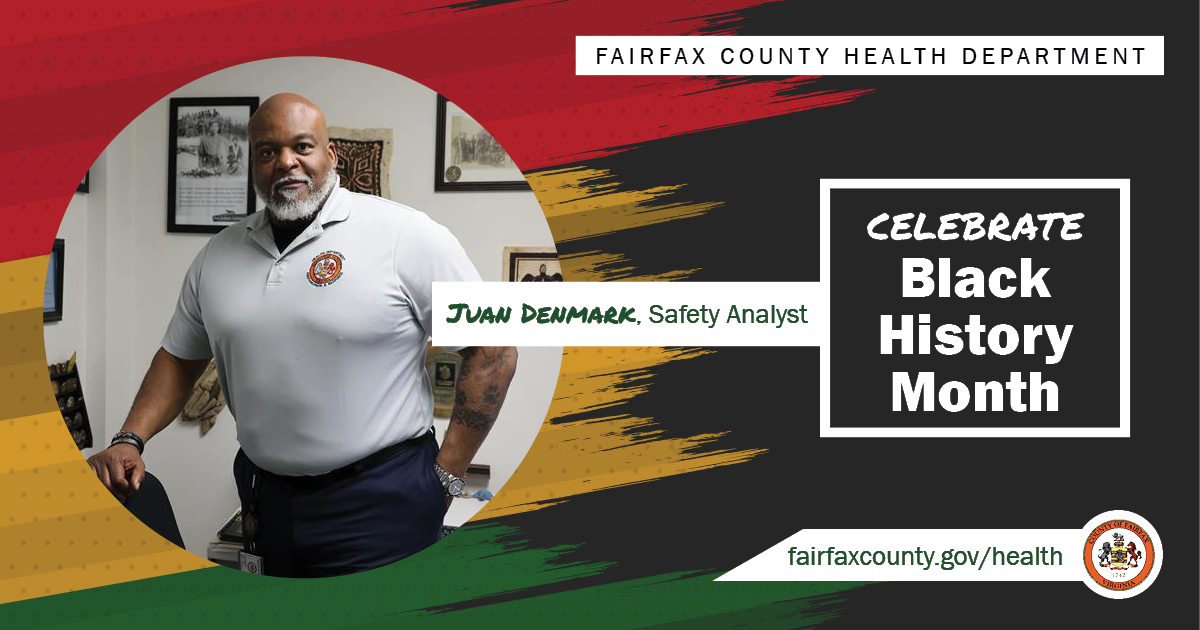
For Health Department safety analyst Juan Denmark, safety isn’t just his career — it’s a lifelong mission. In his role, he applies decades of military, security, and training experience to protect others. Whether he’s developing policies or training staff, Juan's focus is always on keeping people safe.
“Safety isn’t just a job” for him, he said. “It’s a mindset. It’s a mentality.”
Juan’s impact extends across the health department. He enhances safety by accompanying inspectors on visits, advising home health aides, developing workplace violence prevention programs, and more. His proactive approach emphasizes prevention — he believes that being prepared through training and education is the key to mitigating risks. “If you understand why something is important, you’re more likely to take it seriously,” he says, encouraging staff to adopt a safety-conscious attitude not just at work, but in everyday life.
His motivation stems from growing up in a military family and his own 22 years of Army service. “What drives me is wanting to leave something better than the way I found it,” Juan said.
For the nearly 900 employees of the health department and the communities they serve, Juan’s work ensures that safety is always a priority.
Learn more about the Health Department and our mission to protect, promote, and improve health and well-being for all in our community. Read the About Us page on our website.

Fairfax Health District is experiencing high levels of influenza (flu) illness. From January 26 to February 1, about one in seven (14%) people going to Fairfax emergency department and urgent care centers were diagnosed with flu. Children in Fairfax are especially at risk of flu with about one in four (25-27%) of their visits for flu.
This level of flu activity is higher than what Fairfax has seen in past years, both before and after the COVID-19 pandemic. According to the Centers for Disease Control and Protection (CDC), flu activity in Virginia is very high and will likely continue to grow.
Fairfax County Health Department urges the community to review information below about what to do if you or a loved one is sick with flu and how to prevent spreading it to others. You can still get the flu vaccine to help lower your risk of serious illness.
Flu symptoms typically start suddenly, and people with flu usually have some of these symptoms:
| In children | In adults |
|---|---|
|
|
Antiviral drugs are available to treat flu in children and adults. These are not sold over the counter. You can get them if you have a prescription from a healthcare provider.
CDC recommends that people at higher risk of serious flu complications should be treated with antiviral drugs as soon as possible if they get sick with flu. The antiviral treatment works best when taken within 1-2 of the first flu symptoms.
The best way to protect yourself from serious illness is to get a seasonal flu vaccine. The vaccine lowers the risk of flu illness, hospitalization, and death. CDC recommends that everyone 6 months and older get the flu vaccine every year. While it’s best to get the flu vaccine by the end of October, it is still important to get vaccinated as long as flu is a risk in the community.
You may also take the following actions to prevent the spread of flu:
 February is American Heart Month and it’s a good time to consider healthy habits. Heart disease remains the number one cause of death in Virginia. Public health and healthcare partners encourage some simple changes to your routine that can help reduce the risk of heart disease.
Learn more about heart disease.
The Fairfax County Health Department is offering walk-in testing for HIV and other sexually transmitted infections (STIs) at selected times and locations in January, February, and March. Appointments are not required during these specific walk-in testing clinics.
Fees based on services provided and income level. If financial assistance is needed, clients can meet with an assistance worker prior to testing to determine eligibility. If you have questions or need to schedule an appointment for another time, call: 703-246-7100
See all of the walk-in testing dates, times, and locations.
 The application window for the Public Health Youth Ambassador Program's Spring 2025 cohort has been extended. The deadline for submitting completed applications is now 8:00am on Monday, February 3, 2025.
The Public Health Youth Ambassador Program (PHYAP) trains 10th through 12th grade high school students across Fairfax County about methods to reduce opioid use, teen mental health issues, and becoming a Community Health Worker. PHYAP provides certifications from two nationally-know public health institutions (Morehouse College and George Mason University) in each of those areas during its Fall and Spring cohorts.
Since PHYAP’s inception, the program is proud to have partnered with three outstanding Fairfax County Public Schools (FCPS), where our Community Health Worker curriculum is offered during day sessions: John R. Lewis High School, Justice High School, and Mount Vernon High School. Students who qualify can take part in lessons and hands-on activities led by trained PHYAP facilitators three days a week during their advisory period.
For high-school aged students who do not attend Lewis, Mount Vernon, or Justice but wish to become a Youth Ambassador, program sessions are offered outside of regular class hours at the Fairfax County Government Center. Evening classes are held Monday through Thursday each week, while our weekend class is held each Saturday morning. Whether a student attends private school, a faith-based school, is homeschooled, or goes to a non-partner Fairfax County Public School, they have the chance to jumpstart their secondary school and career engagement in the expanding community health field.
Learn more about the Public Health Youth Ambassador Program.
Winter weather and extreme cold temperatures have arrived in Fairfax County this week, and it’s important to take precautions to protect your health and the health of your loved ones. Ensure your snow days stay fun by taking protective actions --- staying informed, limiting your exposure, and avoiding situations that increase your risk of injury.
1. Stay Informed
Weather conditions can change rapidly during the winter. Sign up for Fairfax Alerts to stay informed about road closures, severe weather warnings, and evacuation orders. Familiarize yourself with the county’s emergency resources, including shelters and warming centers.
2. Prepare for Power Outages
Winter storms have the potential to cause power outages, which can disrupt heating, lighting, and refrigeration. When using generators and fireplaces, ensure they are properly ventilated to prevent carbon monoxide poisoning. Always keep a carbon monoxide detector with fresh batteries in your home.
Stock up on flashlights and extra batteries and avoid using candles as they pose a fire hazard. Keep a thermometer in your refrigerator and freezer to monitor food safety. If the power goes out, food is safe as long as the fridge stays below 40°F. Use coolers with ice to preserve perishable items if necessary and keep an eye on any temperature-sensitive medications you may have. Learn more about food safety and power outages here.
3. Limit Your Exposure
Prolonged exposure to cold temperatures can lead to hypothermia or frostbite, which are both serious conditions. Dress in layers, including thermal undergarments, sweaters, and waterproof outerwear. Cover your head, hands, and feet with gloves, hats, and thick socks. Limit outdoor exposure as much as possible, especially for young children, older adults, and those with chronic health conditions.
4. Plan for Medical Needs, including Durable Medical Equipment (DME)
If you or a family member relies on medical equipment requiring electricity, contact your utility company to register for priority restoration and have a backup power source. Refill prescriptions before severe weather arrives to ensure you don’t run out. Maintain a list of emergency contacts, including your healthcare provider and local emergency services.
For Durable Medical Equipment (DME) users: Ensure you have extra batteries or a manual backup for your equipment. Contact your DME provider to discuss emergency options and verify that your equipment is functioning properly before a storm hits. Keep a list of nearby suppliers or repair services so that you’re ready if needed.
5. Prevent Injuries
Wear footwear with good traction when outside and keep walkways clear. Shoveling snow can strain the heart from overexertion. Take frequent breaks, lift with your legs (not your back), and avoid overexertion.
6. Check on Vulnerable Neighbors
Community support is vital during winter emergencies. Check on older adults, people with disabilities, and those living alone. Offer assistance with grocery shopping, snow removal, or other tasks.
 During its annual meeting in December 2024, the Partnership for a Healthier Fairfax elected a new co-chair, welcomed new members to the steering committee, and said good-bye to two dedicated staff members who are retiring. Members also received an update on the progress of compiling the Health Department’s 2025 Community Health Improvement Plan (CHIP).
First formed in 2010, the Partnership is a coalition of community members and organizations that are working together to explore new approaches for addressing critical public health issues. This is a widely diverse group of individuals, community organizations, schools, healthcare providers, nonprofits, businesses, faith communities and government agencies.
During the meeting, India Richards was elected to serve a three-year term as co-chair of the Partnership, sharing leadership duties with Deron Campbell, who continues his first term as co-chair. Ms. Richards has dedicated her career to advancing community health through leadership, strategic planning, and collaborative efforts. She is currently a project manager at Health Care Dynamics International, where she leads a team overseeing the development and execution of healthcare programs. Ms. Richards will take over duties from Ondrea McIntyre-Hall, whose term has now ended.
New members of the Partnership’s steering committee were introduced to attendees. Attorney Kristi Guillory, Manisha Maskay, and George Mason University professor Xiaoquan Zhao will begin their terms of service this month.
Diane Charles, Manager of the Fairfax Food Council and Susan Sanow, Partnership for a Healthier Fairfax Program Manager, were recognized for their commitment to the vision of healthier communities and the mission of the Partnership and the Partnership Teams. Both are now retired from Fairfax County. Carrie Cannon, MPA, Health Promotion Coordinator for the Health Department, has been named as Interim Program Manager until a new manger is hired.
Meeting attendees also heard a progress report on the creation of the next Community Health Improvement Plan (CHIP). Sarah White, Strategic Partnerships Manager in the Health Department’s Division of Community Health Development, described the process of collecting input on various public health issues from individuals and organizations in Fairfax County and the Cities of Falls Church and Fairfax. They gathered important feedback that will be of critical importance and serve as a basis for determining the priority health issues the CHIP will address. White shared that work groups are forming now to create action steps that can be taken to address the identified issues, with a particular focus on communities that experience the greatest health disparities.
Learn more about the Partnership for a Healthier Fairfax, and what you can do to get involved by visiting the Live Healthy Fairfax webpage.
Key Points:
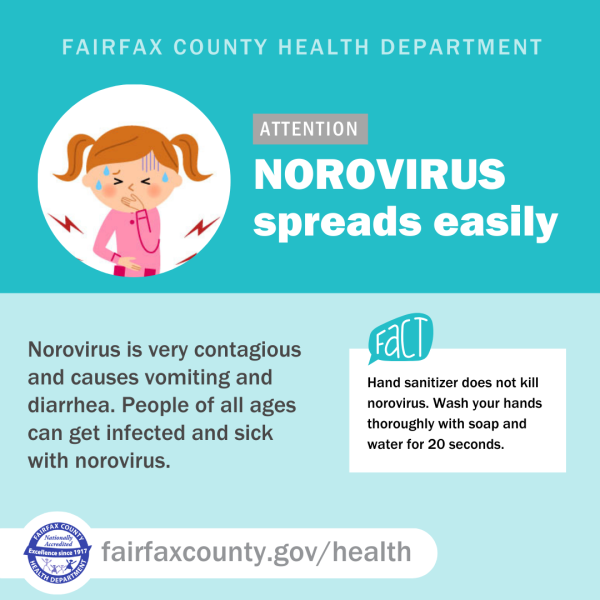 Norovirus (sometimes called stomach flu or stomach bug) is a virus that causes vomiting, diarrhea, nausea, and stomach pain. Norovirus spreads very easily and very quickly. People of all ages can get sick from norovirus.
Like other gastrointestinal (stomach and intestines) illnesses, norovirus spreads throughout the year, but is most common from November to April. Each year, 19-21 million people get sick and there are about 2,500 reported outbreaks in the United States.
You can get norovirus by:
See examples of how norovirus can spread.
Most people with norovirus illness get better in 1 to 3 days. There is no specific medicine that can treat norovirus, but it is important to drink plenty of liquids to prevent dehydration. Dehydration can lead to serious problems. If you, or someone you are caring for, becomes severely dehydrated, contact a healthcare provider.
Norovirus is very contagious, but there are ways you can prevent it.
If you get sick with norovirus, stay hydrated and take steps to stop it from spreading to others.
Learn more about norovirus from the CDC. Learn more about keeping your hands clean, food safety, and other important health topics by visiting our website and following us on social media.