

Health Department Alert:
Since September 2022, the Virginia Department of Health has been investigating a statewide outbreak of meningococcal disease caused by a type of bacteria called Neisseria meningitidis serogroup Y. As of October 12, there have been 29 confirmed cases associated with this outbreak, including one Fairfax Health District resident.
Meningococcal disease is a rare bacterial illness that is spread through close contact. These illnesses are often severe, can be deadly, and include infections of the lining of the brain and spinal cord (meningitis) and of the bloodstream. Symptoms of meningitis include fever, stiff neck and light sensitivity, and symptoms of bloodstream infection include fever, chills, muscle aches, nausea, vomiting and diarrhea. A red, purple, or dark colored rash also may occur. Do not delay seeking care if you experience symptoms of meningococcal disease.
While the risk to the public is very low, the Fairfax County Health Department encourages individuals who are at increased risk of meningococcal disease to check their vaccination records to make sure their MenACWY vaccinations are up-to-date. People at increased risk include:
For persons at increased risk, the vaccination schedule includes 2 doses of MenACWY vaccine administered 8 weeks apart and regular booster doses every 5 years. Additionally, the meningococcal conjugate vaccine (MenACWY) is a routine, school-required vaccine. All preteens and teens should get 2 doses of the MenACWY vaccine with the first dose being given at 11-12 years old. The second dose should be given at 16 years to continue having protection during the years when they are at greatest risk for getting meningococcal disease (16-23 years of age). Talk to your health care provider if you have questions about getting the MenACWY vaccine.
If you are a Fairfax County resident, are at increased risk for meningococcal disease, and are unable to be vaccinated by your health care provider, contact the Fairfax County Health Department at 703-246-7100 to schedule a vaccination appointment.
Get more information about meningococcal disease, including how it spreads and its symptoms. The Centers for Disease Control (CDC) also has information about this outbreak.
Each year on September 28, World Rabies Day is observed to bring attention to rabies and rabies prevention. Rabies is a disease caused by a virus that infects the central nervous system. The virus is usually spread through a bite or scratch, but also can be passed along through direct contact with an infected animal’s saliva or central nervous tissue through an open wound, mouth, nose, or eyes.
 Rabies is nearly 100 percent fatal in mammals, including humans. Fortunately, rabies is also preventable. Thanks to prevention efforts, in the United States, deaths are now rare and typically occur in people who do not seek prompt medical care.
In the U.S., rabies is mostly found in wild animals. According to the Centers for Disease Control and Prevention (CDC), in 2018 bats were the most frequently reported rabid wildlife species, followed by raccoons, skunks, and foxes. While rare, most of the recent human rabies cases in the U.S have been caused by rabies viruses associated with bats.
Bats are an important part of the ecosystem and help us #FighttheBite — each bat can eat thousands of insects in a night, including mosquitoes. There are 17 species of bats in Virginia and eight of them are found in Fairfax Health District. The most commonly reported bat is the Big Brown Bat.
Because we share a habitat with bats, potential exposures do occur. Most bats do not have rabies, but you can’t tell just by looking at it. Rabies can only be confirmed in a laboratory.
It is important to know what steps to take if you or your family comes into contact with a bat because you may need rabies vaccinations to prevent a rabies virus infection.
It is best to be cautious and contact one of our Rabies Program specialists if you were potentially exposed, even if you are not sure if you were bitten or scratched. They can help you determine what to do next.
Exposures to bats can happen outside or if they enter your home. You may not know if you, or a family member, had contact with a bat if you were asleep and woke up to find one near you. And some people may be unaware if they were bit or had direct contact because bats have small teeth that may not leave a visible mark after contact with your skin.
Learn more about bats and rabies, and what you should do if you find a bat in your home.
There are many ways you can protect yourself, your family, and your pets from rabies. One of the most important things that you can do is have your veterinarian vaccinate your dogs, cats, ferrets, and livestock for rabies and remember to keep their vaccinations up-to-date. You can also appreciate wildlife from a distance, keep your pets on your own property, and keep garbage and pet food secure inside.
Last year’s “tripledemic” shined a spotlight on another respiratory illness that adversely affects children under 6 and adults over 65 – Respiratory Syncytial Virus, or RSV. And while most children are infected with RSV by the time they turn 2 years old, anyone can become infected with the virus.
 RSV is often a seasonal illness that typically starts circulating in the fall. It is transmitted from person to person through close contact with an infected person, such as when an infected person coughs or sneezes. Healthy adults and older children may experience mild symptoms that mimic a cold. However, RSV can cause serious illness or death in vulnerable individuals, including premature and very young infants, children with chronic lung disease or congenital heart disease, people of any age with compromised immune systems, and adults over 65.
To help protect vulnerable infants, the U.S. Food and Drug Administration (FDA) authorized an RSV vaccine for pregnant individuals and is recommended by the Centers for Disease Control and Prevention’s (CDC) immunization advisory panel. Abrysvo, the single-dose vaccine produced by Pfizer, is approved for use in pregnant individuals during weeks 32 through 36 of pregnancy.
In addition, the CDC is recommending a new immunization to help protect all infants under 8 months and some older babies who are at increased risk of severe illness caused by RSV. Nirsevimab is a monoclonal antibody product that has been approved for infants during or entering their first RSV season (typically fall through spring) and for some children up to 19 months who remain vulnerable to severe RSV disease during their second RSV season. Monoclonal antibodies provide an extra layer of defense to fight RSV infections and protect children from getting very sick. If you have any questions about monoclonal antibody products to prevent RSV disease, talk to your child’s doctor. Immunization availability is anticipated this fall.
Earlier this year, two RSV vaccines were authorized by the FDA:
Both vaccines contain a part of the RSV virus and work by causing an immune response that can protect you from respiratory disease if you are infected with RSV in the future. The CDC recommends adults 60 years and older talk with their health care provider about whether RSV vaccination is right for them. There is no maximum age for getting RSV vaccination, which is given as a single dose.
Talk with your health care provider about what is recommended for you, your child, or your family member. The cost for these immunizations may vary based on your insurance, contact your provider to find out what is covered.
Along with immunizations for those who are eligible, everyone can help limit the spread of RSV, and other respiratory illnesses, by practicing the following preventive measures:
See more ways to keep you and your loved ones safe as we head into the fall season.
The Fairfax County Health Department is encouraging everyone six months and older to prepare for flu season by getting a flu vaccine and reminding yourself of the steps to take to help avoid flu.
 A yearly flu vaccine is the most important step in protecting yourself and your loved ones against flu viruses. Everyone 6 months and older should get an influenza (flu) vaccine every season, with rare exceptions. Vaccination is especially important for people who are at higher risk of serious flu complications — such as people 65 years and older, young children, people with certain health conditions, and during pregnancy.
The influenza virus changes constantly, and the protection a flu vaccine provides deceases over time. Flu vaccines are updated from one season to the next to protect against the viruses that research suggests will be common during the upcoming flu season. September through October is typically the best time to get a flu vaccine.
This year there are several types of vaccines available based on whether you are younger or older than 65 years of age. Most people need only one flu vaccine for the season. Some children need two doses of flu vaccine. Learn more about flu vaccine options. Talk to a health care provider if you have questions.
Every year, flu vaccination prevents illnesses, hospitalizations, and deaths. Even when flu vaccination does not prevent illness entirely, several studies have shown that it reduces severity of illness. Some additional steps you can take to protect yourself and others from flu include:
It is safe to get a flu vaccine at the same time as a COVID-19. The updated 2023-2024 COVID-19 vaccine was just announced.
Find a flu vaccination site near you using vaccines.gov. Fees may apply; check your health plan. Many plans cover flu vaccinations as part of preventive health services.
Stay informed about 2023-2024 flu season by visiting the Health Department flu website and following us on social media.
Updated COVID-19 vaccine has been recommended for everyone 6 months and older by the Centers for Disease Control and Prevention (CDC). This follows authorization by the Food and Drug Administration (FDA) and recommendation by CDC’s immunization advisory panel. These updated vaccines, referred to as the 2023-2024 COVID-19 vaccine, were developed to more closely target variants that are currently causing disease thereby providing better protection against serious COVID-19, including hospitalization and death. The updated COVID-19 vaccines are similar to earlier COVID-19 vaccines which were safely administered to hundreds of millions of Americans during the pandemic.
The updated 2023-2024 COVID-19 vaccine is arriving just in time for Fall and Winter when respiratory viruses like COVID-19, flu, and RSV spread. In Fairfax County, we have already seen an increase in COVID-19 illness in recent weeks including more COVID-19 hospitalizations, increases in the percent of emergency department visits with COVID-19, and more COVID-19 outbreaks reported.
Staying up to date and getting the new, updated vaccine is important. The virus continues to evolve and protection against it from previous vaccination decreases over time. Getting a COVID-19 vaccine is a safer, more reliable way to build protection than getting sick with COVID-19. Getting vaccinated also reduces your chances of getting long COVID, which can last weeks, months, and even years, after initial illness. Anyone 6 months and older who has gone more than 2 months since their last COVID-19 vaccination is eligible for the new shot.
Like the annual flu vaccine, the new COVID-19 vaccine will be available for everyone who wants them through local health care providers and pharmacies, and you can get both vaccines during the same visit. These vaccines will be covered by health insurance. See where to get Flu and COVID-19 vaccines at vaccines.gov.
For individuals who do not have health insurance, no-cost vaccine will be available at clinics, doctor’s offices, and pharmacies participating in the Vaccines For Children and Vaccines for Adults (Bridge to Access) programs. Contact your health care provider to find out if they participate in these programs. Local health departments will also have a limited supply available for the uninsured and underinsured. In the weeks ahead, Fairfax Health District residents may call 703-246-7100 to make an appointment.
Along with getting vaccinated, take the following steps to protect yourself and others from COVID-19 and other respiratory viruses:
See more ways to keep you and your loved ones safe as we head into the fall season.
Continue to follow the Health Department for updates about COVID-19, the flu, and RSV on our website and social media channels.
 The Fairfax County Board of Supervisors is proclaiming September as Childhood Cancer Awareness Month in Fairfax County and encouraging residents to support this cause that impact families in communities across the country.
According to the Centers for Disease Control and Prevention (CDC), while cancer in children is rare, the disease strikes some 15,000 children (younger than 20 years) each year in the United States and remains one of the leading causes of death in this age group. The good news is that cancer death rates among children from birth to age 14 have dropped nearly 70 percent over the past 40 years. However, less than 10 percent of federal cancer research funding goes to studying childhood cancers.
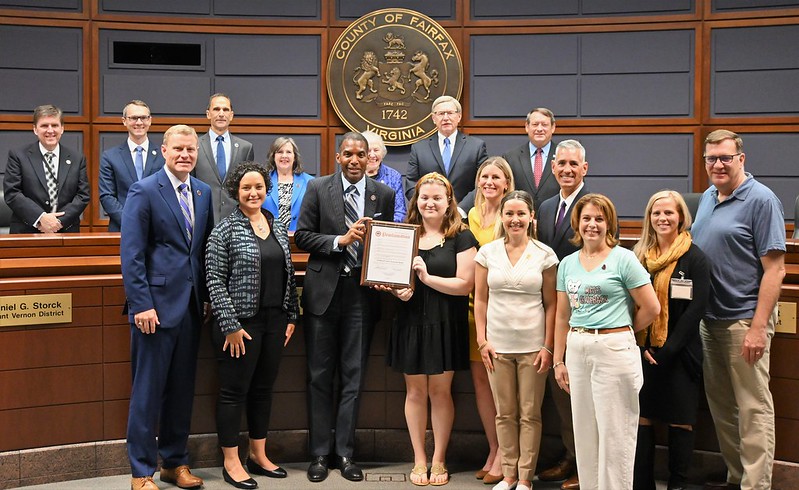
Families can help lower their child’s risk of developing certain cancers later in life by helping them make healthy choices, like avoiding sunburns, wearing broad spectrum sunscreens, staying active, maintaining a healthy weight, avoiding tobacco products, and getting vaccinated against Human papillomavirus (HPV).
Families looking for resources, including causes and prevention, managing care, finding trials, or in need of emergency resources, may visit cancer.gov.
Additional resources:
Childhood Cancers (National Cancer Institute)
Childhood Cancer STAR Act (National Cancer Institute)
INOVA Children's Cancer Program (INOVA)
HPV Vaccine (Virginia Department of Health)
Cancer Prevention Starts in Childhood (National Cancer Institute)
As schools resume and summer wanes, the health department is closely watching COVID-19 hospitalization rates and wastewater surveillance to track disease activity in our communities as the new COVID-19 EG.5 variant circulates. According to the Centers for Disease Control and Prevention (CDC), EG.5 is the most prevalent variant in the U.S. and accounts for more than 17% of cases nationwide.
At this time, there is no evidence that the EG.5 variant increases disease severity compared with other recent variants. Although we have seen a small increase in hospitalization rate in Fairfax County, the hospital admission level remains low and wastewater surveillance for the Northern Region of Virginia shows levels either below detection or unchanged for the most recent reporting period available. Follow the COVID-19 County Check to monitor the situation in Fairfax County.
While the increase in the EG.5 variant may not be considered of high concern to most people in the general population, those who are more vulnerable to serious illness are urged to take steps to prevent illness and protect their health. The CDC provides a personal COVID-19 plan template that provides tools, information and action steps to share with your family, friends, and healthcare provider.
As the weather turns, and people spend more time indoors and near each other, health officials remind residents to monitor for respiratory symptoms, and test, either at home or at a medical facility, if needed. Updated COVID vaccines and boosters will be available this Fall, which are based on a recent Omicron variant (XBB.1.5). Experts state that since the new EG.5 variant is genetically similar to previous Omicron strains, including XBB.1.5, the updated boosters are expected to provide protection for this strain of the virus.
Stay tuned for future updates concerning vaccine availability that will be posted on the health department’s website.
The Fairfax County Health Department recently commended community partner Pediatric Specialists of Virginia for their contributions in protecting the health of children through their dedicated actions and commitment to immunizations.
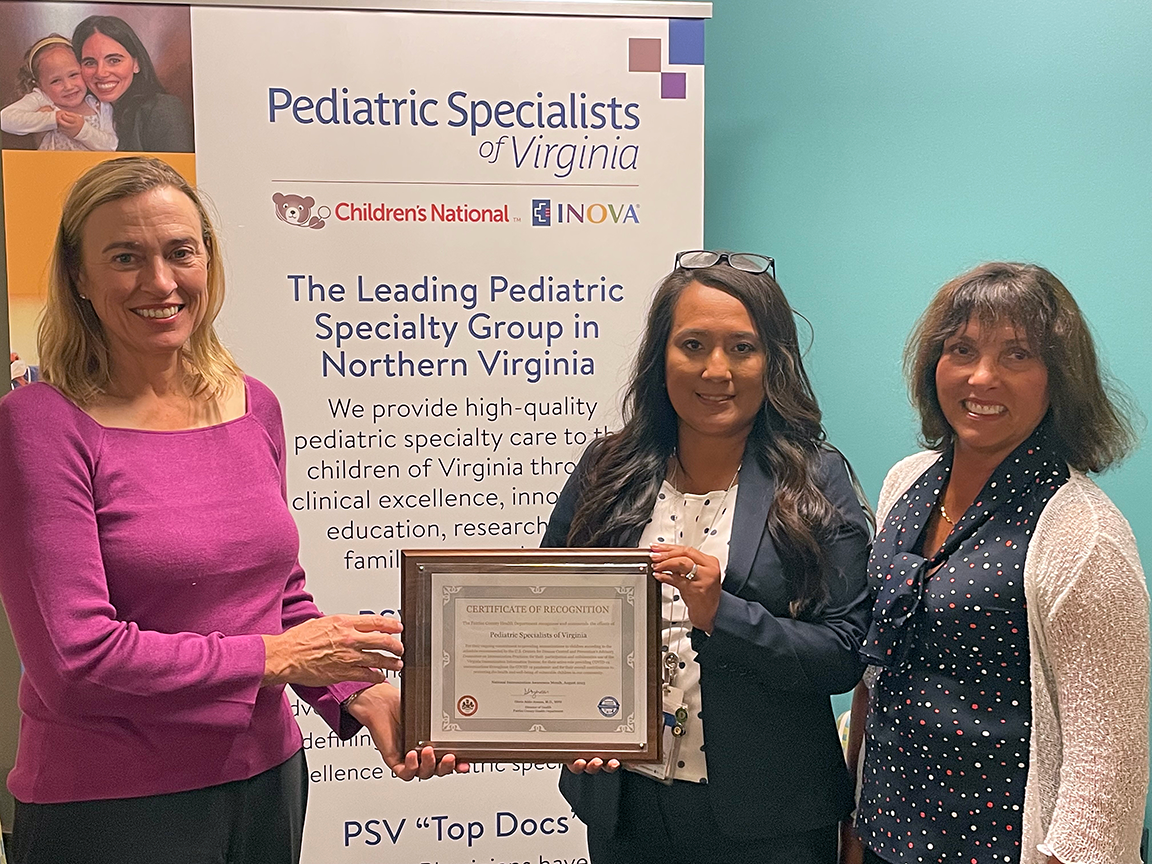
Located in Merrifield, Pediatric Specialists of Virginia is being recognized for their participation and collaborative use of the Virginia Immunization Information System (a statewide system that maintains vaccination history); for their active role providing COVID-19 immunizations throughout the COVID-19 pandemic; and for their overall contributions to protecting the health and well-being of vulnerable children in our community.
“Recognizing the significance of this post-pandemic year, the Health Department acknowledges the unwavering dedication and commitment of Pediatric Specialists of Virginia in providing timely immunizations,” said Christine Carlock, RN, the Health Department’s Immunization Action Plan Coordinator. “With the aftermath of COVID, it becomes imperative for everyone in our community to be mindful of the grave impact infectious diseases like measles, chickenpox, whooping cough, flu, and COVID can have on both individual health and the overall financial stability of our community.”
Each August, The Virginia Department of Health, the Fairfax County Health Department and other partners recognize National Immunization Awareness Month. This recognition highlights the importance of routine vaccination for people of all ages, preventing many diseases that were once common. Today’s childhood vaccines protect against potentially life-threatening illnesses, including polio, measles, whooping cough and chickenpox. Preteens and teens also need vaccines like HPV, which protects them against certain types of cancer later in life. Adults need other vaccines, depending on their age, occupation, travel plans and medical conditions. And everyone 6 months of age and older should get a flu vaccine every year.
When people are not vaccinated, they are at increased risk for diseases and can also spread diseases to others in their community – including babies who are too young to be fully vaccinated and people with weakened immune systems due to cancer or other health conditions.
The Health Department is offering childhood and back-to-school immunizations at its clinic sites by appointment only. Appointments can be made by calling 703-246-7100. For locations and hours visit the Immunizations page.
Seeking medical care in another country, practiced by millions of U.S. residents each year, is known as “medical tourism.” Travelers may seek care outside of the U.S. to reduce cost; to be closer to family or in a more familiar language and cultural setting; or to access procedures or therapies that are not currently approved in the U.S. According to the Centers for Disease Control and Prevention (CDC), the most common procedures that people undergo on medical tourism trips include dental care, cosmetic surgery, fertility and cancer treatments, and organ and tissue transplantation.
Traveling to another country for medical care can be risky to your health. In the U.S., health care facilities must maintain licensure, credentialing, and accreditation intended to provide safe medical care. These safeguards are in place and maintain a high quality of care that include requirements for sterile medical devices during surgery as well as screenings of organs and blood products before any procedure. These same protections are not always available or followed as rigorously in other countries. This means that individuals may be at risk of acquiring wound or bloodstream infections, including those caused by drug-resistant bacteria and fungi, and of being exposed to diseases such as hepatitis B, hepatitis C, and HIV. Additional challenges include communications with medical staff and risks of air travel shortly after surgery.
The CDC posted a travel health notice on 5/26/2023, regarding U.S. citizens returning from Matamoras, Mexico. US citizens have been diagnosed with fungal meningitis infections linked to medical or surgical procedures while visiting Matamoras (Travel Health Notices | Travelers' Health | CDC). The Fairfax Health District has seen a recent increase in hepatitis C infections among travelers to Pakistan who received medical or surgical procedures. Pakistan has one of the highest rates of hepatitis C in the world.
Before seeking medical care in another country, take action to reduce your risks. Check the qualifications of the person who will be performing the procedure and the credentials of the facility where it will be done. Consult with your healthcare provider at least 4-6 weeks before your trip and get their advice including the risks you may face and ways to reduce those risks. Also, make sure you have all needed vaccinations for the country you’re traveling to. Consider getting the hepatitis A and B vaccines before your trip. The CDC updated recommendations for all 19- to 59-year-olds to get the hepatitis B vaccine series (Hepatitis B - Vaccination of Adults | CDC) in April 2022. Visit the CDC website for more information on medical tourism.
Consider having medical or surgical procedures done in the US. If this is not possible, educate yourself on the risks and how to decrease them before traveling. Know the most recent facts in these guides:
Three county employees were recognized with the A. Heath Onthank Award for Merit, the highest honor awarded by the county to its employees at the Fairfax County Board of Supervisors meeting on Tuesday, June 27. Maternal Child Health Compliance Nurse Alisa Brooks and Public Health Nurse Practitioner with the Homeless Health Care program Nathalie Washington were recognized for accomplishments of outstanding worth in advancing and improving public service in Fairfax County Government and Fairfax County Public Schools.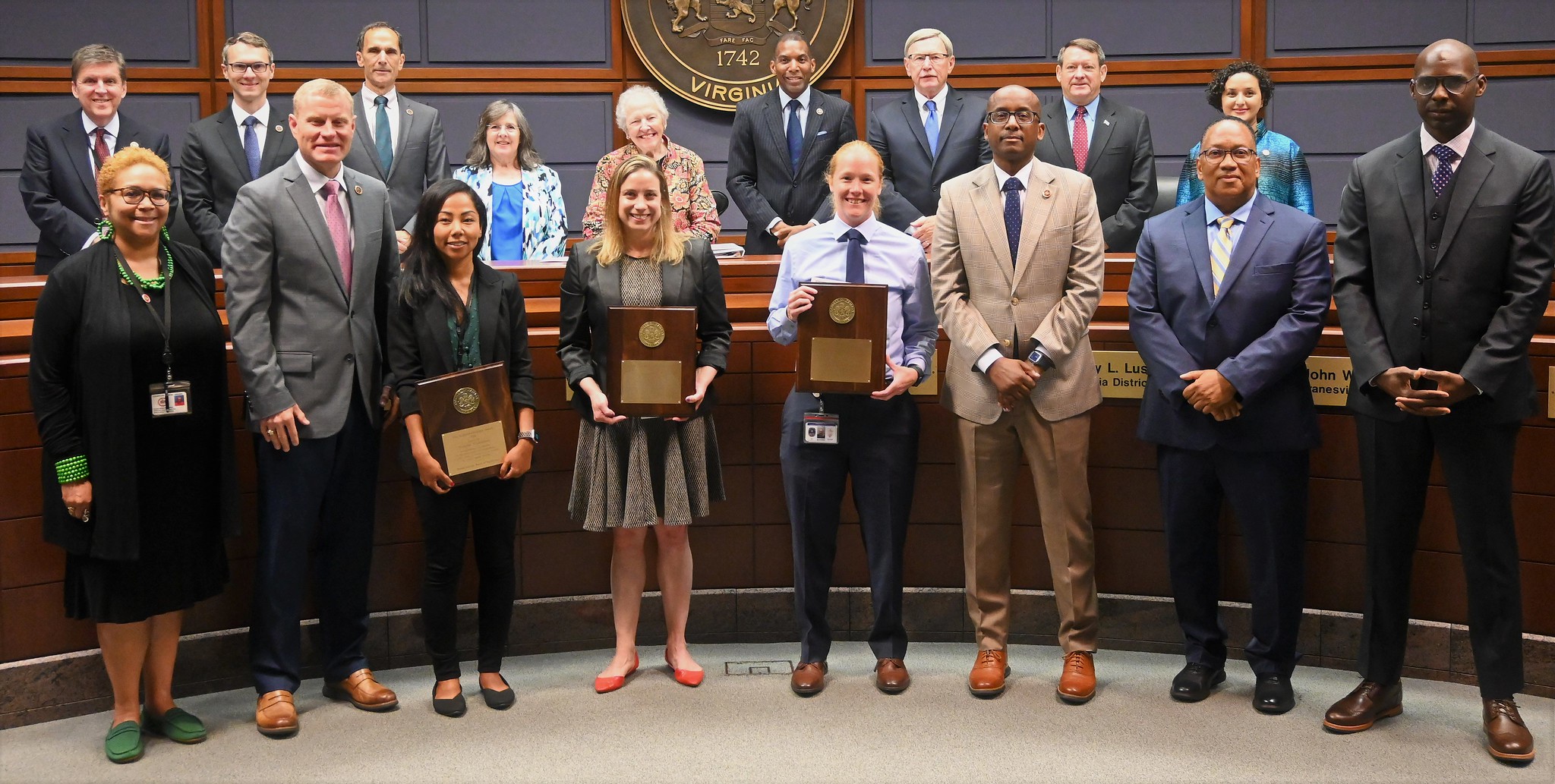
Demonstrating outstanding leadership and initiative, Alisa Brooks assisted in the coordination of the Care to Share Program and developed the Care to Share Toolkit dually addressing food waste in schools and childhood food insecurities in Fairfax County. Since its development, food rescue programs have expanded to schools across the county, with PTAs, students, school staff, parents, school nurses and school clubs all getting involved. As a result, hundreds of pounds of food are being redistributed to those in need, making a positive impact on the health of food-insecure individuals in our community.
Through exceptional collaboration with epidemiology, nonprofits, and the Office to Prevent and End Homelessness, Nathalie Washington created a more efficient COVID-19 screening and isolation protocol and monkeypox evaluation process for the Homeless Health Program. She led a team of nurse practitioners to provide 1,075 medical care visits, addressing over 1,500 critical health conditions and appropriately referring more than 1,300 individuals to higher levels of care and subspecialty evaluations. Through her dedication and direction, 132 vaccine clinics were successfully organized in locations including shelters and the streets, providing high quality, highly needed care in this vulnerable population.
Also recognized was Gillian Ethridge with the Department of Public Safety Communications.
Read the full story: Three County Employees Recognized With Onthank Award