
Health Department Alert:
The Fairfax County Health Department has confirmed rabies in a skunk found on the Bull Run Occoquan Trail near Balmoral Terrace and Cannon Fort Drive. If you, someone you know, or a pet touched or was bitten or scratched by the animal on or around June 10, 2023, you are urged to call the Fairfax County Health Department Rabies Program at 703-246-2433, TTY 711.

The rabid skunk was reported to have chased, sprayed, and bit multiple hikers. It generally behaved aggressively and persistently and was unresponsive to attempts to deter it from approaching hikers. During the time it was sick, the skunk may have had contact with other people or pets. The rabid skunk was described as an adult animal, black with a distinctly large white stripe covering most of its back. It was reported multiple times between the hours of 7am-2pm before being captured by Animal Protection Police.
Rabies is a serious disease caused by a virus that can infect wildlife, particularly foxes, racoons, skunks and bats, and domestic animals, such as dogs and cats. The rabies virus is found in the saliva, brain and spinal tissue of an infected animal. People get rabies when they are bitten or scratched by an animal that is sick with the disease. The virus can also be passed along when an infected animals’ saliva or central nervous tissue enters an open wound, mouth, nose or eyes of another mammal. To date, 10 animals have been diagnosed with rabies in Fairfax County in 2023.
Animals with rabies may act normally during the early stages of the disease, making it difficult to know if the animal is infected. As the disease progresses, animals often show changes in behavior. For example, wild animals may act very docile and domestic animals may become aggressive. Rabid animals may stagger, drool, or become paralyzed. Protect yourself and your family from rabies: stay away from wild animals and be sure pets are vaccinated against rabies every year. Remember, if the animal is not your own, leave it alone!
Here are other important steps to protect yourself and your pets from rabies:
If bitten or scratched by an animal that might have rabies, wash the wound thoroughly with soap and water and seek medical attention right away. When vaccinations are provided in time and appropriately, rabies treatment is 100 percent effective in preventing the disease. But if not treated, rabies is 100 percent fatal.
More information about rabies can be found at on the Health Department’s website at www.fairfaxcounty.gov/health/rabies/.
44 Fairfax County High Schoolers Onboard to Potential Careers in Public Health
The Fairfax County Health Department, together with Edu-Futuro and Stronger2, honored 44 students from Justice and Mount Vernon High Schools, as they graduated from the Public Health Youth Ambassador Program on Saturday, June 10.
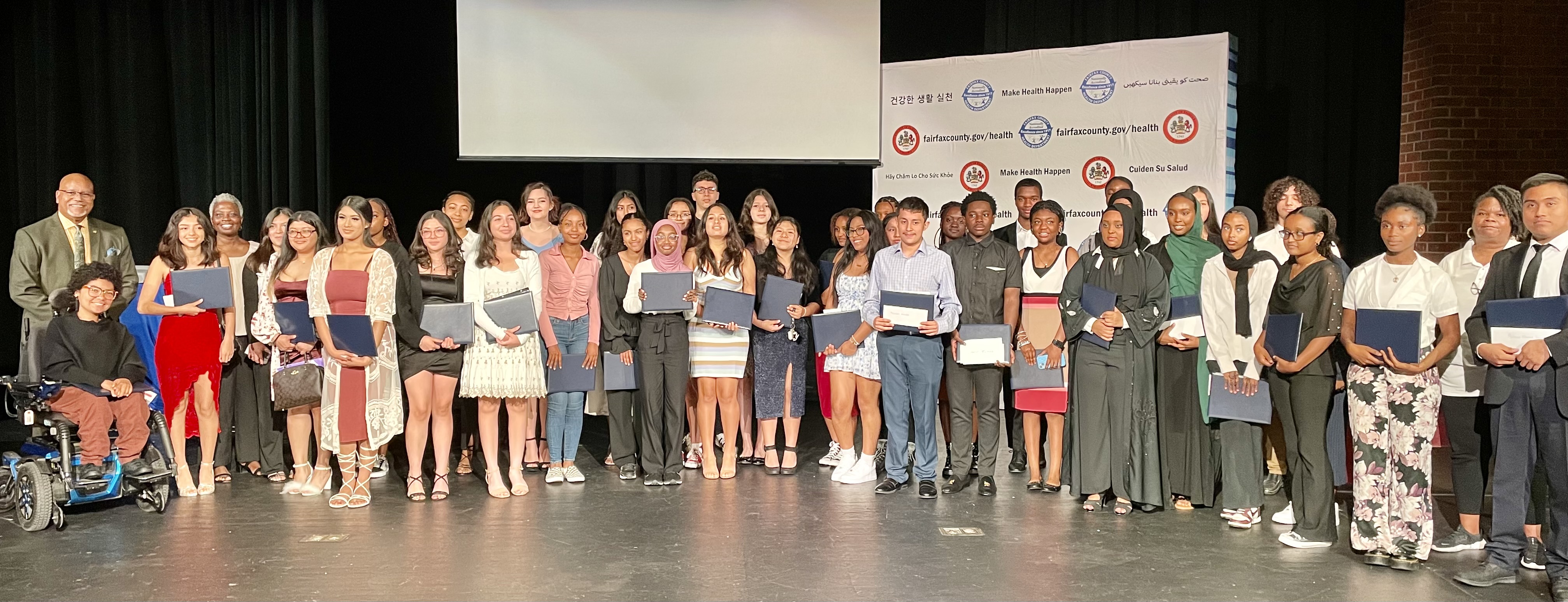
The ceremony was held at Mount Vernon High School’s Little Theater, in a room filled with toddlers, proud parents and grandparents, beautiful piano music and joy. Each of the program’s graduates received a certificate of completion from Morehouse School of Medicine’s High School Community Health Worker Program. Students heard inspiring testimonials from program participants, Adrian Temich from Justice, and Chris Tetteh from Mount Vernon, High Schools and a spoken word performance by Benny Herron. An energetic rap artist, Dumi Right, chanted “Meet me at the top. Nothing stands in my way; the top is where I’m headed.” Positivity, encouragement, and excitement filled the room.
In the nearby cafeteria, student poster displays highlighted student’s research programs on today’s real public health concerns, including teen motherhood resources, obesity prevention, hypertension, and disability visibility.
Jovon Rodgers, Principal of Mount Vernon High School addressed the students. “You’ve shown how brave you are; you give us hope for the future.” Principal of Justice High School, Tiffany Narcisse, said “I am so proud and honored to be here to congratulate you; you are making an impact on your entire school community; it does not go unnoticed.”
The keynote commencement address was delivered by Fairfax County Executive Bryan Hill who shared the personal stories from his youth with the graduates and said, “Education is the key to success and the key to achieving your dreams. We are so very proud of how far you’ve come and that you are taking advantage of this opportunity; we want to see you in the years to come and how far your soar.”
A total of 85 students have graduated from the program in the 2022-2023 school year.
MOUNT VERNON HIGH SCHOOL
Abigail Lefevre
Allison Rivera
Anna Olivares-Diaz
Anthony Thompson
Charity Boateng
Chris Tetteh
Deborah Olorode
Emily Gonzalez
Evelyn Achiaa
Franklin Granados
George Ofori
Haithem Salmi
Ivy Ayala
Jennifer Villalobos-Saenz
Kimberly Ovando
Kimberly O. Gonzalez Rodriguez
Lynette Adjei
Makayla Adams
Marlyn Benitez
Mary Acheampong
Mia Johanna Ramirez-Cruz
Nakiah Morris
Priscila Yeboan
Sandra Oteng-Agyei
Sarahí García Romero
JUSTICE HIGH SCHOOL
Adam Machkor
Adrian Montiel Temich
Amira Ibrahim
Belinda Lopez
Bemnet Daniel
Betzy Romero-Mendez
Cindy Claure
Dania Eldirdiri
Duaa Eldirdiri
Faiza Warsame
Gabriela Flores
Hani Mengesha
Joanna Guzman Arias
Joscelyn Jimenez
Meley Mesfin
Meron Arity
Michelle Abigail Jimenez Vargas
Nebah Adem
Nora Kenzi
Setti Hailu
Wehbe El Hadj Sidi
Yabesra Ewnetu
Watch the Public Health Youth Ambassador Graduation video.
Learn more about the Health Department’s Youth Ambassador Program.
Since 1973, the Health Care Advisory Board (HCAB), has served a vital role in assisting the Fairfax County Board of Supervisors (BOS) in developing health policy and advising the BOS on health and health-related issues which may impact county residents. Today, 50 years later, the HCAB continues to promote the availability and accessibility of quality, cost-effective health care within the county.
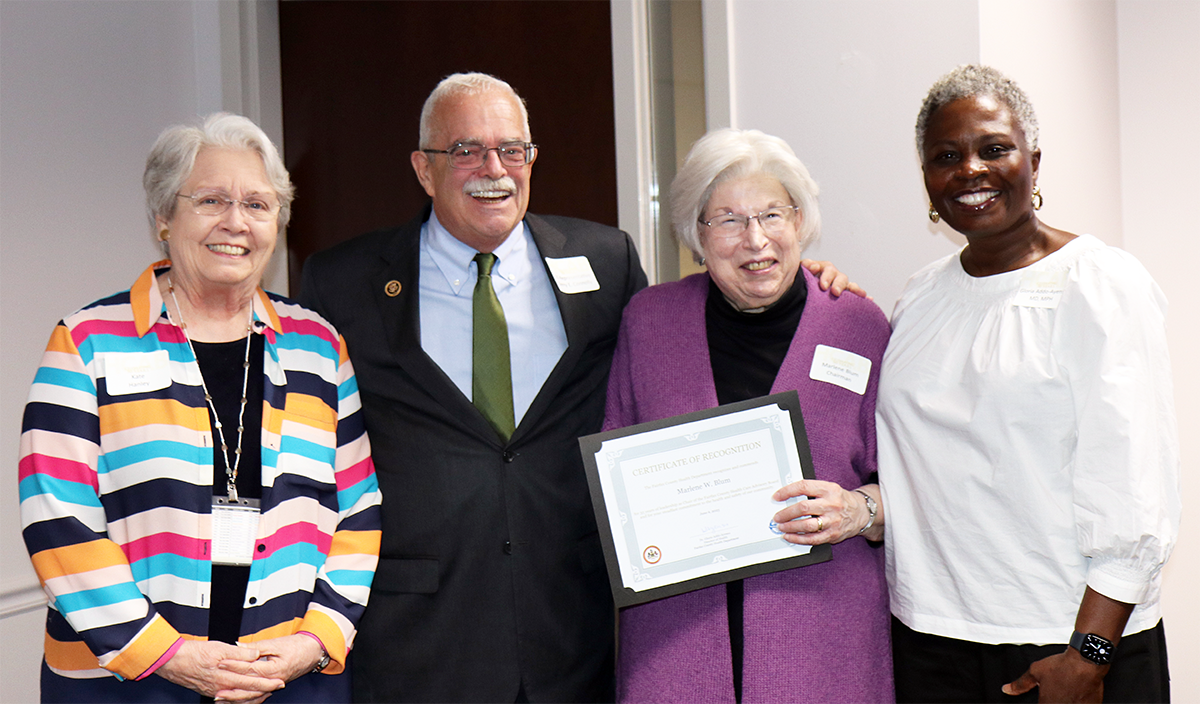
Chairman of the HCAB, Marlene Blum, notes that the work has been “challenging, interesting, substantive, and varied, and that members have been, and continue to be, a diverse group of county residents who consider it a privilege to protect the health and safety of the community.”
“… The Health Care Advisory Board members have had the opportunity to work with supportive, committed, and pioneering Board of Supervisors, outstanding county staff, dedicated health care providers in the private sector, hardworking members of other county board authorities and commissions, and remarkable community advocates and leaders,” noted Mrs. Blum during the recognition reception held at the Fairfax County Government Center.
Gerald E. Connolly, Congressman for Virginia’s 11th District and past Chairman of the Board of Supervisors, served as keynote speaker. He noted how much public health has changed, not only during the past 50 years, but in particular the last few years. “The pandemic underscores how important it was in Fairfax to have the Health Care Advisory Board, which has been a part of the local health department for 50 years.”
Congressman Connolly entered a certificate into the Congressional Record to memorialize the HCAB’s 50-year anniversary and presented Mrs. Blum with a copy of the certificate.
“Fairfax County’s vibrant civic life was built on individuals who dedicated themselves because they cared,” said Congressman Connolly as he described the contributions of HCAB members. “They don’t get paid for it, but they built this community… Thank you.”
Dr. Gloria Addo-Ayensu, Director of Health for the Fairfax County Health Department, highlighted some of the HCAB’s recent initiatives, including supporting the creation of the Epidemiology and Population Health Division and their long-standing advocacy of school nurses to enhance the agency’s school health program.
“This growth has ensured the robust response to outbreaks and to limiting the spread of infections and disease in our communities,” said Dr. Gloria. “Our ability to rapidly gather, process and use data to inform our work was instrumental in shaping the department’s successful response to COVID.”
The Board of Supervisors recognized the work of the HCAB with a Resolution honoring its 50-year history. Board members noted the HCAB’s many accomplishments, including their role in establishing smoke-free workplaces and restaurants, advocating for HIV/AIDS prevention and treatment, and their work in addressing the needs of the community’s medically fragile and homeless populations, individuals with disabilities, older adults, and students.
Members of the HCAB are appointed for 4-year terms by the Board of Supervisors, representing each district. In addition, two at large health care providers are appointed by the Chairman. For more information about the Health Care Advisory Board, visit: Fairfax County Health Care Advisory Board.
The Fairfax County Health Department has updated its online COVID-19 data dashboard following recent changes to the Centers for Disease Control and Prevention (CDC) COVID-19 surveillance and reporting.
Due to changes in reporting requirements after the end of the federal COVID-19 Public Health Emergency on May 11, 2023, certain public health data are no longer available. Additionally, the number of reported cases has become less reliable as most people currently use at-home tests with results typically not reported to a physician or to the health department.
The CDC has redirected their focus to tracking more severe COVID-19 disease, those infections that result in hospitalization or death. The CDC COVID-19 Community Level has been replaced with the COVID-19 Hospital Admission Level with recommended prevention measures based on level (low, medium, or high).
In alignment with the CDC, the Fairfax County Health Department has shifted COVID-19 surveillance and data sharing to focus on measures of disease severity including COVID-19 hospitalization rates, death rates, and emergency care visits. These three indicators have replaced previous measures that were displayed on the COVID-19 Case Data Dashboard.
The Fairfax County Health Department dashboard will be updated weekly each Friday and will display the following metrics: the COVID-19 Hospital Admission Rate (all rates per 100,000 population) and Level for the current week, the COVID-19 Hospital Admission Rate and Level for the previous week, the COVID-19 Death Rate for the current week, and the weekly percent of all emergency care visits for COVID-like illness (CLI).
Additional county-level data can be found on the CDC COVID-19 Data Tracker and the Virginia Department of Health (VDH) COVID-19 dashboards. VDH also recently launched a new dashboard reporting COVID-19 in Wastewater Surveillance, an important tool for earlier detection of disease within a population.
These data provide the public with a detailed look at disease trends throughout the health district and enable us to continue to keep our residents safe and informed.
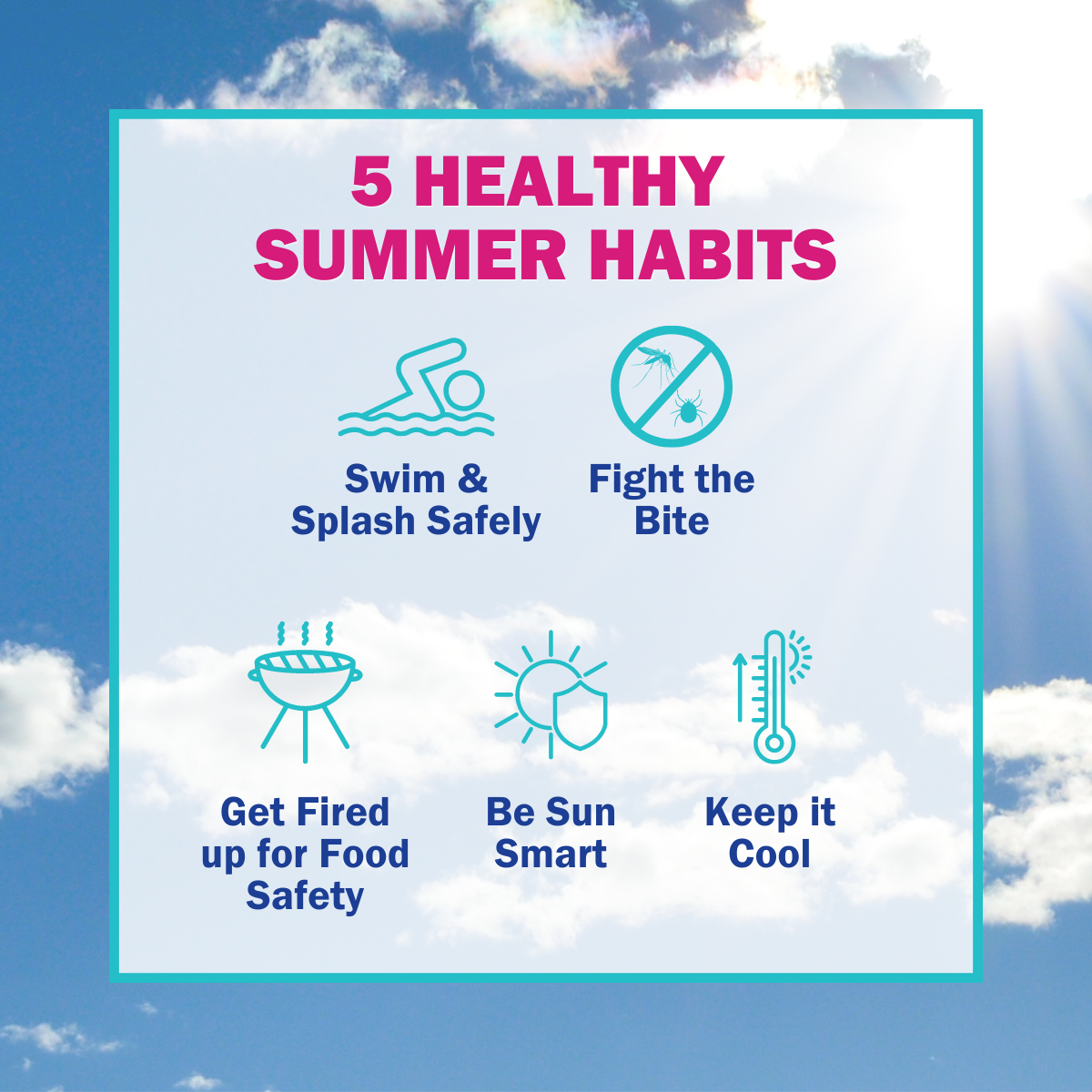 With the unofficial start to the summer season upon us, we are sharing some reminders for five healthy habits (in no particular order) that can help you have a healthy and safe summer.
Swimming, and other water-based activities, are fun and healthy ways to be physically active. Everyone should take steps to prevent illness and injury every time they are in and around the water.
Recreational water illnesses are caused by swallowing, breathing in mists, and having contact with contaminated water. Healthy swimming habits, like not swallowing water, can lower your chance of getting sick. It is also important to stay out of the water if you are sick with diarrhea, to rinse off before getting into pools, splash pads, and hot tubs, and to take kids on bathroom breaks and check diapers (away from the water) every hour.
Drowning often occurs quickly and silently, so it is vital that adults actively supervise and avoid distractions when children are in and around the water. It is also important to know what drowning looks like and how to prevent it.
Mosquito and tick bites are more than annoying — sometimes they transmit diseases. West Nile virus and Lyme disease are two of the vector-borne diseases transmitted by mosquitoes and ticks, respectively, in our region. Get in the habit of these taking simple prevention measures when you go outside, for example:
Find more ways to fight the bite, including how to control mosquitoes and ticks.
Food poisoning peaks in the summer months when warmer temperatures cause foodborne germs to flourish. If grilling is part of your summer kick-off, you may already know to use a food thermometer to make sure your food is cooked to the right temperature. But there are a few more food safety tips you should know beginning at avoiding cross-contamination at grocery store to how long your leftovers can sit out.
Play — and work — outside without raising your skin cancer risk by protecting your skin from the sun. Tanning damages the skin. Skin damage leads to wrinkles later in life and it increases your risk for skin cancer. Remember, you can be exposed to ultraviolet (UV) light even on cloudy and cool days. Layer up on your protection to be sun safe.
We are no strangers to summer heat in Fairfax, but that doesn’t mean we can be complacent, especially in extreme heat. Extreme heat is a period of high heat and humidity with temperatures above 90 degrees for at least two to three days. Extreme heat can be dangerous for everyone, but it may be especially dangerous for people with chronic medical conditions.
 The Fairfax County Health Department is pleased to announce that the 2023 Nurse of the Year, Nurse Practitioner Nathalie Washington, was recently named Virginia Department of Health’s (VDH) Northern Virginia Regional Winner. Nathalie is being recognized for organizing 130 COVID-19 vaccination clinics for Fairfax County’s homeless population as well as her contributions to an article on vaccine coverage in Morbidity and Mortality Weekly Report article, a Centers for Disease Control and Prevention (CDC) publication.
“Our homeless population is very vaccine hesitant,” said Nathalie. “Our vaccination efforts were huge – we went to hotels, shelters, everywhere our homeless population lives. We ended up vaccinating about 45 percent, which is staggering.”
While Nathalie says her path to nursing was somewhat traditional, in high school she knew she wanted to help people but wasn’t quite sure how when she entered George Mason University as a freshman. But it wasn’t long before she decided to follow in her aunt’s footsteps and pursue a degree in nursing. After graduating in the early 2000s, like many new graduates, Nathalie began working in a hospital, in the post-partum unit.
While Nathalie loved the work she was doing, it wasn’t long before she found herself thinking about one particular semester she experienced as a nursing student. As a part of her nursing program, Nathalie worked at the Mount Vernon District office during her public health rotation. Here, she got to see firsthand how public health nursing can make a difference not only in the health of the patient, but in the community. By the fall of 2005, she was back at the Mount Vernon District office working as a public health clinic nurse. Nathalie found her calling.
“I’m passionate about preventative and population health and looking at its overall impact on the community,” said Nathalie. “I wanted to get back to the roots of public health.”
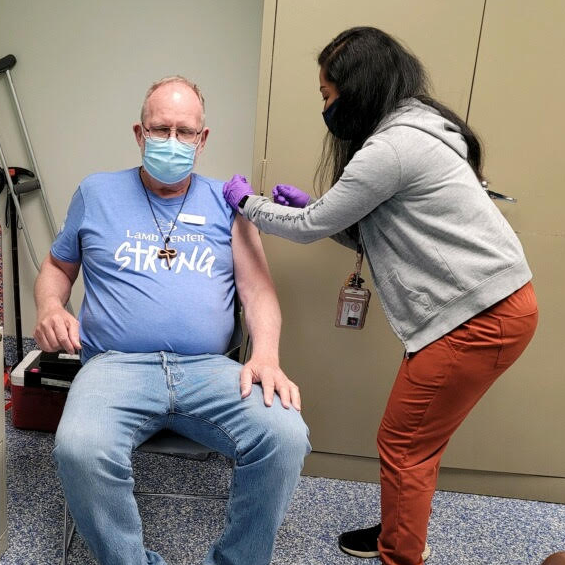 Fast forward nearly 20 years, Nathalie is one of four Nurse Practitioners who provide nursing services to the area’s homeless population. Nathalie, along with her colleagues Janet Kedzie, Danielle Vukadinovich, and Kelly Dodd, provide nursing services to the underserved and vulnerable population throughout Fairfax. They work together in diagnosing and treating health conditions with an added emphasis on disease prevention and health management.
“Our clients are people who normally do not seek out care – in fact, they are hesitant to be treated,” says Natalie. “We see people who need care because they’ve neglected to seek out care for themselves. We meet patients where they’re at. We engage with them. We are a safety net for them. We build trust and form relationships.”
Natalie shares her experience building trust with a patient who has diabetes and a cognitive delay. She would see him every week at the hypothermia clinic and used that time to begin building a relationship. Over time, he allowed that trust to build and agreed to having Nathalie help with his medications as well as navigating other resources. Eventually, he was able to move into permanent housing.
“I still see him,” says Nathalie. “And he is still in housing after more than two years! I see him every so often at the Lamb center for breakfast. He checks in with me and sees how I’m doing. He continues to do his preventative care. It’s so nice to see this full circle.”
According to Nathalie, it’s difficult for people who are homeless to have a medical home. Many clients do not have an I.D. or they lose their medical card. Without an I.D. they cannot collect their social security or other benefits they may be eligible for or see a doctor. There are other barriers as well, including mental illness and drug use. Nathalie says that it takes resources to help make a difference, including nurse practitioners, the Community Services Board, and nonprofits working together.
“Sometimes when someone is resistant to housing, it’s the relationships that can make a difference,” says Nathalie. “We are there to help build that trust over time. It’s giving something without asking for anything in return and I think that’s why we are successful in what we do.”
 “Stable Families, Thriving Futures” onboards young parents to a more stabilized and healthy future
The Fairfax County Health Department is launching a new program to improve the health, educational, and socioeconomic outcomes for local expectant teen and young adult parents.
The new program, called “Stable Families, Thriving Futures,” will provide support to enrollees as they achieve their educational goals, improve confidence as parents, ensure a pathway to economic self-sufficiency and employment, and organize their lives. It is offered to future mothers and fathers ages 14-25.
“Unfortunately, the reality is that most teen and young adult parents are at increased likelihood for negative outcomes – such as dropping out of school, chronic illness and poverty. Getting enrolled in Stable Families, Thriving Futures intervenes to create supports for the parent - and the next generation of their family - that lead to a positive health, financial independence, and an overall brighter future. These provide more stable, solid chances of bright futures for these individuals and their children,” said Blanca Vasquez, program manager.
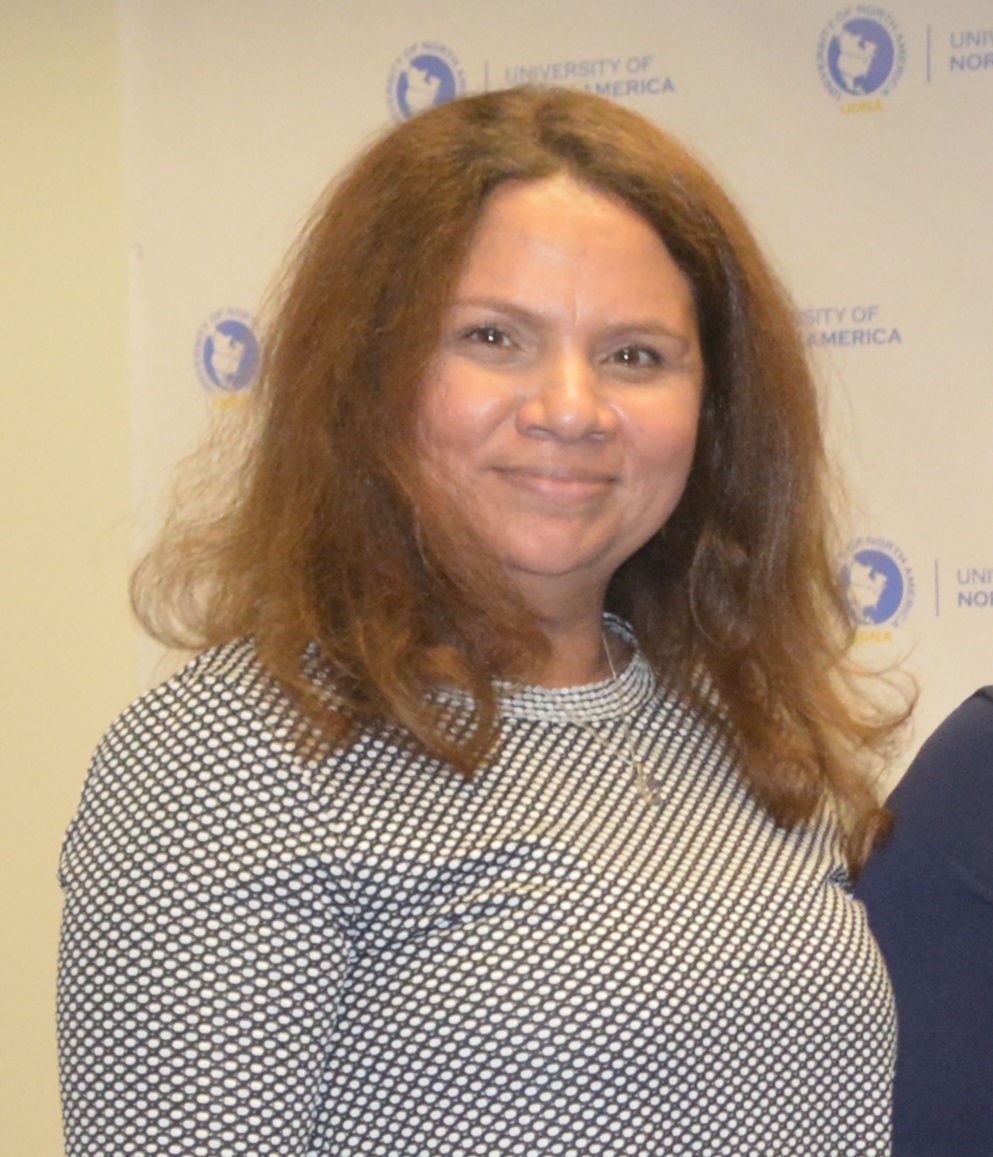
Stable Families-Thriving Futures program participants:
“Stable Families, Thriving Futures creates a network of support for the families it serves and empowers teen and young adult parents. Our ultimate goal is for these young parents to see themselves as capable and responsible people who have the skills they need to pursue their education and get on solid financial footing, creating a foundation upon which the entire young family can thrive,” said Ms. Vasquez.
Stable Families Thriving Futures addressing a community health need in the Fairfax Health District
In 2020, which represents the most recent data on teenage pregnancy from the Virginia Department of Health, 332 teens were pregnant in the County. The Partnership for a Healthier Fairfax’s Community Health Dashboard indicates that teen pregnancy and childbearing have substantial social and economic impacts for communities. The Dashboard cites the Centers for Disease Control and Prevention, which indicates that teen pregnancy accounts for more than $9 billion in costs to U.S. taxpayers and significantly contributes to high school dropout rates among females.
About program funding
“Stable Families, Thriving Futures: A Public Health Model Building Knowledge, Prevention and Resilience Among Teens and Young Adults” is an initiative 100% funded by the U.S. Department of Labor, Office Employment and Training Administration. Please note that the contents of this document are those of the author(s) and do not necessarily represent the official views of, nor an endorsement, by U.S. Department of Labor, Office Employment and Training Administration or the U.S. Government.
How to Enroll
Stable Families, Thriving Futures is accepting referrals to its program. Go to the program website for more information.
Two Live Healthy Award winners were recognized at the Partnership for a Healthier Fairfax Spring meeting today. The Live Healthy Fairfax Awards program recognizes community members whose commitment to health and wellness initiatives go “above and beyond” in the areas of Behavioral Health, Healthy Eating, and/or Healthy Environment and Active Living. Those selected exemplify actions and initiatives that positively impact the health of the overall community and are lasting, sustainable contributions that improve the health and well-being of individuals, families, and populations across Fairfax County.
The work of the Partnership revolves around the Community Healthy Improvement Plan (CHIP), which has just completed year four of its current five year plan. The CHIP provides a five-year collective plan of action for all people in the Fairfax community to be an engaged and empowered community working together to achieve optimal health and well-being for all who work, live, and play across the towns, cities, and diverse communities in Fairfax. Based on a comprehensive data review and planning process, the CHIP’s focus areas, goals, objectives, and key actions involve extensive collaborative efforts with people, groups, organizations, and institutions in the Fairfax community. The CHIP serves as a community-wide initiative, dedicated to equitable access to programs for all residents, and offers opportunities for resident engagement and a chance for everyone to make important contributions to create a healthier Fairfax community.
Today’s Live Healthy Award Winners include:

Tarika Sethi
Tarika Sethi has a history of serving the world, whether as a Peace Corps volunteer, becoming a licensed clinical social worker (where she worked to protect both children and the elderly), and now as the owner of OSA Martial Arts in Fairfax City, Burke, and Manassas, Virginia. At OSA, Tarika’s areas of teaching include improved mental health through a culture of connection, belonging and purpose.
Members of her martial arts studio become a family unit, supporting each other’s accomplishments inside and out of the Dojang. As a trained Social Worker, Tarika’s knowledge and expertise supports behavioral health and physical issues such as anxiety, nutritional issues, ADHD, autism, and cerebral palsy, as well as those who have faced bullying, suicidal thoughts, and low self-esteem.
While many martial arts programs keep kids inside, Tarika knows the importance of bringing children to the calming, connecting and educational activities of area parks and trails, too. She has partnered with senior centers, county schools and Parent-Teacher Associations to provide opportunities for those young to young at heart. Throughout the pandemic, she pivoted her business model to offer virtual classes online.
Tarika Sethi is recognized and awarded for her many years of commitment to awareness of mental and physical health, fitness, stress management and coping skills to meet the needs of a healthy community
Stacey Evers

Stacey Evers is an environmental educator who observed the food struggles around Fairfax County communities at the start of the pandemic and recognized she needed to act. She put her lifelong gardening experience into high gear.
By assembling a team of volunteers to launch Grow a Row, she asked gardeners to grow extra food and developed a drop-off system to get that fresh produce to local food banks. The seeds she planted for Grow a Row in Spring bloomed into a sustainable food nonprofit called Hands on Harvests that continues today and helps people to grow fresh produce and reduces food waste by making it easy to donate surplus harvest.
As she navigated the start-up of a nonprofit to empower gardeners to fulfill the need for fresh, healthy vegetables, fruits, and herbs, she also led the Urban Agriculture Work Group of the Fairfax Food Council. In that role, she invited anyone interested in gardening to get involved. She supported and guided school and community gardens in their garden start-ups, restoration and/or maintenance of gardens during the pandemic and after and she hosted urban agriculture policy discussions that have fueled Food Council policy exploration. She also excelled at her role as an environmental educator at Belvedere Elementary School where she played a pivotal role in securing a grant to start and expand community gardens.
The Partnership for a Healthier Fairfax is a coalition of community members and organizations working together to explore new approaches for addressing the social determinants of health and other critical public health issues. Learn more about what you can do to get involved by visiting Live Healthy Fairfax.
As the weather warms and more residents enjoy the outdoors, the Health Department joins with the Board of Supervisors to share information on how everyone can prevent illnesses caused by insects.
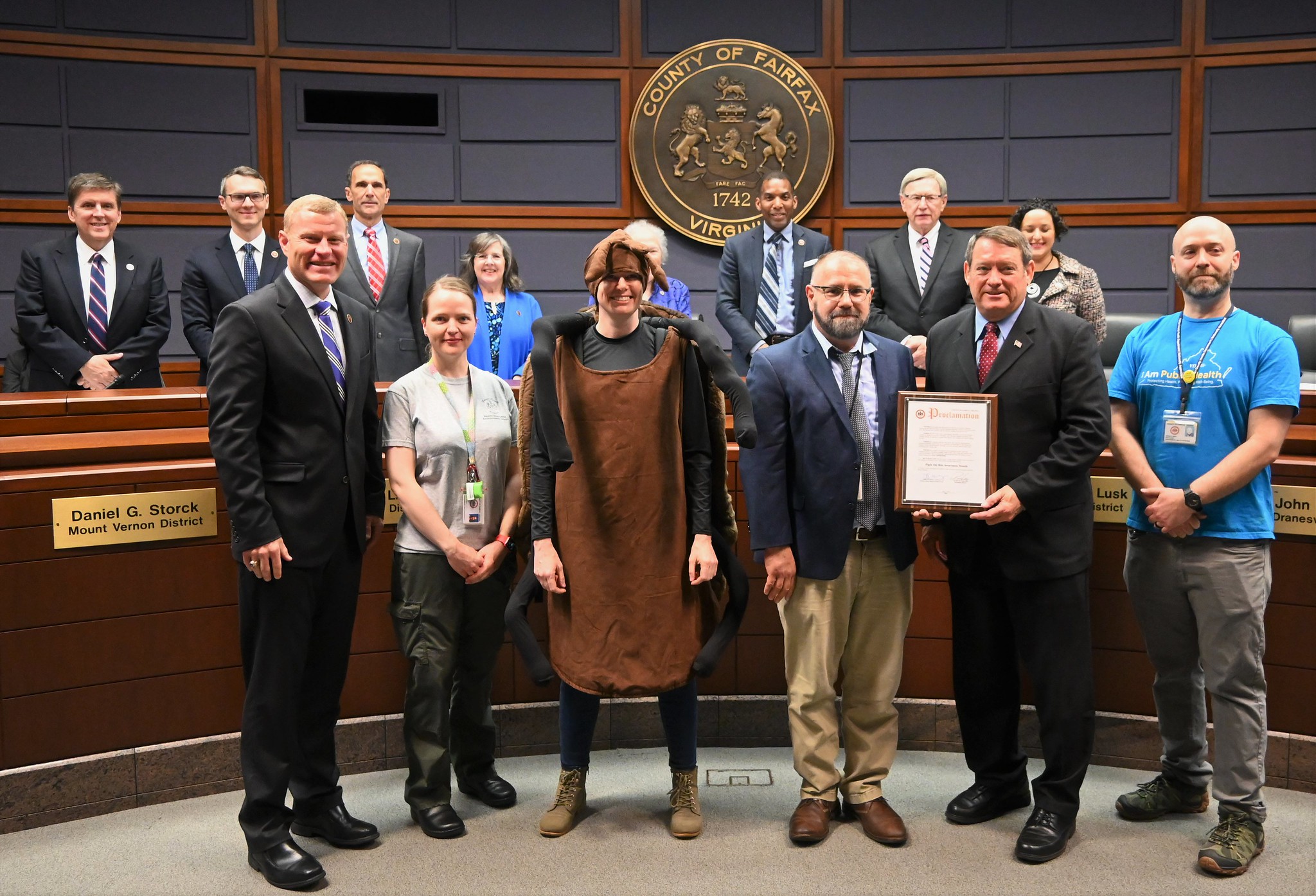
Unfortunately, the bite of an infected mosquito or tick can lead to a life-changing illness. West Nile virus and Lyme disease are two of the vector-borne diseases transmitted by mosquitoes and ticks, respectively, in our region.
Simple prevention measures make an impact on individual and public health. When outside, whether doing yardwork, taking a walk, going to a music performance, or enjoying a picnic, remember to use insect repellents that contain EPA-registered, CDC-recommended active ingredients like DEET or picaridin to prevent tick and mosquito bites.
Other tips include:
All of these are important actions that can be taken to prevent bites—especially when they are combined.
If you find a tick, you can have the tick identified by the Fairfax County’s Environmental Health staff. The Health Department does not identify tickborne diseases but knowing the type of tick is useful because if symptoms develop, it is helpful for your physician to know they type of tick that bit you/your family member.
Education and awareness are also important ways to help prevent disease. The Health Department continues continue to collaborate with County and community partners to provide prevention information to our residents. Learn more about how to control mosquitoes around your home and yard; eliminating standing water, treating standing water, and spraying your yard are simple steps we can all take to reduce the presence of mosquitoes.
Help spread the prevention word; learn more about the Health Department’s Disease Carrying Insect Program and what you can do to help fight the bite.
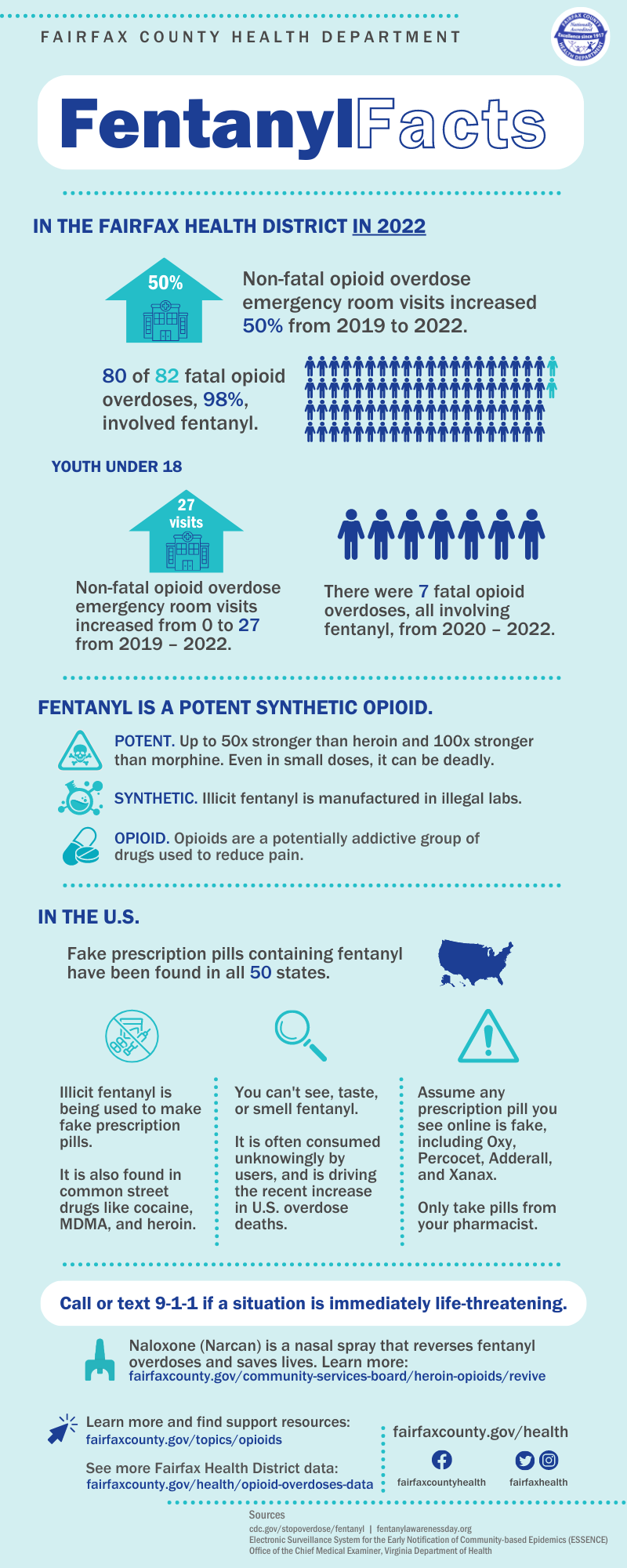
May 9 is National Fentanyl Awareness Day, a day to raise awareness about this potent synthetic opioid. Watch this video and see the infographic below to get the facts on fentanyl and what you can do to help prevent fentanyl overdoses in our community.
Watch this recording of What you should know about fentanyl in the Fairfax Health District with Jennifer Feltes, population health epidemiologist.