

Juvenile and Domestic Relations District Court - Court Services Unit Alert:
When a party files documents in the Fairfax County JDR clerk’s office, they must take specific steps to cause a copy of the documents filed to be given to the opposing party. This is called “service of process.” In Virginia, service of process is only legal if documents are delivered to the opposing party by the Sheriff’s office or a person 18 years of age or older who is not otherwise interested in the case. A person is "otherwise interested" in the case if they are a party to, involved in, or the subject of, the case. If the opposing party’s address is known, the petitioner can request that the court arrange service by the sheriff and pay a service fee.
If the opposing party’s address or whereabouts are unknown, the petitioner can ask an adult who is NOT otherwise interested in the case, to serve the documents or they can hire a person called a private process server to locate and serve the opposing party. Virginia law does not allow a party to deliver the documents that they filed with the court to the opposing party themselves.
If a party does not arrange for copies of the documents filed to be given to the opposing party according to the law, the case cannot move forward; a trial date cannot be scheduled. The correct way to deliver documents to the opposing party depends on the stage of the case.
Once the initial petition, which starts a case, is filed, a copy of the petition and any other documents filed must be given to the opposing party by the sheriff or an adult that does not have an interest in the case. This can be done in one of the following ways:
If the opposing party lives in Virginia, the petitioner must first try to have the documents handed directly to the opposing party. This is called “personal service.” If the sheriff or person who is authorized by law to serve papers is unable to hand the documents to the opposing party, there are two other types of service available, called "substituted service."
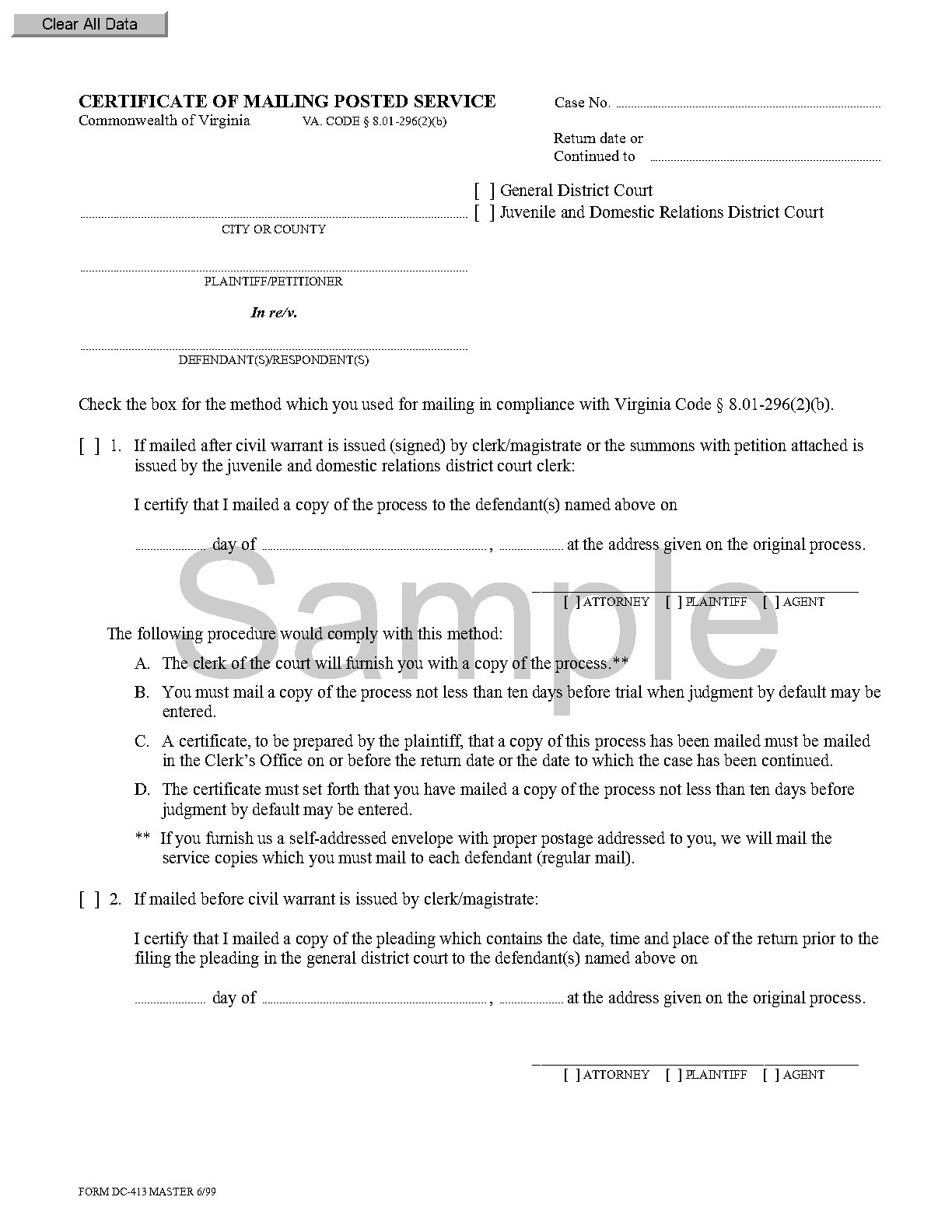
In addition, at least 10 days before the hearing or trial, the party must complete a “Certificate of Mailing” form and file it in the clerk’s office. This form tells the court that the petition posted on the opposing party's home has also been mailed to them. The "Certificate of Mailing" is on the court’s "Forms" page.
If the opposing party DOES NOT live in Virginia, the petitioner must first try personal service to have the documents handed directly to the opposing party. The Virginia sheriff cannot serve papers upon a person that does not live in Virginia. Instead, a private process server or person who is not otherwise interested in the case can deliver the petition. If that person is unable to hand the petition to the opposing party, the petitioner can send the petition to the opposing party by certified mail, return receipt, through the United States Postal Service or publication in the newspaper.
To send a document by certified mail, the petitioner must go to the post office and complete a green post card and certified mail slip. The petitioner will receive a tracking number, which allows them to track the whereabouts of the document.
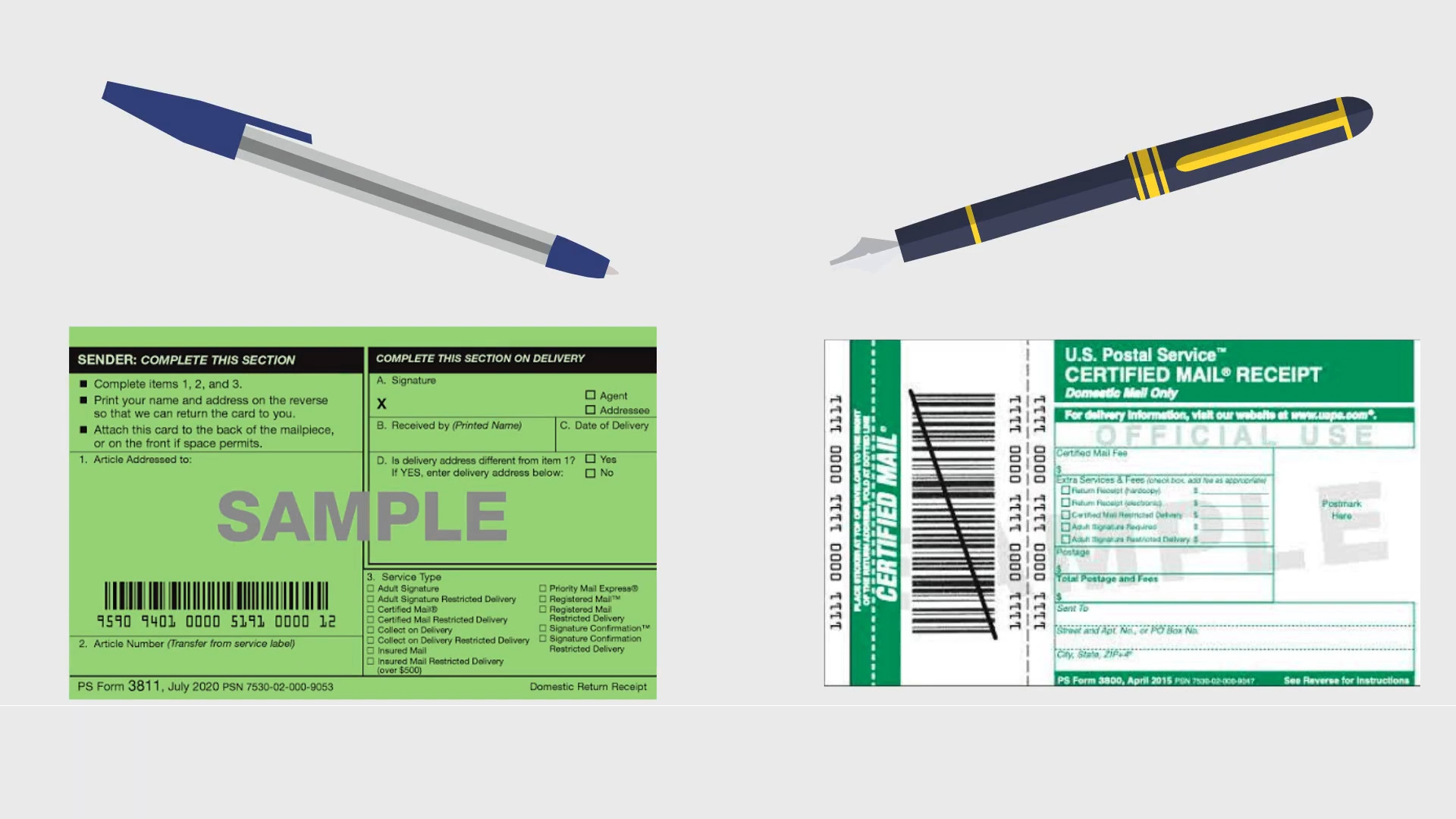
Once the petition arrives at the opposing party’s home, they will sign the green postcard, confirming receipt of the document.
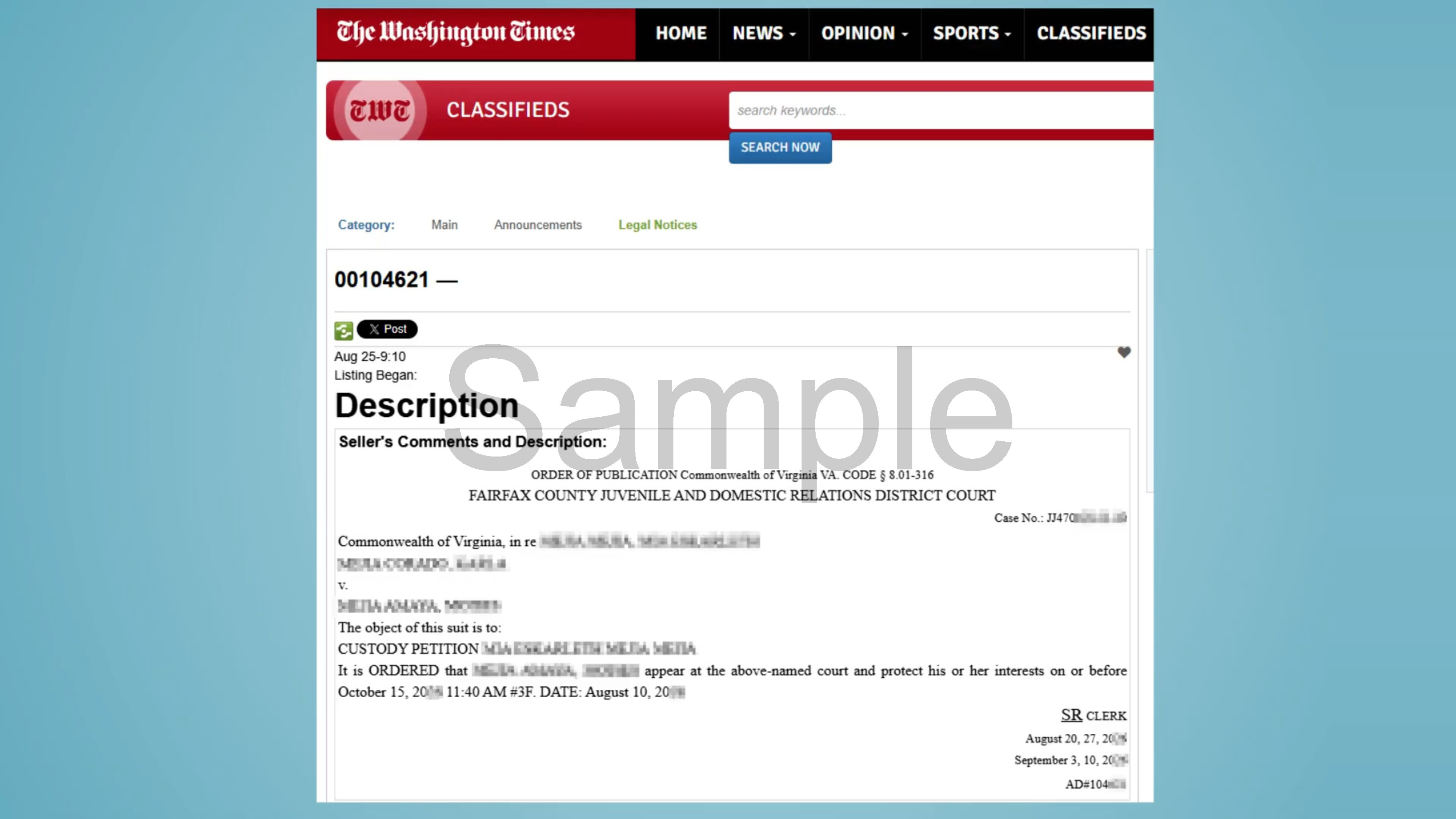
If you do not know the opposing party’s address and you have taken reasonable steps to find the person, at the status hearing, you may ask the court for permission to complete service of process by “publication.” Service by publication means that the petitioner notifies the opposing party about the case and upcoming hearing through a post in the newspaper or on the front door of the Fairfax County courthouse.
After the initial petition is delivered, each party must make sure that a copy of any documents filed in the clerk's office are given to the opposing party. This can be done in one of four ways,
Service by email is only valid if the other party or their attorney consents to receive service by email. This consent must be obtained BEFORE you send the documents by email.
Finally, if you want to appear for a hearing before the calendar control judge or for an emergency motion or Wednesday Motion hearing, you must ask the opposing party or their attorney when they are available to come to court for such a hearing, before you schedule the hearing. If there is a guardian ad litem in your case, you must also ask the guardian ad litem. If the Division of Child Support Enforcement is involved in your case, you must notify the attorney for the Division. Once all parties agree upon a date, notice of the hearing must be sent to the opposing party, attorney, and the guardian ad litem or DCSE attorney, (if they are involved in the case), by personal service, facsimile, or email, if given permission. Service cannot be provided by phone call or text message.