
Fairfax County, Virginia
Fairfax County Virginia

FFX Global Navigation

  • Residents
    • Animals & Pets
      • Adoptions
      • Animal Control & Regulations
      • Guide to Dogs
      • Lost & Found Pets
      • Shelter Support & Supplies
      • Wildlife
      • More
      Courts & Legal
      • Case Information
      • Circuit Court Docket
      • Jury Duty
      • Land Records
      • Magistrate
      • Public Law Library
      • Self-Help Resources
      • Traffic Court
      • Vital Records
      • More
      Environment & Energy
      • Invasive Species
      • Litter
      • Recycle, Trash & Compost
      • Sustain Fairfax
      • Trees
      • Watersheds
      • More
      Health & Human Services
      • Basic Needs & Assistance
      • Disability Services
      • Diseases & Conditions
      • Domestic & Sexual Violence
      • Health Clinics
      • Mental Health
      • Opioids
      • More
      Individuals & Families
      • Children & Youth
      • Federal Workforce
      • Immigrants
      • Military & Veterans
      • New Residents
      • Older Adults
      • Parents
      • People with Disabilities
      • Volunteers
      • More
      Land Use & Planning
      • Comprehensive Plan
      • County Capital Projects
      • Land Records
      • Parks Planning
      • Planning Projects
      • Research Tools
      • Transportation Projects
      • Urban Centers
      • More
      Library & Education
      • Adult Education
      • Early Childhood Programs
      • Library Branches
      • Library Catalog Search
      • Public Schools
      • More
      Parks & Recreation
      • Arts
      • Athletic Fields
      • Camps
      • Community Centers
      • Parktakes Classes
      • Rec Centers
      • Senior Centers
      • Teen Centers
      • Trails
      • More
      Permits & Licenses
      • Birth & Death Certificates
      • Building
      • Child Care
      • Dogs
      • Health
      • Marriage
      • Park Use
      • Solicitors
      • More
      Property & Housing
      • Affordable Housing
      • Code & Zoning
      • Neighborhoods
      • Real Estate Values
      • Recycling & Trash
      • Tenant Landlord Issues
      • Utilities
      • More
      Public Safety & Emergencies
      • 9-1-1
      • Emergency Preparedness
      • Fire & Rescue
      • Gun Violence Prevention
      • Police
      • Scams
      • Sheriff
      • Storm Center
      • More
      Roads & Commuting
      • Bike & Walk
      • Connector Bus
      • Metrobus & Metrorail
      • Park & Ride
      • Pedestrian Safety
      • Road Maintenance/VDOT
      • Street Parking
      • Toll Roads
      • Transportation Projects
      • More
      Taxes & Fees
      • Car Taxes
      • Park Fees
      • Real Estate Taxes
      • Tax Relief
      • Trash Disposal Fees
      • More
      Voting & Elections
      • Absentee Voting
      • Early Voting
      • Election Results
      • Polling Places
      • Voter Registration
      • More
      Weather & Climate
      • Air Quality
      • Climate Action Dashboard
      • Extreme Heat
      • Floods
      • Ready Fairfax
      • Resilient Fairfax
      • Snow
      • Tornadoes
      • More
  • Business
    • Business & Construction
      • Building Permits
      • Code & Zoning
      • Land Use
      • More
      Business Services
      • Business Emergency Preparedness
      • Business Taxes
      • Consumer Services
      • Employer Transportation Service
      • Green Business Partners Program
      • Home-Based Business
      • Regulation & Licensing
      • Small Business
      • Starting a Business
      • Workplace Issues
      • More
      Doing Business with Fairfax
      • Contracting and Procurement
      • Current Solicitations
      • Permits
      • Vendor Pitch Portal
      • More
  • Government
    • About
      • Codes & Standards
      • Countywide Strategic Plan
      • Facilities & Locations
      • History of Fairfax County
      • Operating Status
      • More
      Board of Supervisors
      • Auditor
      • Board Members
      • Boards, Authorities & Commissions
      • Clerk Services
      • Committees
      • Meetings & Agendas
      • More
      Budget & Finance
      • Bonds
      • Budget
      • Financial Transparency
      • Unclaimed Money
      • More
      Departments & Agencies
      Jobs & Employment
      • Full-Time Openings
      • Internships
      • Seasonal & Non-Merit
      Maps & Data
      • Countywide Data Analytics
      • Demographics
      • Geographic Information Systems
      • Interactive Data Tools
      • More
      One Fairfax
      • Digital Equity
      • Inclusive Engagement
      • Trust Policy
  • Fairfax County Virginia
  • Services
    • Find
      • Animal Services
      • Health Clinics
      • Jobs
      • Library Resources
      • Lost or Found Pet
      • Mental Health Support
      • Park Classes
      • Real Estate Values
      • Recycling & Trash
      • Volunteer Opportunities
      • More
      Pay
      • Business Taxes
      • Car Taxes
      • Dog Licenses
      • Driving & Parking Fines
      • False Alarm Fees
      • Real Estate/Property Taxes
      • SACC Payments
      • More
      Register/Apply
      • Basic Needs & Assistance
      • Building Inspections
      • Car Registration
      • Fairfax Alerts
      • Permits & Licenses
      • Tax Relief
      • Vote
      • More
      Report
      • Animal Control Issues
      • Consumer Complaints
      • Crime
      • Domestic Violence
      • Financial Crimes
      • Neighborhood Complaints
      • Road Issues to VDOT
      • Street Light Outages
      • More
  • Connect
    • Alerts, Emails & Apps
      • Email Subscriptions
      • Fairfax Alerts
      • Mobile App
      • More
      Community Engagement
      • Surveys & Projects
      Contact
      • Directory
      • Hotlines & Emergency Numbers
      • VDOT
      • VFOIA Requests
      • More
      News & Events
      • Daily Headlines
      • Emergency Information Blog
      • Events Calendar
      • NewsCenter
      • NotiCentro (Spanish)
      • Public Meetings Calendar
      • More
      Social Media
      • Comments Policy
      • Directory of Accounts
      • More
      TV, Video & Podcasts
      • Channel 16
      • Podcasts & Radio
      • YouTube
      • More
  • TRANSLATE
    • Language Selection

      To change the language of this website, click the drop-down list and select the desired language. The Fairfax County Web site is being translated through "machine translation" powered by Google Translate. Disclaimer

  1. Home
  2. Public Works and Environmental Services
  3. Energy - Sustainability Sector

Public Works and Environmental Services Alert:

Energy - Sustainability Sector

Energy powers essential public works services like wastewater treatment and solid waste disposal and recycling. DPWES is doing its part to become more energy efficient to maintain reliable, nationally recognized operations. 

We ’re reducing energy use, cutting greenhouse gas emissions, expanding renewable energy, and promoting smart, strategic energy choices across our facilities. These actions help lower costs, reduce pollution, and support a cleaner, more sustainable future for Fairfax County. Energy efficiency, conservation, renewable energy, and education are key parts of our strategy because they offer practical, effective ways to reduce overall demand and protect the environment.

Energy use reduction chart

Energy use reduction chart

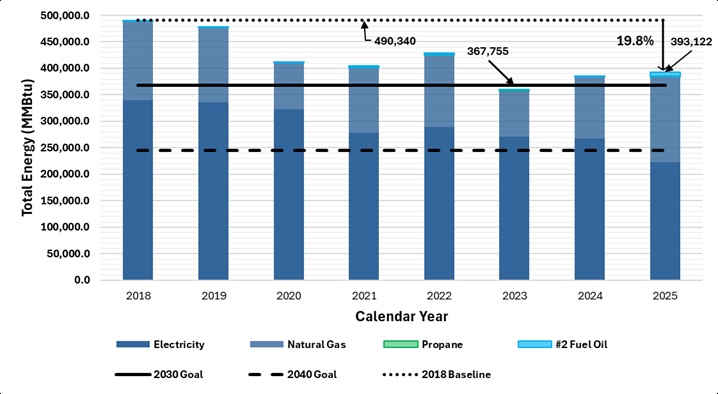
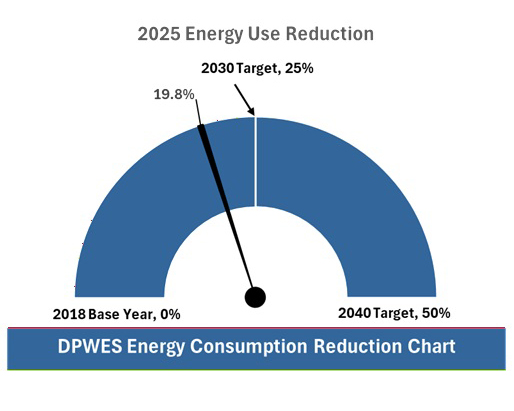
In 2025, DPWES energy use was reduced to 19.8% below 2018 levels.

Energy use reduction progress

Energy use reduction progress

In 2025, DPWES reduced its energy use 19.8% below the baseline level of 2018 to ~386,550 million Btus (MMBtus). The 2030 target is ~367,755 MMBtus. A Btu is a unit of measurement for heat content and is commonly used to normalize different sources of energy so they can be combined.

Energy use emissions reduction chart

Energy use reduction progress

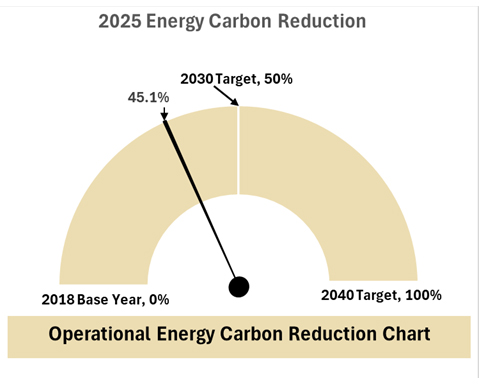
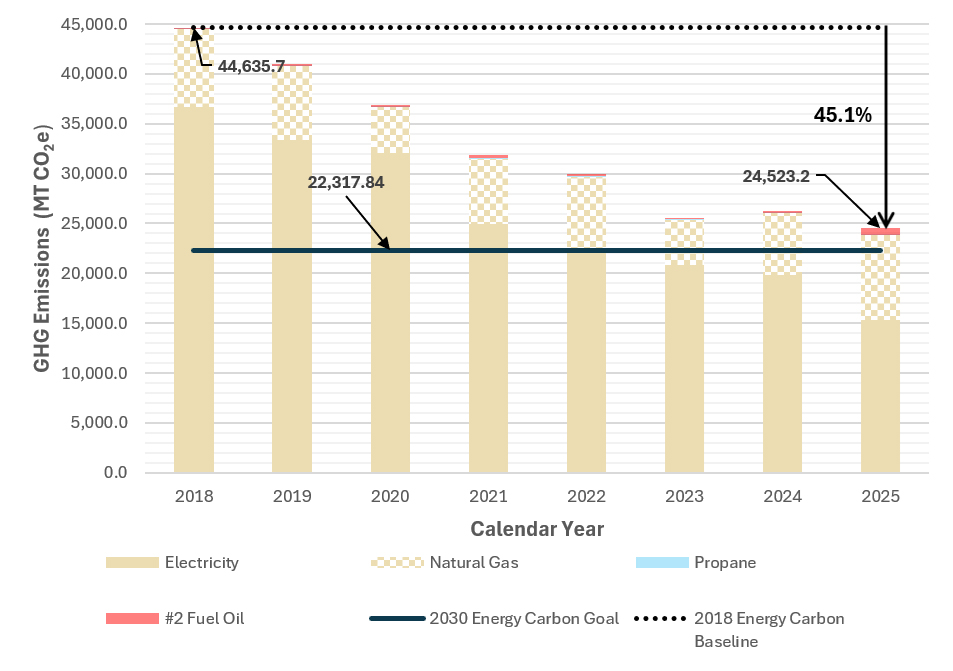
In 2025, DPWES energy associated carbon emissions were reduced to 45.1% below 2018 levels.

Energy use emissions reduction trend

Greenhouse Gas reduction trend

In 2025, DPWES reduced its energy associated carbon to 45.1% below the baseline level of 2018 to ~24,523 metric tons of carbon dioxide equivalent (MTCO2e).

Renewable Energy Chart

Renewable energy chart


Renewable Energy Progress

Energy use reduction progress


SUSTAINABILITY TOPICS

Energy
Design and Construction
Waste
Natural Resources
Sustainability Hub

ON THIS PAGE

Energy Use and Related Greenhouse Gas Emissions Reduction
Renewable Energy
Energy Use Reduction

ENERGY USE AND RELATED GREENHOUSE GAS EMISSIONS

For the Energy Use Reduction area of focus, the Operational Energy Strategy has a target of reducing energy use by 25% by 2030 and 50% by 2040 below 2018 levels. Energy Use Reduction is directly linked and key to carbon energy reduction. For example, in 2025, energy use accounted for approximately 62.7% of DPWES’ operational and existing facility energy carbon emissions. The remaining carbon emissions were from transportation fuels such as diesel and E10 gasoline. DPWES’ energy use and associated carbon emission sources include grid electricity, natural gas, propane, and #2 Fuel Oil for heating.  

The Greenhouse Gas Emissions Reduction (GHGs) metric includes reductions in DPWES energy carbon dioxide (CO2), methane (CH4) and nitrous oxide (NOx) emissions. GHG Emissions Reductions are measured and reported as “carbon dioxide equivalent,” or CO2e to capture the different global warming potentials (GWP) of the three GHGs. Energy GHG sources include grid electricity, natural gas, propane, and #2 fuel oil. 

Scope

The Energy Use Reduction area of focus includes DPWES buildings, infrastructure, and operations. The Greenhouse Gas Emissions Reduction (GHGs) area of focus includes carbon dioxide (CO2), methane (CH4) and nitrous oxide (NOx). GHG Emissions Reduction metric is measured and reported as “carbon dioxide equivalent,” or CO2e to capture the different global warming potentials (GWP) of the three GHGs. 

Sources

DPWES’ energy use and energy-related carbon sources include grid electricity, natural gas, propane, and fuel oil for heating measures and reported as a million British thermal units or MMBtu. A Btu is a standard unit of measurement commonly used to combine different sources of energy. DPWES building, infrastructure, and operational carbon energy sources include grid electricity, natural gas, propane, and fuel oil for heating. 

Target(s)

The 2030 target is a 25% reduction in energy use and a 50% reduction in energy-related carbon emissions below 2018 levels. 

Benefits

2025 building, infrastructure, and operational electricity is 34,288,135.24 kWh lower compared to 2018 levels. Electricity cost avoidance in 2025 is approximately $3,223,085. 2025 energy-related carbon emissions were 20,113 metric tons (MT) CO2e lower compared to 2018 levels. This is equivalent to 4,191 homes’ electricity use for one year.

Progress

In 2025, DPWES reduced its energy use 19.8% below the baseline level of 2018 to ~386,550 million Btus (MMBtus). In 2025, DPWES reduced its energy-related carbon to ~24,523 metric tons of carbon dioxide equivalent (MTCO2e). This reduction is 45.1% below the baseline level of 2018.
Energy use reduction chart

Energy Use Reduction chart

Energy use reduction progress

Energy Use Reduction progress

Energy use reduction progress

Greenhouse Gas Emissions Reduction chart
Energy use reduction progress

Greenhouse Gas Emissions Reduction progress

Click on figures to enlarge.

Highlights

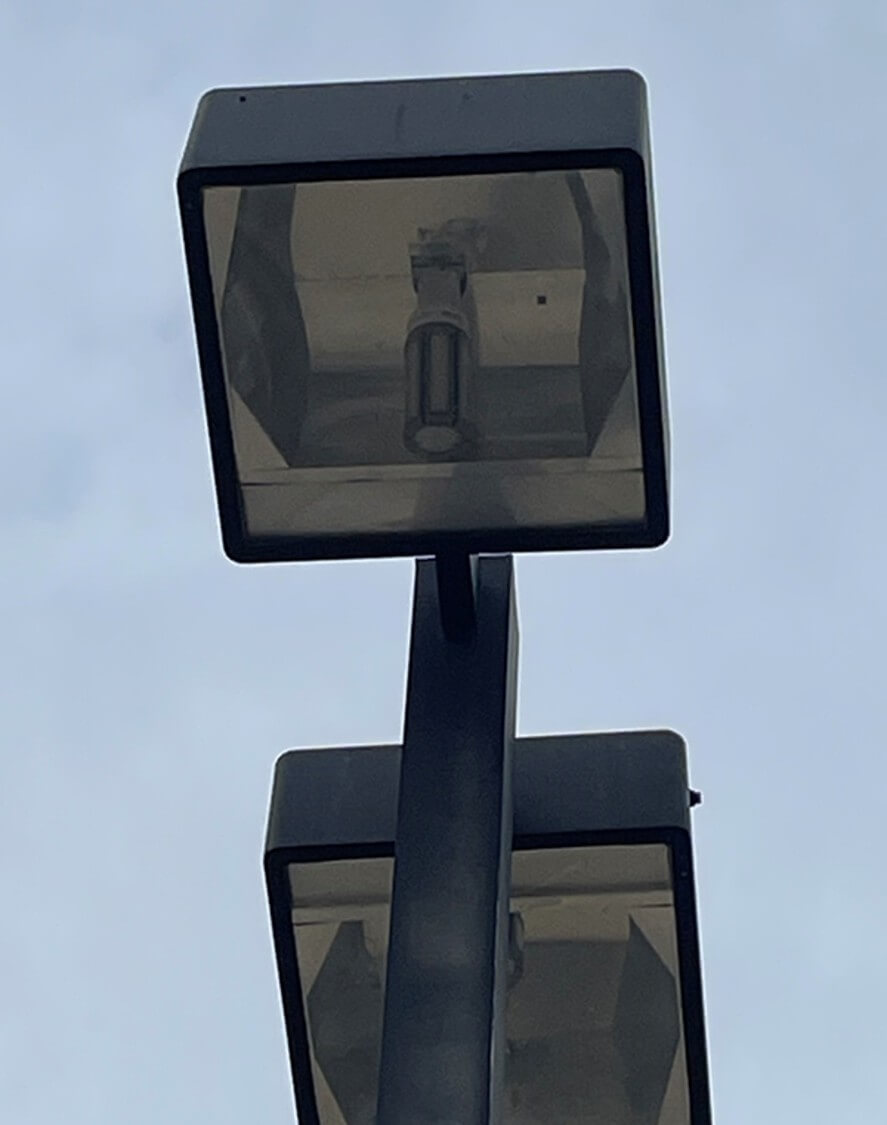
In 2023 through 2025, the Solid Waste Management Program (SWMP) completed energy efficiency Light Emitting Diodes (LED) lighting projects at its Newington Refuse and Recycling Collection Operations Facility, I-95 Landfill Complex and I-66 Transfer Station Facility. The new LED lighting will save nearly 76,000 kilowatt hours of electricity per year, which is a cost-avoidance of nearly $10,000 per year. The electricity saving is equivalent to nearly 47 metric tons of greenhouse gases and all the electricity used by more than 10 households every year.
LED

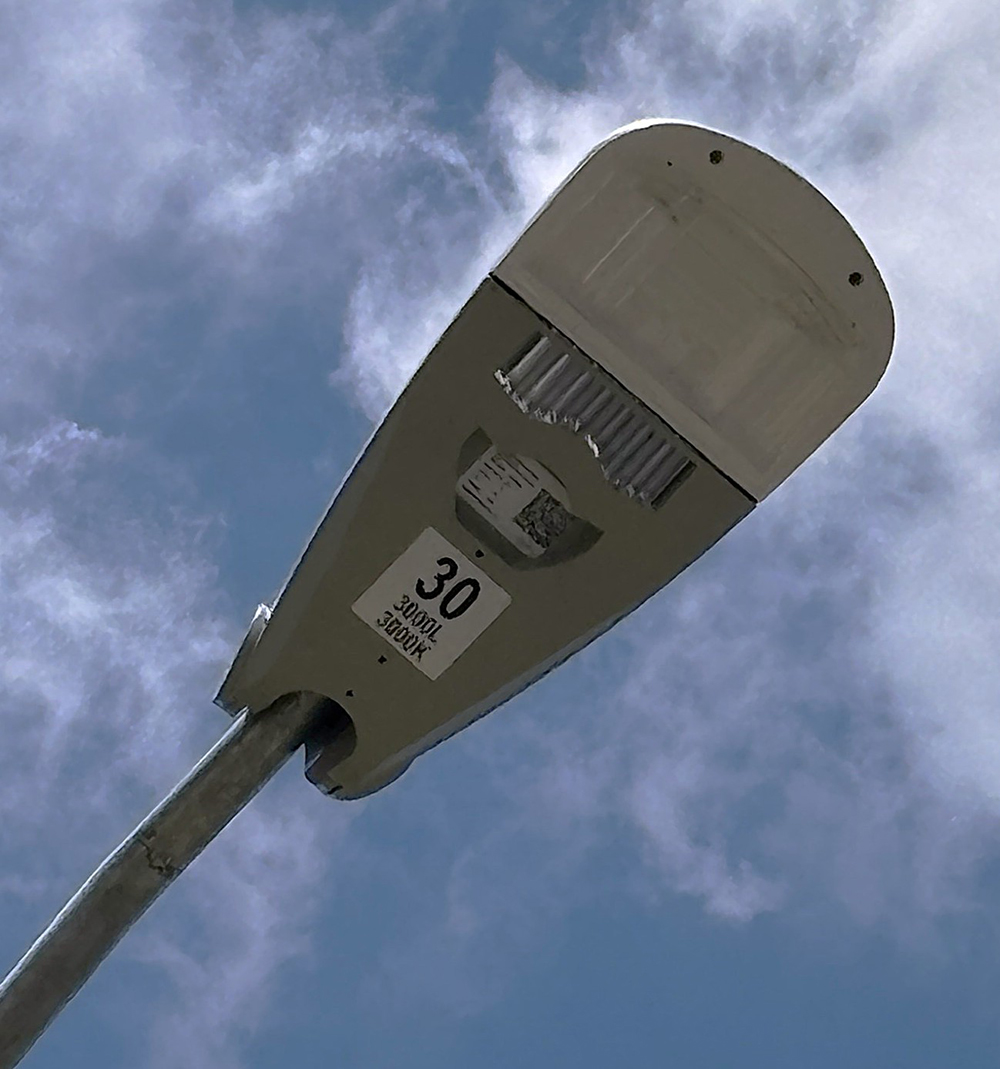
The county’s 5-year Light Emitting Diodes (LED) Streetlight Conversion Plan will convert nearly 58,000 existing mercury vapor, high pressure sodium and metal halide fixtures to LED streetlights. This conversion plan is projected to generate savings of $1,400,000 once all fixtures are converted and remove 14,700 metric tons of carbon emissions annually. More information about the LED Streetlight Conversion Plan is available at Streetlights | Public Works and Environmental Services.
LED

Get Involved

What You Can Do

Explore local stories, use simple action checklists, and start making changes today to save money, cut greenhouse gas emissions, and help build a more climate‑resilient Fairfax County.

  • Resources for Residents
  • Home Energy

What You Can Learn

  • Minor Streetlight Upgrades
  • Streetlight Developer Program

Renewable Energy

RENEWABLE ENERGY

The onsite Renewable Energy generation area of focus includes DPWES landfill gas capture (LFG) and reuse and rooftop solar photovoltaic systems (solar). 

Scope

The Renewable Energy area of focus includes DPWES onsite renewable energy generation and use for its facilities and operations.  

Sources

DPWES’ renewable energy sources include landfill gas capture and reuse (LFG), and solar photovoltaic systems (Solar) measured and reported as a million British thermal units or MMBtu. A Btu is a standard unit of measurement for heat content and is commonly used to combine different sources of energy. 

Target(s)

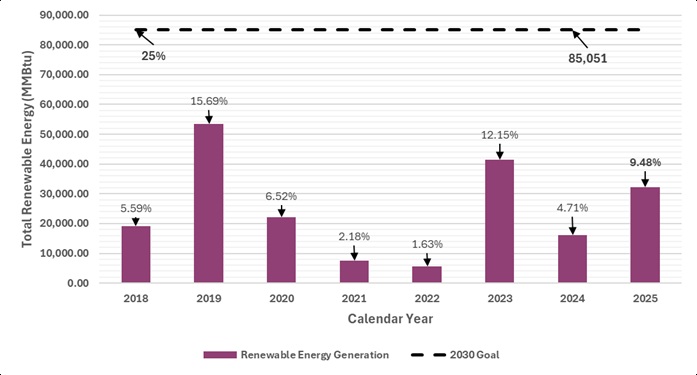
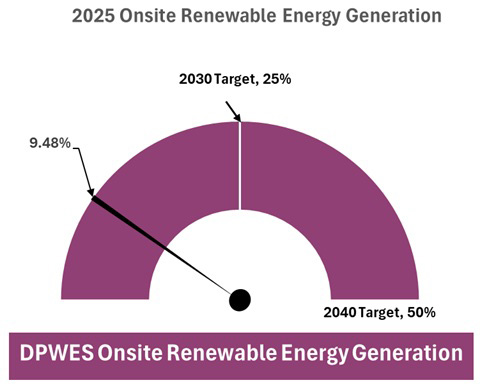
DPWES has renewable energy targets of generating 25% of DPWES’ 2018 electricity use as renewable energy by 2030 and 50% by 2040. 

Benefits

In 2025, DPWES’ renewable energy generation and use and renewable energy green credits reduced overall operational GHG emissions by 3,019 metric tons, which is equivalent to 630 homes’ electricity use for the year.

In 2025 alone, renewable energy generation and use saved the county over $840,000 in avoided energy costs. 

Progress

In 2025, DPWES produced 9.5% of its 2018 electricity use through landfill gas capture and reuse at the I-95 and I-66 closed landfills and solar systems located at the Newington and I-66 Transfer Station facilities. Solar accounted for nearly 27% of the total generation.

On August 9, 2024, DPWES completed its first solar installation at its Newington Refuse and Recycling Collection Operations Facility Office located in Lorton, VA. The 150-kilowatt solar facility generated 167.3 megawatt-hours of electricity in 2025. Additionally, on May 15, 2025, DPWES completed a 350-kilowatt solar installation at its I-66 Transfer Station Facility located in Fairfax, VA. The facility generated 343.7 megawatt-hours of electricity in 2025. The combined landfill gas capture and reuse and solar electricity generation totaled 32,253 MMBtus of renewable energy generation in 2025.
Energy use reduction chart

Renewable Energy chart

Renewable energy progress

Renewable Energy progress

Click on figures to enlarge.

Highlights

DPWES recovers landfill gas (LFG) from its I-95 and I-66 closed landfill sites to produce electricity, incinerate bio-solids at the nearby Noman M. Cole, Jr. Water Recycling Facility and heat maintenance facilities near the I-66 Transfer Station. The county’s LFG use prevents the release of an estimated 362,500 tons of greenhouse gases annually, which is equivalent to removing more than 70,000 cars from the road per year.
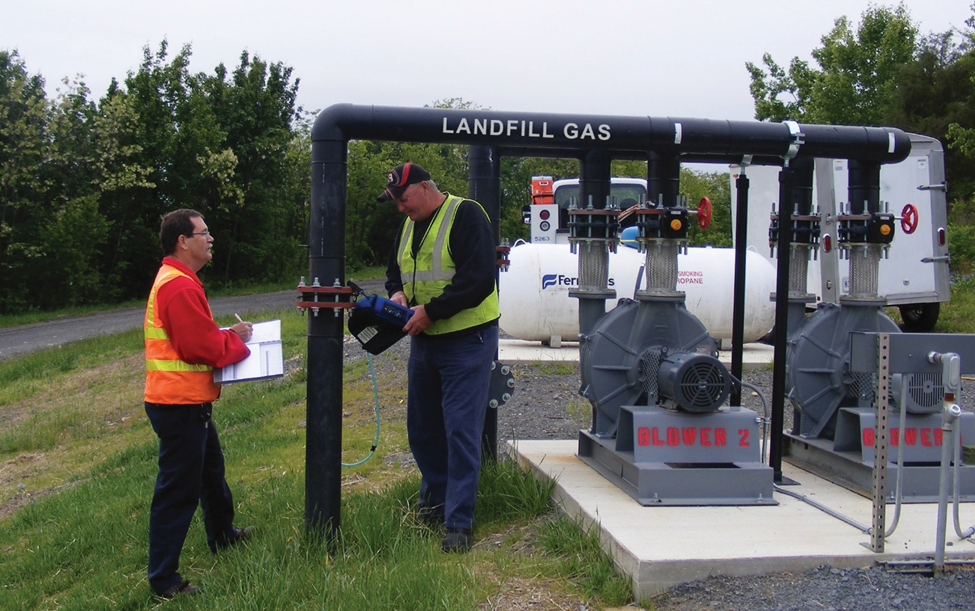
Landfill Gas

Our Operational Energy Strategy has set a goal for carbon neutrality in facilities, including 50 percent of county electricity from renewable sources, by 2040.

On May 15, 2025, the county’s Department of Public Works and Environmental Services Solid Waste Management Program completed a solar installation at the I-66 Transfer Station Facility located in Fairfax, VA. 

The project includes 644 high-efficiency rooftop solar photovoltaic panels for onsite power generation totaling 350 kilowatts. The project will generate approximately 369 thousand kilowatt-hours of electric energy per year, saving the county nearly $1.5 million in energy costs over 20 years. The solar arrays will reduce over 216 metric tons of greenhouse gas emissions each year, which is equivalent to 45 homes’ electricity use for one year.
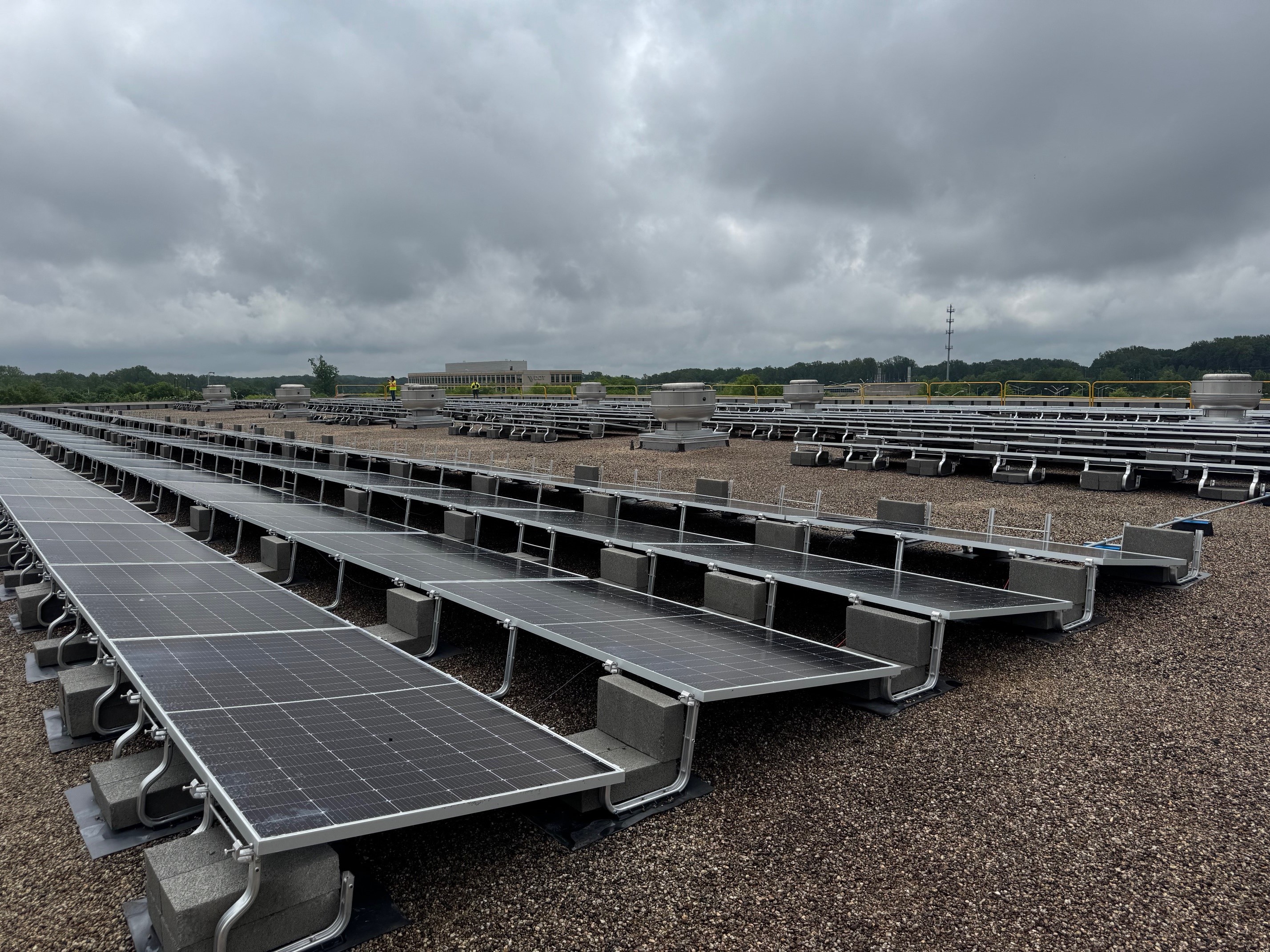
Solar

Get Involved

What You Can Do

Explore your solar options by visiting Going Solar in Fairfax County.

What You Can Learn

  • Fairfax County and Madison Energy Infrastructure Complete the Largest Solar Project in County History at the I-95 Landfill Complex

What is Sustainability?

Sustainability in DPWES is a team-based, cross‑disciplinary effort to protect the environment, support social equity, and strengthen the local economy so communities are healthy, diverse, and resilient.

The Energy focus area—and its supporting programs and practices are in support of county adopted policies and goals, as shown in the 2021 Operational Energy Strategy (OES).


Energy
Design and Construction
Waste
Natural Resources
Sustainability Hub

Recent Interactions

    Ask Fairfax

    Terms & Conditions
    Live chat available Search our site
    • Translate
    • Awards
    • Site Feedback
    • PRIVACY POLICY & COPYRIGHT
    Main Address

    12000 Government Center Pkwy
    Fairfax, VA 22035

    Phone

    703-324-7329

    TTY 711

    Site Tools
    • Website Accessibility
    • Translate
    • Download Mobile App
    Support
    • ADA Accessibility
    • FOIA Requests
    • Website Administrator
    Additional Resources
    • Fairfax County Public Schools
    • Economic Development Authority
    • Visit Fairfax
    • Council of Governments
    • Commonwealth of Virginia
    • USA.gov
    • Calendar
    • Channel 16
    • Mail
    • Security
    • WIFI
    • Facebook
    • Twitter
    • Instagram
    • YouTube
    • Mobile

    The Official Site of Fairfax County