

Written by Emily Bohr, Outreach Specialist, OEEC
Nishka Shah, a passionate advocate for the environment, serves as the 2025-2026 Student Member of the Environmental Quality Advisory Council (EQAC).
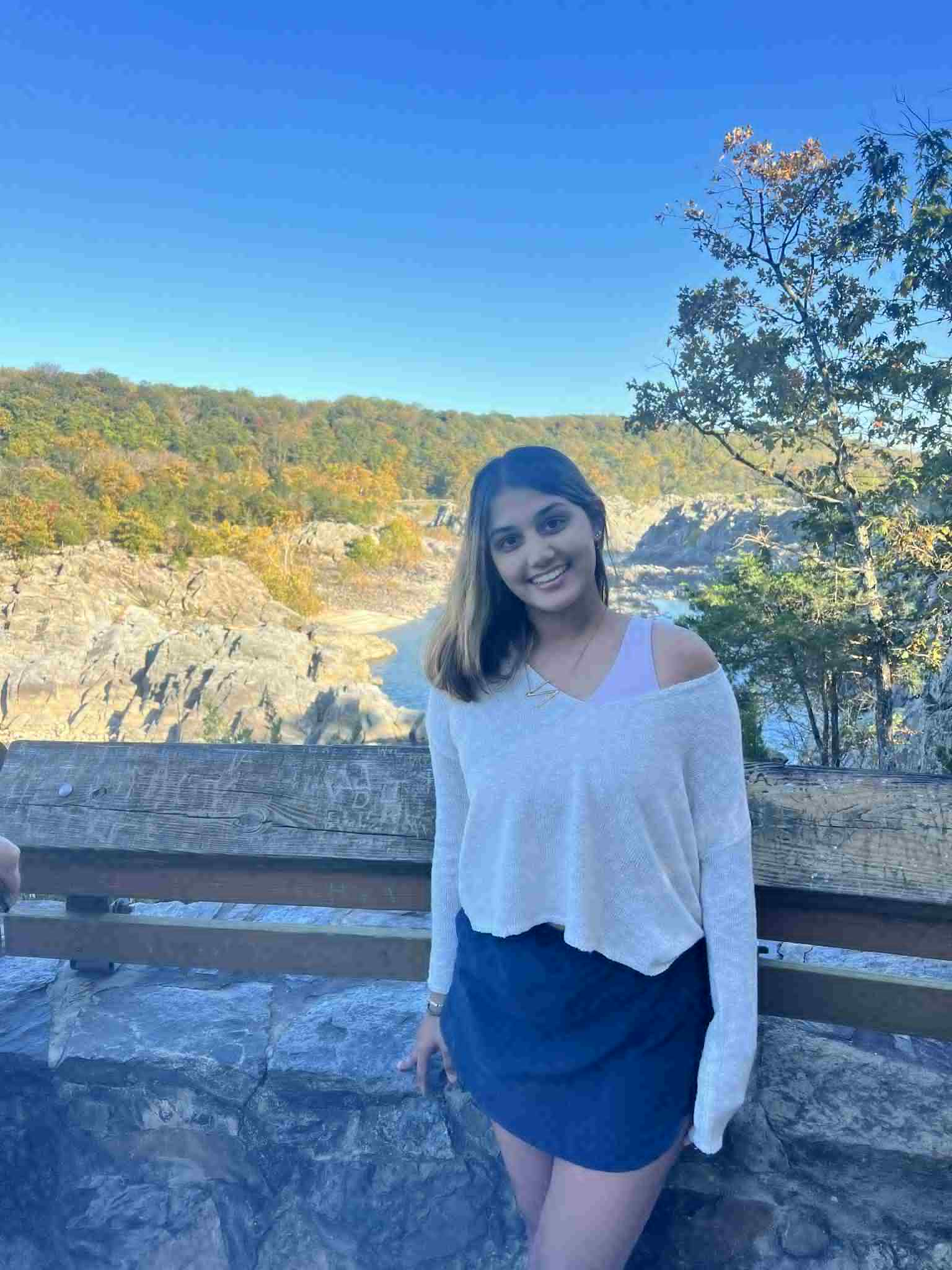
In every leaf, ocean wave and patch of blue sky — Nishka finds inspiration. But she’s not just about appreciating the planet; she’s working to make a real difference for her environment and community. We had the chance to chat with her about her journey, what drives her love for sustainability and the impact she hopes to make.
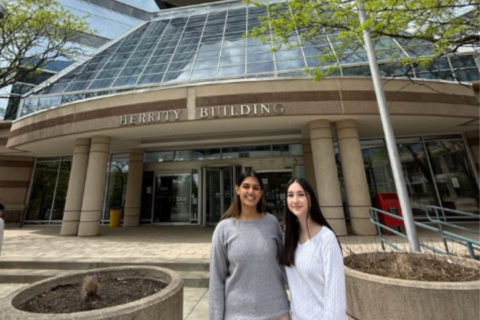
You’re a student member for the EQAC, which is open to all interested high school sophomores and juniors in Fairfax County. What high school do you attend and what made you decide to apply to be a student member?
I go to Thomas Jefferson High School for Science and Technology, and since my freshman year I've been volunteering with stream monitoring programs. From there, I was connected to other opportunities in the county and came across EQAC!I was excited by the opportunity to engage with environmental policy because I am interested in studying environmental science in the future. I think it's important to work with your local community, and EQAC seemed like an incredible way to do so. I also read some of the biographies of the previous EQAC student members and it seemed like something fun to do.
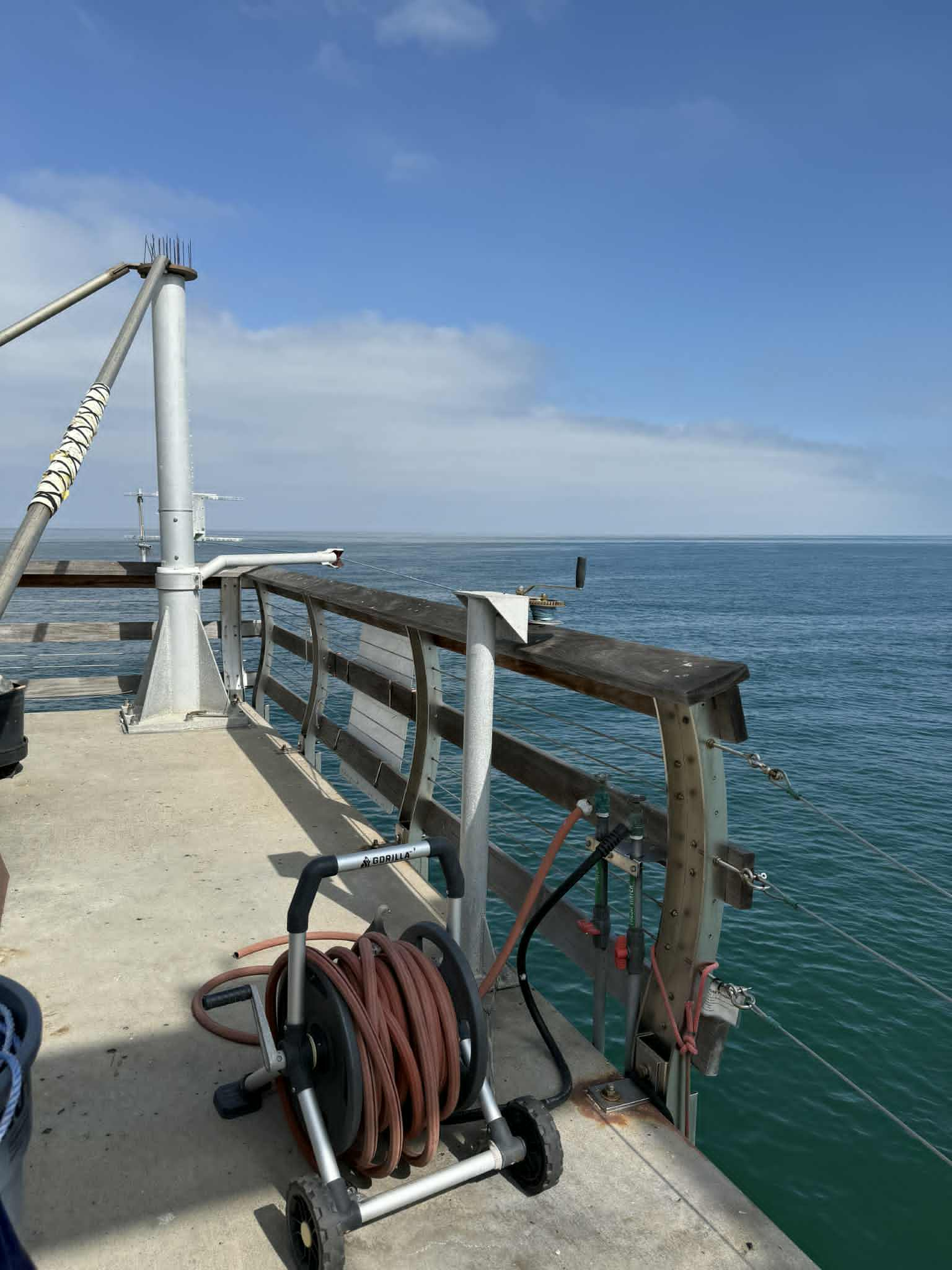
We heard you recently spent time at the Scripps Institute of Oceanography in San Diego! How was that experience and how does ocean health connect to Fairfax County?
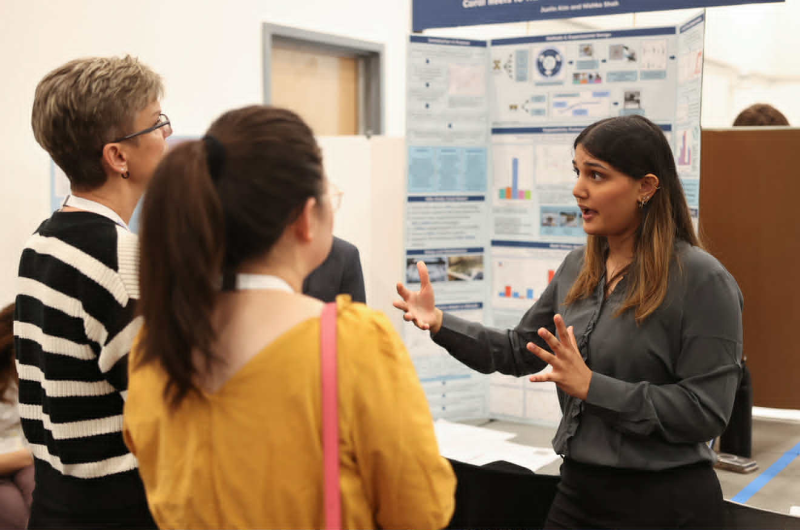
At Scripps, I worked on a project looking at environmental DNA in the oceans and marine biodiversity. I compared marine protected area sites versus non marine protected area sites. I think the connection of Fairfax County is, a lot of people don't realize this, but all of our backyards, the runoff [from precipitation events] goes into the streams and those streams connect to the Potomac (River), and it feeds into the Chesapeake (Bay) and eventually the Atlantic Ocean. I think it's important to realize that for every small decision you make, our oceans are affected. In San Diego, we saw that tourism from the beaches nearby was affecting the marine protected areas because the waters all flowing, it's all connected— and it's the same with the Chesapeake Bay watershed.
What inspired you to get involved with environmental issues at such a young age?
I lived on an old farm with a pretty open backyard, and so, when I was young, we had horses and chickens. I would love to hang out with them in the yard and spent a lot of time outdoors! Then, my dad's job brought us to Hawaiʻi. When I lived there, I got really interested in the ocean and coral reefs. I always had a passion for environment and as I grew older, and I learned about climate change in school and all these things that were happening. It turned into something I wanted to do as a career. And I had great support along the way, which I think is really important — like my freshman biology teacher was a marine biologist and she would share about her experience as a scientist but also working with conservation organizations. That also really shaped what I wanted to do for my career.
You have a podcast about sustainability topics! Tell us about the podcast and what motivated you to start it.
My podcast is called “Debunking Earth” and we cover a lot of different sustainability stories. One thing that we've been doing recently is talking about stories from around the world. For example, we talked about renewable energy in Costa Rica for one episode and domoic acid (a neurotoxin produced by algal blooms) in California. We also cover general topics that we think are important for people to know more about. We started it because we noticed that climate illiteracy is common. When talking to people at my school, it was really surprising some of the things that I would hear about, and I realized people didn't know as much about climate change as I thought they would. Same with my parents and friends and even on online platforms. So, I thought it would be fun to just start out a podcast to help people learn more. There's many different routes of advocacy that you can pursue, but for me I really like the idea of a podcast cause there's so much freedom. It started out small, but we've been able to get some attraction, especially on some of the recent real world sustainability success stories.
What environmental issues within Fairfax County are you most passionate about and why?
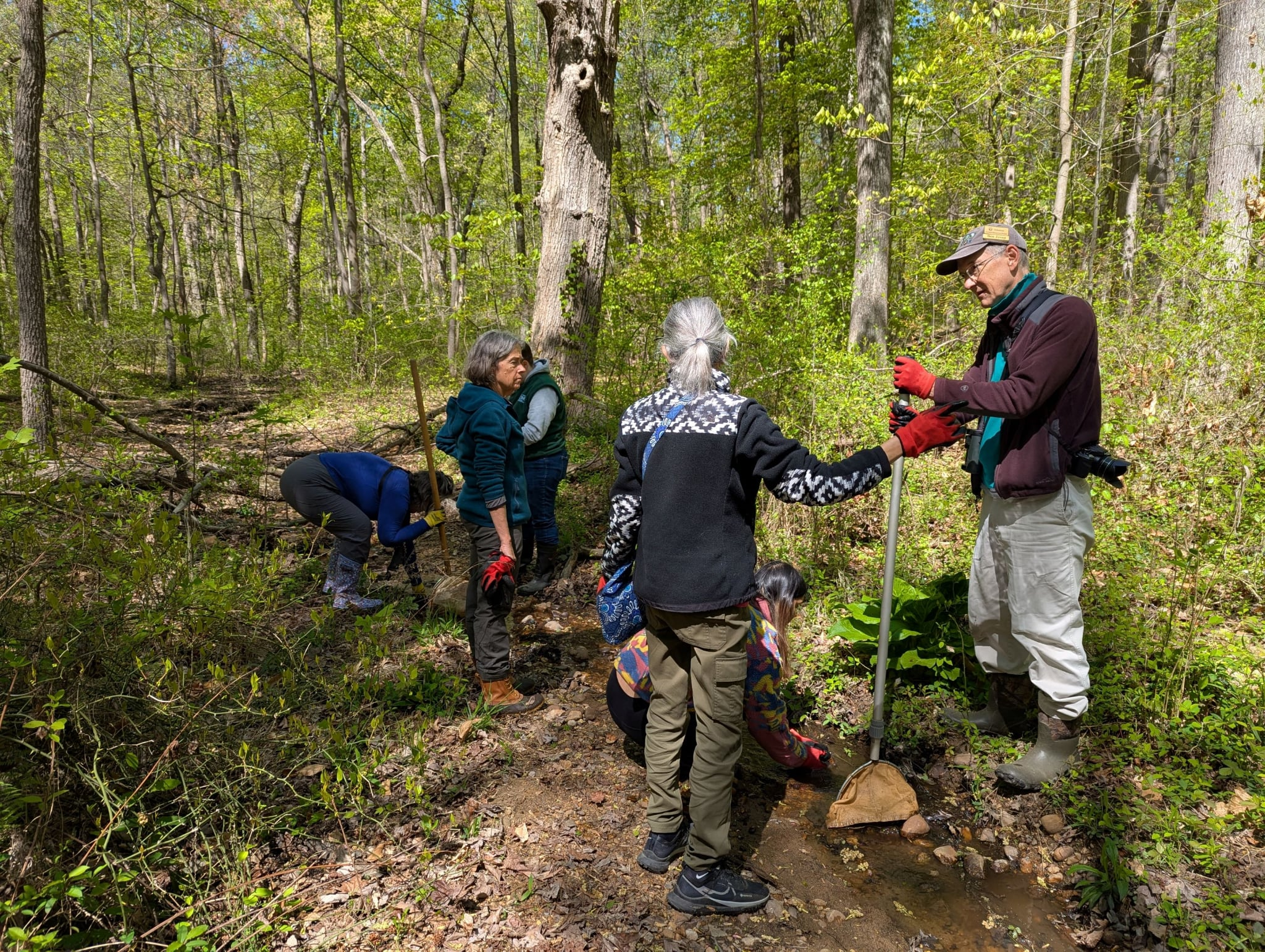
Stream health and invasive species! A big thing is stream health and restoration. It's kind of what I started doing first when I was volunteering, so I'm really passionate about that. I think there's a lot of streams [in the county] that have really bad erosion problems, and it's definitely improving. I know that we have a lot of restoration projects going on, but there are so many streams in the county. Recently, I also worked on a project for the Youth Conservation Leadership Institute, partnering with the Department of Forestry. We looked at invasive species all throughout northern Virginia — specifically, I did a project looking at tree of heaven and spotted lanternfly distribution, which is getting really bad in Fairfax County.
How has participating as the EQAC student member and hosting your podcast influenced your views on environmental issues?
I like this question because I've talked a lot about this. I've done some research, and I go to a science school, so I know a lot about environmental science, but I think that EQAC and the podcast have opened my eyes to the social and political issues that complicate what might seem like a simple solution. For example, it's easy to say that we need to restore a stream if we know the water quality is impaired. In reality, there needs to be sufficient funding and time for those types of projects. And EQAC has definitely opened my eyes to that type of thing. Like with all public policy, it can be difficult to make a quick change — there's memos and drafts and revisions and discussions and debates and long processes and they go through multiple levels of people just to get implemented. That is a big takeaway!
What new sustainability trends or technologies are you most excited about?
Two big things: Epigenetics and electric vehicles! The expansion of electric vehicles and how we see prices lowering; they're becoming affordable for a lot of new people. And I know they're standardizing the charging port, so it's definitely becoming accessible. And I think that's really exciting. I also recently read a paper about how some scientists are using epigenetics (study of how environmental factors and behaviors can influence DNA) to help ocean ecosystems. It’s a new sort of thing but involves using epigenetics to help coastal organisms that are being affected by climate change and help make them more resilient to global warming. Definitely a field that I think could be very promising in the future!
Are you thinking about a future career in the environmental field?
YES! I definitely am! I've been thinking about going for a PhD. I'd also love to teach in the future — one of the professors I'm working with is very passionate that when you do research, you should also be working with policy and conservation. Environmental consulting is also interesting or traveling the world to address global sustainability or something like that. Not sure exactly what yet, but I’ve got a lot of ideas, and I plan to focus on research and policy.
EQAC is an advisory group appointed by the Board of Supervisors to provide advice on environmental matters. The Council is comprised of one member from each supervisor district, four at-large members, and one student representative. If you're interested in becoming a student member for EQAC, the next application period opens in March 2026. Visit the EQAC webpage for more details.

Emily Bohr has served as OEEC's outreach specialist since 2022, supporting the office’s communications and public outreach. She holds a degree in Environmental Studies from George Mason University and recently completed NASA's Earth to Sky course, gaining a deeper knowledge of climate communication.
Climate Matters is the blog of Fairfax County’s Office of Environmental and Energy Coordination, where we share stories, insights and information related to climate change and environmental sustainability. Posts are written by knowledgeable and passionate OEEC staff members and guest authors. To read all blog posts, visit Climate Matters.