
Health Department Alert:
A sustainable diet refers to a pattern of eating that promotes health and well-being for individuals while at the same time reducing the environmental impact. Eating sustainably can save you money, reduce the amount of food and other resources that are wasted, and protect the environment by reducing greenhouse gas emissions.
Watch and learn more about food sustainability.
📽️ En Español: Pregúntale al Nutricionista: Alimentación Sostenible
Small steps from each of us can add up to big changes. You can get started eating a more sustainable diet by incorporating some of these strategies into your routine.
Visit our web page and follow us on social media for more information on nutrition and other health topics.
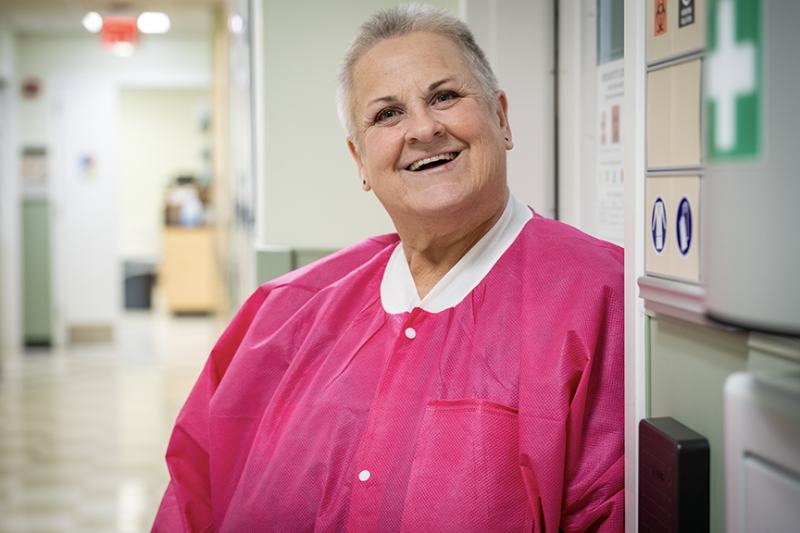 Medical Laboratory Professionals Week is an annual celebration that highlights the contributions of laboratory professionals. This year’s theme, The Future is Lab, celebrates laboratory professionals who meet today’s evolving patient care and public health challenges with resilience, innovation, and expertise. In Fairfax County, Public Health Laboratory Scientist Mary Louise Kolodziej has spent the last 40 years doing her part to identify and slow the spread of disease in Fairfax.
“When I was little, I really wanted to be a teacher,” said Mary Louise. “But I began watching Quincy, M.E. [a crime investigation and mystery series on TV] and he [actor Jack Klugman] worked in a lab and figured things out… I thought, ‘wow, this is really neat!’.”
Inspired by her favorite TV show, Mary Louise took accelerated science courses in high school and explored the possibilities of working in a lab. She attended Cedar Crest College in Allentown, PA and earned a degree in biology in 1982. Mary Louise’s first job out of college was for the Fairfax County Health Department as a laboratory aide. At the time, the Health Department’s laboratory was located in a small square building on Chain Bridge Road next to the Masey building.
 “Back then, we were called microbiologists and chemists. The lab conducted urinalyses, serology testing, hematology, environmental and water testing, rabies testing… and we had a designated area for tuberculosis [TB] testing,” said Mary Louise. “We also used a lot of glassware back in the day – we ran the autoclave to sterilize and decontaminate, and we physically went out into the field to collect specimens.”
Lab professionals often work behind the scenes. Even though they don’t interact directly with patients, their work is instrumental in health outcomes. Few people understand the critical nature of the testing they perform every day. An estimated 70 percent of all decisions regarding a patient's diagnosis and treatment, hospital admission, and discharge are based on laboratory test results. Doctors rely on laboratory test results to make informed patient diagnoses. While patient history and physical symptoms are vital, most diagnoses require confirmation through laboratory testing. “You have to be organized, pay attention to detail, and have good communication skills,” said Mary Louise. “Even though we don’t see the patients, the specimens BECOME our patients.”
During the early part of her career, Mary Louise was particularly drawn to Tuberculosis testing. “…but we only screened specimens by reading slides and observing growth on culture media,” said Mary Louise. “Cultures that grew would be shipped to the public health lab in Richmond for identification and susceptibility testing.”
Under the guidance of the lab director at the time, Mary Louise was tasked with bringing TB testing fully in-house. She was sent to Richmond to work with the Virginia Department of Health technologists to learn how they conducted TB testing and brought those skills back to Fairfax, which soon became the second public health laboratory in Virginia certified to conduct full TB testing.
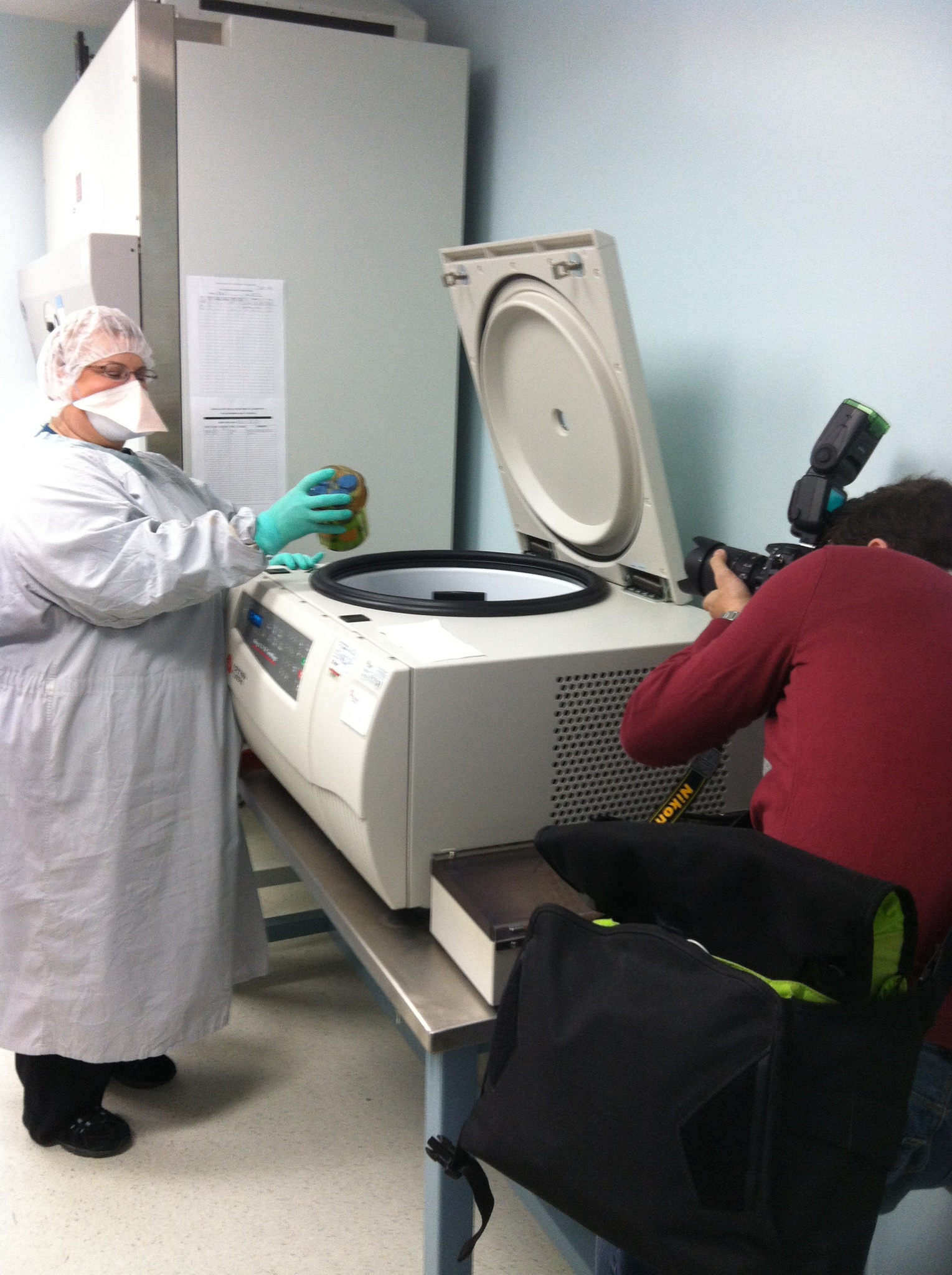 Over the years, her affinity for TB testing has caught the eye of the Association of Public Health Laboratories (APHL) who photographed Mary Louise demonstrating proper TB testing techniques which are now a part of the APHL TB training modules. She’s also been invited to speak on the inner workings of the TB Laboratory at the annual TB Control and Newcomer Health Nurse Training Program for Virginia public health nurses working with TB clients. And Mary Louise was honored with the annual American Lung Association of Virginia Award with honors significant contributions to prevent and control TB in Virginia.
During her tenure with the Health Department, Mary Louise has witnessed firsthand how laboratory sciences have adapted to changes within the community. She was instrumental in assisting the lab adding HTLV-III testing (before it was called HIV/AIDs) and was a part of the team that brought on hepatitis and chlamydia testing.
“Those were the days when we had to cart our own microscopes and our bag of supplies to each district office during STI clinic hours,” said Mary Louise, adding “There’s always some new organism or new disease – it’s critical that we stay up to date, attend conferences, continue our education. Over the years, we’ve added toxicology and testing for drug use and misuse. When COVID came, that was a major undertaking. We handled thousands upon thousands of specimens and rearranged our lab for PCR [polymerase chain reaction] equipment. We even had to open a second lab, the Burkholder building, to accommodate our testing.”
And while Mary Louise has more than 40 years with the Health Department lab, there is no risk of her slowing down quite yet. “One day I’ll hang up my lab coat and fade into the sunset,” Mary Louise shared jokingly. “I don’t plan to do anything too exciting when I retire – I am looking forward to just being able to kick back, put my feet up, and not have to go anywhere.”
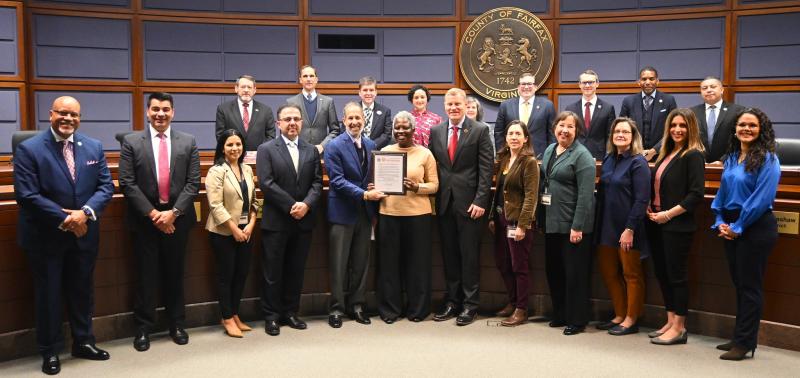
Each year, National Public Health Week is observed to recognize public health contributions and call attention to issues that are important to improving our nation's health. This National Public Health Week, April 1 -7, the theme: “Protecting, Connecting and Thriving” is centered around the interconnectedness of individuals, communities, and the world around us.
Health is more than health care and strong public health systems are critical for sustaining and improving community health and resiliency. Our health department team works, often behind the scenes, to protect, promote and improve the health and wellbeing of our diverse community.
We are doing that by leveraging lessons learned from the COVID-19 pandemic and continuing to take action to meet the evolving issues that impact our community. Emerging and reemerging issues include communicable diseases, chronic conditions, climate change, emergency preparedness, health literacy, mental health and substance use.
Over the next five years, we are committed to prioritizing in four areas: embedding equity in all aspects of our work, strengthening intentional community relationships grounded in trust, ensuring a thriving and inspired workforce, and equipping a robust, innovative organization to meet needs into the future.
The Fairfax County Board of Supervisors has designated April 1 -7 Public Health Week. Watch the proclamation reading along with Director of Health Dr. Gloria Addo-Ayensu’s remarks (minutes ~40:00 - 48:00 of the meeting):
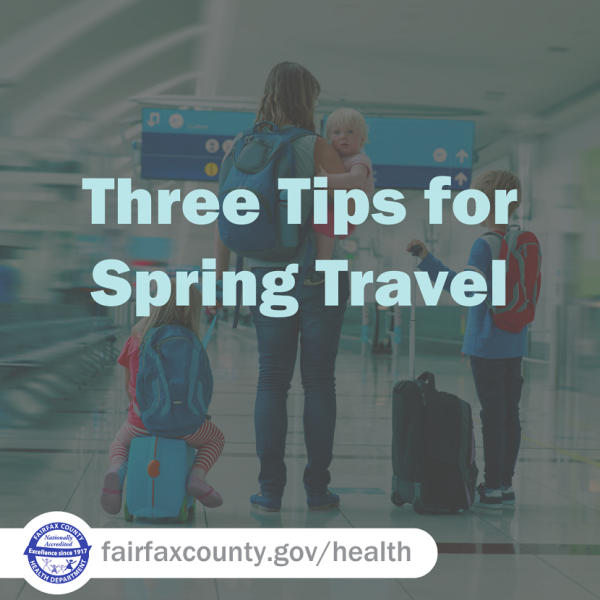 If you are traveling this spring, here are three reminders to help you stay healthy while you’re away.
It’s important to be up to date on recommended routine immunizations before you travel, including Flu, RSV and COVID-19. If you are not vaccinated, international travel increases your chances of getting and spreading diseases that are not common in the United Sates, like measles. Plan ahead so the vaccines have time to work with your body’s immune system.
Learn more about international travel immunizations.
The CDC shares health recommendations for destinations across the globe. When you plan your itinerary, check for travel health notices, recommended vaccines and medicines, other ways you can stay safe and healthy, and sample packing check lists. Search for your destination.
Whether you choose a warm or cold destination, pack the right clothing and protective gear. And remember healthy habits while you have fun. Here are some examples:
Find more travel advice for before, during, and after your trip.
Visit our web page and follow us on social media for updates on respiratory viruses and other health topics.
The Centers for Disease Control and Prevention (CDC) has updated recommendations for COVID-19 and other respiratory viruses.
We continue to encourage everyone to stay up to date with recommended immunizations and maintain healthy habits to prevent the spread of respiratory viruses.
Visit our web page and follow us on social media for updates on respiratory viruses and other health topics.

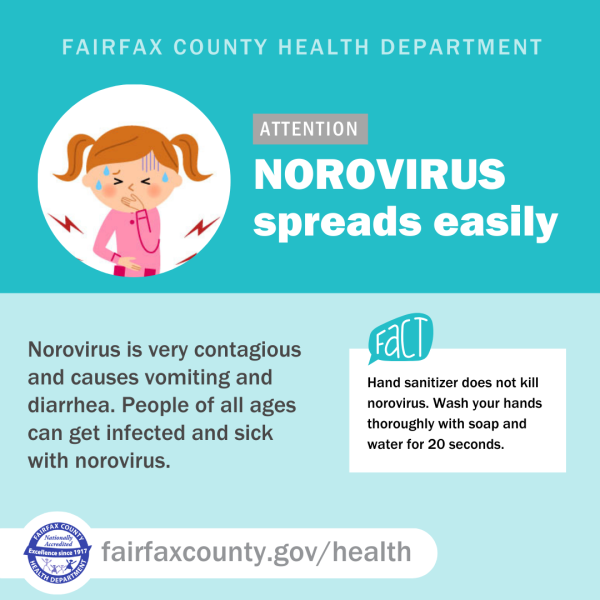
Over the past several weeks there have been three measles cases confirmed in people living in or traveling through the National Capitol Region. And sadly we are not alone, measles outbreaks are occurring in every region of the world with health officials in many countries reporting large outbreaks.
Measles is caused by a highly contagious virus. In fact, it is so contagious that if one person has it, up to 90% of the people close to that person who are not immune will also become infected.
Measles spreads through the air when an infected person coughs or sneezes. Other people then become infected when they breathe contaminated air or touch an infected surface and then touch their eyes, nose, or mouth. The measles virus can live for up to two hours in an airspace after an infected person leaves the area.
Measles symptoms typically begin with a high fever, cough, runny nose, and watery eyes followed by a rash. Measles can be serious in all age groups. However, some groups are more likely to suffer from complications:
Serious complications include pneumonia (infection of the lungs) and encephalitis (infection of the brain). Measles infection can also be fatal.
Measles is still common in many places, including Europe, the Middle East, Asia, and Africa. Every year, measles is brought into the United States by unvaccinated travelers, most often Americans and sometimes foreign visitors, who get measles while they are in other countries.
![Protect your child from measles Measles is still common in many parts of the world. Unvaccinated travelers who get measles in other countries continue to bring the disease into the United States. [Illustration of a plane flying around the world] Give your child the best protection against measles with two doses of measles-mumps-rubella (MMR) vaccine: MMR 1st dost at 12-15 months 2nd dose at 4-6 years [Illustration of MMR vaccine] Traveling abroad with your child? Infants 6 to 11 months old need 1 dose of measles vaccine before traveling abroad. Children 12 months and older should receive 2 doses before travel. Check with your pediatrician before leaving on your trip to make sure your children are protected. [logo] U.S. Department of Health and Human Services, Centers for Disease Control and Prevention](/health/sites/health/files/Assets/images/news/measles-travel-infographic.jpg)
If you plan to travel internationally, make sure you and your family are protected, no matter where you are going. The best protection against measles is vaccination. You should plan to be fully vaccinated at least 2 weeks before you leave for your trip.
Vaccines help teach the immune system how to defend against germs, helping to build up natural defenses. They can prevent common diseases that used to seriously harm or even kill infants, children, and adults — like measles.
The MMR vaccine protects against three diseases: measles, mumps, and rubella. It is safe and highly effective: two doses are about 97% effective at preventing measles if exposed to the virus.
See the recommend vaccine schedule to learn more about when your child should get an MMR vaccine, and other recommended vaccines. Following the recommended schedule helps reduce the risk of serious diseases that can be prevented. While under the routine immunization schedule, children receive their first vaccine against measles at 12-15 months of age, infants between 6 and 11 months of age should receive one dose of measles vaccine before traveling internationally.
Learn more about measles. Find answers to frequently asked questions about measles and the vaccine used to prevent it.
Visit our web page and follow us on social media for updates on viruses and other health topics.
The COVID-19 Vaccination Dashboard has been updated with a new focus on 2023-2024 COVID-19 vaccine data.
The CDC currently recommends a single 2023–2024 updated COVID-19 vaccine for most people.* Therefore the Fairfax County Health Department will no longer report data on the percentage of residents in Fairfax Health District who completed their primary series and boosters. Instead, the dashboard now focuses on 2023-2024 COVID-19 vaccine metrics and the total doses given since COVID-19 vaccines became available.
The updated COVID-19 vaccines have been recommended since September 2023. They were updated to provide more protection from severe disease, hospitalization, and death from the variants that are currently circulating.
Currently, 18.6% of residents in Fairfax Health District received the 2023-2024 COVID-19 vaccine. We continue to encourage you to keep yourself and others in the community safe by staying up to date with the recommended vaccines. Vaccination remains the safest way to avoid hospitalization, long-term health outcomes, and death. Learn more about the benefits.
It’s not too late to get a COVID-19 vaccine. Visit vaccines.gov to find a location near you. If you are uninsured or underinsured, you can get a no-cost COVID-19 vaccine through participating providers. Visit the CDC’s Bridge Access Program page for more information.
* Vaccine recommendations are based on age, and in some cases, time since last dose, the first vaccine received, and immunocompromised status. People who are immunocompromised or younger than 5 years may need an additional dose.
From the Virginia Department of Health
The Virginia Department of Health (VDH) was notified of a confirmed case of measles in a person who traveled through Northern Virginia when returning from international travel. Out of an abundance of caution, VDH is informing people who were at various locations, including Dulles International Airport on January 3, 2024, and Ronald Reagan Washington National Airport on January 4, 2024, that they may have been exposed. Health officials are coordinating an effort to identify people who might have been exposed, including contacting potentially exposed passengers on specific flights.
Listed below are the dates, times, and locations of the potential exposure sites associated with this case of measles:
| Location | Date and Time |
|---|---|
|
Dulles International Airport (IAD) International arrivals area of the main terminal |
Between 4 p.m.-8 p.m. on Wednesday, Jan. 3, 2024 |
|
Ronald Reagan Washington National Airport (DCA) Terminal A |
Between 2:30 p.m.-6:30 p.m. on Thursday, Jan. 4, 2024 |
Measles is a highly contagious illness that can spread easily through the air when an infected person breathes, coughs, or sneezes. Measles symptoms usually appear in two stages. In the first stage, most people have a fever of greater than 101 degrees, runny nose, watery red eyes, and a cough. These symptoms usually start 7 to 14 days after being exposed. The second stage starts 3 to 5 days after symptoms start, when a rash begins to appear on the face and spread to the rest of the body. People with measles are contagious from 4 days before the rash appears through 4 days after the rash appeared.
What should you do if you were at one of the above locations on the day and time specified?
Measles is preventable through a safe and effective MMR vaccine. Two doses of the vaccine are given to provide lifetime protection. Virginia has high measles vaccination rates, with approximately 95% of kindergarteners fully vaccinated against measles. However, infants younger than 12 months of age are too young to be vaccinated. These infants, and others who are not vaccinated, are very susceptible to infection if they are exposed to someone with measles. If you or your child have not yet been vaccinated, call your health provider. To check your immunization status, call your healthcare provider or request records from the VDH Immunization Record Request Form. For additional information, contact your local health department.
Healthcare providers should maintain an increased index of suspicion for measles in clinically compatible cases at all times, especially if patients were recently exposed. Measles is an immediately reportable disease. Contact the local health department right away to report any suspected cases and arrange for public health testing. For additional guidance on testing and infection control measures for healthcare providers, visit https://www.vdh.virginia.gov/measles/hcp/.
Residents with additional questions about their potential exposure can call VDH at (804) 864-8140 or email epi_response@vdh.virginia.gov.
For more information on measles, see the VDH Measles Fact Sheet.
Have you heard yourself or someone else saying “I know so many people who are sick right now!”? It would be no surprise, the CDC reports Very High overall respiratory illness activity in Virginia based on healthcare visits for fever and cough or sore throat.
Here are updates about COVID-19, flu, and RSV in our community and the steps you can take to stay healthy in the new year.
In Northern Virginia, COVID-19 hospital admissions and emergency department visits have continued to increase. While the Fairfax County hospitalization level remains in the low category, for most counties in Virginia, it is now in the moderate category. Nationally, emergency department visits, hospital admissions, and deaths have all increased.
COVID-19 variant JN.1 is causing an increasing percentage of COVID-19 infections and is now the most widely circulating variant in the United States. This trend is expected to continue. JN.1’s continued growth suggests that the variant either spreads more easily or is better at evading our immune systems than other circulating variants. Existing vaccines, tests, and treatments still work well against JN.1, so current COVID-19 recommendations have not changed. Learn more about JN.1 from CDC.
In Northern Virginia, we remain at a very high influenza-like illness (ILI) intensity level. ILI symptoms include a fever (100.4°F or greater) and cough and/or sore throat. There was a slight decrease in Northern Virginia for emergency department and urgent care visits last week. However, they still made up 6.7% of all visits. In Virginia, children 0-4 years have the highest rate of visits.
RSV activity continued to decrease in Fairfax Health District. If you are at high risk for severe illness from RSV, you should continue to take steps to protect yourself, especially if you are traveling or hosting a visitor. RSV activity remains elevated in many areas of the country. Hospitalization rates remain elevated, particularly among young children and older adults.
It is not too late to get an immunization. We strongly encourage you to get this year’s vaccine, especially if you are at risk for getting very sick from COVID-19 or flu. COVID-19 and flu vaccines are recommended for everyone 6 months and older. Vaccination rates in the Fairfax Health District are low, with only 17.4% and 34.7% of residents having received the current COVID-19 and flu vaccines respectively. Find a vaccine near you at vaccines.gov.
People who are 60 years or older, pregnant, or parents of infants should talk to a healthcare provider about RSV immunization.
If you have any symptoms of a respiratory virus — like fever, cough, sore throat, runny or stuffy nose, to name a few — there are three things to do right away.
We encourage you to take steps to prevent the spread of viruses. Actions can include: improving indoor air quality by increasing ventilation and filtration, choosing to wear a high-quality mask, and covering coughs and sneezes. For more ways to stay healthy, go to Healthy Habits to Help Protect Against Respiratory Viruses.
Visit our web page and follow us on social media for updates on respiratory viruses and other health topics. The CDC also shares situation updates and ways to Protect yourself and others from Flu, COVID-19, and RSV.