
Health Department Alert:

Each May, the Fairfax County Health Department recognizes National Nurses Month as a celebration of the tremendous impact that public health nurses have on wellness and wellbeing across our communities. As part of the celebration, the Health Department selects a Public Health Nurse who exhibits essential of an outstanding nurse, including a caring nature, empathic attitude, emotional stability, adaptability, hard work, quick thinking, physical endurance, good judgment, and strong communication skills. These qualities represent the FCHD’s “Health Nurse of the Year.” On April 17, that honor was bestowed upon Vivienne Goldstein, a Public Health Nurse Manager who serves in the FCHD’s School Health program.

“Receiving this recognition is deeply meaningful,” said Vivienne. “But the real reward is seeing the impact of our collective work. I am constantly inspired by the diversity of expertise my nursing team brings to the table. Their dedication motivates me to be a better advocate for our families. “
Vivienne is recognized not just as a nurse, but also as a leader, a mentor, a problem-solver, and an advocate. With professional experience beyond healthcare, Vivienne brings a unique and valuable perspective to her work. She understands systems, efficiency, and strategy, and she applies that insight to improve processes and outcomes within the school health program. She is not only clinically strong, but operationally savvy, an increasingly important combination in today’s complex healthcare environment.
“Today, we recognize not just a nurse, but a leader, a mentor, a problem-solver, and an advocate,” said Brian Hochstrasse the Health Department’s Assistant Director of School Health. “We recognize someone who strengthens our system, uplifts her colleagues, and transforms challenges into opportunities for growth and connection.”
Vivienne’s resourcefulness, combined with her technical proficiency and efficiency, ensures that she remains a step ahead in a world where information evolves constantly, benefiting everyone around her. Her impact is felt in countless ways—through the students she’s supported, the families she’s reassured, the colleagues she’s guided, and the profession she continues to elevate.
“My passion lies in the intersection of health and education, said Vivienne. “By ensuring students have access to quality medical care and connecting families with the right resource, we aren't just treating a diagnosis; we are removing barriers to learning. I love knowing that the work we do helps these students lead healthier, more focused lives, giving them a fair shot at reaching their full potential.”
As we honor Vivienne, and all of our nurses this month, it is crucial to acknowledge the breadth of their contributions. They are the trusted hand of health and wellness, the voice of calm in emergencies, and the guiding light toward healthier, stronger communities. Public health nurses, in particular, embody the spirit of service and resilience that National Nurses Month is designed to celebrate.

From the Virginia Department of Health
The Virginia Department of Health (VDH) was notified of a confirmed case of measles that traveled through Washington Dulles International Airport Thursday, April 23 and Friday, April 24. The person traveled internationally and is an out of state resident. To protect the patient’s privacy, VDH will not provide any additional information about the patient. Health officials are coordinating an effort to identify people who might have been exposed, including contacting potentially exposed passengers on specific flights.
Listed below are the dates, times, and locations of the potential exposure sites in Virginia:
Any additional exposure sites identified in Virginia will be posted to the VDH Measles website. Additional exposure sites have been identified in DC and Maryland.
What to Do If You Have Been Exposed to Measles
Most people in Virginia have immunity to measles through vaccination, so the risk to the general public is low. However, anyone who was at the potential exposure sites at the times listed should:
General Measles Information
Measles is a highly contagious illness that can spread easily through the air when an infected person breathes, coughs, or sneezes. Measles symptoms usually appear in two stages. In the first stage, most people have a fever of greater than 101 degrees, runny nose, watery red eyes, and a cough. These symptoms usually start seven to 14 days after being exposed. The second stage starts three to five days after symptoms start, when a rash begins to appear on the face and spreads to the rest of the body. People with measles are contagious from four days before the rash appears through four days after the rash appeared.
Measles is preventable through a safe and effective MMR vaccine. Two doses of the vaccine are given to provide lifetime protection. Virginia has high measles vaccination rates, with approximately 95% of kindergarteners fully vaccinated against measles. However, infants who are too young to be vaccinated, and others who are not vaccinated, are at high risk of developing measles if they are exposed. Infants six months through 11 months of age who will be traveling internationally, or to an outbreak setting, should receive one dose of MMR vaccine prior to travel. Talk to your healthcare provider if you have questions about the MMR vaccine.
To date in 2026, Virginia has 21 reported cases of measles. For more information about measles visit www.vdh.virginia.gov/measles/.
Springfield residents encouraged to go to new Franconia-Springfield location
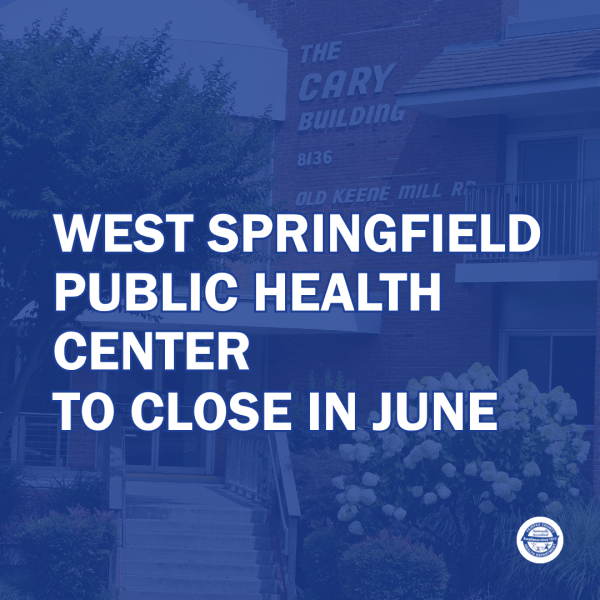
Services offered at the Fairfax County Health Department’s West Springfield Public Health Center (located in the Cary Building at 8136 Old Keene Mill Road in Springfield) are being transitioned to the Franconia-Springfield Public Health Center. The last day for client services at West Springfield is June 12, 2026.
To prepare for the transition, all clients and patients are being actively referred to the Franconia-Springfield location. Residents who would like an appointment for services are encouraged to make one at the Franconia-Springfield Public Health Center, located at 6564 Loisdale Court in Springfield. This location is easily accessible to the Franconia-Springfield Metro station and several bus lines.
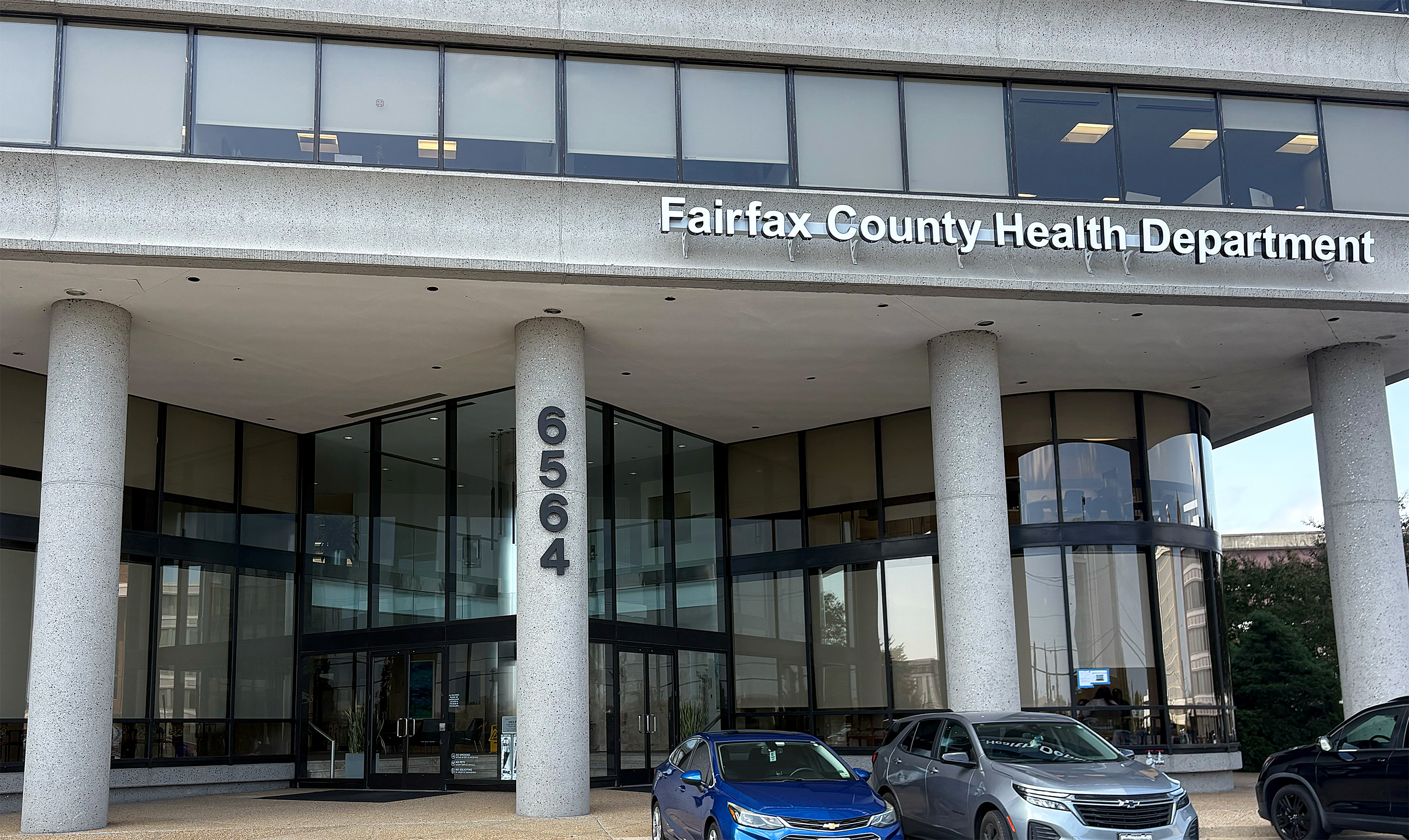
The transition comes in advance of West Springfield’s lease for space ending later this year and following the opening of the Franconia-Springfield Public Health Center in October 2025, which is also accommodating staff and clients from the Joseph Willard Health Center following its closure for demolition and reconstruction.
The Franconia Springfield Public Health Center is a state-of-the-art facility that provides a wide array of public health services including immunizations, pregnancy testing and maternity intake, tuberculosis (TB) testing and treatment, HIV and STI testing, Newcomer Health Screenings, and referral assistance. Other services include vital records (issuance of birth, death, and marriage certificates) and enrollment into the Women, Infants & Children (WIC) supplemental nutrition program.
Appointments are encouraged and can be made by calling 703-246-7100, TTY 711. Walk-in hours are also available for select services.
In addition to the Franconia-Springfield location, the Health Department provides services at three additional public health centers located in Annandale, Mt. Vernon, and Herndon-Reston.

Igniting curiosity, knowledge and action in behavioral health was the theme of the day recently, as the inaugural SPARK event was held at the Government Center. SPARK is a new event for high school students participating in Public Health Youth Ambassador Program (PHYAP) sponsored by the Fairfax County Health Department (FCHD). PHYAP students from Mount Vernon and Justice high schools took part in an interactive day focused on behavioral health and disability development programming and career exploration. The event is the culmination of a collaboration between the Fairfax-Falls Church Community Services Board (CSB) and the Health Department.
"The unique cross-agency partnership between FCHD and the CSB is designed to support PHYAP student development by providing them with direct access to behavioral health and developmental disability professionals, customized learning experiences, and internship/job opportunities," said Scott Folks, Program Manager for the Youth Ambassador program. " Each goal was personified through SPARK, where simulations and dialogues led by CSB subject-matter experts provided our PHYAP students with critical insights that will assist their secondary school and career aspirations."
The day began in a general session, with some energy-raising activities, hosted by LaVurne Williams, the CSB's Youth and Family Director, and PHYAP's Instructor Supervisor, Blaythe Ayala. Fairfax County's Director of Health, Dr. Gloria Addo-Ayensu spoke to the group, encouraging the students to make the most of these opportunities to understand ways they may make a meaningful difference in their communities and their families. Jean Post, CSB's Deputy Director of Administrative Operations, spoke of the importance of their work in the community, and invited the students to ask deep questions of the staff and volunteers they would meet during the day. She urged them to take full advantage of this chance to explore these possible career options.

Every family deserves a strong start. In observance of National Home Visiting Week from April 20-24, the Fairfax County Health Department is recognizing the vital work of our Maternal Child Health Field program and Nurse-Family Partnership program. These initiatives reflect the Health Department’s commitment to building a healthier community, delivering essential support, education, and services directly to where families need them most.
Home visitation programs pair expectant mothers and new parents with specially trained public health nurses who provide regular, ongoing visits starting early in pregnancy and continuing through the child’s first years of life. The benefits for both parents and children are profound. Parents receive hands-on guidance in prenatal care, newborn development, and infant nutrition. Children benefit from a close bond with their parent, fewer preventable injuries, better school readiness, and improved long-term health outcomes.
"The success of this program is rooted in the remarkable empathy and resilience our staff bring to their work every day," says Joanna Hemmat, Assistant Director of Health Services at the Fairfax County Health Department. "They possess a unique ability to build trust through genuine kindness and a deep respect for the families they serve. It is their unwavering dedication and the human connection they foster that truly makes the difference in our community.”
While routine health care provider visits are essential for medical check-ups, home visiting programs offer unique advantages that traditional clinical settings simply cannot match. A clinic visit provides only a brief, 15-minute snapshot of a patient's life. By visiting a family at home over an extended period of time, public health nurses gain a better understanding of a client’s lived reality. They can assess the physical living environment, identify everyday stressors, and tailor their health education to the family's needs. Learning to properly baby-proof a living room, manage a new medication, or establish safe sleep habits for infants is far more effective when taught in the family's own home. Furthermore, being in a familiar environment naturally helps parents feel more comfortable and open, fostering a deeper, more trusting relationship with their nurse.
Home visitation provided through the Nurse-Family Partnership and Maternal Child Health programs have consistently proven their value in our community. By emphasizing health promotion, disease prevention, and early intervention, these efforts build on family strengths while actively reducing long-term health care costs.
"We are incredibly proud of the progress we see every day in our community, one family at a time," says Sylvia Susana de la Torre, the Health Department's Nurse-Family Partnership Manager. "Mothers in our home visiting programs experience healthier pregnancies, parents find more emotional support after bringing their babies home, and their children are successfully reaching key developmental milestones. We also see that many family bonds are strengthened. By meeting families where they are, we accompany them as they take small yet important steps every day to help their children thrive.”
As we observe National Home Visiting Week, the Health Department extends our deepest gratitude to the nurses and support staff who make this mission a reality. They are not simply delivering public health services; they are delivering hope, confidence, and connection directly to the front doors of our community.
To learn more about the Nurse-Family Partnership and Maternal Child Health services, or to find out if you qualify, please visit the Fairfax County Health Department website.

This is a Virginia Department of Health (VDH) news release. To access this information in other languages, visit the VDH Fish Consumption Advisory page.
Effective immediately, the Virginia Department of Health (VDH) is issuing a fish consumption advisory for the Occoquan watershed due to elevated perfluorooctane sulfonate (PFOS) levels in specific fish species. The affected species include largemouth bass and bluegill sunfish.
This advisory includes the Occoquan River, the Occoquan Reservoir, Broad Run, Bull Run, Cub Run and South Run.
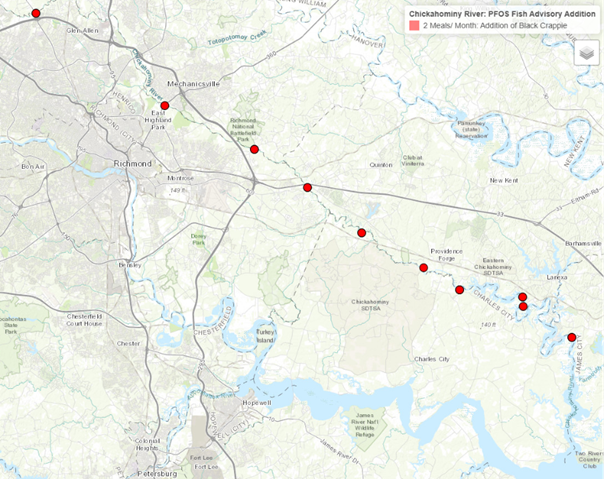
Fish tissue sample results collected from March 2024 through September 2025 show PFOS levels in largemouth bass and bluegill sunfish exceed the amount considered safe for long-term human consumption.
VDH advises not eating largemouth bass from the Occoquan River and Occoquan Reservoir. The advisory covers the tidal portion below the Occoquan River from the Occoquan Reservoir dam downstream to Occoquan Bay including Belmont Bay and the backwaters of the Occoquan Reservoir on the Bull Run arm near Hemlock Overlook Regional Park and just upstream of Davis Ford Road on the Occoquan River arm down to the water supply dam of the Fairfax County Water Authority. Localities impacted are Fairfax and Prince William.
VDH advises eating no more than two fish meals per month of largemouth bass from Broad Run from the outlet of Lake Manassas downstream to the confluence with Cedar Run; Bull Run from the I-66 bridge downstream to the backwaters of the Occoquan Reservoir on the Bull Run arm near Hemlock Overlook Regional Park; and South Run from the outlet of Lake Brittle downstream to the confluence with Lake Manassas (Broad Run). Localities impacted are Fairfax, Fauquier, Manassas, and Prince William. A meal is defined as eight ounces of fish.
VDH advises eating no more than two fish meals per month of bluegill sunfish from the Occoquan Reservoir from the backwaters of the Occoquan Reservoir on the Bull Run arm near Hemlock Overlook Regional Park and just upstream of Davis Ford Road on the Occoquan River arm down to the water supply dam of the Fairfax County Water Authority; Broad Run from the outlet of Lake Manassas downstream to the confluence with Cedar Run; Bull Run from the I-66 bridge downstream to the backwaters of the Occoquan Reservoir on the Bull Run arm near Hemlock Overlook Regional Park; Cub Run from the confluence with Elklick Run downstream to the confluence with Bull Run; and South Run from the outlet of Lake Brittle downstream to the confluence with Lake Manassas (Broad Run). Localities impacted are Fairfax, Fauquier, Manassas, and Prince William.

The health effects of PFOS exposure can include increased cholesterol or changes in liver enzymes. It can also lower antibody response to some vaccines. It can cause pregnancy-induced hypertension and preeclampsia, and a decrease in birth weight.
Fish consumption advisories alert people to contaminants present in affected fish species. They do not prohibit people from eating fish. Children and women who are pregnant or who may become pregnant have an increased health risk. Nursing mothers and young children should not eat fish from this advisory area.
Currently, this advisory area poses no health risk for recreational activities. Swimming, water skiing, and boating can continue in the advisory area.
Cleaning or cooking fish does not remove or reduce PFOS. To reduce potential harmful effects, VDH recommends the following precautions:
For more information, visit the VDH Fish Consumption Advisory page.
Join us in celebrating National Public Health Week from April 6 to 12, as we recognize the work being done every day to make Fairfax Health District healthy.
For more than 120 years, the Fairfax County Health Department has worked to protect and improve health across areas including environmental health, disease investigation and prevention, maternal and child health, and emergency preparedness. Today, we serve roughly 1.2 million residents as the largest health department in Virginia. 
Public health is more than the absence of disease. It's the science of creating conditions where everyone can be healthy and it takes a village. This year's national theme, "Ready. Set. Action!" emphasizes that public health is teamwork we achieve with our dedicated workforce and partners.
Explore the our partners in public health and consider getting involved in this work. Visit the pages for the Multicultural Advisory Council, Partnership for a Healthier Fairfax, Fairfax Food Council, and Medical Reserve Corps to see how you can take part in making Fairfax a healthier place to live, work, and play.
Throughout the week, find us on social media where we're running a "word of the day" series defining key public health terms. Follow us on Facebook, Nextdoor, Instagram, YouTube, and sign up to receive monthly updates through the Public Health in Action e-newsletter.

Originally published on Golden Gazette, March 2026 edition
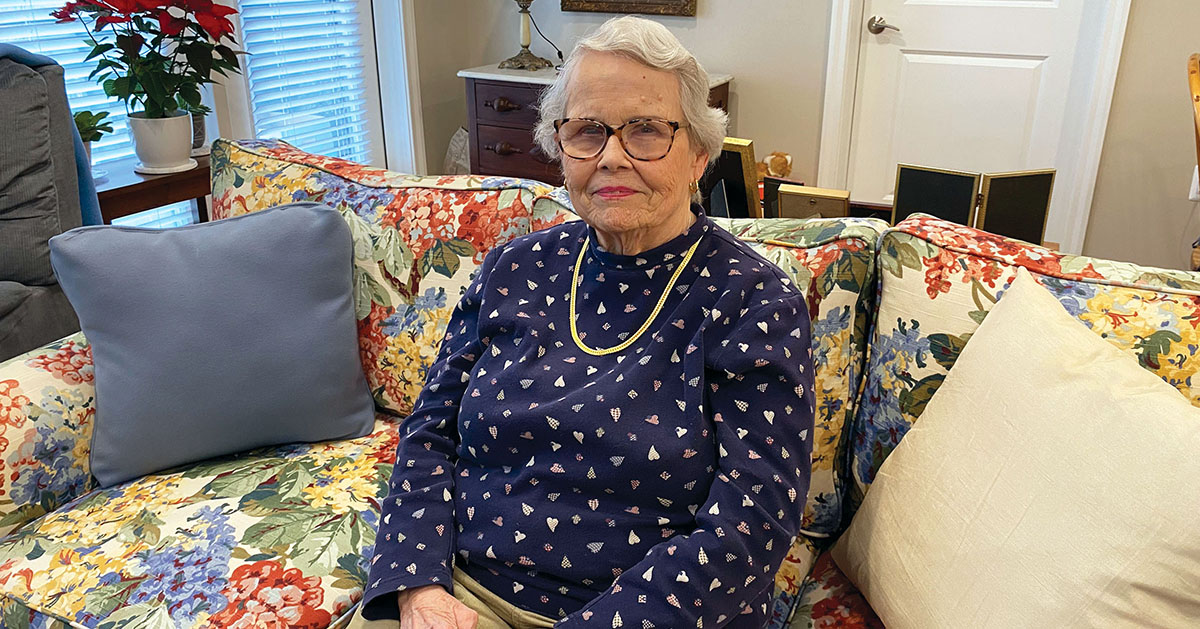
Edwyna Wingo has always been a people person, eager to meet strangers, get involved and lend a helping hand. Her natural inclination to serve her community led to a successful career as a public health nurse. It also caused her to devote much of her free time to community service. Her care for others and desire to connect has resulted in a wide social circle and happy life.
Edwyna Wingo was born at the University of Virginia Hospital in Charlottesville, Va., and raised in the small rural community of Mitchells, Va., located in Culpeper County. Her parents, Eloise and Buck, ran the general store in town, which was previously owned by Edwyna’s maternal grandfather. An only child, Edwyna began working in her parents’ store at a young age, greeting and waiting on customers. “That’s where I learned how to write my name and how to add and subtract numbers. My granddaddy would write the prices down on a brown paper bag and say, add it up for the customer. And that was even before I went to school,” she recalls.
Edwyna’s parents were very involved in the community and instilled a sense of service in her at an early age. Eloise was chairman of the American Red Cross bloodmobile volunteers. “I guess that’s where I cut my teeth on being a volunteer because as soon as I was old enough to safely carry a plate of cookies or cups of orange juice to people, my mother had me working,” Edwyna says.
Very early on, Edwyna knew that she wanted to be a nurse. Her decision was influenced by her aunt, a nurse who often visited the family and gifted her nursing textbooks to her niece. Edwyna remembers poring over the pictures in her aunt’s medical and anatomy books, fascinated by them. Her first experience of nursing came when she was 12 years old, helping to care for her grandmother at the end of her life. During this time, Edwyna learned how to give a bed bath and change the sheets while her grandmother was in bed.
During high school, Edwyna worked two summers as an aide at the University of Virginia Hospital. During this time, she was able to observe the work of a hospital and perform tasks such as taking patients’ vital signs, giving them baths, and feeding them. After graduating from Culpeper High School, Edwyna spent the summer before college working at Culpeper County’s new hospital. Knowing that she planned to study nursing in college, the doctors would invite her to observe during emergencies, allowing her to witness medical procedures like the delivery of a baby.
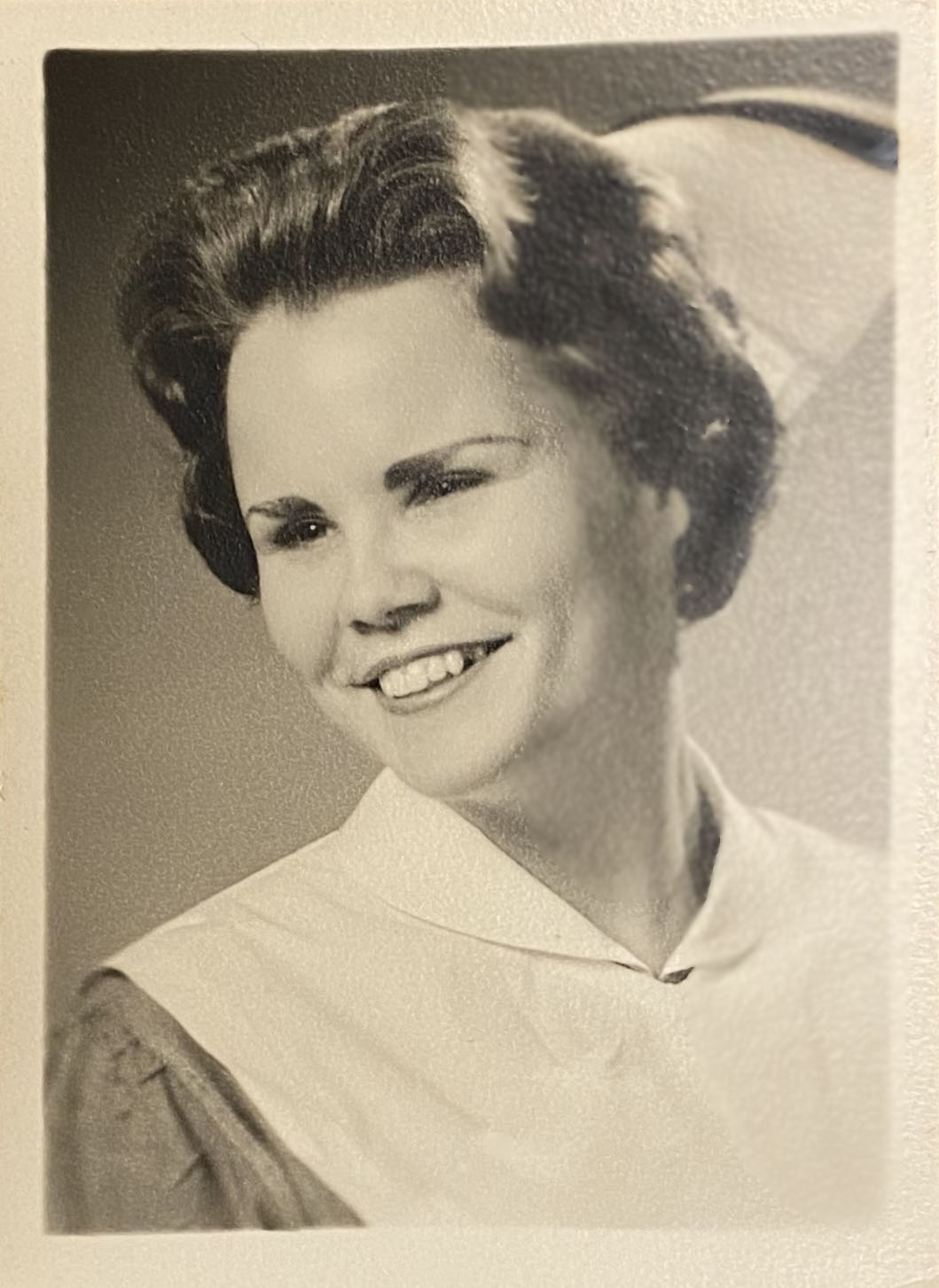
Edwyna attended Longwood College (now Longwood University) for two years before transferring to the University of Virginia (UVA). At that time, UVA was still an all-male university, but female nursing students could transfer in from other liberal arts schools in Virginia. While at UVA, Edwyna joined the Zeta Tau Alpha sorority and became very involved in the organization. She graduated in 1964 with a Bachelor of Science in nursing.
Edwyna’s first job after college was at the University of Virginia Hospital, but she eventually grew tired of the long shifts. Wanting a job with regular work hours, she went into home health, visiting and caring for patients in their homes. Her territory covered a third of Albermarle County and a third of the city of Charlottesville. She enjoyed her work, especially teaching families how to care for their loved ones. During this time, she remained active with her sorority, serving as general advisor to the chapter at UVA.
In September 1965, Edwyna moved to Fairfax County and began a new job as a public health nurse with the Virginia Department of Health. Her territory, covering what is now all of Burke, was mostly rural at that time. “We had a lot of farmland. We had a lot of cattle and horses and dairy farms. Many of the roads weren’t paved,” she recalls. Edwyna enjoyed her job, which consisted of visiting families and working at public health clinics and three elementary schools. After a year, she was promoted into the role of public health nursing supervisor.
During the long career that followed, Edwyna served in various roles that were often gratifying and challenging. For five years, she worked for a health department program called the Daytime Development Center. The program, serving children ages three to 21 with developmental disabilities and their families, existed before special education was available in Fairfax County Public Schools. Edwyna considers the time she worked there to be one of the most fulfilling periods of her career.
In 1974, Fairfax County began a program placing health aides in all elementary school clinics. Prior to this, school secretaries cared for sick or injured children. Edwyna was tasked with getting the program up and running. Over the period of one month, she interviewed and hired 125 people, created the curriculum for the program, and trained the staff – just in time for the first day of school. She continued to supervise the program and staff for another two years, before moving on to manage various Health Department offices throughout Fairfax County.
Soon after moving to Fairfax County, Edwyna purchased a home in the Greenbriar neighborhood in Chantilly and got involved right away, volunteering to be a block captain representing the residents of her community. She also joined the Western Fairfax Zeta Tau Alpha alumni group and served as treasurer for 25 years. The group volunteered in the community, especially at local food banks. In the late 80s and early 90s, Edwyna served as district president, responsible for all the Zeta Tau Alpha alumni chapters in the state of Virginia. During the five years she was president, she enjoyed visiting chapters, meeting people and attending national conventions.
Edwyna retired in the fall of 2011 and enjoyed a full month of retirement before accepting a part-time position with the Health Department. One of her primary responsibilities is serving as coordinator for a program that provides free car seats to low-income families. The program requires parents to view videos, then attend a class, after which they leave with a new car seat. Edwyna enjoys leading the program, saying, “It’s really been rewarding to see how appreciative families are when they come to a class and leave with a car seat for their child or expected child.” She also works on other initiatives, such as the COVID-19 vaccine clinics that were held at the Government Center during the pandemic.
Edwyna’s part-time status has allowed her to travel more. She has visited friends in the U.S. and Great Britain and enjoyed a few cruises (a favorite was Alaska). However, her most memorable adventure was a two-week train trip on the Rocky Mountaineer train, traveling through the Rocky Mountains.
After 55 years of living in her home in Greenbriar, Edwyna decided it was time to downsize. She was the fourth person to select an apartment in the Woodleigh Chase Senior Living Community before construction even began. While her new home was being built, Edwyna had two years to downsize. “I thought it was going to be really hard, but I gave myself a good talking to. Am I ever going to have a dinner party for ten people? Do I need my crystal and my china and my silver? I don’t think so,” she laughs. She spent her spare time packing boxes for her move and carefully selecting what furniture to take with her. She gave her remaining possessions to family members or donated them. Edwyna finally moved into her new home in August of 2024. While she was sad to leave her neighbors, they are only 10 miles away and continue to stay in touch.
Like her long ago move to Greenbriar, Edwyna got involved soon after moving to Woodleigh Chase. She was elected to serve on the resident advisory council, working with management to address residents’ concerns. Freed from the duties of home maintenance, she has time to participate in programs and events hosted in her community, including social activities, guest lectures, and concerts. She also helped form a group called Friends at Woodleigh Chase, comprised of residents who are available to help their neighbors. “If someone is ill, we can pick up a prescription or bring a meal. We aren’t doing medical stuff; we’re just being good neighbors,” she says.
While she continues to volunteer with her sorority alumni group, Edwyna has taken on a new cause. She collects plastic and paper bags from her Woodleigh Chase neighbors and donates them to the Inova Fair Oaks Hospital Thrift Store, where staff use them to bag customers’ purchases. Because plastic bags can’t be put into recycling bins, she is giving them a new purpose and keeping them out of the landfill. Word has spread throughout her community. “They’ll laugh and say I’m the bag lady because I’ll come home and they’ll be bags sitting at the door of my apartment,” Edwyna says.
One thing that Edwyna didn’t anticipate when moving to Woodleigh Chase was just how many people from her past would be her new neighbors. She’s reconnected with a woman she went to school with, a sorority sister, and an old colleague from the Health Department. “It’s nice to have people from your former life suddenly appear in your current life,” she observes.
Now 84 years old, Edwyna plans to continue working as long as she can. Looking back, she is grateful for her good life. “I’m happy with the way my life has gone. I have no regrets. I’ll go to my grave knowing I’ve done something positive for the world here in Fairfax County,” she says.

The Fairfax County Health Department has confirmed rabies in a cat located in Alexandria between North Kings Highway and Fort Lyon Court in the Huntington area. If you, someone you know, or a pet was touched, bitten, or scratched by the cat between March 5-19, 2026, you are urged to call the Fairfax County Health Department Rabies Program at 703-246-2433, TTY 711.
The cat attacked multiple people on the afternoon of March 19 on North Kings Highway near Fort Lyon Court in Alexandria. During the time it was sick, the cat may have had contact with other people or pets. The cat is described as a domestic shorthair male with solid black coloring and yellow eyes. The cat has been captured, and the purpose of this notice is for notification and to identify any additional potential exposures.
Rabies is a serious disease caused by a virus that can infect wildlife (e.g., foxes, raccoons, skunks and bats), as well as domestic animals, such as dogs and cats. The rabies virus is found in the saliva, brain and spinal tissue of an infected animal. People may get infected with rabies when they are bitten or scratched by an animal that is sick with the disease. The virus can also be passed along when an infected animal’s saliva or central nervous tissue enters an open wound, mouth, nose or eyes of another mammal. To date, 11 animals have been diagnosed with rabies in Fairfax County in 2026.
Animals with rabies may act normally during the early stages of the disease, making it difficult to know if the animal is infected. As the disease progresses, animals often show changes in behavior. For example, wild animals may act very docile, and domestic animals may become aggressive. Rabid animals may stagger, drool, or become paralyzed.
Here are some important steps to protect yourself and your pets from rabies:
If bitten or scratched by an animal that might have rabies, wash the wound thoroughly with soap and water and seek medical attention right away. When vaccinations are provided in time and appropriately, rabies treatment is 100% effective in preventing the disease. If not treated, rabies is 100% fatal.
More information about rabies can be found on our rabies webpage.

Spring brings blooming flowers, buzzing bees, and pollen in the air. Weather conditions such as temperature, humidity, wind, and rain can affect when allergy season starts and ends, and how severe symptoms can be. A longer and more intense pollen season is in the forecast this year, which can worsen allergies, asthma attacks, and air quality.
Pollen season lasts for several months and is affected by different types of plants. In Northern Virginia, tree pollen started in early March and is expected to peak in April and May. Grass pollen will increase in late spring and early summer, followed by ragweed and other weeds in late summer and early fall.
For many people, pollen causes seasonal allergies. Common symptoms include red or itchy eyes, congestion, runny nose, scratchy throat, sneezing, and coughing. Pollen can also worsen asthma and other respiratory illnesses, and can cause shortness of breath or difficulty breathing in serious cases, especially for children, older adults, and people with chronic obstructive pulmonary disease (COPD) and other medical conditions.
Some people are only affected by one type of pollen, while others experience symptoms from multiple types.
As we move further into spring and beyond, the following actions can help reduce the effects of pollen and season allergies for you and your family:
Check pollen levels and air quality: Keep an eye on local pollen forecasts using a weather app, website, or trusted news source. Learn how to check the daily Air Quality Index (AQI) to see how pollen and other pollutants affect outdoor air quality in your area.

Reduce your exposure: When pollen count is expected to be high, stay inside as much as possible and keep windows and doors closed, especially if you have a respiratory illness. If you go outside, choose shorter or less intense activities and avoid times when pollen count is highest. When driving during peak pollen times, use your car’s air recirculation mode to keep pollution and allergens outside.
Wash off pollen: When outside, don’t touch or rub your eyes. When you go back inside, wash your hands, take a shower, and change your clothes to remove pollen from your hair, skin, and clothing.
Protect your home: If your home has an HVAC system, use high-efficiency filters and change them regularly. If you don’t have an HVAC system, consider using portable air purifiers or box fans to help filter and keep air circulating. Use caulk to seal any cracks around windows and doors to minimize the pollen that gets inside.
Seek medical care: Talk to your doctor about medications and treatment options so you can be prepared year-round. Get medical care right away for urgent symptoms such as shortness of breath, chest tightness, or heart palpitations.