GREEN BUILDINGS
Recognizing the impact of Fairfax County’s public facility buildings on the local environment, the Building Design and Construction Division within Capital Facilities implements the county’s green buildings policy in the design and construction of capital construction projects. This fulfills the Capital Facilities’ mission of providing buildings in an environmentally sound manner with energy-efficient practices and sustainable materials.
While energy reduction is a major focus in the county’s environmental strategies, county buildings do more than just reduce energy use. They also address water use, waste, site conditions, indoor air quality, and environmentally safe materials and sourcing.
On this page, you will find information on the Green Building strategies in the design and construction of Fairfax County's facilities. To fulfill the county’s commitment to environmental and sustainable development, green building practices are incorporated in the design and construction of county facilities.
Scope
All new construction and major renovations of county facilities are to be designed for improved energy and water efficiency, improved indoor environmental quality, and reduced carbon emissions.
Green Building design elements include:
- High-performance building envelope
- Energy efficient HVAC
- LED lighting systems and controls
- Enhanced indoor air quality strategies
- Low-flow plumbing fixtures
- Low environmental impact building materials
- On-site renewable energy systems
- Sustainable sites – enhanced stormwater management
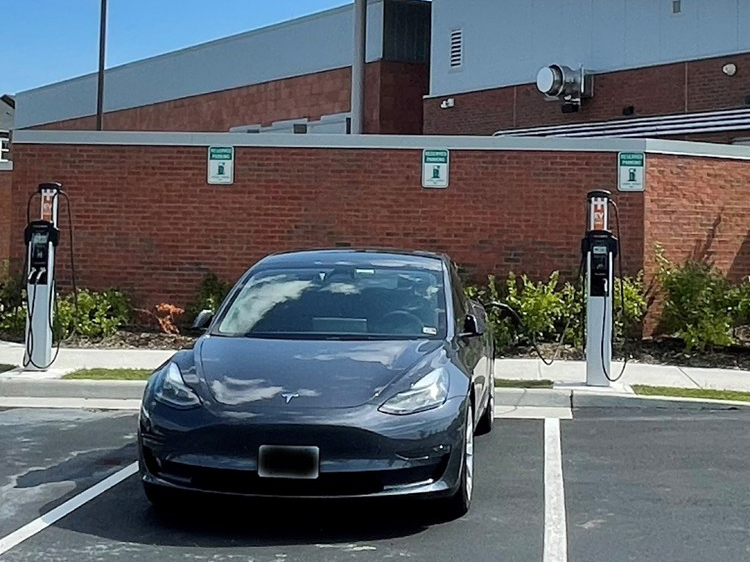
- EV charging stations and infrastructure
Sources
Green Building energy reduction includes both grid electricity and natural gas.
Target(s)
All new county government buildings and major renovations over 10,000 square feet that began the design phase in 2021 are designed and constructed to achieve:
- A minimum of Leadership in Energy and Environmental Design (LEED®) Gold certification
- LEED® is the U.S. Green Building Council's Leadership in Energy and Environmental Design standard
- Meet Net Zero Energy (NZE) design standards
- 50% energy efficiency over baseline
- All electric equipment and appliances.
Benefits
Reduced carbon emissions, reduced energy and operating costs and improved air quality and occupant comfort.
Progress
2021 – 2025 Building Projects (Pre-Operational Energy Strategy Design Target Projects)
| LEED® Gold or Better | % Energy Use Reduction | % Water Use Reduction | kWh Renewable Energy Generation |
|---|---|---|---|
| 6/13 or 46% | 34.5% | 32% | 1,476,858 |
The table above shows information for LEED® Gold or better green buildings that were completed in years 2021 through 2025. These buildings were designed and constructed under a prior LEED® target of Silver certification and 5% energy efficiency above baseline. While these completed projects pre-dated the 2021 Operational Energy Strategy (OES) design target of LEED® Gold and 50% energy efficiency (projects in design by 2021), the information demonstrates DPWES’ commitment to sustainable design practices.
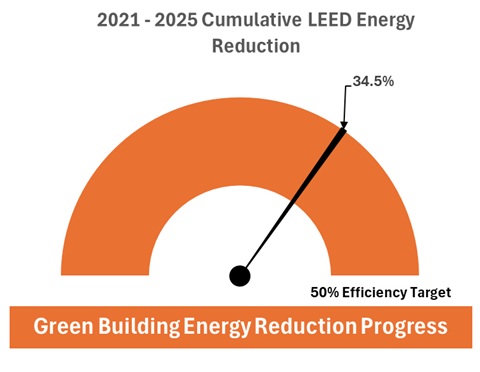
For example, in 2021 through 2025 there were a total of 13 green buildings completed with 7 achieving LEED® Silver designation, 5 achieving LEED® Gold and 1 achieving LEED® Platinum, which amounts to more than 46% of all green building projects designed and constructed to achieve a LEED® Gold or better designation. During this same period, the total cumulative LEED® energy reduction was 34.5%. Water use was reduced by 32%.
The on-site solar installations in 2021 through 2025 amount to 1,476,858 kilowatt hours (kWh) of renewable energy generation and use which is equivalent to the reduction of over 924 metric tons of carbon dioxide (CO2e) equivalent and 254 homes’ electricity use for one year.
To date 49 projects achieved LEED® certification:
- 1 - LEED® Platinum
- 21- LEED® Gold
- 26 – LEED® Silver
- 1 – LEED® Certified

Leed energy use reduction chart
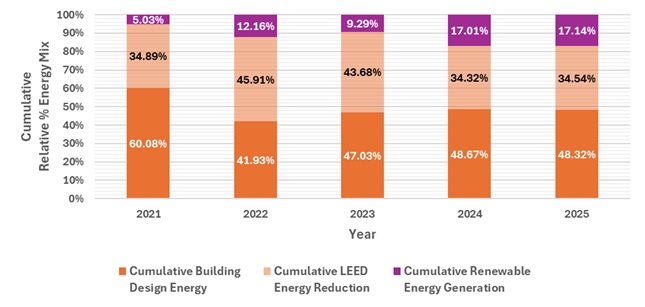
Cumulative energy profile
Click on figures to enlarge.
Highlights
Photovoltaic Solar Panels
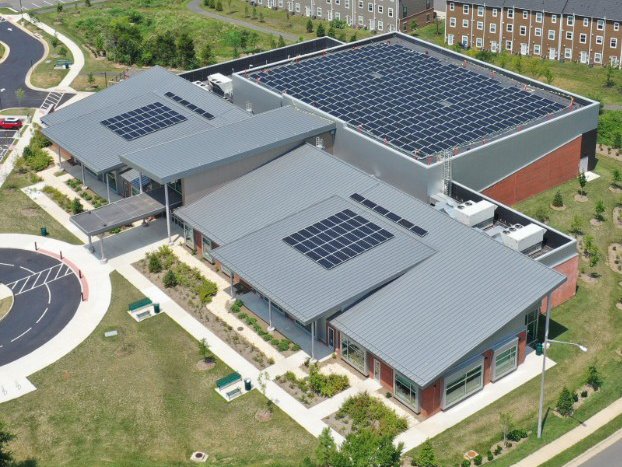
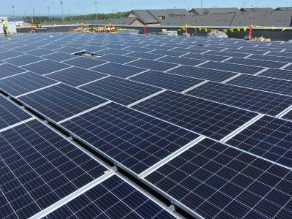
Incorporating photovoltaic (PV) solar panels into county projects as renewable energy not only supports our efforts to achieve LEED® certification but also advances the county’s goals of reducing energy consumption, lowering carbon emissions, and improving air quality thereby designing buildings that are environmentally responsible.
LED Lights
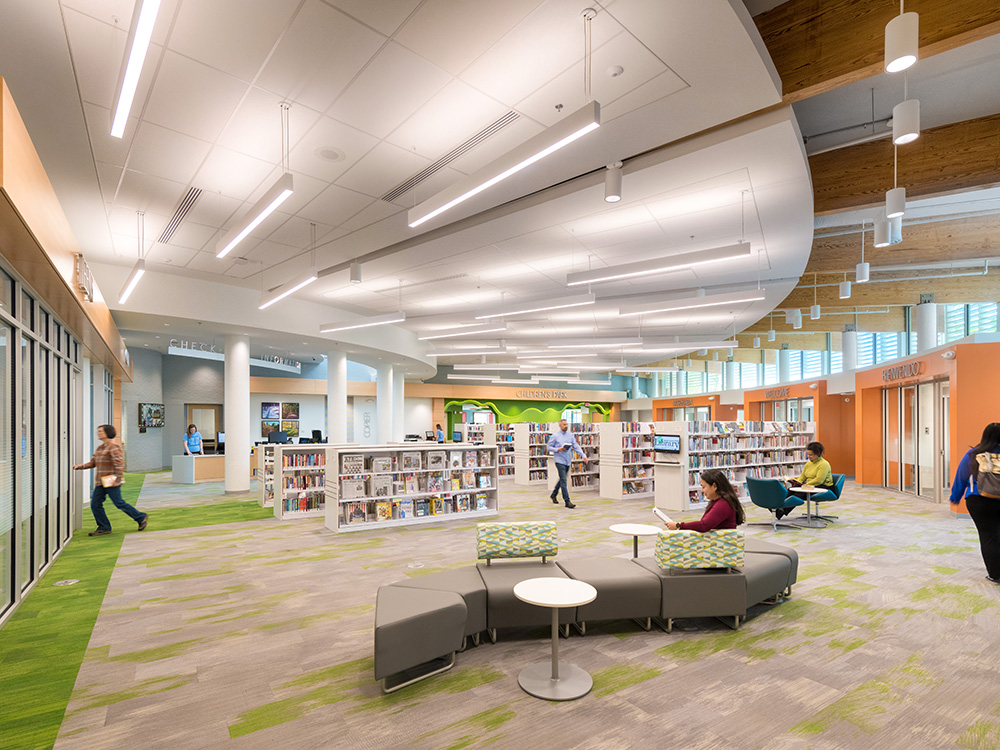
An important aspect of achieving LEED® certification is the use of energy-efficient lighting systems. Light-Emitting Diodes (LEDs) are an essential component for a project to achieve LEED® certification and reduce energy consumption.
Geothermal Systems
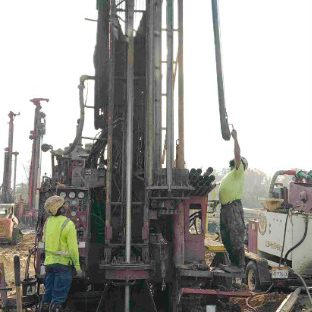
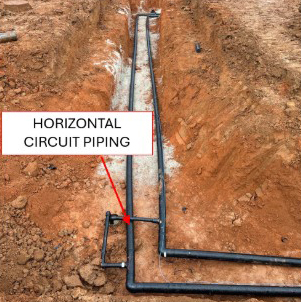
Utilizing the constant temperature of the ground with underground loops that absorb heat in the winter and dissipate heat into the earth in summer, geothermal systems are highly efficient regardless of outdoor air temperature. Geothermal systems provide energy efficiency, minimize the environmental impact, reduce the operational noise, and have a longer life span than a typical mechanical system.
Electric Vehicle Charging Stations
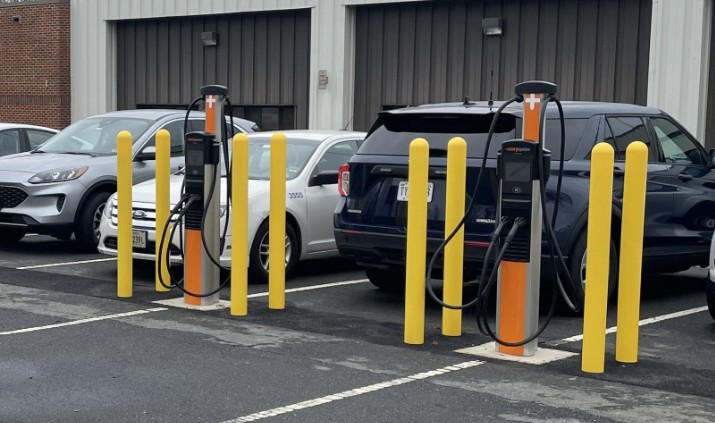
Fairfax County is paving the way for the transition from gasoline- and diesel-powered vehicles to hybrid-electric and electric vehicles (EVs). The Operational Energy Strategy (OES) supports this transition with the installation of EV charging stations being installed in major county facilities and parking garages. Charging stations located in county-owned parking lots and publicly accessible garages throughout the county are available for use by the public as well as county employees.
Since 2021, DPWES has constructed thirteen (13) buildings and facilities and two parking garages that have achieved LEED® certifications – 1 Platinum, 5 Gold, and 7 Silver. In 2025, the cumulative green building energy design baseline was 8,614,577 kWh per year. LEED® reduced the energy design value by ~34.54% to 5,639,066 kWh per year. New onsite renewable energy generation at eight building sites accounted for 1,476,858 kWh per year of additional reductions bringing the remaining energy design value to 4,162,208 kWh per year. The overall cumulative energy reduction in 2025 is 51.7%.
LEED® certified buildings do more than just reduce energy use, they also address water use, waste, siting, indoor air quality, and material sourcing among other environmental factors. Since 2021, the water use across the 13 buildings and facilities has been reduced by more than 1.18 million gallons / year. Across the same period, more than 14,440 tons of construction waste was diverted (reused or recycled).
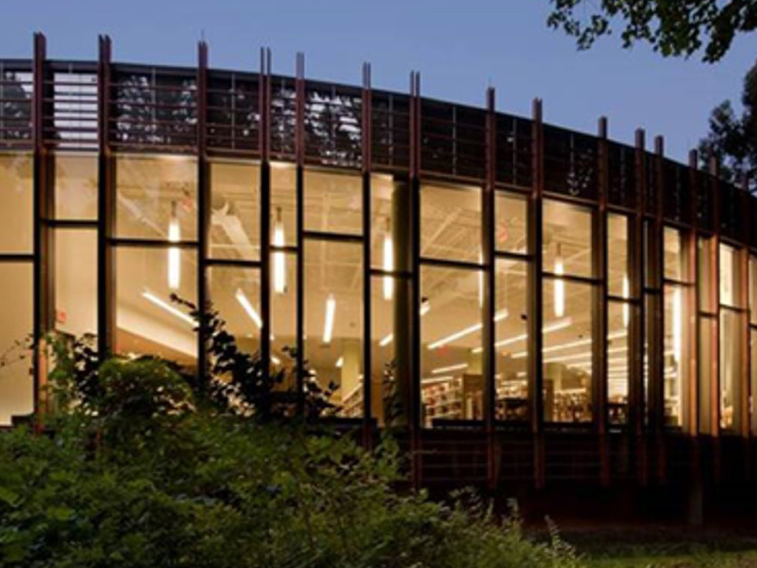
The county’s green building policy (Leadership in Energy and Environmental Design® (LEED®)) for capital projects (Sustainable Development Policy for Capital Projects) was strengthened in July 2021 following the adoption of the Carbon Neutral Counties Declaration. LEED® buildings are designed to save energy and water and use sustainable materials and practices that help protect our environment.
The updated policy established LEED® Gold with 50% energy performance improvement, Net Zero Energy ready, All-electric Building systems and equipment, EV ready, and Solar ready. To date, 49 Fairfax County-owned and operated buildings have been certified with 21 of these buildings certified as LEED® Gold.
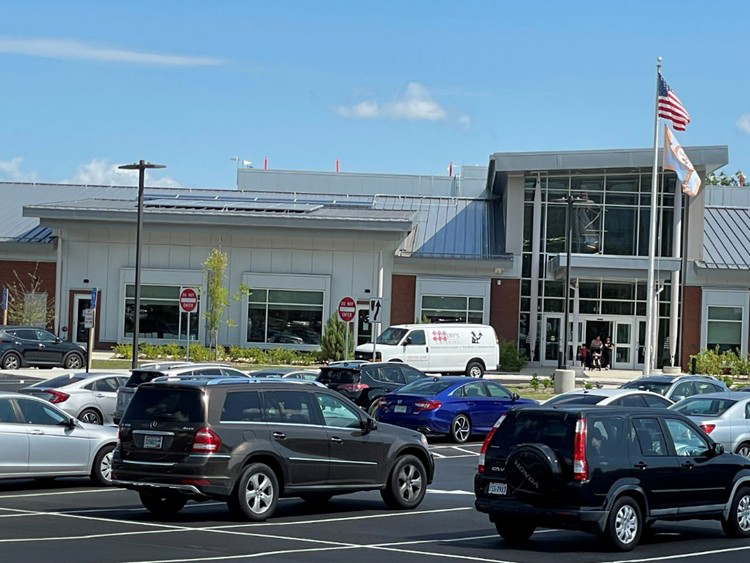
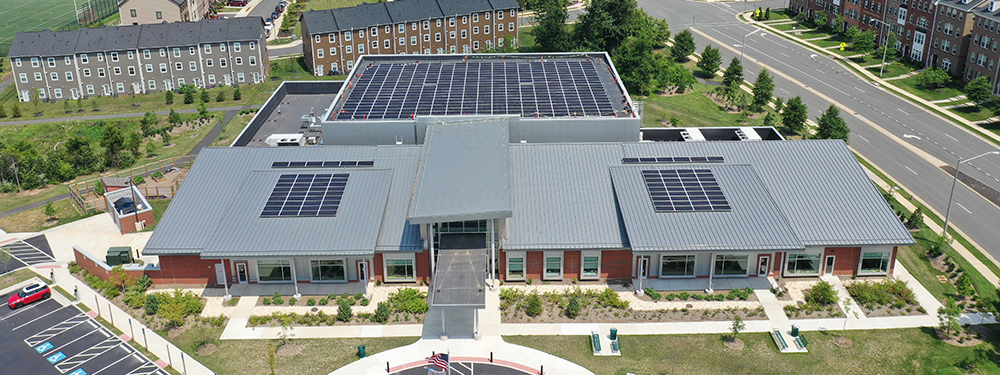
For example, the Sully Community Center which is shown, was completed in the fall of 2023, and achieved a LEED® Gold certification with EV Charging, LED lighting, high-efficiency HVAC controls, and a 180 kW Solar system. The solar project includes 457 rooftop solar photovoltaic panels for onsite power generation. The project generates approximately 267 megawatt-hours of electric energy per year, saving the county over $1 million in energy costs over 25 years. The solar arrays will reduce over 165 metric tons of greenhouse gas emissions each year, which is equivalent to 32 homes’ electricity use for one year.
The County also received its first LEED® Platinum certification for the Woodlawn Fire Station project.
GREEN INFRASTRUCTURE
Recognizing the impact of Fairfax County’s public facility infrastructure on the local environment, the Wastewater Design and Construction Division (WDCD) within Capital Facilities implements the DPWES’ Green Infrastructure policy in the design and construction of capital construction projects. This fulfills the Capital Facilities’ mission of promoting the design and construction of Green Infrastructure projects.
Envision® is a holistic sustainability framework and rating system that enables a thorough examination of the sustainability and resiliency of all types of civil infrastructure. Envision promotes infrastructure practices that enhance community quality of life while supporting long-term environmental, social, and economic benefits.
In addition, all projects executed by the WDCD at the Noman M. Cole, Jr. Water Recycling Facility, which tend to be large and long-duration projects, include a strict “construction waste management and disposal” specification, with supplemental tracking forms, that strives to achieve 100% by weight of total non-hazardous solid construction waste management, with emphasis on recycling of materials. This is a standard requirement on all our projects at the facility, regardless of whether they are LEED® or Envision-certified.
Scope
Fairfax County incorporates the Institute for Sustainable Infrastructure's (ISI) Envision rating system to guide, evaluate, and certify its “horizontal” infrastructure projects. While vertical facilities use the LEED® rating system, Envision applies directly to public works, stormwater, and environmental utility projects such as pumping stations, sewer lines, and water recycling facilities.
Sources
WWM Program Sustainability in Infrastructure Policy
Benefits
Incorporating the Envision sustainability framework into capital improvement projects provides a standardized roadmap for developing resilient, cost-effective, and community-focused infrastructure.
Envision design and sustainability elements include:
- Promoting environmental justice and social equity principles within project processes and decision making.
- Supporting communities to achieve carbon neutrality.
- Resource-efficient materials, energy, and water use
- Enhanced stormwater management and water conservation
- Protection and restoration of natural habitats and ecosystems
- Facilitating improved stakeholder engagement and interagency collaboration.
- Increasing the resiliency, preparedness, and long-term viability of civil infrastructure.
- Providing climate-ready infrastructure.
- Delivering fiscally responsible and resource-efficient infrastructure.
Progress
To date two projects achieved Envision certificates and two additional projects are beginning design and construction in 2026/2027:
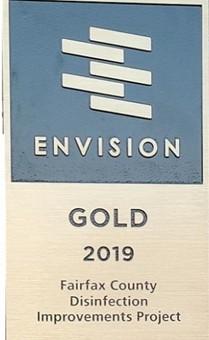
- Envision Gold Certification: Awarded to the Disinfection System Replacement/Improvements Project at the Noman M. Cole, Jr. Water Recycling Facility
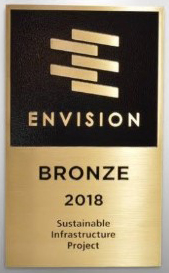
- Envision Bronze Certification: Awarded to the Huntington Levee Project.
- Jones Point Facilities Rehabilitation: The county anticipates “Silver” as the target minimum Envision certification level for this project. This project includes the replacement of the Jones Point Pump Station and Metering Station. Project anticipated to begin design in 2026.
- Moving Bed Biofilm Reactor (MBBR) Capacity Improvement Project: The county anticipates “Silver” as the target minimum Envision certification level for this project. This project is anticipated to begin design in 2027.
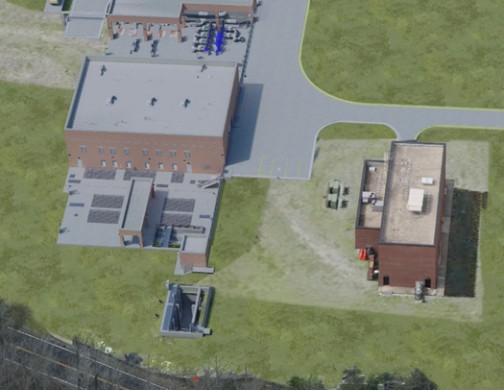
Ultraviolet Disinfection Improvements at the Noman M. Cole, Jr., Water Recycling Facility
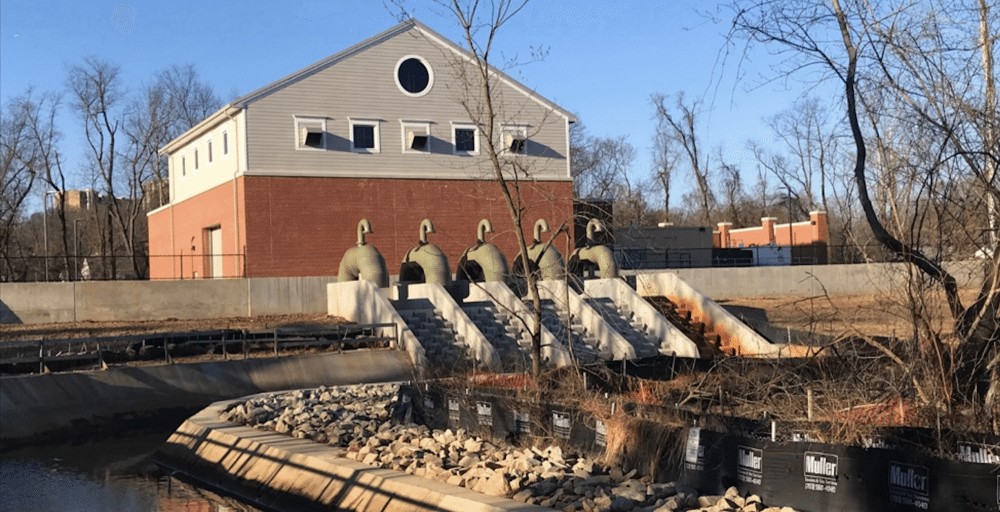
Huntington Levee Flood Mitigation Project
Highlights
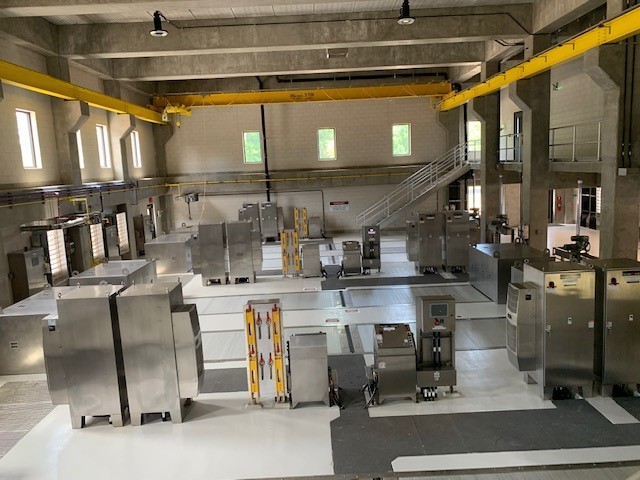
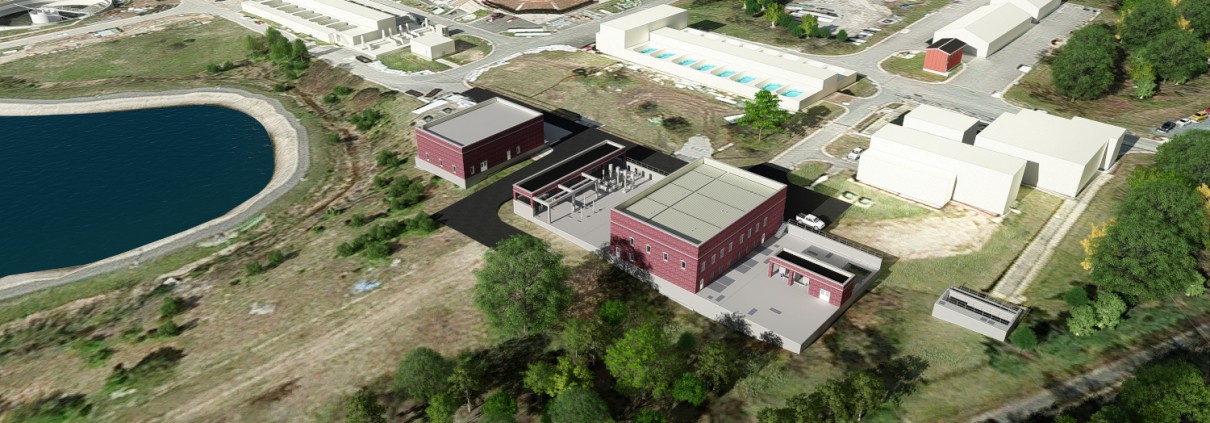
A new process designed to disinfect treated wastewater using ultraviolet lights (UV) is now operating at the Noman M. Cole, Jr. Water Recycling Facility (formally the Noman M. Cole, Jr. Pollution Control Plant) in Lorton. The UV process replaced the existing chemical (sodium hypochlorite) disinfection system.
The UV process is a physical disinfection system which generates photons that penetrate microbial DNA to deactivate them and leave them unable to reproduce. The new $87 million UV disinfection facilities are capable of processing 67 million gallons per day, with a peak disinfection flow of 133 million gallons per day.
Replacing the aging sodium hypochlorite system will save the county approximately $750,000 annually in chemical costs and eliminating 200 yearly tanker truck deliveries. Abandoning a large pump station associated with the old disinfection system saves about 846,000 kWh of energy per year, saving nearly 60,000 in electricity costs and reducing greenhouse gas emissions equivalent to removing 100 cars from our roadways.
The project resulted in the first Institute for Sustainable Infrastructure Envision Gold Award achieved by Fairfax County. To earn an Envision rating, a project must deliver a heightened range of environmental, social, and economic benefits to the host and affected communities. The rating must be validated through a rigorous third-party review process against the Envision sustainable infrastructure framework and rating system. Several aspects of the project contributed to its sustainable success, including project team collaboration through alternative project delivery, stakeholder involvement, plant-wide sustainable initiatives, prioritization of worker health and safety, and reduction in chemical, greenhouse gas emissions, and energy use.
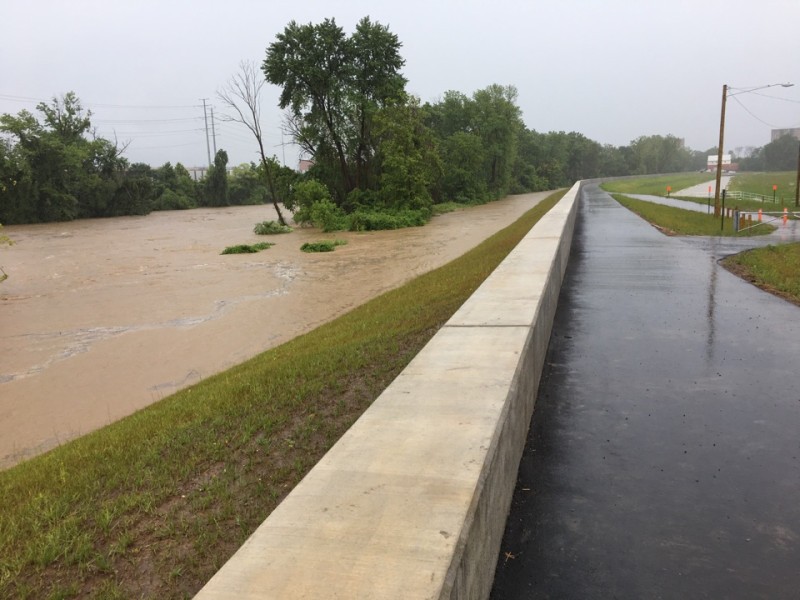
The Huntington community, built prior to the enactment of the current floodplain regulations, has been exposed to floods due to tidal surges from the Potomac River and flash flooding from the Cameron Run Watershed. Since 2002, three floods have damaged property in this community. In this community, more than 160 homes are in the floodplain designated by the Federal Emergency Management Agency (FEMA)—all of which are at risk of flooding in the future. At the request of Fairfax County, the United States Army Corps of Engineers studied the best ways in which to protect the Huntington community from future floods. The study examined several options, including dredging Cameron Run, buying the flood-prone properties, and flood-proofing individual homes. The study ultimately found that the most cost-effective and sustainable way to manage flooding risks in the area was to build a levee and pumping station. This is now known as the Huntington Levee project.
The Huntington Levee project consists of two main elements: a levee that runs parallel to Cameron Run that consists of an earthen embankment and a series of steel-reinforced concrete panels formed in the shape of an I, known as an I-wall, as well as a two-stage pumping station located at the east end of the levee (pictured). The levee itself is 2,800 feet long, beginning west of Fenwick Drive and running eastward. The earthen embankment portion of the levee is between 6 and 11 feet high, with a 4-foot high I-wall situated on the top. The top of the levee is 13 feet wide and includes an 8-foot-wide asphalt recreational trail. The project also includes a collection drain system to control ground water seepage, new storm drains to connect the existing storm drains to the pumping station, and concrete channels and a vegetated swale to divert stormwater collected behind the levee to the pumping station. The whole system has been designed to protect the community from extreme 100-year flooding events—floods that have a one per cent chance of occurring in any given year.
Fairfax County’s Department of Public Works and Environmental Services delivered this award-winning sustainable project. Regulatory partners included FEMA and the Virginia Department of Environmental Quality.