
May is Mental Health Awareness Month, a time to advocate for support, foster empathy, and most importantly, reduce the stigma that often surrounds mental health crises. At the Fairfax County Sheriff’s Office, we believe that public safety begins with understanding how to improve the response of first responders to residents suffering from a mental health issue or a developmental disability.
When a person experiences a mental health crisis, they aren't just in need of a response; they are in need of a connection. That is why our Crisis Intervention Team (CIT) training is so vital. It transforms the way our deputies see and interact with the community.
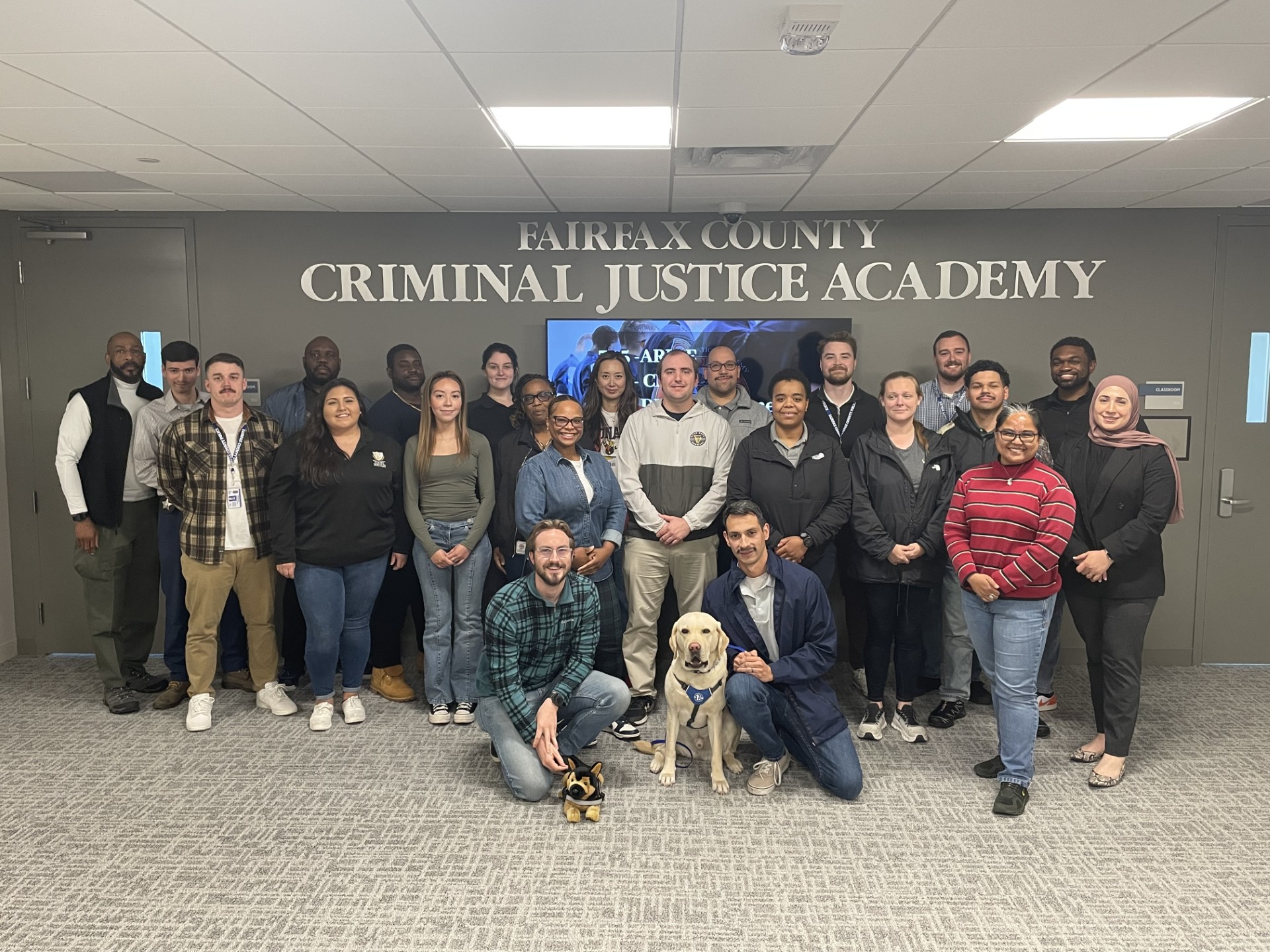
On May 1, 23 first responders, including four of our own deputies, graduated, from a grueling 40-hour program. While the general assumption is that Crisis Intervention Training (CIT) is mostly about de-escalation, this training is a deep dive into the complexities of behavioral health. During five days of training, students studied serious mental illnesses, developmental disabilities like autism, and the effects of psychotropic medications. They also participated in hands-on exercises, including “audio hallucination” simulations, to better understand the experience of someone in crisis.
“This year marks the 10th anniversary of Diversion First,” said 2nd Lt. Jennifer Foster, CIT Coordinator. “That initiative led us to create the Fairfax CIT Alliance, a joint effort where the FCSO and FCPD spearhead training for the entire county. We ensure that every agency, from probation to dispatch, is equipped with the same high-level suicide prevention and intervention skills.”
The training is comprehensive, involving site visits to the Merrifield Center and the Northern Virginia Mental Health Institute, alongside role-play exercises focused on Veterans with PTSD and traumatic brain injuries.
Since joining the Sharon Bulova Center for Community Health in February 2024, Foster has helped increase the percentage of active CIT deputies from 38% to 42%. Currently, 149 deputies are CIT-trained, with 251 having completed the program since 2016.
“We have three more classes to go this year,” Foster noted. “By using the Academy in-service scheduler, we’ve ensured all deputies have an equal opportunity to gain these vital skills.”
As we observe Mental Health Awareness Month, FCSO remains dedicated to the Diversion First mission: ensuring that those in crisis receive treatment and support rather than entering the criminal justice system.