

Fairfax County, Virginia
Fairfax County Virginia

FFX Global Navigation

    • Soil and Water Conservation District Homepage
    • About NVSWCD
      • About the Soil and Water Conservation District
      • Board of Directors and Staff
      • Careers and Internships
      • Our Partners
      • Policy Positions and Legislative Letters
    • Addressing Conservation Problems
    • Urban Agriculture and Community Gardens
    • CAP/VCAP Cost-share
    • Flood Mitigation Assistance Program (FMAP)
    • Community Programs and Presentations
    • Volunteering with NVSWCD
    • Youth and Student Programs
    • Newsletter
  • Residents
    • Animals & Pets
      • Adoptions
      • Animal Control & Regulations
      • Guide to Dogs
      • Lost & Found Pets
      • Shelter Support & Supplies
      • Wildlife
      • More
      Courts & Legal
      • Case Information
      • Circuit Court Docket
      • Jury Duty
      • Land Records
      • Magistrate
      • Public Law Library
      • Self-Help Resources
      • Traffic Court
      • Vital Records
      • More
      Environment & Energy
      • Invasive Species
      • Litter
      • Recycle, Trash & Compost
      • Sustain Fairfax
      • Trees
      • Watersheds
      • More
      Health & Human Services
      • Basic Needs & Assistance
      • Disability Services
      • Diseases & Conditions
      • Domestic & Sexual Violence
      • Health Clinics
      • Mental Health
      • Opioids
      • More
      Individuals & Families
      • Children & Youth
      • Federal Workforce
      • Immigrants
      • Military & Veterans
      • New Residents
      • Older Adults
      • Parents
      • People with Disabilities
      • Volunteers
      • More
      Land Use & Planning
      • Comprehensive Plan
      • County Capital Projects
      • Land Records
      • Parks Planning
      • Planning Projects
      • Research Tools
      • Transportation Projects
      • Urban Centers
      • More
      Library & Education
      • Adult Education
      • Early Childhood Programs
      • Library Branches
      • Library Catalog Search
      • Public Schools
      • More
      Parks & Recreation
      • Arts
      • Athletic Fields
      • Camps
      • Community Centers
      • Parktakes Classes
      • Rec Centers
      • Senior Centers
      • Teen Centers
      • Trails
      • More
      Permits & Licenses
      • Birth & Death Certificates
      • Building
      • Child Care
      • Dogs
      • Health
      • Marriage
      • Park Use
      • Solicitors
      • More
      Property & Housing
      • Affordable Housing
      • Code & Zoning
      • Neighborhoods
      • Real Estate Values
      • Recycling & Trash
      • Tenant Landlord Issues
      • Utilities
      • More
      Public Safety & Emergencies
      • 9-1-1
      • Emergency Preparedness
      • Fire & Rescue
      • Gun Violence Prevention
      • Police
      • Scams
      • Sheriff
      • Storm Center
      • More
      Roads & Commuting
      • Bike & Walk
      • Connector Bus
      • Metrobus & Metrorail
      • Park & Ride
      • Pedestrian Safety
      • Road Maintenance/VDOT
      • Street Parking
      • Toll Roads
      • Transportation Projects
      • More
      Taxes & Fees
      • Car Taxes
      • Park Fees
      • Real Estate Taxes
      • Tax Relief
      • Trash Disposal Fees
      • More
      Voting & Elections
      • Absentee Voting
      • Early Voting
      • Election Results
      • Polling Places
      • Voter Registration
      • More
      Weather & Climate
      • Air Quality
      • Climate Action Dashboard
      • Extreme Heat
      • Floods
      • Ready Fairfax
      • Resilient Fairfax
      • Snow
      • Tornadoes
      • More
  • Business
    • Business & Construction
      • Building Permits
      • Code & Zoning
      • Land Use
      • More
      Business Services
      • Business Emergency Preparedness
      • Business Taxes
      • Consumer Services
      • Employer Transportation Service
      • Green Business Partners Program
      • Home-Based Business
      • Regulation & Licensing
      • Small Business
      • Starting a Business
      • Workplace Issues
      • More
      Doing Business with Fairfax
      • Contracting and Procurement
      • Current Solicitations
      • Permits
      • Vendor Pitch Portal
      • More
  • Government
    • About
      • Codes & Standards
      • Countywide Strategic Plan
      • Facilities & Locations
      • History of Fairfax County
      • Operating Status
      • More
      Board of Supervisors
      • Auditor
      • Board Members
      • Boards, Authorities & Commissions
      • Clerk Services
      • Committees
      • Meetings & Agendas
      • More
      Budget & Finance
      • Bonds
      • Budget
      • Financial Transparency
      • Unclaimed Money
      • More
      Departments & Agencies
      Jobs & Employment
      • Full-Time Openings
      • Internships
      • Seasonal & Non-Merit
      Maps & Data
      • Countywide Data Analytics
      • Demographics
      • Geographic Information Systems
      • Interactive Data Tools
      • More
      One Fairfax
      • Digital Equity
      • Inclusive Engagement
      • Trust Policy
  • Fairfax County Virginia
  • Services
    • Find
      • Animal Services
      • Health Clinics
      • Jobs
      • Library Resources
      • Lost or Found Pet
      • Mental Health Support
      • Park Classes
      • Real Estate Values
      • Recycling & Trash
      • Volunteer Opportunities
      • More
      Pay
      • Business Taxes
      • Car Taxes
      • Dog Licenses
      • Driving & Parking Fines
      • False Alarm Fees
      • Real Estate/Property Taxes
      • SACC Payments
      • More
      Register/Apply
      • Basic Needs & Assistance
      • Building Inspections
      • Car Registration
      • Fairfax Alerts
      • Permits & Licenses
      • Tax Relief
      • Vote
      • More
      Report
      • Animal Control Issues
      • Consumer Complaints
      • Crime
      • Domestic Violence
      • Financial Crimes
      • Neighborhood Complaints
      • Road Issues to VDOT
      • Street Light Outages
      • More
  • Connect
    • Alerts, Emails & Apps
      • Email Subscriptions
      • Fairfax Alerts
      • Mobile App
      • More
      Community Engagement
      • Surveys & Projects
      Contact
      • Directory
      • Hotlines & Emergency Numbers
      • VDOT
      • VFOIA Requests
      • More
      News & Events
      • Daily Headlines
      • Emergency Information Blog
      • Events Calendar
      • NewsCenter
      • NotiCentro (Spanish)
      • Public Meetings Calendar
      • More
      Social Media
      • Comments Policy
      • Directory of Accounts
      • More
      TV, Video & Podcasts
      • Channel 16
      • Podcasts & Radio
      • YouTube
      • More
  • TRANSLATE
    • Language Selection

      To change the language of this website, click the drop-down list and select the desired language. The Fairfax County Web site is being translated through "machine translation" powered by Google Translate. Disclaimer

Northern Virginia Soil and Water Conservation District

  1. Home
  2. Northern Virginia Soil and Water Conservation District
  3. Is Managing Your Horse's Waste a Headache?

Northern Virginia Soil and Water Conservation District Alert:

703-324-1460 TTY 711
ConservationDistrict@fairfaxcounty.gov
12055 Government Center Parkway
Suite 905, Fairfax, VA 22035
nvswcd
Willie Woode
Executive Director

Department Resources

  • Soil and Water Conservation District Homepage
  • About NVSWCD
    • About the Soil and Water Conservation District
    • Board of Directors and Staff
    • Careers and Internships
    • Our Partners
    • Policy Positions and Legislative Letters
  • Addressing Conservation Problems
  • Urban Agriculture and Community Gardens
  • CAP/VCAP Cost-share
  • Flood Mitigation Assistance Program (FMAP)
  • Community Programs and Presentations
  • Volunteering with NVSWCD
  • Youth and Student Programs
  • Newsletter
  • facebook
  • instagram

Is Managing Your Horse's Waste a Headache?

Did you know that a single mature horse generates two cubic feet of waste per day? At that rate, waste management inevitably becomes a headache. Particularly at horse keeping operations on small acreages, an overwhelming manure mountain can quickly develop.

There are ways to manage your overflowing manure pile. These include paying to have waste picked up, giving away manure to neighbors or friends for gardening purposes, stacking and spreading waste over your pastures, or composting the waste and then selling or reusing the compost.

Of these methods, composting is the least expensive and most efficient approach for managing large quantities of manure. Composting is an aerobic process in which microorganisms (mainly bacteria, fungi and actinomycetes) convert organic materials, such as animal or yard waste, into a friable, highly organic soil-like substance called compost or humus.

The greatest advantage of composting over other manure management methods is the tremendous volume reduction of the waste. Thoroughly composted material can take up 50% or less of its original volume. Composting has many other great advantages, such as water pollution prevention, a significant reduction in offensive odors, and an end-product that is a lot easier to handle.

For horse-owners who typically manage manure by stacking and spreading it on their pastures, composting has additional benefits. During composting, temperatures can rise well above 140°F (60°C). If the temperature within the manure pile stays at 150°F (66°C) for three days, bacteria, pathogens, weed seeds, and other unwanted components in the pile will be killed. Compost also improves the quality of the soil by increasing microbial activity, increasing moisture retention capacity, and by adding readily available macro- and micro-nutrients that plants need to the soil. In contrast, simply stacking the waste can preserve some unfavorable manure components that can cause disease or weeds in your pasture; spreading uncomposted waste also does not readily improve soil tilth (the ability of the soil to be worked) or soil fertility. The nutrients contained in uncomposted animal waste are not readily available for plants to use—in fact, upon initial application, bacteria in waste actually use up a portion of the existing soil nutrients and can decrease the availability of nutrients in your pasture.

In order to get composting started in your manure pile, certain conditions must be in place. Your pile should have adequate amounts of moisture and oxygen, the ratio of carbon to nitrogen (C:N) within the material to be composted must be within the optimal range (between 25:1 and 30:1) and microorganisms must be present.

To help get the composting process started and keep it moving:

  • make sure the pile is three to four feet high
  • add grass clippings, urea or any high nitrogen-containing material if the pile doesn’t get hot enough, and
  • maintain the moisture content of the pile.

The composting material should feel as moist as a damp sponge.

Dry bedding material, a common component of horse manure, typically contributes sufficient carbon to maintain a favorable C:N ratio in the stack. Once begun, the composting process will usually steer itself to completion, as long as the moisture level is maintained, and the pile is turned regularly for aeration and heat regulation.
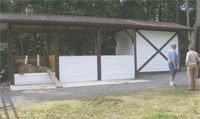
Compost structure with roof and concrete floorTo prevent the manure pile from polluting ground or surface water resources, the composting manure should be stored on a less permeable or impervious base, such as compacted clay soil, a concrete slab or any other impervious layer. A roof or a tarp should be in place to protect the compost site from rain. To prevent surface runoff from flowing through the pile, locate the composting site at the highest elevation of the property or build a dirt berm on its uphill side.

For operations with more than ten horses, a large, single unit composting shed is a practical facility for handling the large amount of waste produced by your animals. For smaller horse operations (10 horses or less), a multi-celled composting structure is generally adequate. Waste is stacked into the multi-celled composting structure one cell at a time, and rotated into the next cell as it composts.
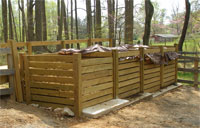
Simple multi-celled composter with tarp coverIf yours is a small horse operation, you can build your own simple multi-celled composting structure in your backyard, for a relatively low cost. Alternatively, funding to build a composting facility is available through the Northern Virginia Soil and Water Conservation District. The district is the local administrator of the Virginia Agricultural Best Management Practice (BMP) Cost Share Program, a state program which can reimburse 75% of the approved cost of your composting facility. Additionally, you may be eligible for a state tax credit for any out-of-pocket expenses you incur after reimbursement. The district also can help you determine the proper size for your composting facility, as this varies depending on the number of horses that are kept in stalls, the percentage of day they spend in those stalls, and the length of your spreading cycles, among other factors.

Please call NVSWCD at 703-324-1460, TTY 711 or send an e-mail for further information on sizing your composting facility, and for more information on participating in the Virginia Agricultural BMP Cost Share Program.

Make your own contribution toward reducing nutrient pollution within your watershed. Don’t let managing your horse waste be a headache anymore!

Recent Interactions

    Ask Fairfax

    Terms & Conditions
    Live chat available Search our site
    • facebook
    • instagram
    • Translate
    • Awards
    • Site Feedback
    • PRIVACY POLICY & COPYRIGHT
    Main Address

    12000 Government Center Pkwy
    Fairfax, VA 22035

    Phone

    703-324-7329

    TTY 711

    Site Tools
    • Website Accessibility
    • Translate
    • Download Mobile App
    Support
    • ADA Accessibility
    • FOIA Requests
    • Website Administrator
    Additional Resources
    • Fairfax County Public Schools
    • Economic Development Authority
    • Visit Fairfax
    • Council of Governments
    • Commonwealth of Virginia
    • USA.gov
    • Calendar
    • Channel 16
    • Mail
    • Security
    • WIFI
    • Facebook
    • Twitter
    • Instagram
    • YouTube
    • Mobile

    The Official Site of Fairfax County