

Fairfax County, Virginia
Fairfax County Virginia

FFX Global Navigation

    • About Us
      • About Us
      • Request a Speaker
    • Our Work
      • Climate Plans, Policies, and Initiatives
      • Buildings and Energy
      • Sustainable Transportation
      • Natural Resources
      • Waste
      • Resources for Residents
      • Resources for Businesses
      • Resources for Organizations
    • Sustain Fairfax
    • Sustain Fairfax Challenge
    • Our Programs
      • AC Rescue
      • Charge Up Fairfax
      • Energy Conservation Assistance Program
      • Fairfax Energy Compass
      • Green Business Partners Program
    • Latest News and Events
      • OEEC News and Events
      • Newsletters
      • Climate Matters Blog
    • Track Our Progress
      • Climate Action Dashboard
      • County Government Energy Data
  • Residents
    • Animals & Pets
      • Adoptions
      • Animal Control & Regulations
      • Guide to Dogs
      • Lost & Found Pets
      • Shelter Support & Supplies
      • Wildlife
      • More
      Courts & Legal
      • Case Information
      • Circuit Court Docket
      • Jury Duty
      • Land Records
      • Magistrate
      • Public Law Library
      • Self-Help Resources
      • Traffic Court
      • Vital Records
      • More
      Environment & Energy
      • Invasive Species
      • Litter
      • Recycle, Trash & Compost
      • Sustain Fairfax
      • Trees
      • Watersheds
      • More
      Health & Human Services
      • Basic Needs & Assistance
      • Disability Services
      • Diseases & Conditions
      • Domestic & Sexual Violence
      • Health Clinics
      • Mental Health
      • Opioids
      • More
      Individuals & Families
      • Children & Youth
      • Federal Workforce
      • Immigrants
      • Military & Veterans
      • New Residents
      • Older Adults
      • Parents
      • People with Disabilities
      • Volunteers
      • More
      Land Use & Planning
      • Comprehensive Plan
      • County Capital Projects
      • Land Records
      • Parks Planning
      • Planning Projects
      • Research Tools
      • Transportation Projects
      • Urban Centers
      • More
      Library & Education
      • Adult Education
      • Early Childhood Programs
      • Library Branches
      • Library Catalog Search
      • Public Schools
      • More
      Parks & Recreation
      • Arts
      • Athletic Fields
      • Camps
      • Community Centers
      • Parktakes Classes
      • Rec Centers
      • Senior Centers
      • Teen Centers
      • Trails
      • More
      Permits & Licenses
      • Birth & Death Certificates
      • Building
      • Child Care
      • Dogs
      • Health
      • Marriage
      • Park Use
      • Solicitors
      • More
      Property & Housing
      • Affordable Housing
      • Code & Zoning
      • Neighborhoods
      • Real Estate Values
      • Recycling & Trash
      • Tenant Landlord Issues
      • Utilities
      • More
      Public Safety & Emergencies
      • 9-1-1
      • Emergency Preparedness
      • Fire & Rescue
      • Gun Violence Prevention
      • Police
      • Scams
      • Sheriff
      • Storm Center
      • More
      Roads & Commuting
      • Bike & Walk
      • Connector Bus
      • Metrobus & Metrorail
      • Park & Ride
      • Pedestrian Safety
      • Road Maintenance/VDOT
      • Street Parking
      • Toll Roads
      • Transportation Projects
      • More
      Taxes & Fees
      • Car Taxes
      • Park Fees
      • Real Estate Taxes
      • Tax Relief
      • Trash Disposal Fees
      • More
      Voting & Elections
      • Absentee Voting
      • Early Voting
      • Election Results
      • Polling Places
      • Voter Registration
      • More
      Weather & Climate
      • Air Quality
      • Climate Action Dashboard
      • Extreme Heat
      • Floods
      • Ready Fairfax
      • Resilient Fairfax
      • Snow
      • Tornadoes
      • More
  • Business
    • Business & Construction
      • Building Permits
      • Code & Zoning
      • Land Use
      • More
      Business Services
      • Business Emergency Preparedness
      • Business Taxes
      • Consumer Services
      • Employer Transportation Service
      • Green Business Partners Program
      • Home-Based Business
      • Regulation & Licensing
      • Small Business
      • Starting a Business
      • Workplace Issues
      • More
      Doing Business with Fairfax
      • Contracting and Procurement
      • Current Solicitations
      • Permits
      • Vendor Pitch Portal
      • More
  • Government
    • About
      • Codes & Standards
      • Countywide Strategic Plan
      • Facilities & Locations
      • History of Fairfax County
      • Operating Status
      • More
      Board of Supervisors
      • Auditor
      • Board Members
      • Boards, Authorities & Commissions
      • Clerk Services
      • Committees
      • Meetings & Agendas
      • More
      Budget & Finance
      • Bonds
      • Budget
      • Financial Transparency
      • Unclaimed Money
      • More
      Departments & Agencies
      Jobs & Employment
      • Full-Time Openings
      • Internships
      • Seasonal & Non-Merit
      Maps & Data
      • Countywide Data Analytics
      • Demographics
      • Geographic Information Systems
      • Interactive Data Tools
      • More
      One Fairfax
      • Digital Equity
      • Inclusive Engagement
      • Trust Policy
  • Fairfax County Virginia
  • Services
    • Find
      • Animal Services
      • Health Clinics
      • Jobs
      • Library Resources
      • Lost or Found Pet
      • Mental Health Support
      • Park Classes
      • Real Estate Values
      • Recycling & Trash
      • Volunteer Opportunities
      • More
      Pay
      • Business Taxes
      • Car Taxes
      • Dog Licenses
      • Driving & Parking Fines
      • False Alarm Fees
      • Real Estate/Property Taxes
      • SACC Payments
      • More
      Register/Apply
      • Basic Needs & Assistance
      • Building Inspections
      • Car Registration
      • Fairfax Alerts
      • Permits & Licenses
      • Tax Relief
      • Vote
      • More
      Report
      • Animal Control Issues
      • Consumer Complaints
      • Crime
      • Domestic Violence
      • Financial Crimes
      • Neighborhood Complaints
      • Road Issues to VDOT
      • Street Light Outages
      • More
  • Connect
    • Alerts, Emails & Apps
      • Email Subscriptions
      • Fairfax Alerts
      • Mobile App
      • More
      Community Engagement
      • Surveys & Projects
      Contact
      • Directory
      • Hotlines & Emergency Numbers
      • VDOT
      • VFOIA Requests
      • More
      News & Events
      • Daily Headlines
      • Emergency Information Blog
      • Events Calendar
      • NewsCenter
      • NotiCentro (Spanish)
      • Public Meetings Calendar
      • More
      Social Media
      • Comments Policy
      • Directory of Accounts
      • More
      TV, Video & Podcasts
      • Channel 16
      • Podcasts & Radio
      • YouTube
      • More
  • TRANSLATE
    • Language Selection

      To change the language of this website, click the drop-down list and select the desired language. The Fairfax County Web site is being translated through "machine translation" powered by Google Translate. Disclaimer

Office of Environmental and Energy Coordination

  1. Home
  2. Office of Environmental and Energy Coordination
  3. Fairfax County Shows Commitment to Cutting Carbon Emissions through DOE’s “Better Climate Challenge”

Alert:

CONTACT INFORMATION: Our office is open to visitors by appointment only. Please call or email from 8:00 a.m. - 4:30 p.m., Monday through Friday.
703-324-7136 TTY 711
oeecinfo@fairfaxcounty.gov
12000 Government Center Pkwy, Suite 533
Fairfax, VA 22035
fairfaxcountyclimate
Robert Sandoli
Director

Department Resources

  • About Us
    • About Us
    • Request a Speaker
  • Our Work
    • Climate Plans, Policies, and Initiatives
    • Buildings and Energy
    • Sustainable Transportation
    • Natural Resources
    • Waste
    • Resources for Residents
    • Resources for Businesses
    • Resources for Organizations
  • Sustain Fairfax
  • Sustain Fairfax Challenge
  • Our Programs
    • AC Rescue
    • Charge Up Fairfax
    • Energy Conservation Assistance Program
    • Fairfax Energy Compass
    • Green Business Partners Program
  • Latest News and Events
    • OEEC News and Events
    • Newsletters
    • Climate Matters Blog
  • Track Our Progress
    • Climate Action Dashboard
    • County Government Energy Data

Fairfax County Shows Commitment to Cutting Carbon Emissions through DOE’s “Better Climate Challenge”

December 17, 2024

Post written by Kevin Smith, Division Manager, OEEC

Fairfax County Government has ambitious goals to reduce its greenhouse gas emissions, including becoming carbon-neutral by 2040.  Reaching that goal will require a sustained, multi-pronged effort to reduce fossil fuel use in county facilities and operations. Fortunately, programs like the U.S. Department of Energy’s Better Climate Challenge are helping Fairfax County and other jurisdictions across the country make progress toward those goals by sharing innovative solutions, offering technical assistance, and providing peer-to-peer learning opportunities.
better climate challenge logo

What is the Better Climate Challenge (BCC)?

The U.S. Department of Energy’s (DOE) Better Climate Challenge is a program that encourages organizations to partner with the DOE for support in their efforts to reduce their greenhouse gas emissions – sometimes referred to as decarbonization.

Through BCC, not only can partners leverage technical expertise from DOE, but they also join a network of market leaders with access to peer-to-peer exchange opportunities. Partners can range from local governments to school districts and higher education campuses, to private companies in the manufacturing and data center spaces, and more.

Fairfax County Government joined BCC in 2022 and in doing so, pledged to reduce its greenhouse gas emissions by 50% within 10 years, using Fiscal Year (FY) 2018 as a baseline. The BCC commitment aligns with the county’s Operational Energy Strategy (OES), which has an interim target of 50% greenhouse gas emissions reduction by FY 2030. 
kevin smith reaching up to point out a light fixture
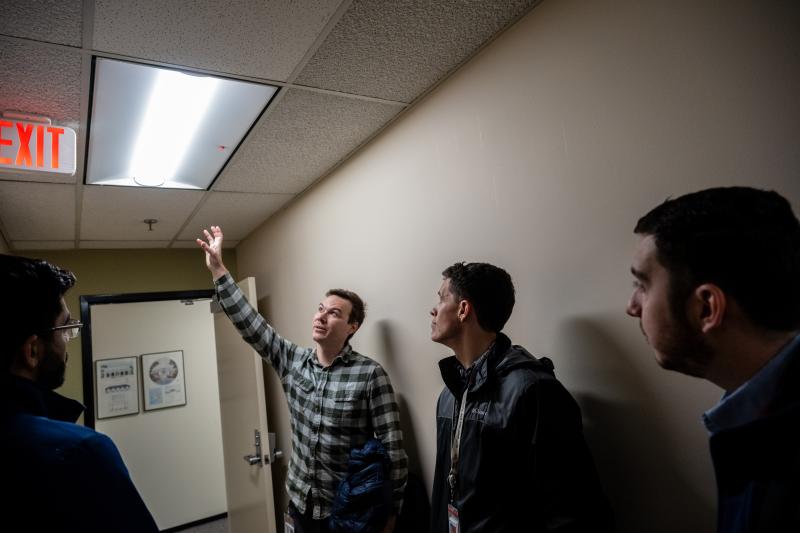
Author Kevin Smith, with other staff, identifying energy efficiency needs for Pender Office Building

How are greenhouse gas emissions tracked and reported?

Fairfax County calculates its greenhouse gas emissions on an annual, fiscal year basis and reports to the DOE by August 1st. While the county joined BCC in 2022, the baseline year for assessing progress is FY2018, which aligns with the baseline year for OES.

This calculation process starts with compiling information from two sources:

  1. electricity and natural gas consumption in the county’s building portfolio from utility bills; and
  2. vehicle fuel consumption from the county’s vehicle and transit fleets using the county’s fuel management software.

Next, greenhouse gas emissions factors are applied to energy consumption to find the annual emissions from each source. Emissions factors for our regional electric grid, natural gas stationary combustion, and vehicle fuel combustion are sourced from the U.S. Environmental Protection Agency’s Greenhouse Gas Emission Factors Hub. 

Finally, the three annual emissions values (building electricity, building natural gas, and vehicle fuel), in pounds or tons of CO2-equivalent, are summed to find the total emissions for county government operations. However, the county acquires renewable energy credits (RECs) as an alternative method to reducing greenhouse gas emissions as renewable energy projects ramp up. Once electricity emissions are calculated, any acquired RECs are applied appropriately to determine the net emissions. 

Greenhouse gas emissions are reported for Scope 1 (direct on-site energy combustion: natural gas and vehicle fuel) and Scope 2 (indirect off-site power generation: electricity) emissions.
solar panel project at reston fire station
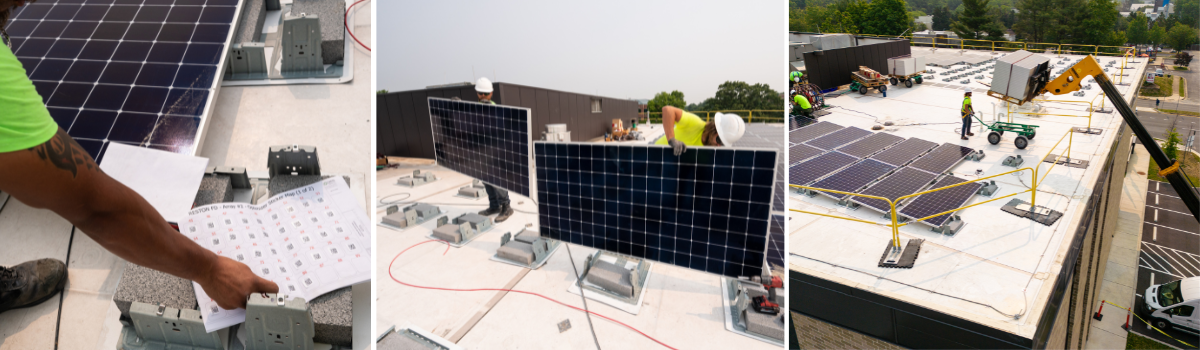
Photos of the solar panel project at Reston Fire Station

What kind of support does the DOE offer to BCC partners?

The DOE offers several avenues for support for partners in their efforts to meet the emissions reduction goal.

Fairfax County meets with the BCC team quarterly for technical assistance calls. During those meetings, Fairfax County and BCC discuss the county’s decarbonization efforts, whether it is a review of annual emissions data, review of current decarbonization efforts, or discussion of upcoming BCC events and learning opportunities.

Additionally, the DOE leads BCC technical working groups devoted to topics such electrification, onsite renewable energy, and shifting to low-impact refrigerants. During the meetings, which take place over a period of six months, partners discuss their experiences with the given topic, including lessons learned, challenges, and success stories. At the end of the working group cycle, the DOE team assembles notes and feedback to develop technical frameworks and other helpful documents that anyone around the world can utilize in their decarbonization efforts.

A third form of support is through organizing technical conferences and webinars. The flagship event is the DOE’s Better Buildings, Better Plants Summit held annually in the spring in Washington, D.C. In the 2024 edition of the Summit, I represented Fairfax County and OEEC on panels which focused on external stakeholder engagement for decarbonization, and on vehicle fleet electrification. This was a great opportunity to connect with leaders across the country and share feedback and challenges in our decarbonization journeys.

Is Fairfax County on track to meet the BCC commitment?

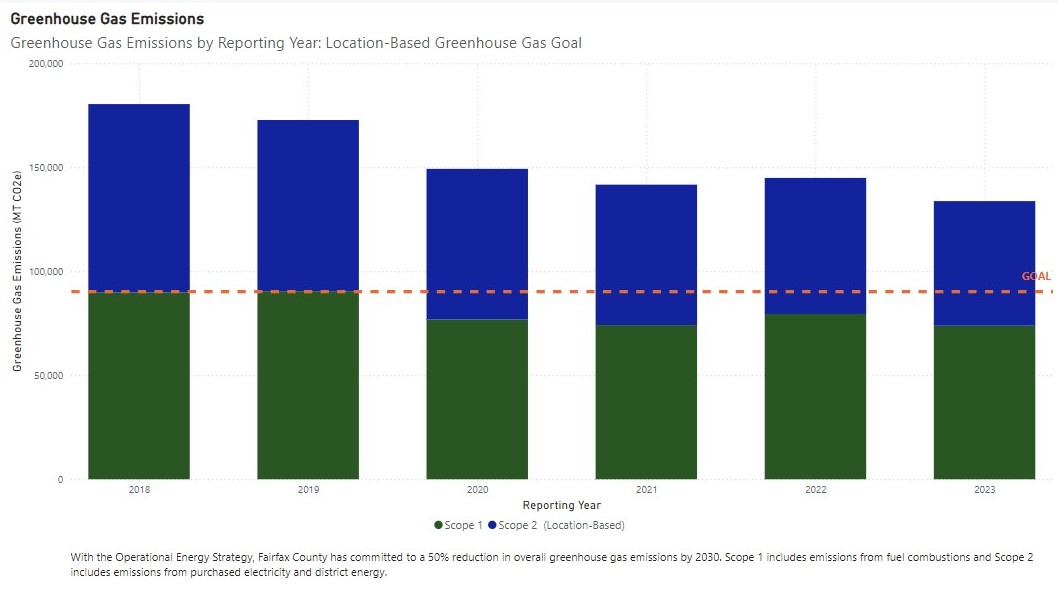
In FY 2023, Fairfax County achieved a 26% reduction in greenhouse gas emissions from government operations compared to the FY 2018 baseline. Some of that decrease – roughly 9% – is attributed to the greening of our electric grid. The remaining 17% is due to efficiency and conservation efforts in our buildings and fleet vehicles.
screenshot of powerbi
Note: Click the photo above to go to our "Reducing Greenhouse Gases" page. You can find this dynamic chart and explore more under "Track Progress'.

In existing buildings, we’ve replaced older fluorescent and other inefficient lights with LEDs, and replaced aging heating, ventilating and air-conditioning (HVAC) equipment and controls with modern, more efficient alternatives. Where possible, we’ve implemented whole building energy retrofits, including award-winning projects at the Department of Housing and Community Development’s Pender Building and Fairfax County Park Authority’s Cub Run Rec Center.

Beyond energy efficiency upgrades, the county has started installing solar photovoltaic (PV) systems on county buildings. The first solar PVs were installed on the rooftops of Reston Fire Station and Woodlawn Fire Station in summer 2023. As November 2024, solar PV systems have been completed at 10 sites with a total capacity of 1.2 megawatt (MW), enough to power about 110 homes.

Fuel consumption decreased by about 18% from FY 2018 to FY 2023. This is due in part to replacing older fleet vehicles with more fuel-efficient modern options, including hybrids and electric vehicles (EVs). The vehicle fleet now has 55 EVs and 12 battery-electric buses in service, in addition to 378 hybrid light-duty vehicles and 5 hybrid diesel-electric buses. Fairfax County’s departments of Vehicle Services and Transportation also use telemetry systems to track vehicle miles traveled and are continuously looking for more effective and efficient routes and usage patterns.

Although we have a ways to go to reach our climate goals, the consistent decrease in emissions is an indication that the county’s energy policy is truly being operationalized.

Learn more about what Fairfax County is doing to decarbonize its operations:

Our efforts to meet our Better Climate Challenge policy are driven by the targets, goals, and strategies contained in the Operational Energy Strategy. Visit our Operational Energy Strategy webpage to learn more about county energy policy; see what we are doing to decarbonize our buildings, electricity supply and vehicle fleet; and track progress toward our goals.

LEARN MORE ABOUT FAIRFAX COUNTY'S OPERATIONAL ENERGY STRATEGY
 

kevin smith's headshot


Kevin Smith has been with OEEC since 2022 serving as the division manager for energy programs, leading the implementation of the county’s Operational Energy Strategy. He is a licensed mechanical engineer with over a decade of experience in building design & construction, and facilities optimization.


Climate Matters is the blog of Fairfax County’s Office of Environmental and Energy Coordination, where we share stories, insights and information related to climate change and environmental sustainability. Posts are written by knowledgeable and passionate OEEC staff members and guest authors. To read all blog posts, visit Climate Matters.

Recent Interactions

    Ask Fairfax

    Terms & Conditions
    Live chat available Search our site
    • Translate
    • Awards
    • Site Feedback
    • PRIVACY POLICY & COPYRIGHT
    Main Address

    12000 Government Center Pkwy
    Fairfax, VA 22035

    Phone

    703-324-7329

    TTY 711

    Site Tools
    • Website Accessibility
    • Translate
    • Download Mobile App
    Support
    • ADA Accessibility
    • FOIA Requests
    • Website Administrator
    Additional Resources
    • Fairfax County Public Schools
    • Economic Development Authority
    • Visit Fairfax
    • Council of Governments
    • Commonwealth of Virginia
    • USA.gov
    • Calendar
    • Channel 16
    • Mail
    • Security
    • WIFI
    • Facebook
    • Twitter
    • Instagram
    • YouTube
    • Mobile

    The Official Site of Fairfax County