

Now that fall has arrived, respiratory season is here and the number of people getting sick with a respiratory illness is expected to increase. Although germs will be circulating over the next few months, there are many ways to stay healthy and protect yourself from flu, COVID-19, and respiratory syncytial virus (RSV).
Remember, vaccination is your first line of defense against respiratory diseases.
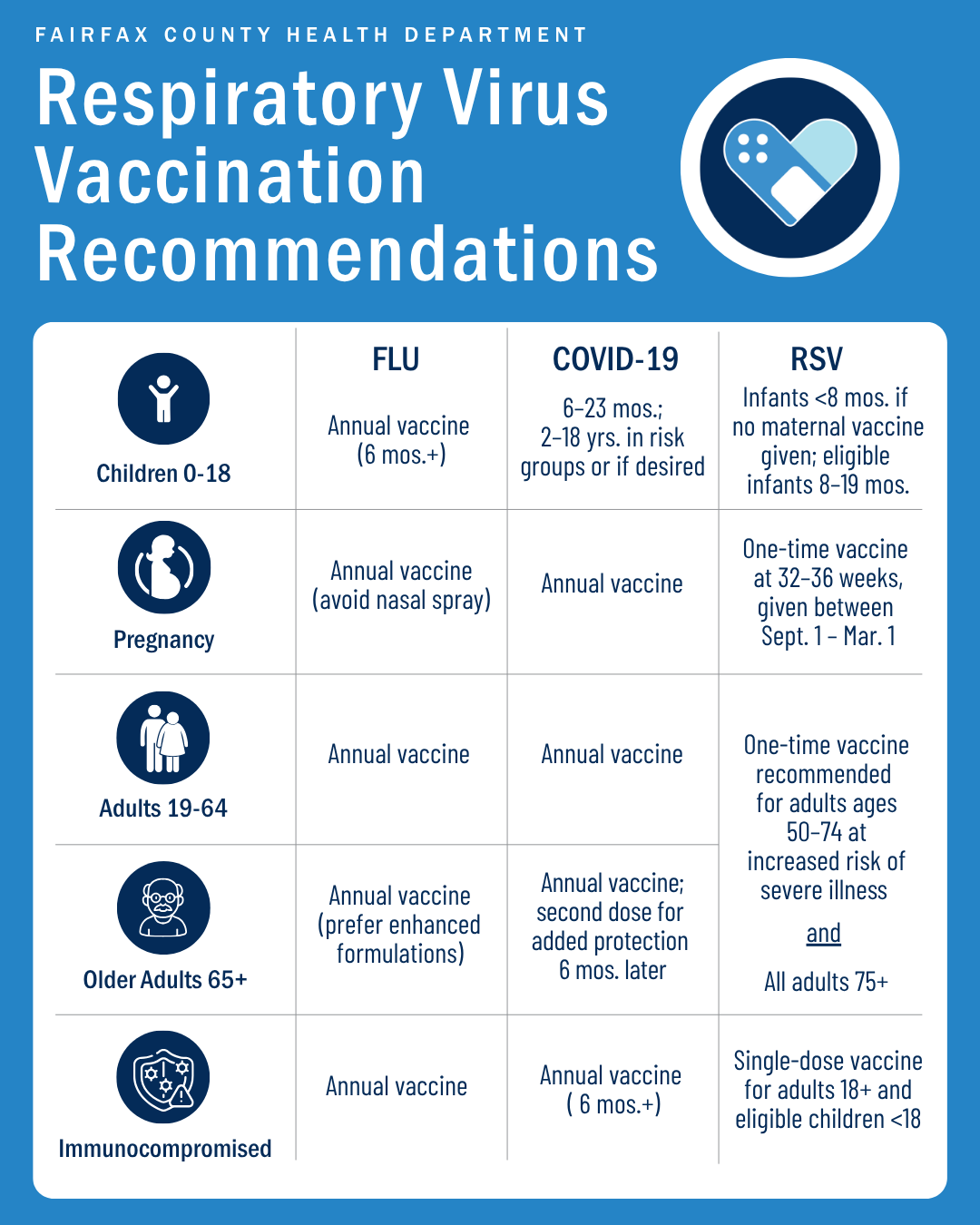
Vaccine Recommendations for 2026-2027 Respiratory Illness Season:
- Children (6 months–18 years): Annual flu shot for all; annual COVID-19 for ages 6–23 months and for ages 2–18 in certain risk groups (optional otherwise); RSV vaccine for infants under 8 months if the mother was not vaccinated in pregnancy, and for ages 8–19 months in certain risk groups.
- Healthy adults (19–64 years): Annual flu and COVID-19 vaccines for all; one-time RSV vaccine for adults 50–74 at increased risk, in consultation with a healthcare provider.
- Pregnant women: Annual flu (no nasal spray) and updated COVID-19 vaccines; RSV vaccine at 32–36 weeks’ gestation (Sept 1–March 1) each pregnancy to protect newborns.
- Older adults (65+ years): Annual high-dose flu vaccine and annual COVID-19 vaccine plus a booster after 6 months; one-time RSV vaccine for all adults 75 and older.
- Immunocompromised (6 months+): Annual flu (no nasal spray) and COVID-19 vaccines; RSV vaccine considered on a case‑by‑case basis with a healthcare provider.
Influenza (Flu)
Everyone 6 months and older, with rare exceptions, should get a flu vaccine every year.
When to get it: The ideal time is by the end of October, but you can still get vaccinated later in the season. Flu viruses usually start increasing in early October, peak in January or February, and can circulate through late May.
What’s in the vaccine: The current flu shot protects against three flu virus strains, including the influenza A(H3N2) subclade K virus that spread widely during the 2025–2026 season.
COVID-19
COVID-19 vaccines are available for everyone 6 months and older.
Who especially needs it: Older adults, infants, and people who are pregnant are strongly encouraged to be vaccinated because they are at higher risk of severe illness.
Why an updated dose matters: Protection from COVID-19 vaccines decreases over time, so getting an updated dose (if you are eligible) helps restore and maintain protection.
Respiratory Syncytial Virus (RSV)
Adults:
All adults 75 years and older should receive a single dose of an RSV vaccine.
Adults aged 50–74 with certain health conditions should talk with their healthcare provider to decide if the RSV vaccine is appropriate, as some conditions increase the risk of severe RSV.
Babies and Pregnancy:
All babies should be protected from severe RSV using one of two options:
- A maternal RSV vaccine given during pregnancy, or
- An RSV monoclonal antibody given directly to the baby.
These options significantly reduce the risk of hospitalization for infants during their first RSV season.
Pregnant people and parents of newborns should talk with their healthcare providers about the best RSV protection for their baby.
Stay Healthy
Practicing healthy habits can help you reduce the chances of getting and spreading respiratory viruses like flu, RSV, and COVID-19.
- Get vaccinated against respiratory illnesses. Talk with your health care provider for details.
- Wash hands often with soap and water for 20 seconds, especially after coughing or sneezing.
- Cover coughs and sneezes with a tissue or your elbow.
- Stay home if you are sick with respiratory illness to prevent spreading it to others. Return to normal activity when your symptoms have improved, and you are fever free for 24 hours.
- Keep a distance from others when possible.
- Improve air quality by bringing in fresh air from outside (opening doors or windows or using exhaust fans), purifying air indoors, or gathering outdoors.
Help spread the message about respiratory illness. Share Respiratory Illness Resources with your friends, family, school, or health clinic.