

Fairfax County, Virginia
Fairfax County Virginia

FFX Global Navigation

    • Healthy Minds Fairfax homepage
    • About Healthy Minds Fairfax
      • About us
      • Fairfax County-Falls Church Children's Behavioral Health Plan
      • Publications & Reports
    • Children's Behavioral Health Community Resources
      • How do I pay for services?
      • Does my child have a mental health concern?
      • Does my child have a mental health concern (Spanish)?
      • Common mental health diagnoses
      • Guide to behavioral health treatments
      • Types of professionals who help with behavioral health issues
      • How do I know if my child is getting good treatment?
      • How can my child’s school help?
    • Information for service providers
      • How to become a Short-Term Behavioral Health Services provider
      • Resources for primary care physicians
      • Fairfax Consortium for Evidenced-Based Practice
  • Residents
    • Animals & Pets
      • Adoptions
      • Animal Control & Regulations
      • Guide to Dogs
      • Lost & Found Pets
      • Shelter Support & Supplies
      • Wildlife
      • More
      Courts & Legal
      • Case Information
      • Circuit Court Docket
      • Jury Duty
      • Land Records
      • Magistrate
      • Public Law Library
      • Self-Help Resources
      • Traffic Court
      • Vital Records
      • More
      Environment & Energy
      • Invasive Species
      • Litter
      • Recycle, Trash & Compost
      • Sustain Fairfax
      • Trees
      • Watersheds
      • More
      Health & Human Services
      • Basic Needs & Assistance
      • Disability Services
      • Diseases & Conditions
      • Domestic & Sexual Violence
      • Health Clinics
      • Mental Health
      • Opioids
      • More
      Individuals & Families
      • Children & Youth
      • Federal Workforce
      • Immigrants
      • Military & Veterans
      • New Residents
      • Older Adults
      • Parents
      • People with Disabilities
      • Volunteers
      • More
      Land Use & Planning
      • Comprehensive Plan
      • County Capital Projects
      • Land Records
      • Parks Planning
      • Planning Projects
      • Research Tools
      • Transportation Projects
      • Urban Centers
      • More
      Library & Education
      • Adult Education
      • Early Childhood Programs
      • Library Branches
      • Library Catalog Search
      • Public Schools
      • More
      Parks & Recreation
      • Arts
      • Athletic Fields
      • Camps
      • Community Centers
      • Parktakes Classes
      • Rec Centers
      • Senior Centers
      • Teen Centers
      • Trails
      • More
      Permits & Licenses
      • Birth & Death Certificates
      • Building
      • Child Care
      • Dogs
      • Health
      • Marriage
      • Park Use
      • Solicitors
      • More
      Property & Housing
      • Affordable Housing
      • Code & Zoning
      • Neighborhoods
      • Real Estate Values
      • Recycling & Trash
      • Tenant Landlord Issues
      • Utilities
      • More
      Public Safety & Emergencies
      • 9-1-1
      • Emergency Preparedness
      • Fire & Rescue
      • Gun Violence Prevention
      • Police
      • Scams
      • Sheriff
      • Storm Center
      • More
      Roads & Commuting
      • Bike & Walk
      • Connector Bus
      • Metrobus & Metrorail
      • Park & Ride
      • Pedestrian Safety
      • Road Maintenance/VDOT
      • Street Parking
      • Toll Roads
      • Transportation Projects
      • More
      Taxes & Fees
      • Car Taxes
      • Park Fees
      • Real Estate Taxes
      • Tax Relief
      • Trash Disposal Fees
      • More
      Voting & Elections
      • Absentee Voting
      • Early Voting
      • Election Results
      • Polling Places
      • Voter Registration
      • More
      Weather & Climate
      • Air Quality
      • Climate Action Dashboard
      • Extreme Heat
      • Floods
      • Ready Fairfax
      • Resilient Fairfax
      • Snow
      • Tornadoes
      • More
  • Business
    • Business & Construction
      • Building Permits
      • Code & Zoning
      • Land Use
      • More
      Business Services
      • Business Emergency Preparedness
      • Business Taxes
      • Consumer Services
      • Employer Transportation Service
      • Green Business Partners Program
      • Home-Based Business
      • Regulation & Licensing
      • Small Business
      • Starting a Business
      • Workplace Issues
      • More
      Doing Business with Fairfax
      • Contracting and Procurement
      • Current Solicitations
      • Permits
      • Vendor Pitch Portal
      • More
  • Government
    • About
      • Codes & Standards
      • Countywide Strategic Plan
      • Facilities & Locations
      • History of Fairfax County
      • Operating Status
      • More
      Board of Supervisors
      • Auditor
      • Board Members
      • Boards, Authorities & Commissions
      • Clerk Services
      • Committees
      • Meetings & Agendas
      • More
      Budget & Finance
      • Bonds
      • Budget
      • Financial Transparency
      • Unclaimed Money
      • More
      Departments & Agencies
      Jobs & Employment
      • Full-Time Openings
      • Internships
      • Seasonal & Non-Merit
      Maps & Data
      • Countywide Data Analytics
      • Demographics
      • Geographic Information Systems
      • Interactive Data Tools
      • More
      One Fairfax
      • Digital Equity
      • Inclusive Engagement
      • Trust Policy
  • Fairfax County Virginia
  • Services
    • Find
      • Animal Services
      • Health Clinics
      • Jobs
      • Library Resources
      • Lost or Found Pet
      • Mental Health Support
      • Park Classes
      • Real Estate Values
      • Recycling & Trash
      • Volunteer Opportunities
      • More
      Pay
      • Business Taxes
      • Car Taxes
      • Dog Licenses
      • Driving & Parking Fines
      • False Alarm Fees
      • Real Estate/Property Taxes
      • SACC Payments
      • More
      Register/Apply
      • Basic Needs & Assistance
      • Building Inspections
      • Car Registration
      • Fairfax Alerts
      • Permits & Licenses
      • Tax Relief
      • Vote
      • More
      Report
      • Animal Control Issues
      • Consumer Complaints
      • Crime
      • Domestic Violence
      • Financial Crimes
      • Neighborhood Complaints
      • Road Issues to VDOT
      • Street Light Outages
      • More
  • Connect
    • Alerts, Emails & Apps
      • Email Subscriptions
      • Fairfax Alerts
      • Mobile App
      • More
      Community Engagement
      • Surveys & Projects
      Contact
      • Directory
      • Hotlines & Emergency Numbers
      • VDOT
      • VFOIA Requests
      • More
      News & Events
      • Daily Headlines
      • Emergency Information Blog
      • Events Calendar
      • NewsCenter
      • NotiCentro (Spanish)
      • Public Meetings Calendar
      • More
      Social Media
      • Comments Policy
      • Directory of Accounts
      • More
      TV, Video & Podcasts
      • Channel 16
      • Podcasts & Radio
      • YouTube
      • More
  • TRANSLATE
    • Language Selection

      To change the language of this website, click the drop-down list and select the desired language. The Fairfax County Web site is being translated through "machine translation" powered by Google Translate. Disclaimer

Healthy Minds Fairfax

  1. Home
  2. Healthy Minds Fairfax
  3. Guide to behavioral health treatments

Healthy Minds Fairfax Alert:

703-324-5235 TTY 711
DFSHealthyMinds@fairfaxcounty.gov
12011 Government Center Parkway - Pennino Building
Fairfax, VA 22035
Peter Steinberg
Healthy Minds Fairfax Program Manager

Department Resources

  • Healthy Minds Fairfax homepage
  • About Healthy Minds Fairfax
    • About us
    • Fairfax County-Falls Church Children's Behavioral Health Plan
    • Publications & Reports
  • Children's Behavioral Health Community Resources
    • How do I pay for services?
    • Does my child have a mental health concern?
    • Does my child have a mental health concern (Spanish)?
    • Common mental health diagnoses
    • Guide to behavioral health treatments
    • Types of professionals who help with behavioral health issues
    • How do I know if my child is getting good treatment?
    • How can my child’s school help?
  • Information for service providers
    • How to become a Short-Term Behavioral Health Services provider
    • Resources for primary care physicians
    • Fairfax Consortium for Evidenced-Based Practice

Related Resources

  • Fairfax-Falls Church Community Services Board
  • Health & Human Services System
  • Human Services Resource Guide
  • Children's Services Act Resources
  • Northern VA Regional Projects Office
  • Va. Dept. of Behavioral Health & Developmental Services

Guide to behavioral health treatments

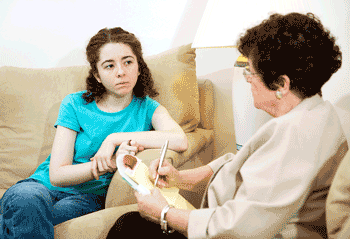
Photo of teen girl talking with therapistIf your child has been diagnosed with a mental health disorder, you may be told that your child may benefit from receiving evidence-based treatment. Evidence-based treatments are those that research has showed to be effective.

There are a lot of different kinds of behavioral therapy because each is customized to work effectively with a specific disorder or set of disorders. They have been tested on children with that specific disorder, and they have been manualized — that is, spelled out step-by-step to ensure that the techniques are use in the manner and sequence that have been shown to be most effective. There are also clear measures of a child’s progress, and an estimated duration for the treatment.

Here’s a look at some of the most common behavioral treatments that are effective for children and youth.

Who is it for? Applied Behavior Analysis (ABA) is for children with autism spectrum disorders.

What is it? ABA is an intensive intervention designed to help children with autism develop behaviors they don’t pick up the way neurotypical children do, including social, verbal, and motor skills, and decrease behaviors that are problematic or self-injurious.

How does it work? ABA uses close observation of your child’s behavior and positive prompts or reinforcement to increase desired behaviors. Problematic behaviors are addressed by studying what occurs before and after the behavior and altering those triggers or reinforcements rather than focusing on the behavior itself.

Who is it for? Cognitive behavioral therapy (CBT) is used to treat a wide range of disorders and difficulties.

What is it? CBT is based on the premise that thoughts (cognitions), feelings, and behaviors all influence one another. CBT is an umbrella term for many specific kinds of therapy tailored to specific psychiatric disorders.

How does it work? A therapist can use CBT to help your child identify how her thoughts influence her behaviors, or change her behaviors, which in turn can help her change the way she manages unwanted feelings and thoughts.

Who is it for? Dialectical behavior therapy (DBT) is used to treat a wide range of psychiatric issues. DBT was originally developed for people with borderline personality disorder, but has been used successfully to treat eating disorders, suicidal and self-injurious behavior, depression, and substance abuse.

What is it? Dialectical behavior therapy, (DBT) focuses on accepting rather than challenging difficult thoughts, while at the same time initiating change.

How does it work? DBT helps individuals focus on accepting, rather than becoming overwhelmed by, difficult thoughts by using what’s called “mindful awareness” while taking steps to improve interpersonal interactions and avoid problematic behavior. It’s called dialectical because it involves balancing both acceptance and change.

Who is it for? Interpersonal psychotherapy is often used to treat children and adolescents with depression, but can be helpful with a wide-range of psychological issues and disorders.

What is it? Interpersonal psychotherapy is a form of short-term therapy that focuses on helping your child explore how her relationships with peers and family positively (and negatively) affect her mood and behavior.

How does it work? Interpersonal therapy helps your child identify things that might be adversely affecting her mood—including conflicts, transitions, grief, and negative patterns in relationships—and make improvements that can positively impact her feelings and behavior.

Who is it for? Motivational interviewing is often used with adolescent substance abusers who have been directed to treatment by parents or authorities and are unlikely to succeed in it unless they perceive a benefit for themselves.

What is it? Motivational interviewing is focuses on exploring and resolving ambivalence to treatment in order to increase motivation to change problematic behavior.

How does it work? In a motivational interview, the therapist is collaborative rather than confrontational. The emphasis is on understanding the child’s point of view, eliciting the child’s ideas about change, and emphasizing the child’s responsibility for his behavior.

Who is it for? Parent-child interaction therapy is for parents and children who are struggling to interact in a positive, productive way.

What is it? Parent-child interaction therapy is a therapeutic technique that restructures the interaction between you and your child to reduce conflict, improve the attachment relationship, and reduce disruptive behaviors.

How does it work? A therapist will help teach you to give effective positive reinforcement for desired behaviors and consistent consequences for undesirable behaviors. Once you’ve learned these new skills, you’ll receive live coaching (via a bug in the ear) from a therapist who watches from behind a one-way mirror as you and your child interact. The goal of parent-child interaction therapy is to help children, youth and parents enjoy a more positive relationship by teaching parents to exercise their authority calmly and consistently, and helping children learn to manage their own behavior more effectively.

Who is it for? Trauma-focused cognitive behavior therapy is for children and adolescents who have experienced trauma.

What is it? A kind of cognitive behavioral therapy specifically geared to helping children and parents learn to process a disturbing experience in a healthy way.

How does it work? A trauma-focused cognitive therapist will teach your child skills that will help him manage distressing thoughts and feelings, rather than avoiding them, and allow him to recover his sense of well-being.

Information from the Child Mind Institute, reposted with permission: https://childmind.org/guide/guide-to-behavioral-treatments/list-of-treatments/

Connect with Care Navigation

Graphical icon of a compass.

Connect with a Free Individual Care Navigator

Call:
703-468-0040

Email:
youthcarenav@hopelinkbh.org

Care Navigators help to determine what level of service may be needed and helps youth and families connect to those services with barriers and challenges in mind.

Search for Nearby Help
Graphical icon of a magnifying glass looking at a heart.

Find Local Resources Near You

Access a free specialized database and enter your zip code to find children's/youth behavioral health and physical health resources and other local resources in your area.

Recent Interactions

    Ask Fairfax

    Terms & Conditions
    Live chat available Search our site

    Related Resources

    • Fairfax-Falls Church Community Services Board
    • Health & Human Services System
    • Human Services Resource Guide
    • Children's Services Act Resources
    • Northern VA Regional Projects Office
    • Va. Dept. of Behavioral Health & Developmental Services
    • Translate
    • Awards
    • Site Feedback
    • PRIVACY POLICY & COPYRIGHT
    Main Address

    12000 Government Center Pkwy
    Fairfax, VA 22035

    Phone

    703-324-7329

    TTY 711

    Site Tools
    • Website Accessibility
    • Translate
    • Download Mobile App
    Support
    • ADA Accessibility
    • FOIA Requests
    • Website Administrator
    Additional Resources
    • Fairfax County Public Schools
    • Economic Development Authority
    • Visit Fairfax
    • Council of Governments
    • Commonwealth of Virginia
    • USA.gov
    • Calendar
    • Channel 16
    • Mail
    • Security
    • WIFI
    • Facebook
    • Twitter
    • Instagram
    • YouTube
    • Mobile

    The Official Site of Fairfax County