
Fairfax County, Virginia
Fairfax County Virginia

FFX Global Navigation

    • Soil and Water Conservation District Homepage
    • About NVSWCD
      • About the Soil and Water Conservation District
      • Board of Directors and Staff
      • Careers and Internships
      • Our Partners
      • Policy Positions and Legislative Letters
    • Addressing Conservation Problems
    • Urban Agriculture and Community Gardens
    • CAP/VCAP Cost-share
    • Flood Mitigation Assistance Program (FMAP)
    • Community Programs and Presentations
    • Volunteering with NVSWCD
    • Youth and Student Programs
    • Newsletter
  • Residents
    • Animals & Pets
      • Adoptions
      • Animal Control & Regulations
      • Guide to Dogs
      • Lost & Found Pets
      • Shelter Support & Supplies
      • Wildlife
      • More
      Courts & Legal
      • Case Information
      • Circuit Court Docket
      • Jury Duty
      • Land Records
      • Magistrate
      • Public Law Library
      • Self-Help Resources
      • Traffic Court
      • Vital Records
      • More
      Environment & Energy
      • Invasive Species
      • Litter
      • Recycle, Trash & Compost
      • Sustain Fairfax
      • Trees
      • Watersheds
      • More
      Health & Human Services
      • Basic Needs & Assistance
      • Disability Services
      • Diseases & Conditions
      • Domestic & Sexual Violence
      • Health Clinics
      • Mental Health
      • Opioids
      • More
      Individuals & Families
      • Children & Youth
      • Federal Workforce
      • Immigrants
      • Military & Veterans
      • New Residents
      • Older Adults
      • Parents
      • People with Disabilities
      • Volunteers
      • More
      Land Use & Planning
      • Comprehensive Plan
      • County Capital Projects
      • Land Records
      • Parks Planning
      • Planning Projects
      • Research Tools
      • Transportation Projects
      • Urban Centers
      • More
      Library & Education
      • Adult Education
      • Early Childhood Programs
      • Library Branches
      • Library Catalog Search
      • Public Schools
      • More
      Parks & Recreation
      • Arts
      • Athletic Fields
      • Camps
      • Community Centers
      • Parktakes Classes
      • Rec Centers
      • Senior Centers
      • Teen Centers
      • Trails
      • More
      Permits & Licenses
      • Birth & Death Certificates
      • Building
      • Child Care
      • Dogs
      • Health
      • Marriage
      • Park Use
      • Solicitors
      • More
      Property & Housing
      • Affordable Housing
      • Code & Zoning
      • Neighborhoods
      • Real Estate Values
      • Recycling & Trash
      • Tenant Landlord Issues
      • Utilities
      • More
      Public Safety & Emergencies
      • 9-1-1
      • Emergency Preparedness
      • Fire & Rescue
      • Gun Violence Prevention
      • Police
      • Scams
      • Sheriff
      • Storm Center
      • More
      Roads & Commuting
      • Bike & Walk
      • Connector Bus
      • Metrobus & Metrorail
      • Park & Ride
      • Pedestrian Safety
      • Road Maintenance/VDOT
      • Street Parking
      • Toll Roads
      • Transportation Projects
      • More
      Taxes & Fees
      • Car Taxes
      • Park Fees
      • Real Estate Taxes
      • Tax Relief
      • Trash Disposal Fees
      • More
      Voting & Elections
      • Absentee Voting
      • Early Voting
      • Election Results
      • Polling Places
      • Voter Registration
      • More
      Weather & Climate
      • Air Quality
      • Climate Action Dashboard
      • Extreme Heat
      • Floods
      • Ready Fairfax
      • Resilient Fairfax
      • Snow
      • Tornadoes
      • More
  • Business
    • Business & Construction
      • Building Permits
      • Code & Zoning
      • Land Use
      • More
      Business Services
      • Business Emergency Preparedness
      • Business Taxes
      • Consumer Services
      • Employer Transportation Service
      • Green Business Partners Program
      • Home-Based Business
      • Regulation & Licensing
      • Small Business
      • Starting a Business
      • Workplace Issues
      • More
      Doing Business with Fairfax
      • Contracting and Procurement
      • Current Solicitations
      • Permits
      • Vendor Pitch Portal
      • More
  • Government
    • About
      • Codes & Standards
      • Countywide Strategic Plan
      • Facilities & Locations
      • History of Fairfax County
      • Operating Status
      • More
      Board of Supervisors
      • Auditor
      • Board Members
      • Boards, Authorities & Commissions
      • Clerk Services
      • Committees
      • Meetings & Agendas
      • More
      Budget & Finance
      • Bonds
      • Budget
      • Financial Transparency
      • Unclaimed Money
      • More
      Departments & Agencies
      Jobs & Employment
      • Full-Time Openings
      • Internships
      • Seasonal & Non-Merit
      Maps & Data
      • Countywide Data Analytics
      • Demographics
      • Geographic Information Systems
      • Interactive Data Tools
      • More
      One Fairfax
      • Digital Equity
      • Inclusive Engagement
      • Trust Policy
  • Fairfax County Virginia
  • Services
    • Find
      • Animal Services
      • Health Clinics
      • Jobs
      • Library Resources
      • Lost or Found Pet
      • Mental Health Support
      • Park Classes
      • Real Estate Values
      • Recycling & Trash
      • Volunteer Opportunities
      • More
      Pay
      • Business Taxes
      • Car Taxes
      • Dog Licenses
      • Driving & Parking Fines
      • False Alarm Fees
      • Real Estate/Property Taxes
      • SACC Payments
      • More
      Register/Apply
      • Basic Needs & Assistance
      • Building Inspections
      • Car Registration
      • Fairfax Alerts
      • Permits & Licenses
      • Tax Relief
      • Vote
      • More
      Report
      • Animal Control Issues
      • Consumer Complaints
      • Crime
      • Domestic Violence
      • Financial Crimes
      • Neighborhood Complaints
      • Road Issues to VDOT
      • Street Light Outages
      • More
  • Connect
    • Alerts, Emails & Apps
      • Email Subscriptions
      • Fairfax Alerts
      • Mobile App
      • More
      Community Engagement
      • Surveys & Projects
      Contact
      • Directory
      • Hotlines & Emergency Numbers
      • VDOT
      • VFOIA Requests
      • More
      News & Events
      • Daily Headlines
      • Emergency Information Blog
      • Events Calendar
      • NewsCenter
      • NotiCentro (Spanish)
      • Public Meetings Calendar
      • More
      Social Media
      • Comments Policy
      • Directory of Accounts
      • More
      TV, Video & Podcasts
      • Channel 16
      • Podcasts & Radio
      • YouTube
      • More
  • TRANSLATE
    • Language Selection

      To change the language of this website, click the drop-down list and select the desired language. The Fairfax County Web site is being translated through "machine translation" powered by Google Translate. Disclaimer

Northern Virginia Soil and Water Conservation District

  1. Home
  2. Northern Virginia Soil and Water Conservation District
  3. Understanding Stream Restoration

Northern Virginia Soil and Water Conservation District Alert:

703-324-1460 TTY 711
ConservationDistrict@fairfaxcounty.gov
12055 Government Center Parkway
Suite 905, Fairfax, VA 22035
nvswcd
Willie Woode
Executive Director

Department Resources

  • Soil and Water Conservation District Homepage
  • About NVSWCD
    • About the Soil and Water Conservation District
    • Board of Directors and Staff
    • Careers and Internships
    • Our Partners
    • Policy Positions and Legislative Letters
  • Addressing Conservation Problems
  • Urban Agriculture and Community Gardens
  • CAP/VCAP Cost-share
  • Flood Mitigation Assistance Program (FMAP)
  • Community Programs and Presentations
  • Volunteering with NVSWCD
  • Youth and Student Programs
  • Newsletter
  • facebook
  • instagram

Understanding Stream Restoration


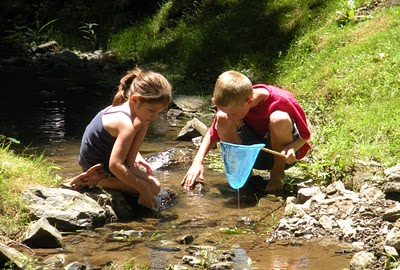
Children catch stream bugs. Always wash your hands after playing in the stream.
Credit: Christin of "Wandering thru"

Stream Restoration and Fairfax County Watershed Management Plans

By Adele Kuo

Our neighborhood streams and creeks draw people of all ages, especially our children, to play at the water’s edge. Exploring a small stream stimulates all the senses: it provides the delightful burbling of water trickling over stones, small pools that twinkle with reflected light, and the melodic chorus of the aquatic life. There are mosaics of natural outcroppings of stones and plants, fresh air mixed with wholesome earthiness, and cooler waters that soothe bare feet. Aquatic vegetation creates hiding places where small critters can be discovered going about their daily activities. Healthy streams provide the priceless simple pleasures of exploring nature and deciphering the surrounding natural environment, even in the midst of our increasingly built-up world.

What is Stream Restoration?

Stream restoration can take on many forms, and is one of many new technologies and creative planning tools that can be used to protect watersheds. Restoration may include practices such as replanting native vegetation along stream banks, fencing out livestock from the stream channel, or reshaping the channel to create a stable stream using natural channel design.
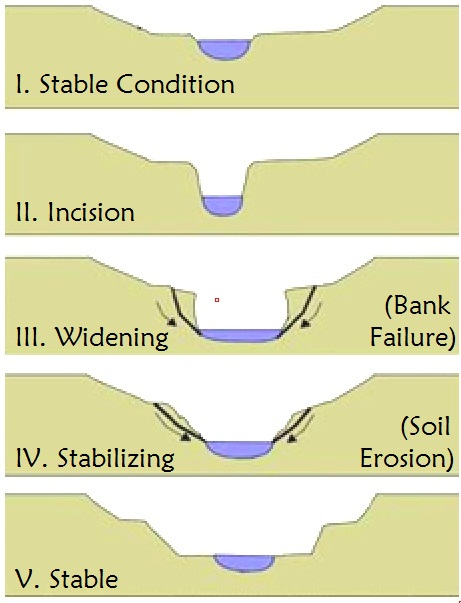

Stream channel evolution in response to increased runoff

Natural channel design seeks to restore the disturbed stream to emulate the natural stable channel. Stream bank erosion is a natural process, but can be accelerated by human impacts. When we build roads, buildings, and parking lots, we increase impervious surfaces, and more runoff rushes to streams when it rains instead of soaking into the land. Stream banks are eroded and channels are deepened and widened. Tree roots are exposed and the incising stream channel becomes disconnected from its floodplains. Stream buffer zones are impacted, trees fall and die, and without them soil is left to erode away. Over time, a new deeper and wider channel will form, and the stream vegetation will recover, but not before rain carries away huge amounts of sediment.

A stream restoration that uses natural channel design will imitate nature while preventing soil erosion. The incised stream channel cross section is re-graded to a more gentle angle to accommodate plantings, improve bank stability and reconnect a stream to its floodplain. Because redesigning streams often removes trees along the stream edge in order to accommodate the wider channel, stream restoration can sometimes cause controversy. Unfortunately, if the stream is left to restabilize on its own in response to increased runoff flow, the trees will come down regardless, but with much more soil erosion damage to the watershed. Although natural channel design projects can be expensive, conventional approaches of armoring banks with rock rip-rap, berming and concrete channelization can be many times more expensive and negatively impact aquatic habitat and the downstream channel.

Across Fairfax County, a pleasant stroll through a typical suburban community passes sidewalks, streets, homes, and well-kept lawns. Though it may not seem so, our neighborhoods are directly connected to those stream ecosystems. The storm drain network, the traditional way of handling rainfall, sends runoff directly to the streams through concrete channels and pipes. This prevents street flooding, but has environmental consequences. In natural systems rain soaks into the soil, recharging groundwater, but when rain falls on impervious surfaces like roads, rooftops, and parking lots, it all turns into runoff.

As a result, when it rains, runoff from the storm drain system overwhelms our streams. The runoff carries eroded soil particles, yard debris, trash, oil, and harmful nutrients and chemicals from lawn care. Water temperature fluctuations impact the ability of fish, amphibians, and insects to survive or reproduce. The increased quantity of water flow causes stream bank erosion and other physical changes. Our urban streams suffer from runoff pollution, erosion, and degradation.

Many residents have witnessed these events occurring in the streams that pass through their backyards and neighborhoods. Virtually everyone living in Fairfax County lives within a half-mile of a stream or creek, and all Fairfax County streams eventually flow into the Potomac River, Chesapeake Bay, and Atlantic Ocean. What happens in your yard and neighborhood, or on any parcel of land, affects the water quality downstream, which in turn affects us all. Habitat is damaged, recreational and aesthetic value is diminished, and more resources are needed to treat drinking water.

In 2003, Fairfax County embarked upon a long-term project to develop comprehensive Watershed Management Plans for each of the county’s watersheds. Over one million people live in the county’s 400 square miles. This area is drained by 30 major watersheds – such as Accotink Creek, Difficult Run and Bull Run, to name just a few. The 30 watersheds contain 980 miles of streams that are as diverse as the communities that inhabit them, yet they all drain to the Potomac River and Chesapeake Bay. No matter where you live, work or play, you are connected to everyone else through your watershed.

The Fairfax County Watershed Management Plans will serve as tools to identify and address the issues affecting our environment and to manage the protection, conservation, and restoration of the county’s stream corridors, wetlands, and other water resources. As of February 2011, all the Watershed Management Plans have been approved by the Board of Supervisors. The plans are facilitated by the Stormwater Planning Division of the Fairfax County Department of Public Works and Environmental Services (DPWES).

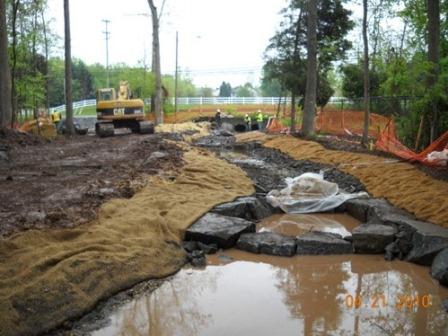
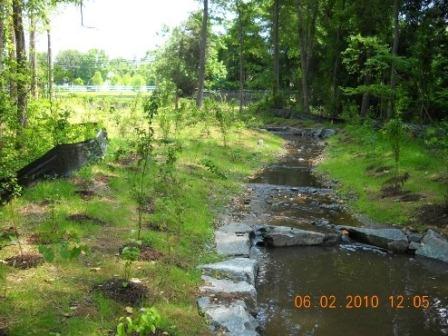
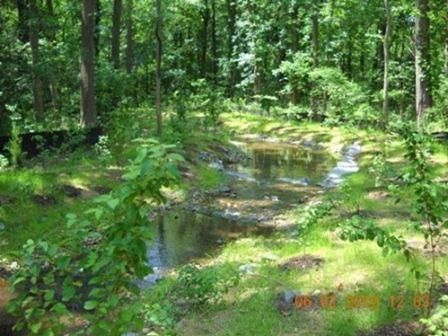
As part of the Watershed Management Plan process, a small tributary of Big Rocky Run was targeted for stream restoration. A successful stream restoration attempts to find a stable equilibrium between the stream’s ecological functions and the urbanized landscape that surrounds it. (Read more about stream restoration in the box above and follow the process in photos below.) The primary goals of the project included stabilizing eroding stream banks and re-establishing a vegetated buffer to improve the stormwater drainage from a subdivision across a wide, busy road. To view the Watershed Management Plans that include streams near you or to learn more about your watershed, visit www.fairfaxcounty.gov/dpwes/watersheds/.

Over the last decades, the way rainwater is handled has changed. As the Watershed Management Plans emerge and begin to be implemented in Fairfax County, the health, safety, and function of our watersheds will continue to play a larger role in the way we plan and manage our surroundings. We find that stormwater can behave naturally despite imperviousness and other challenges, and that stream restoration projects celebrate the rebuilding of a stream to a more stable condition. Improving the overall health and ecological character of streams in the midst of suburban Fairfax County invites residents of all ages to amble down to the water’s edge and enjoy their alluring qualities.
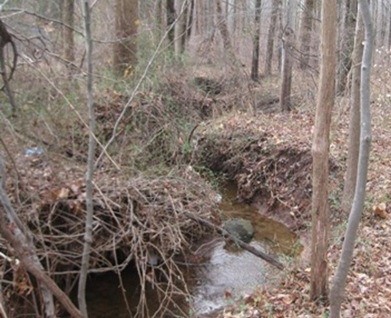
before restoration
Before Restoration (View 1)
during restoration
During Restoration (View 2)
right after restoration
Right After Restoration (View 2)
after restoration
After Restoration (View 1)
 
Stream Restoration on a Tributary of Big Rocky Run (in the Cub Run Watershed)
Stormwater Planning Division, Fairfax County Department of Public Works and Environmental Services
 

Adele Kuo is a graduate student at George Washington University pursuing a degree in Sustainable Landscape Design.

Recent Interactions

    Ask Fairfax

    Terms & Conditions
    Live chat available Search our site
    • facebook
    • instagram
    • Translate
    • Awards
    • Site Feedback
    • PRIVACY POLICY & COPYRIGHT
    Main Address

    12000 Government Center Pkwy
    Fairfax, VA 22035

    Phone

    703-324-7329

    TTY 711

    Site Tools
    • Website Accessibility
    • Translate
    • Download Mobile App
    Support
    • ADA Accessibility
    • FOIA Requests
    • Website Administrator
    Additional Resources
    • Fairfax County Public Schools
    • Economic Development Authority
    • Visit Fairfax
    • Council of Governments
    • Commonwealth of Virginia
    • USA.gov
    • Calendar
    • Channel 16
    • Mail
    • Security
    • WIFI
    • Facebook
    • Twitter
    • Instagram
    • YouTube
    • Mobile

    The Official Site of Fairfax County