

Article by Gwen Jones, Department of Family Services
(Posted 2026 April)

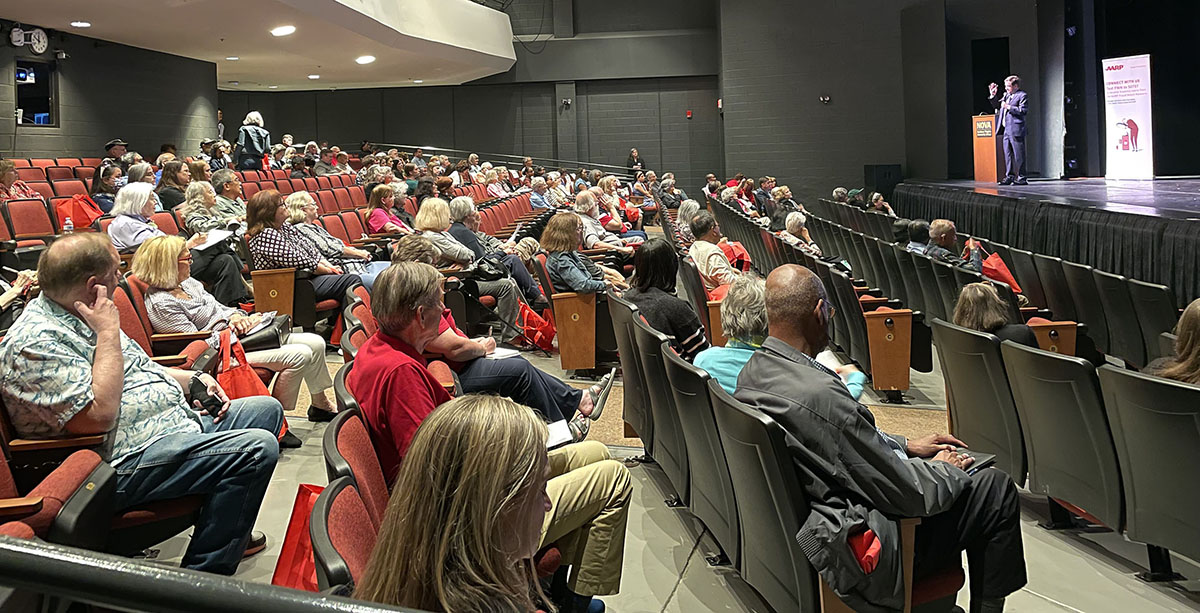
Each year, millions of Americans fall victim to scams and fraud. In 2024, $12.5 billion was lost, up 25 percent from 2023, according to the Federal Trade Commission. Unfortunately, older adults are often a favorite target of scammers. One of the best ways to guard against scams is by educating yourself about scams and fraud and staying up to date on the latest scams in your community.
Each year, AARP Virginia and Fairfax County’s Silver Shield Anti-Scam Program hosts Scam Jam, a free community event that brings together experts in law enforcement, finance, and consumer protection to provide the latest information on how to avoid falling for a scam and other resources to keep older adults safe. Scam Jam 2026 will take place on Thursday, April 30, from 9 a.m. to 1 p.m. at the Fairfax County Government Center, 12000 Government Center Parkway, in Fairfax.

The event will feature expert presentations on romance and financial scams, including how scammers are increasingly using artificial intelligence to make these schemes more convincing and difficult to detect. You can also visit the Scam Jam Resource Fair, made up of representatives from government agencies and non-profit organizations dedicated to fraud prevention and the protection of older adults. These groups will share information about their programs and services, including how to recognize scams and safeguard your personal and financial information.
AARP Virginia is generously providing box lunches for attendees who register for the event in advance. To register, visit events.aarp.org/event/ffsj26/summary.
Silver Shield Anti-Scam Program
The Silver Shield Anti-Scam Program is an initiative designed to protect older adults, people with disabilities, and family caregivers from scams and fraud. Through presentations and resources, the program raises awareness about common scams – such as imposter schemes and financial fraud – and teaches strategies to avoid becoming a victim. Learn more about Silver Shield at https://bit.ly/3P2d6ii.
Common Scams
- Government Impersonation Scams – Scammers pretend to be from Social Security, Medicare, the IRS, or law enforcement. They may say your benefits are at risk, you owe money, or there is a warrant for your arrest, and demand immediate payment or personal information. They may contact you by phone, text, or email and often ask for payment by gift card, wire transfer, or cryptocurrency.
- Grandparent/Family Emergency Scams – Scammers call, text, or email pretending to be a grandchild, other relative, or an attorney or police officer representing them. They claim there is an emergency (arrest, accident, or being stranded) and urgently request money, often asking that the victim not tell anyone else.
- Electronic Benefits Transfer (EBT) – Scammers attempt to steal Electronic Benefits Transfer (EBT) card benefits by tricking benefits recipients into sharing their EBT card number.
- Utility Shutoff Scams – Scammers claim to be from the electric, gas, water, or phone company and say service will be disconnected immediately unless you pay right away, often by gift card, wire transfer, or payment app. Real utilities provide advance written notices and do not demand instant payment through unconventional methods.
- Charity and Disaster Relief Scams – Scammers pose as charities, especially after natural disasters or major news events, and request donations by phone, text, email, or social media. They often pressure you to give immediately and may mimic the names of real charities.
- Jury Duty Scam – Scammers claim that an individual missed jury duty and threaten them with arrest if they do not pay a fee, click a link to "reschedule" or respond immediately.
- Home Repair Scams – Unscrupulous individuals go door-to-door offering home repairs (roofing, driveway paving, tree work) at a discount. They often demand payment in advance and then perform poor-quality work or disappear before completing the job.
- Toll Fees Scam – Scammers from coast to coast are pretending to be tolling agencies and sending texts demanding money.
Read more about these scams and others and learn to identify the warning signs of scams at FairfaxCounty.gov/topics/scams.
This article is part of the Golden Gazette monthly newsletter which covers a variety of topics and community news concerning older adults and caregivers in Fairfax County. Are you new to the Golden Gazette? Don’t miss out on future newsletters! Subscribe to get the electronic or free printed version mailed to you. Have a suggestion for a topic? Share it in an email or call 703-324-GOLD (4653).