

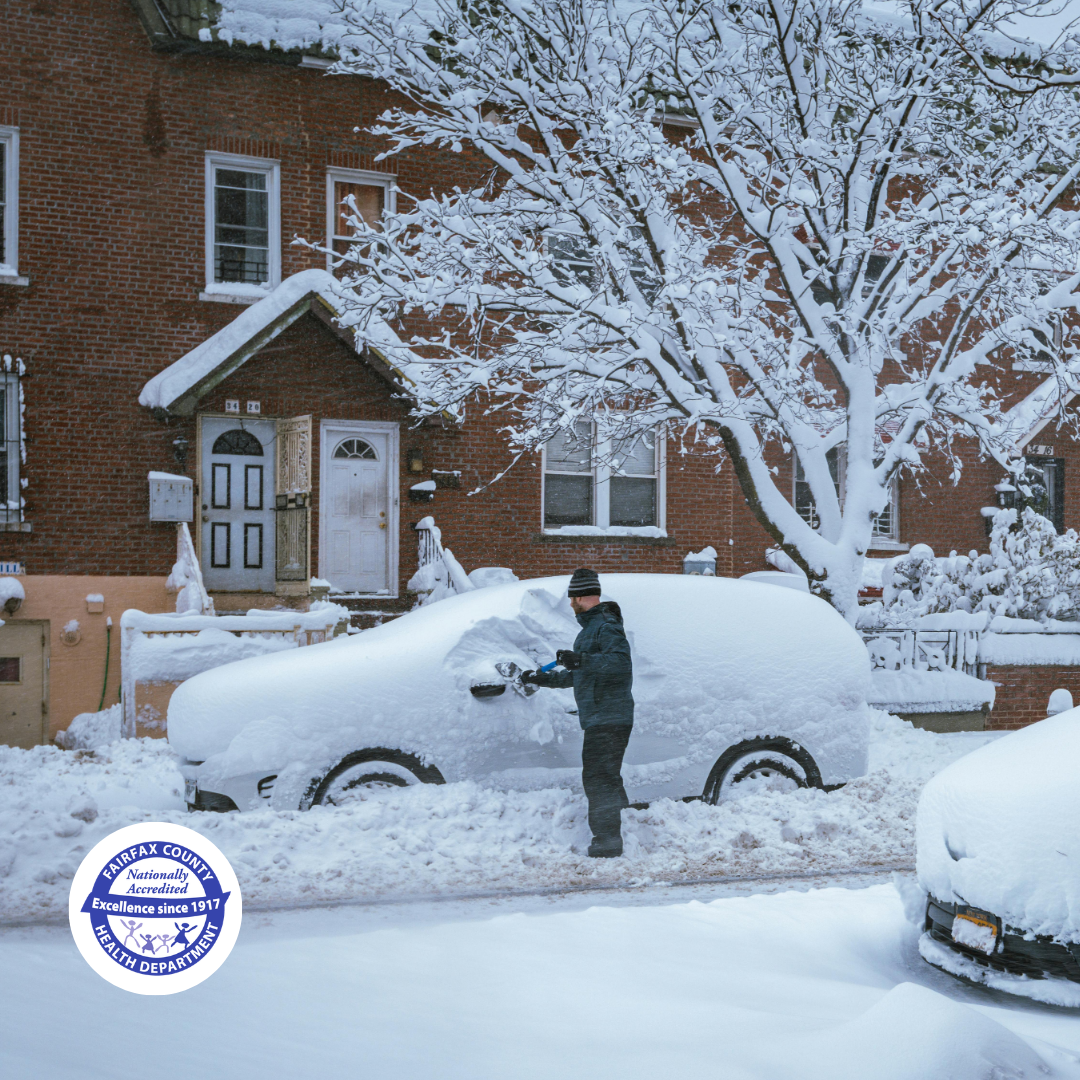
While winter temperatures in the Fairfax Health District are generally getting warmer, freezing temperatures and snowfall remain common over the winter months, especially in January and February.
Having stocked home and car emergency kits on hand is one of the best ways to protect your health during winter weather. Winter storms can cause power outages, hazardous conditions, travel disruptions, and injuries. Preparing now for the season ahead can help keep you warm, dry, and healthy.
Review your emergency supplies to make sure you have seasonal essentials:
1. Winter Clothing and Blankets
Cold temperatures can increase the risk of hypothermia and frostbite. Now is a great time to swap out the clothing in your emergency kit for winter gear. Pack gloves, hats, warm socks, layers, and an insulated jacket for each member of your household. Winter boots with strong traction can help you navigate slippery conditions caused by snow or ice, reducing your risk for fall-related injuries. Mylar emergency blankets take up very little space and help you retain body heat. Warm blankets add an extra layer of protection, so keep plenty on hand for everyone in your home.
2. Non-Perishable Foods, Water, Medicines
As the season changes, check the expiration dates on the food in your emergency kit and replace anything that’s expired. During heavy snow, roads can become impassable, and grocery stores or pharmacies may close. Keep an emergency supply of food, water, and medicine for each household member in case you can’t leave your home or local businesses are closed. Store these emergency supplies in a cool, dry place in your home, such as a pantry or closet.
3. Heating Sources
Don’t let colder temperatures catch you off guard. Add hand and foot warmers to your emergency kit. Consider purchasing a battery-powered or hand-crank heater rated for indoor use, which can provide localized warmth during a power outage. Keep an unexpired fire extinguisher available and make sure you know how to use it properly.
4. Flashlights and Batteries
Winter storms can lead to power outages, so keep flashlights and extra batteries on hand. Flashlights are safer than candles, which can pose a fire risk, or fireplaces, which can create carbon monoxide hazards during outages that limit ventilation.
Consider adding a headlamp for hands-free lighting, which can be especially useful if you’re walking a dog or navigating outdoors after dark. If your flashlights or headlamps are rechargeable, make sure they are fully charged before the winter season.
5. Snow Essentials
Snow is a regular part of Northern Virginia winters, so stocking up on snow essentials helps you stay ready. Pet-safe deicer or snow melt salt can make shoveling easier by reducing accumulation. Apply it to walkways and driveways before snowfall begins to prevent surfaces from icing and minimize how much you may need to shovel. Shoveling can increase the risk of heart attack, stroke, and muscle strain, so reducing how much you need to shovel can help lower your health risks. If you have a cardiovascular condition, avoid shoveling yourself and ask a household member or neighbor to assist you instead.
6. Consider Your Car
Snow or sleet can start while you’re on the road, quickly creating dangerous driving conditions. In addition to your home kit, keep an emergency kit in your car with non-perishable food, water, medications, warm clothing, mylar blankets and other blankets, a first aid kit, winter boots, and other essentials in case you need to pull over or get stranded due to unsafe conditions. Car-specific items can also keep you safe, such as an ice scraper and snowbrush, compact or folding shovel, sand or kitty litter for tire traction, and windshield washer fluid rated for freezing temperatures.
Learn more about preparing for extreme cold and other winter health hazards at www.fairfaxcounty.gov/health/emergency/climate.
Related Resources:
- Protect Your Health During Winter Weather Events
- Fairfax County | Guide to Snow
- Fairfax County Fire and Rescue | Cold Weather Safety
- Emergency Preparedness on a Budget: 5 Low-Cost Ways to Build Your Supplies Kit
- National Preparedness Month: How to Build Preparedness
- Paws and Prepare: Emergency Preparedness for Pet Owners
- Fairfax County Department of Emergency Management and Security | Stay Informed