The procedures on this page provide general guidance to help staff and contractors prevent stormwater pollution at county-owned or operated properties.
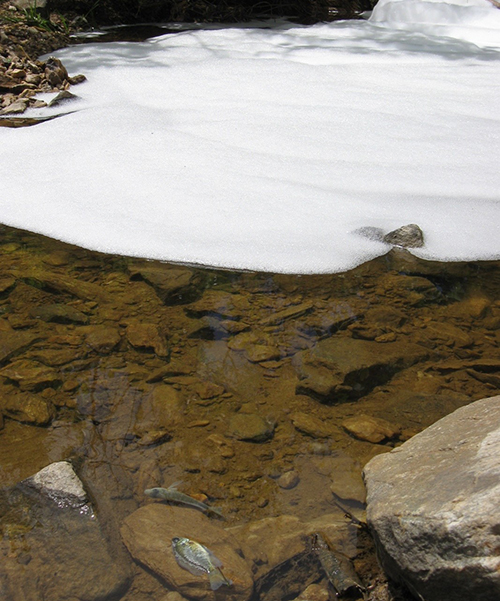
When it rains, pollutants such as oil, fuel, dirt, chemicals, trash, and yard waste can be carried into storm drains. Storm drains flow directly to local streams and rivers, where pollution can harm water quality, wildlife, and the environment.
By following these procedures, staff and contractors can help keep pollutants out of local waterways and protect Fairfax County's natural resources.
If you have questions, need additional information, or would like to report stormwater pollution, please call 703-877-2800 (TTY 711).
Use dry cleanup methods, like sweeping or absorbent pads, to remove leaks or drips from surfaces. Follow the written procedures for Spill Prevention and Response to clean up spills.
Replace damaged equipment right away.
Do not schedule work when rain is expected.
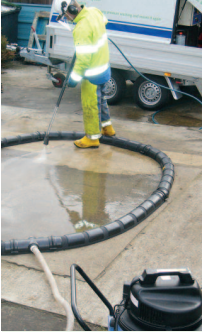
Protect storm drains with berms, absorbent barriers, sandbags, or other protective methods to prevent runoff.
Sweep up dirt and debris before and after performing work.
Wash brushes and spray guns used for water-based paint in a sink connected to the sanitary sewer system. For tools used for oil-based paints, wash them off into a hazardous waste container and then properly dispose of the container.
Use only mild soaps.
Wipe off cleaner residue to prevent contaminating soil and runoff.
Concrete/Asphalt Installation and Repair
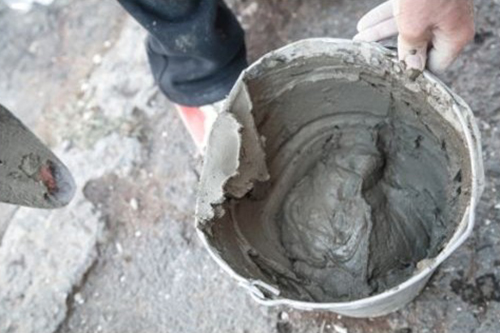
Mix only the amount of concrete or mortar needed.
Seal open cement bags to prevent spills.
Keep cement dust from blowing into streets or drains.
Use as little water as possible when cutting pavement.
Disposal/Cleanup
Throw away small amounts of hardened concrete, grout, and mortar in the trash.
Let wet concrete residue dry before shoveling or vacuuming it from pavement or gutters.
Use a vacuum to collect slurry if needed.
Wash concrete trucks following the written procedures for Vehicle Washing.
Use cloths or a tub under tools during cleaning.
Recycle waste concrete when possible.
Landscaping and Grounds Maintenance
Landscaping and Grounds Maintenance
If fertilizer is applied to turf greater than one acre, a Nutrient Management Plan must be prepared by a certified nutrient management planner. Use fertilizers carefully and apply only what is needed.
Choose native plants whenever possible to reduce the need for fertilizers and water.
Do not dump or blow yard waste into storm drains. Keep grass clippings, leaves, and other debris out of waterways. If clippings are blown onto paved surfaces, sweep or blow them back onto vegetated areas, not into storm drains. Grass clippings and other collected vegetation should be mulched and left in place or composted, when possible.
Do not compost grass clippings contaminated with pesticides or herbicides. Throw them in the trash instead.
Cover bare soils with wood chips, hay, or straw mulch to prevent runoff.
Use all chemicals (fertilizer, herbicides, pesticides, etc.) according to the directions on the manufacturer’s label.
Do not apply chemicals during rain, 24 hours prior to a rain or storm event, or onto frozen ground.
Do not apply any chemicals directly to surface waters unless that action is expressly permitted by the state.
When broadcast spreading, avoid hitting paved surfaces or applications during high winds.
Calibrate application equipment according to manufacturers' instructions and/or material to be spread. Calibrate per use based on specific material (seasonally, annually, etc.).
Never pour pesticides down the sink, toilet, sewer, or storm drain. Follow all disposal instructions on chemical labels and clearly mark hazardous material storage areas.
Triple rinse empty containers in a sink connected to the wastewater system and follow all label instructions. Spray the rinsate in areas typically sprayed for pests or as otherwise directed.
Use Integrated Pest Management (IPM) techniques when possible. This means using the least amount of pesticides needed and combining other pest control methods.
Set timers on irrigation sprinklers to minimize runoff.
Apply only as much water as the soil can absorb.
Aim irrigation heads away from impervious (paved) surfaces like roads, sidewalks, and driveways.
Landscaping equipment should be regularly inspected and maintained. Below are some procedures to keep equipment clean and functional:
Inspect irrigation systems regularly (for example each use, seasonally, or yearly) to ensure proper application and prevent runoff.
Check pesticide/fertilizer equipment and transportation vehicles before and after each use.
Inspect stored chemicals weekly for proper storage, leaks, or spills.
Check spill equipment quarterly to make sure adequate supplies are available in case of a spill.
Keep equipment and chemical storage areas clean and dry.
Clean up any leaks and drips using dry methods like absorbents – never wash them into a drain.
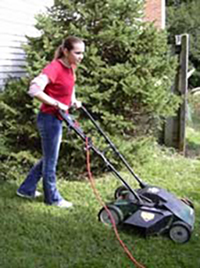
Brush off or blow off mowers and tractors over grassy areas and leave clippings there. Throw away contaminated clippings in the trash when necessary.
Materials Loading-Unloading
Material Loading and Unloading
When loading or unloading materials, have at least two people help whenever possible. Always use designated loading and unloading areas. These areas should be located away from storm drains so spills or leaks can be contained before reaching the drainage system.
Protect storm drains by using berms, adjusting site grading, or directing roof runoff away from drains. Follow the Material Storage procedures for outside storage, salt storage, liquids, and stockpiles.
Avoid loading or unloading during wet weather. If work creates dust, sweep up to make sure it does not blow or wash into the storm drain.
Liquid Materials
When loading and unloading liquids, use door seals or skirts between trucks and buildings to prevent runoff. Place drip pans or absorbent materials under hoses and connections, especially when disconnecting them.
Check loading and unloading areas every week and before rain for leaks, spills, rust, or improper storage.
Inspect berms, curbs, and other containment barriers weekly and repair any damage.
Make sure spill response kits are fully stocked and ready to use.
Check hoses, gaskets, and equipment often for leaks and replace damaged parts right away.
Regular maintenance helps prevent pollution. See the Material Storage procedures for material maintenance guidelines, and the Vehicle Wash procedures for information on how to properly wash equipment.
Once per year, perform a deep cleaning of loading and unloading areas.
Material Storage
Material Storage
Outside Storage
Store materials indoors when possible.
If materials must be stored outside, cover them with a roof, tarp, or waterproof cover to keep rain and runoff away from stored materials.
After each use, make sure materials are contained. Sweep loose material back into storage areas.
Salt Storage
Outdoor storage of de-icers must be pre-approved by the county’s High Priority Municipal Facilities (HPMF) coordinator at: ContactMSMD@fairfaxcounty.gov.
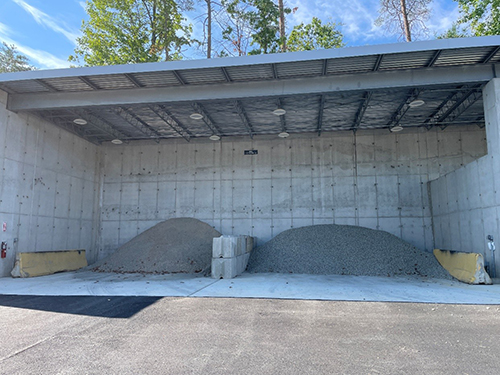
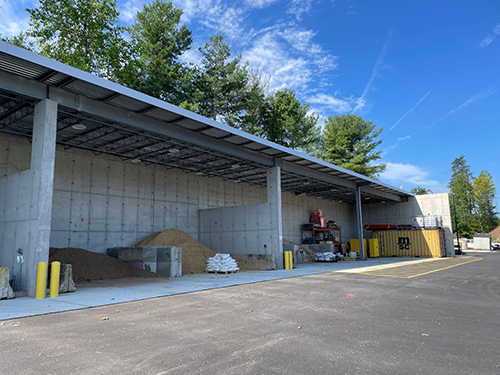
Salt and other de-icers should be stored indoors or under cover, on a paved surface, with berms or walls on a minimum of three sides.
Bulk Material Stockpiles
Cover stockpiles with a tarp or similar cover on the top and sides when not in use.
If a pile is too large to cover, use erosion and sediment controls around the pile and nearby storm drains.
Use berms or barriers around stockpiles to keep materials from spreading.
Liquid Storage
Store liquids in clean, sturdy, leak-tight containers, like drums.
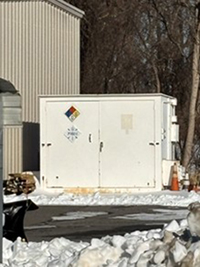
Use secondary containment like spill pallets or berms. Secondary containment must be able to hold the volume of the largest container.
Place containers in protected areas away from traffic to prevent damage.
Sweep storage areas often to remove dirt and trash.
Make sure stockpiles stay covered and materials do not wash away.
Fix or replace covers, barriers, and containment structures as needed.
Spill Prevention and Response Procedures
Spill Prevention and Response
If you see a spill and feel unsafe, move to a safe location and call 911 immediately.
Call 911 if the spill:
Caused an injury
Damaged property
Reached a storm drain, stream, or other waterway
Harmed the environment
Could catch fire or explode
Do not hose down spills. Keep spill kits stocked and available in areas where spills are more likely to occur.
Emergency Spill Response
Call 911 from a safe location.
Provide the location, type of material, estimated amount, and any injuries.
Notify your supervisor, Facility Operations Manager, or Spill Coordinator.
If it is safe to do so, use spill control materials to keep the spill from reaching storm drains or waterways.
Complete a Spill Report after the incident.
Non-Emergency Spills
A non-emergency spill is a small spill that can be safely handled by trained staff. Examples include small amounts of fuel, wash water, rock salt, or other materials that are easy to contain.
Stop the spill if it is safe to do so.
Use appropriate protective equipment.
Contain and clean up the spill using absorbent materials.
Notify your supervisor or Facility Operations Manager.
Dispose of waste properly.
Complete a Spill Report after the cleanup.
If the spill reaches a storm drain, report it as an illicit discharge.
After any spill, take steps to prevent it from happening again.
Help prevent spills by:
Storing materials indoors or under cover when possible
Keeping materials in labeled containers
Storing materials away from high traffic areas
Keeping spill kits stocked and easy to access
If a spill occurs, clean it up as soon as it is safe to do so. Use dry cleanup methods and properly dispose of all cleanup materials. Do not wash spills into storm drains or waterways.
Reporting and Recordkeeping
Report emergency spills immediately.
Document all non-emergency spills using a Spill Report.
Keep spill reports and related records on file.
Additional reporting may be required for emergency spills or spills that reach a storm drain or waterway.
Vehicle & Equipment Operations
Vehicle & Equipment Operations
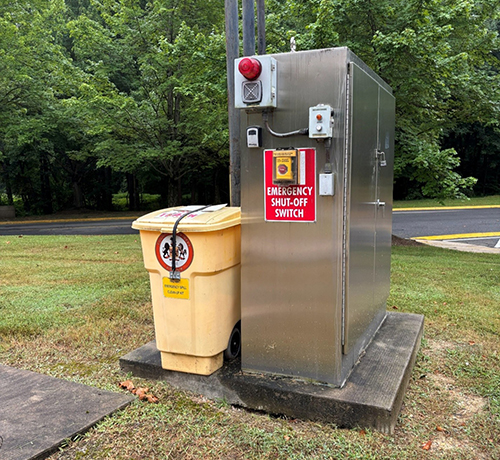
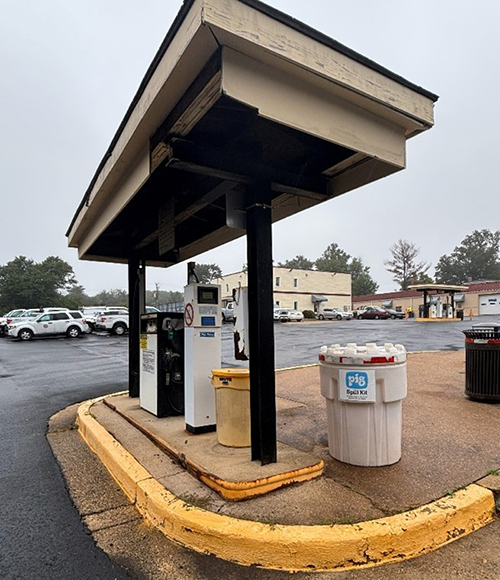
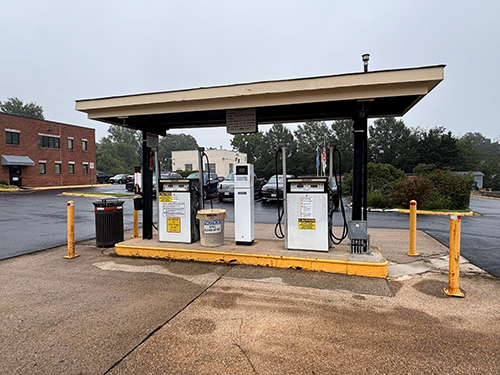
Fuel vehicles and equipment at designated county-operated fueling stations whenever possible. To prevent overfilling, fuel nozzles should have automatic shut-off features. Use covers, berms, or dikes to keep spilled fuel from washing into storm drains.
Always use the correct fuel container for the fuel type:
Red - Gasoline.
Yellow - Diesel.
Blue - Kerosene.
Green - Fuel mixed with oil for small engines and equipment.
Contact your department's vehicle coordinator to schedule preventive maintenance and annual safety and emissions inspections.
Perform maintenance and repairs indoors and on a hard surface whenever possible. If maintenance must occur outdoors, use drip pans, absorbent materials, or other containment measures to capture fluids.
If leaking vehicles or equipment cannot be stored indoors, cover them and place a drip pan underneath until repairs can be completed.
Waste Disposal
Vehicle washing station at Oakmont Recreation Center maintenance area.
County staff and contractors should use a commercial vehicle washing facility in accordance with the Stormwater Protection Policy. Commercial car washes use water recycling systems that help prevent pollutants from entering storm drains and waterways.
If approved, county staff and contractors may use designated county vehicle wash stations, including those located at the I-95 Landfill Complex, I-66 Transfer Station, Water Resources & Infrastructure facility, and select Fairfax County Park Authority locations.
Do not wash vehicles where wash water can enter storm drains, ditches, streams, or other waterways.
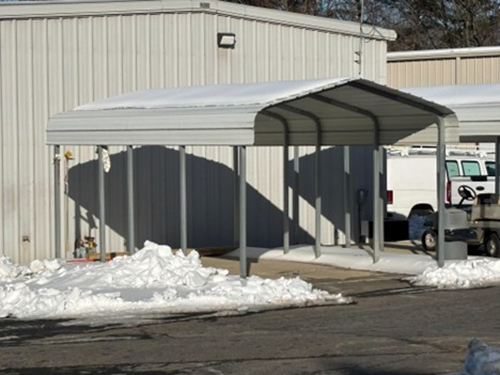
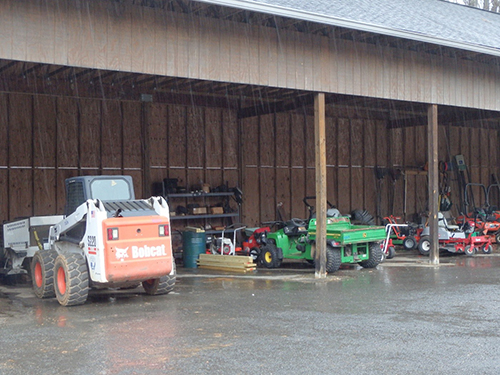
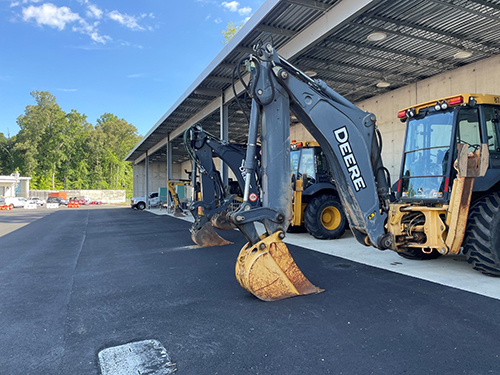
Store vehicles and equipment indoors or under cover whenever possible.
Do not store vehicles or equipment near storm drains, ditches, or waterways. Clean up leaks and spills immediately according to Spill Prevention and Response procedures.
Assign numbered parking spaces when practical to help identify leaks.
Do not park or store equipment under trees where debris may accumulate.
Keep vehicles and equipment clean to prevent oil and grease buildup.
Surplus Vehicles and Equipment
Do not store surplus equipment for more than 180 days whenever possible.
Maintain an inventory of surplus vehicles and equipment.
Remove and properly manage fluids before long-term storage.
Remove or dispose of surplus equipment promptly.
Recommended Signage
Clearly identify vehicle and equipment storage areas.
Mark designated areas for draining fluids from surplus equipment.
Post reminders that vehicles may only be washed in approved locations.
Maintain storm drain markings where required.
Daily
Check vehicles, equipment, and fueling areas regularly for leaks and drips.
Clean up spills and leaks immediately. Use dry cleanup methods and do not hose down contaminated areas.
Collect and properly dispose of used absorbent materials.
Sweep parking lots, maintenance areas, and storage areas to remove debris.
Weekly
Inspect and restock spill kits.
Inspect fueling tanks, pumps, pipes, and equipment for damage, leaks, corrosion, and overfills.
Repair damaged hoses, leaking gaskets, and other equipment issues promptly.
Monthly
Inspect containment structures for cracks, damage, or leaks.
Have aboveground storage tanks inspected or tested as required.
Inspect parking areas and nearby storm drains for signs of pollution or drainage problems.
Inspect incoming vehicles and equipment for leaks before placement in storage.
Waste Management
Waste Management
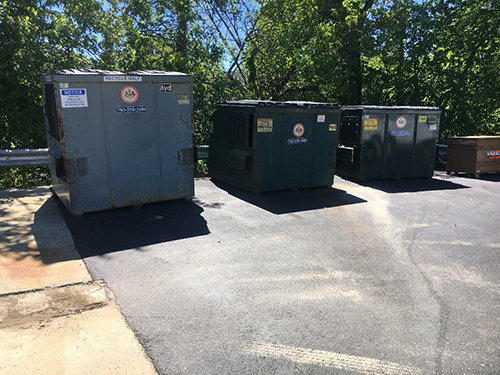
Keep rainwater away from waste materials. Whenever possible, store waste containers indoors or under a permanent roof.
Cover waste materials before it rains to prevent leaks and exposure to rain.
Keep collected waste out of high-traffic areas to prevent spills and accidental tipping.
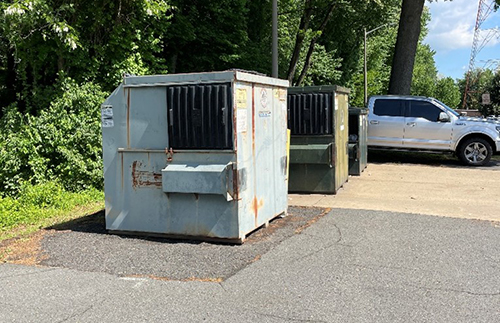
Inspect dumpsters often. Make sure drain plugs are in place, and repair or replace containers with missing plugs, rust, or holes.
Recycle whenever possible, including cardboard, bottles, cans, vehicle fluids, and metals.
Solid Waste Management
Train employees in waste management procedures, including types of waste, where they belong, and how to sort them.
Label all waste containers clearly. Do not mix liquids with solids or different waste types.
Do not overfill containers. If they overflow often, request larger containers or more frequent pickups.
Material Handling
Cover outdoor waste piles with a roof or waterproof tarp. Secure all covers to prevent wind or rain from moving them. Check covers regularly for damage and replace them when needed.
Inspect storage areas, containers, and covers every day and before rain events. Move materials to covered storage if a container is damaged.
Sweep storage areas regularly. Do not hose down waste areas into storm drains.
If non-hazardous liquids spill inside a dumpster, apply absorbent materials like kitty litter and then dispose of them in the proper waste container. Never dispose of any waste in the stormwater system.
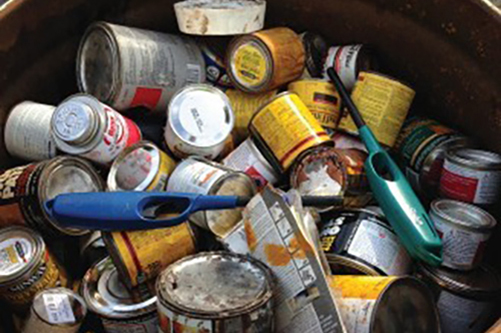
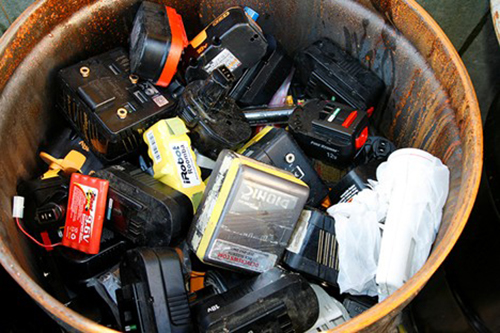
Hazardous waste should always be stored properly:
Choose a container material that will not corrode. Regularly check that there are no spills or leaks.
Tightly seal all container lids.
Label hazardous waste containers.
Keep hazardous waste off the floor and out of the elements.
Empty pesticide containers completely before disposal. If pesticides remain, take them to a hazardous waste collection site. Triple rinse empty containers in a sink connected to the wastewater system and follow all label directions. Spray rinsate in designated pest treatment areas following written county guidance.
Do not throw fluorescent light bulbs in the trash.
Store used bulbs in a designated area.
Dispose of them at the I-66 Transfer Station or the I-95 Landfill Complex.