Office of Environmental and Energy Coordination

CONTACT INFORMATION: Our office is open to visitors by appointment only. Please call or email from 8:00 a.m. - 4:30 p.m., Monday through Friday.
703-324-7136 TTY 711
12000 Government Center Pkwy, Suite 533
Fairfax, VA 22035
John Morrill
Director

OES: Goods and Services

Fairfax County is dedicated to developing responsible and sustainable sourcing strategies that align with its environmental, climate action, and social equity goals.

Both the Operational Energy Strategy (OES) and the Zero Waste plan identify sustainable procurement as a key strategy for reducing greenhouse gas emissions and overall waste.

On this page, you’ll find more information about how Fairfax County is encouraging and increasing the purchase of environmentally preferable products and services.

Target: Review purchases and develop a sustainable purchasing program.

Progress: Fairfax County’s Department of Procurement and Material Management analyzed the greenhouse gas emissions from the county and schools’ $1 billion supply chain. Based on this assessment — along with the Zero Waste Plan, the One Fairfax Policy and other county priorities — DPMM is now developing a Sustainable Procurement Policy.


Learn More About Sustainable Procurement

Sustainable procurement involves selecting products and services that reduce environmental and climate impacts while aligning with long-term sustainability goals.

Key practices include:

  • Environmental Responsibility in Purchasing: Minimizing the purchase of new products whenever possible by purchasing only what is needed, procuring second-hand, and renting or leasing when appropriate. Then, prioritizing products that minimize waste, reduce negative impacts on the environment, discourage single-use items, and emphasize recycled content, low toxicity, and durability.
  • Carbon Reduction in Supply Chains: Adopting low-carbon procurement policies and practices, sourcing low-carbon, carbon-neutral, or carbon-negative products, and engaging suppliers to decrease their own emissions.
  • Energy Efficiency Standards: Ensuring appliances and equipment meet high-efficiency standards such as ENERGY STAR® and EPEAT® certifications.
  • Supplier Accountability and Circular Economy: Promoting partnerships with suppliers who engage in reuse, take-back, recycling, and other circular economy practices.
  • Sustainable Practices for Contractors: Encouraging contractors working with Fairfax County to incorporate environmentally sustainable practices into their operations.

For more detail, visit these pages from the Department of Procurement and Material Management (DPMM):

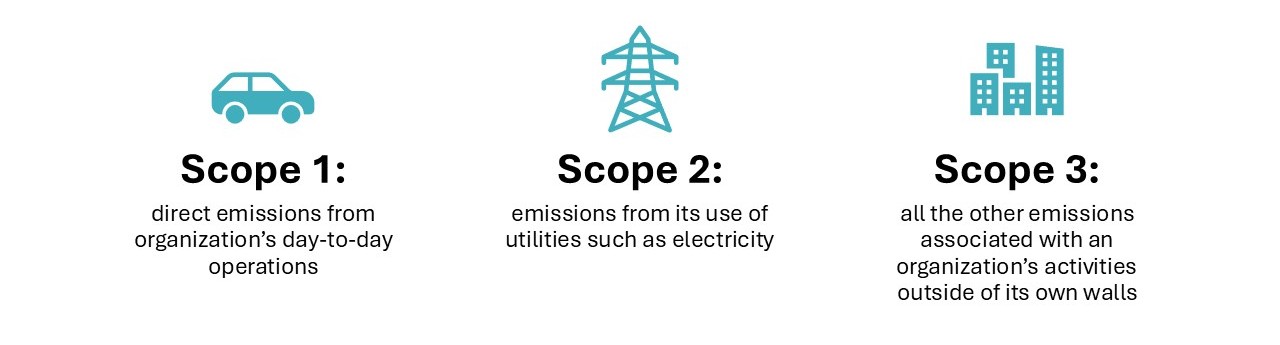
Greenhouse gas emissions are categorized into three scopes to help organizations understand their climate impact. 

  • Scope 1 emissions are direct emissions from operations, such as emissions from county vehicles or on-site fuel combustion.
  • Scope 2 emissions are indirect emissions from purchased energy, like electricity or purchased steam for heating in buildings.
  • Scope 3 emissions, however, include all other indirect emissions that occur outside of direct operations, such as those from purchased goods, construction projects, waste disposal, and other supply chain activities.

Scope 3 emissions often surpass the emissions from Scopes 1 and 2 and present significant opportunities for Fairfax County to reduce its overall carbon footprint.

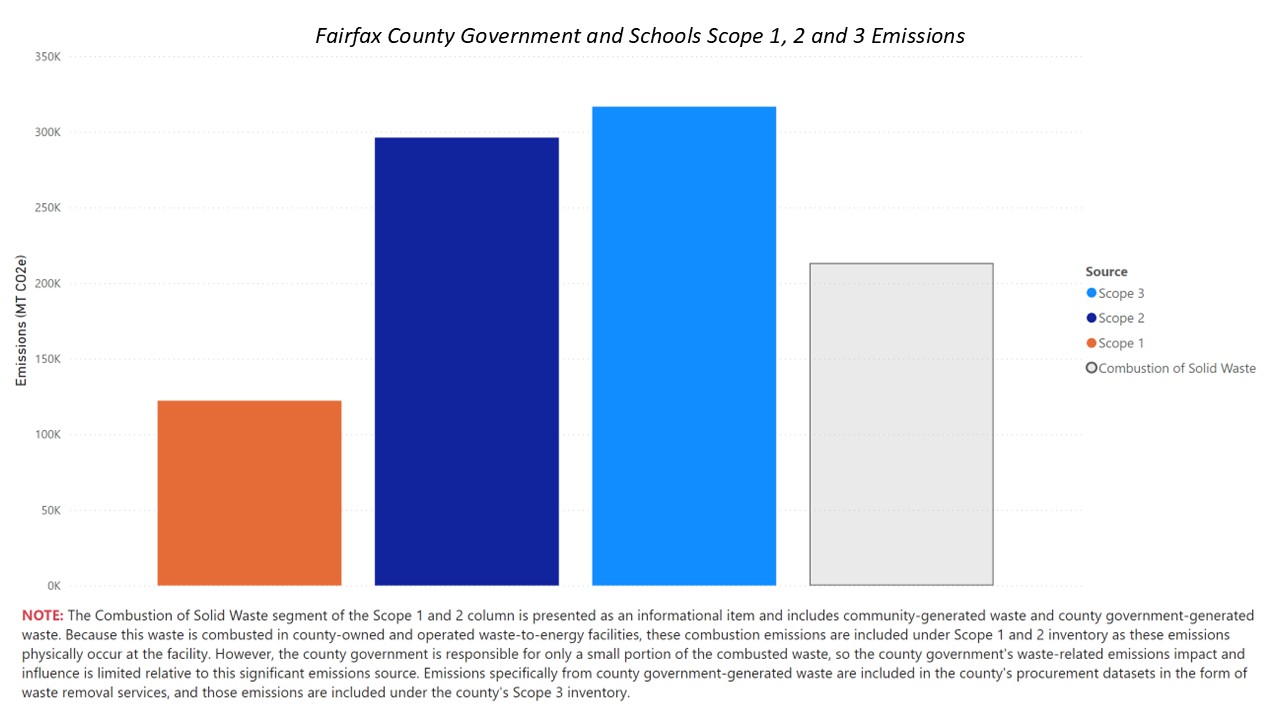
To better understand the county’s impact on the climate, DPMM conducted an analysis to estimate the greenhouse gas emissions of the county and schools’ $1 billion supply chain (purchased goods, services, and capital construction), as well as the waste generated in its operations. By conducting an analysis of Scope 3 emissions, the county gains insight into key categories driving emissions and identifies actionable strategies to reduce its overall carbon footprint. DPMM’s analysis focused on three Scope 3 categories: Purchased Goods & Services, Capital Construction (together the “supply chain”), and Waste.

DPMM used a model from the U.S. Environmental Protection Agency to estimate emissions from county and school purchases in fiscal year 2023. This data is now helping the county develop strategies for more sustainable purchasing practices.

Note: The methodology used in this analysis provides only a high-level overview to identify general areas of opportunity.
 

Click here to enlarge this chart. 

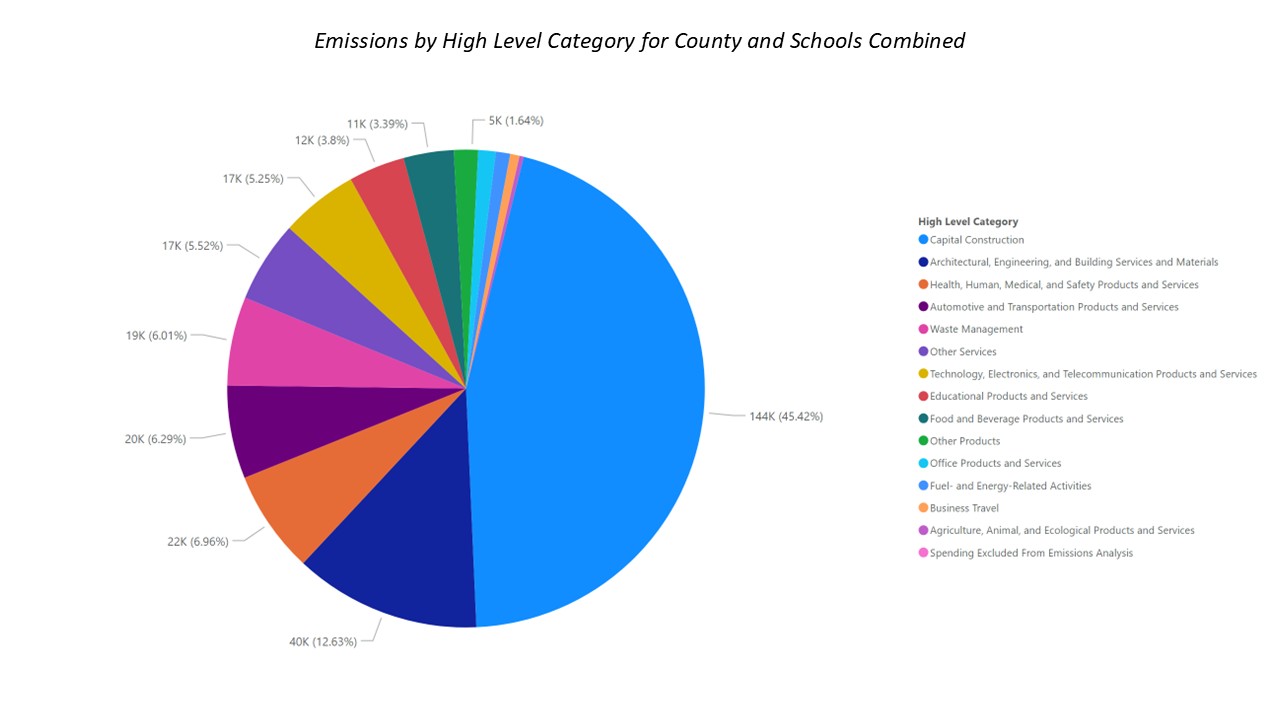
The Scope 3 analysis revealed that emissions from Fairfax County and schools’ supply chain surpass direct emissions from operations such as vehicles and facilities, emphasizing the critical impact of indirect emissions. The largest contributors include high-impact categories such as construction, health and human products/services, automotive and transportation, waste management, and technology. These findings underline the importance of targeting procurement practices and supply chain management as part of the county’s ongoing efforts to advance climate goals and reduce greenhouse gas emissions.

Key Takeaways:

  • Total Emissions: Scope 3 emissions from the county and schools’ supply chain are higher than direct emissions from vehicles and facilities.
  • High-Impact Categories:
    • Construction
    • Health and Human Products/Services
    • Automotive and Transportation
    • Waste Management
    • Technology

Click here to enlarge this chart. 

The Scope 3 analysis complements Fairfax County’s department-specific efforts and operational adjustments. By targeting emissions within its supply chain, the county aligns with broader sustainability objectives such as carbon neutrality and its Zero Waste Plan while fostering innovation and accountability in procurement.

How Departments Can Use This Data:

The Scope 3 analysis provides actionable insights to help departments reduce supply chain emissions. By leveraging the findings, departments can implement strategies to make procurement more sustainable:

  • Strategy 1: Data-Driven Procurement: Use analysis insights to prioritize high-impact categories and structure procurement processes to capture emissions data from suppliers for future analyses.
  • Strategy 2: Supplier Practices: Engage suppliers to improve their sustainability performance and emphasize responsible business practices through solicitation processes.
  • Strategy 3: Lower-Carbon Alternatives: Procure sustainable materials such as low-carbon construction materials, office supplies, and electronics to minimize environmental impact.
  • Strategy 4: Reduce and Reuse: Identify opportunities for bulk purchasing, reuse durable products, and procure second-hand items to reduce waste and emissions.

These strategies can help procurement leaders align purchasing practices with Fairfax County’s sustainability and carbon reduction goals. Examples include:

  • Prioritizing lower-impact goods.
  • Addressing emissions-heavy categories.
  • Revising purchasing policies to incorporate sustainability.
  • Building partnerships with suppliers to create sustainable solutions.

Countywide Climate Impact:

Fairfax County plans to scale these efforts while maintaining fiscal responsibility. Collaboration with both internal departments and external partners will help expand climate-positive procurement practices and further reduce supply chain emissions.
 

County Government Energy Data

Curious how much electricity and natural gas is being used in Fairfax County facilities? The Fairfax County Government Energy Data page includes overall energy use, cost and emissions data for buildings and facilities managed by the county's Facilities Management Department (FMD) and Park Authority (FCPA).


Operational Energy Strategy (OES)

The Operational Energy Strategy promotes cost-effective solutions and an energy-conscious culture for county government operations. The plan sets goals, targets and actions across major focus areas – including building energy and water use, fleet electrification, and waste management.


Zero Waste

Fairfax County's Zero Waste program takes a holistic approach to minimizing solid waste in county facilities by rethinking not only how we dispose of materials, but also what we use and how we use it.


Sustain Fairfax Challenge

Ready to be more sustainable at home? Sign up for the Sustain Fairfax Challenge to track sustainable purchases and climate actions at the individual level.


Fairfax Virtual Assistant