

Written by Emily Burton, Operation Stream Shield Program Manager
This blog is part of a continuing series highlighting programs and initiatives supported by the Plastic Bag Tax, a five-cent fee on disposable bags designed to reduce plastic pollution. Over 7 million fewer plastic bags have been used since the tax took effect in January 2022. Revenue from the tax helps fund community-based litter clean-up efforts and environmental education initiatives like this one.
What if cleaning up our streams and public spaces could also help people build a path toward stability?
That is the idea behind Operation Stream Shield (OSS), a Fairfax County program that brings together environmental protection and employment opportunities. Launched as a pilot in 2019, OSS has grown into a countywide partnership between the Department of Public Works and Environmental Services and the Office to Prevent and End Homelessness. The program provides temporary, part-time employment to people experiencing homelessness while they work to remove litter from Fairfax County’s waterways, roadsides and public spaces.
Participants work in teams across the county, collecting litter and documenting what they find. They are paid for their work while also connecting with employment and supportive services. For many participants, OSS is more than a cleanup job. It can be an opportunity to build work experience, establish a routine and take another step toward permanent employment and housing stability.
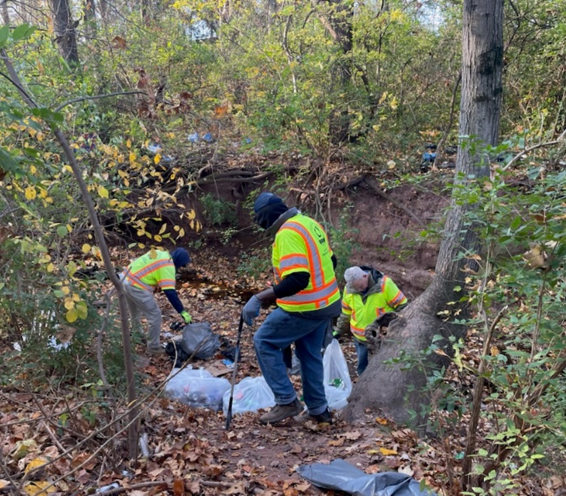
Every bag of litter removed from the environment makes a difference. Trash left on the ground can be carried by rainwater into storm drains and streams and eventually reach the Chesapeake Bay. Removing that litter helps protect local waterways and the communities and ecosystems that depend on them. Since 2020, OSS teams have removed 37,656 bags of litter across Fairfax County. The work also gives participants an opportunity to see the impact they are making firsthand as they improve parks, roadsides and stream corridors over time.
Environmental challenges do not exist separately from the challenges people face in their daily lives. OSS recognizes that a healthy community includes both a healthy environment and opportunities for people to participate in that community. The program is built around partnerships with county staff, nonprofit organizations, employment specialists and community partners working together to support participants and coordinate cleanup activities. OSS teams also use mapping tools to document where work takes place and where litter is collected, helping the county understand cleanup needs and track the program’s impact.
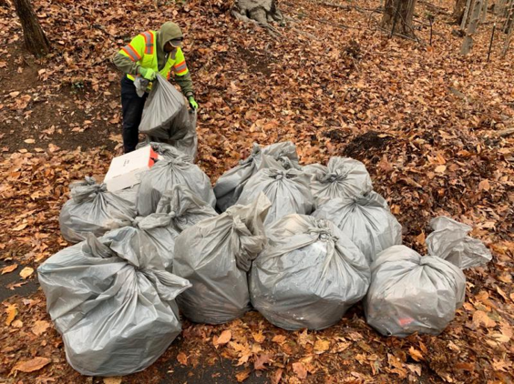
There is no single solution to environmental challenges, but there are many opportunities to make a difference. Operation Stream Shield shows what can happen when environmental protection and community support are approached together. Behind every bag collected are people showing up, working together and making a difference in the places they call home.
Cleaner streams. Cleaner communities. New opportunities.
Additional Resources
- Fairfax County Department of Public Works and Environmental Services
- Fairfax County Stormwater Management
- Fairfax County Office to Prevent and End Homelessness
Emily Burton is an MS4 Program Specialist and the Operation Stream Shield (OSS) Program Manager with Fairfax County’s Stormwater Planning Division within the Department of Public Works and Environmental Services (DPWES). She supports compliance with the County’s Municipal Separate Storm Sewer System (MS4) permit and manages the countywide OSS program, a partnership between DPWES and the Office to Prevent and End Homelessness (OPEH) that provides temporary work opportunities and environmental stewardship activities for individuals experiencing homelessness. Emily holds a Bachelor of Science in Fisheries Management from Virginia Tech and a Master of Science in Environmental Management from the University of Maryland.
Climate Matters is the blog of Fairfax County’s Office of Environmental and Energy Coordination, where we share stories, insights and information related to climate change and environmental sustainability. Posts are written by knowledgeable and passionate OEEC staff members and guest authors. To read all blog posts, visit Climate Matters.