Fairfax County, Virginia
Fairfax County Virginia

FFX Global Navigation

    • Department Homepage
    • About Us
    • General FAQs
    • Frequent Referrals / Derivaciones Frecuentes
    • Flyers
    • Records Requests (FOIA)
    • Report a Violation
    • Submit Customer Feedback
  • Residents
    • Animals & Pets
      • Adoptions
      • Animal Control & Regulations
      • Guide to Dogs
      • Lost & Found Pets
      • Shelter Support & Supplies
      • Wildlife
      • More
      Courts & Legal
      • Case Information
      • Circuit Court Docket
      • Jury Duty
      • Land Records
      • Magistrate
      • Public Law Library
      • Self-Help Resources
      • Traffic Court
      • Vital Records
      • More
      Environment & Energy
      • Invasive Species
      • Litter
      • Recycle, Trash & Compost
      • Sustain Fairfax
      • Trees
      • Watersheds
      • More
      Health & Human Services
      • Basic Needs & Assistance
      • Disability Services
      • Diseases & Conditions
      • Domestic & Sexual Violence
      • Health Clinics
      • Mental Health
      • Opioids
      • More
      Individuals & Families
      • Children & Youth
      • Federal Workforce
      • Immigrants
      • Military & Veterans
      • New Residents
      • Older Adults
      • Parents
      • People with Disabilities
      • Volunteers
      • More
      Land Use & Planning
      • Comprehensive Plan
      • County Capital Projects
      • Land Records
      • Parks Planning
      • Planning Projects
      • Research Tools
      • Transportation Projects
      • Urban Centers
      • More
      Library & Education
      • Adult Education
      • Early Childhood Programs
      • Library Branches
      • Library Catalog Search
      • Public Schools
      • More
      Parks & Recreation
      • Arts
      • Athletic Fields
      • Camps
      • Community Centers
      • Parktakes Classes
      • Rec Centers
      • Senior Centers
      • Teen Centers
      • Trails
      • More
      Permits & Licenses
      • Birth & Death Certificates
      • Building
      • Child Care
      • Dogs
      • Health
      • Marriage
      • Park Use
      • Solicitors
      • More
      Property & Housing
      • Affordable Housing
      • Code & Zoning
      • Neighborhoods
      • Real Estate Values
      • Recycling & Trash
      • Tenant Landlord Issues
      • Utilities
      • More
      Public Safety & Emergencies
      • 9-1-1
      • Emergency Preparedness
      • Fire & Rescue
      • Gun Violence Prevention
      • Police
      • Scams
      • Sheriff
      • Storm Center
      • More
      Roads & Commuting
      • Bike & Walk
      • Connector Bus
      • Metrobus & Metrorail
      • Park & Ride
      • Pedestrian Safety
      • Road Maintenance/VDOT
      • Street Parking
      • Toll Roads
      • Transportation Projects
      • More
      Taxes & Fees
      • Car Taxes
      • Park Fees
      • Real Estate Taxes
      • Tax Relief
      • Trash Disposal Fees
      • More
      Voting & Elections
      • Absentee Voting
      • Early Voting
      • Election Results
      • Polling Places
      • Voter Registration
      • More
      Weather & Climate
      • Air Quality
      • Climate Action Dashboard
      • Extreme Heat
      • Floods
      • Ready Fairfax
      • Resilient Fairfax
      • Snow
      • Tornadoes
      • More
  • Business
    • Business & Construction
      • Building Permits
      • Code & Zoning
      • Land Use
      • More
      Business Services
      • Business Emergency Preparedness
      • Business Taxes
      • Consumer Services
      • Employer Transportation Service
      • Green Business Partners Program
      • Home-Based Business
      • Regulation & Licensing
      • Small Business
      • Starting a Business
      • Workplace Issues
      • More
      Doing Business with Fairfax
      • Contracting and Procurement
      • Current Solicitations
      • Permits
      • Vendor Pitch Portal
      • More
  • Government
    • About
      • Codes & Standards
      • Countywide Strategic Plan
      • Facilities & Locations
      • History of Fairfax County
      • Operating Status
      • More
      Board of Supervisors
      • Auditor
      • Board Members
      • Boards, Authorities & Commissions
      • Clerk Services
      • Committees
      • Meetings & Agendas
      • More
      Budget & Finance
      • Bonds
      • Budget
      • Financial Transparency
      • Unclaimed Money
      • More
      Departments & Agencies
      Jobs & Employment
      • Full-Time Openings
      • Internships
      • Seasonal & Non-Merit
      Maps & Data
      • Countywide Data Analytics
      • Demographics
      • Geographic Information Systems
      • Interactive Data Tools
      • More
      One Fairfax
      • Digital Equity
      • Inclusive Engagement
      • Trust Policy
  • Fairfax County Virginia
  • Services
    • Find
      • Animal Services
      • Health Clinics
      • Jobs
      • Library Resources
      • Lost or Found Pet
      • Mental Health Support
      • Park Classes
      • Real Estate Values
      • Recycling & Trash
      • Volunteer Opportunities
      • More
      Pay
      • Business Taxes
      • Car Taxes
      • Dog Licenses
      • Driving & Parking Fines
      • False Alarm Fees
      • Real Estate/Property Taxes
      • SACC Payments
      • More
      Register/Apply
      • Basic Needs & Assistance
      • Building Inspections
      • Car Registration
      • Fairfax Alerts
      • Permits & Licenses
      • Tax Relief
      • Vote
      • More
      Report
      • Animal Control Issues
      • Consumer Complaints
      • Crime
      • Domestic Violence
      • Financial Crimes
      • Neighborhood Complaints
      • Road Issues to VDOT
      • Street Light Outages
      • More
  • Connect
    • Alerts, Emails & Apps
      • Email Subscriptions
      • Fairfax Alerts
      • Mobile App
      • More
      Community Engagement
      • Surveys & Projects
      Contact
      • Directory
      • Hotlines & Emergency Numbers
      • VDOT
      • VFOIA Requests
      • More
      News & Events
      • Daily Headlines
      • Emergency Information Blog
      • Events Calendar
      • NewsCenter
      • NotiCentro (Spanish)
      • Public Meetings Calendar
      • More
      Social Media
      • Comments Policy
      • Directory of Accounts
      • More
      TV, Video & Podcasts
      • Channel 16
      • Podcasts & Radio
      • YouTube
      • More
  • TRANSLATE
    • Language Selection

      To change the language of this website, click the drop-down list and select the desired language. The Fairfax County Web site is being translated through "machine translation" powered by Google Translate. Disclaimer

Code Compliance

  1. Home
  2. Code Compliance
  3. Do You Need Help?

Code Compliance Alert:

CONTACT INFORMATION: Code Compliance is open 8AM - 4PM Mon-Thurs and 9:15AM - 4PM Fridays.
703-324-1300 TTY 711
codecompliance@fairfaxcounty.gov
12055 Government Center Parkway, Suite 1016
Fairfax, VA 22035
Gabriel M. Zakkak
Director

Department Resources

  • Department Homepage
  • About Us
  • General FAQs
  • Frequent Referrals / Derivaciones Frecuentes
  • Flyers
  • Records Requests (FOIA)
  • Report a Violation
  • Submit Customer Feedback

Related Resources

  • Hoarding Home
  • Dangers & Health Risks
  • Do You Need Help
  • Do You Suspect Hoarding
  • FAQs
  • Hoarding Strategies
  • Submit a Hoarding Complaint
  • What is Hoarding?

Do You Need Help?


hands with scissorsDo you experience any of the following symptoms?

  • You have acquired or saved an excessive number of possessions and you have run out of space to put anything new.
  • Your home is not a sanctuary for comfort any longer and you are embarrassed to bring anyone home due to the clutter.
  • You have difficulty discarding possessions and organizing what you have.
  • You demonstrate intense positive feelings (euphoria) for obtaining new items.
  • You demonstrate intense negative feelings (disgust, anger, anxiety) for removing items.
  • You do not believe you have a problem, despite the fact that you cannot live and move freely inside your home.
  • Everything is “valuable” or “useful” to you, despite other people not thinking so.

If you answered “yes” to any of these questions, there are many ways to get the professional help that is needed.

A Message of Hope from a Fairfax County Resident


What Can I Do?

  • Create small goals, and complete one goal at a time before starting another goal.
  • Do not move more things back into that space once it is deemed a “clear area.”
  • Utilize the “One Touch Rule”- Pick up an item and make a decision about it:  throw away, give away, put away, or donate.  Then do it immediately- you only touch it once.
  • Utilize “Two Day Purchase Rule” when shopping.  Stick to a list of things you need to buy and write down items not on your list that you want to buy.  Then wait two days to decide whether you should go back and make the purchase.  If you decide to buy, for every item you buy, one item of equal size must be removed from your house.
  • To overcome indecisiveness: all items deemed “put away” need a designated space in the house.  This space should be designated as the “resting spot” for that item, where it “lives” when you are not using it.
  • Do not make a pile for items to decide what to do with later or to discard later.  Take action now before you have second thoughts.
  • Items that have not been used for a year or more should be evaluated for their purpose and discarded if the space could be given to something more useful or meaningful.
  • Get rid of anything you do not like, regardless of who gave it to you.
  • If something in your house could be useful, but you cannot find an immediate use for it, donate it!  You can give things to charities and help people less fortunate than you.
  • Throw away anything moldy, broken, rotting, or attracting pests.  There is no more use for these items.
  • Remind yourself that possessions do not have feelings and are not living beings.  Things do not have a “need” to stay with you.  Don’t let stuff replace real relationships with friends and family.
  • Seek the help of others when you cannot move forward: friends, family, professional organizers. Don’t be embarrassed.
  • Remember... you have the power to create change!

  • Remove items from behind the front, back and/or side doors so they can swing completely open.
  • Make sure there is a working smoke detector on every level of the home. Depending on when the home was built, you could also be required to install them in each sleeping room. However, this is always a good idea to do for increased safety. Smoke Detectors should have adequate clearance around them to allow smoke to flow and trigger the alarm when needed.
  • Clear clutter or furniture blocking windows in rooms where people sleep.
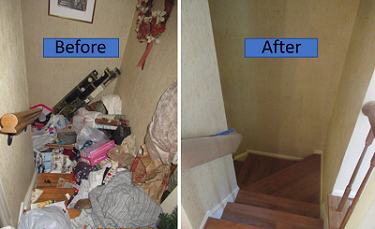
  • Make sure the stairs and hallways are completely free of any possessions.
  • Clear items away from sources of heat, especially gas appliances like the furnace, water heater, electric panel box, or stove.
  • Do not use space heaters as permanent sources of heat and DO NOT sleep with them on.
  • If you only have narrow pathways as the route of travel through your house, a 3-foot-wide path needs to be restored and ensure items are not stacked up to the ceiling.
  • Do not have excessive amounts of combustible materials, such as magazines, newspapers or papers.  This will spread fire more quickly and reduce the chance of escape.
  • Make litter pans accessible to cats in the house and clean them out; give dogs access to the exterior.
  • Spay and Neuter your animals to reduce breeding.  Overbreeding can lead to increased ammonia in the air and compromised air quality.
  • Make exterior repairs to the home to seal any entry points for pests, which could be carrying diseases into your home or gnawing wires that could lead to fires.
  • Ensure all smoke alarms are in proper working order.

DO
  • Always keep in mind that hoarding is a common problem and is not unique to your family or friend.
  • Be respectful and let your actions build trust.  Take on a role of supporter or encourager.  Stay sympathetic when the person shows symptoms of grieving over their possessions.
  • Steer clear of conversations about sanitation, but focus on their health, happiness, or future plans and express that doing something now will get them there. 
  • Give the person choices and some decision-making power, so they feel in control of the situation.
  • Ask questions about their fears and concerns and be a good listener, as this will be key in understanding how to motivate them.
  • Create small, workable, and concrete goals together and complete one at a time.  Help the person overcome any obstacles and include them in any clean-up plan.
  • Focus on developing the person’s decision-making skills in order to assist them in making better choices about their possessions. 
  • Make donating an appealing topic by explaining how it will help others less fortunate.
  • Restoring social life is a great approach to the need to discard possessions.  Make it clear friends and family care about them and want to see them again in their home.
  • Encourage and praise momentum, even small victories.
  • Seek help from a professional therapist to help navigate the situation if the person will not attend sessions himself or herself.
  • Try to access underlying cause(s) for why hoarding occurred in the first place (i.e. trauma, health issues, indecisiveness or bad organizational skills).  Try to get them help for this issue.
  • Realize that until a person is internally motivated to clean their house and get help, they will probably not be willing to take any of the necessary steps to change.
DON’T
  • First and foremost, never leave someone in an unsafe situation by ignoring or avoiding the situation.  Many hoarding events go unnoticed or unassisted until it is too late.
  • Don’t be afraid to ask for help from Fairfax County or from some supportive source.  Often this is a complicated problem that requires many types of professionals to help resolve.
  • At no time is it appropriate to give therapy if you are not a licensed therapist.
  • When speaking to someone with Hoarding Disorder, do not be judgmental, shame or blame them, or cause them to become defensive.
  • It does not motivate people with Hoarding Disorder if you threaten to end a relationship.
  • Don’t be impatient.  Change will not happen overnight and progress will have to be monitored for the rest of their lives.
  • Once a home is restored from a hoarding situation, do not assume the job is done.  Recidivism is a problem for many people with Hoarding Disorder.
  • Do not argue with someone over a particular item.  Focus your energy on the big picture and keep them motivated to discard anything. 
  • Never threaten to or force a person to discard all of their possessions.  Additionally, always obtain consent before throwing away anything.  Being separated from possessions without their approval can often trigger a major stress reaction or depression.
  • Do not forget that individuals have rights about the way they live and the choices they make.  It might not meet your standards, but low levels of clutter may not be a violation of code.
  • In extreme cases, do not attempt to clean and organize yourself.  Instead, it is helpful to consult a professional to take a multi-angle approach.
  • Do not clean out a house without getting the person treatment for the underlying condition.  Without successful treatment, this attempt will fail.

When Is Intervention Necessary?

holding handsIf you have tried an intervention yourself by approaching someone with Hoarding Disorder and were not successful OR you know someone that has a problem but you don’t know how to help, there are local county agencies that can be of assistance.  Houses on the verge of collapse, or where adults, children, or animals are being neglected or abused may require emergency interventions.  Additionally, local authorities can be the catalyst for change to help an individual receive the help and/or treatment needed to return to a normal, safer lifestyle. 

Hoarding Disorder is a complex issue that affects, adults, children, animals, structures, and even can cause risk to the community, especially in apartments, condos and townhomes that share walls.  There can be various code violations across different code books and ordinances.  People suffering with Hoarding Disorder will need treatment and coaching to change their lifestyle and help to clean up their home.

Because Fairfax does not provide mental/physical health care or monitoring, the private sector becomes a large player in the resolution as well.  Finding a safe and fast resolution to structural concerns and a long-term solution for an individual’s needs means that many different groups have to come together for effective transformation.  Intervention is necessary to activate the different players in the solution.  No one person can resolve serious hoarding circumstances on their own.

Treatment Options & Other Resources

Fairfax County does not provide services for mental/physical health care aspect of Hoarding Disorder.  Therefore, these services must be accessed privately through personal health insurance plans.  However, here is an overview of treatment options:

Intervention: 

Individuals do not want help and are unwilling to change.  The most important thing to understand is that if an individual with Hoarding Disorder DOES NOT want to change his/her lifestyle or behavior, then treatment is ineffective if forced upon them.   It will not work or be successful, and it could damage your relationship with them if you try to push them in a direction that they are not ready to go.  If this is your situation, please refer to the “When is Intervention Necessary” section above for next steps.

They Are Willing: 

Individuals are ready for help and want a change.  If you or someone you know has a living situation beyond their control and yet are open to a change, then the first step is for that individual to obtain insight into their own behavior.  Next, they will need to find the mechanism or motivation to create change.  However, neither insight nor motivation alone will change the long-term hoarding behavior.  Instead, intensive professional treatment should be obtained.  Treatment can help people with this disorder understand how their beliefs and behaviors must be changed to live safer and happier lives.

To get this end result, the private sector involvement is vital in the prevention and treatment of Hoarding Disorder.  The professional, unbiased, unjudgmental approach often is the key to reaching afflicted individuals and focusing on their specific needs. 

This includes:

  • Finding and joining hoarding support groups, both for the client and the family
  • Utilizing hoarding coaches to help build skills
  • Hiring professional organizers to help classify things and do heavy disposing
  • Contracting mental health clinics and private therapists
  • Entering psychiatric rehabilitation programs
  • Reaching out to religious groups for personal support of individuals and families

To understand the treatment options for hoarding behavior, it is first important to understand that people with Hoarding Disorder will battle this for most of their adult life.  This is a chronic condition, which needs to be continually managed.  The act of hoarding can affect relationships with friends and family and could cause individuals to feel isolated, alone or depressed.  If the onset trigger for Hoarding Disorder included experiencing a traumatic event of serious loss or living through hardship, these underlying causes must be addressed as well as the hoarding behavior itself.  Additionally, people with this disorder do not always see their behaviors as being a problem.  This makes treatment very complex and challenging.  Weekly therapy visits can extend into months or years and includes substantial habit-breaking homework.  During these visits, many intensive interventions and techniques can be used to help manage this disorder through helping people understand how to change their beliefs and behaviors.  Despite this sounding like an overwhelming process, the end result can be a return to a normal life which is socially enriching and again functional.

Treatment of Hoarding Disorder by private therapists and programs utilize a variety of strategies for a personalized treatment plan per individual. 

These strategies can include from the following list:

  • Using Medicine (i.e., anti-depressants) yields mixed results. For most people the use of medicine has not been found to be effective in treating hoarding behavior, as this behavior does not seem to be linked to neurological problems.  It has been found useful, however, to help people relax during other therapy interventions making that type of therapy more successful.
  • Coaching or Motivational Interviewing strategies improve a person’s motivation to create positive change.
  • Skill or Tolerance Building Therapy sessions allow people who are tuned into their compulsivity or indecisiveness the ability to break up the pattern and alter the hoarding behavior.  This is very helpful for people who are shop-a-holics or who might have difficulty throwing things away.  For example, it may include trips to the store to not buy anything.
  • Counseling Sessions allow people who have experienced a traumatic event evaluation and they are helped through a healing process.  The purpose of this is for the person to gain insight into why they are reacting the way they are, doing the things they are doing, and then learning how to do things differently to gain a different outcome.  For example, they will learn how to form relationships with people, so they do not have a need to love their possessions.
  • Cognitive Behavioral Therapy is a combination of skill building and counseling combined, as hoarding is based on irrational thinking patterns that sustain the behavior.  This treatment centers on challenging the irrational thoughts and substituting with reality-based thinking.  In other words, a focus on skill-based learning leads to alterations in compulsive hoarding behavior.  Some concentrations for this therapy include:
    • Challenging the hoarder’s beliefs/needs to keep everything
    • Going out without bringing home new items, including free items
    • Independently removing clutter, donating, or recycling, and organizing what remains
    • Developing a plan to prevent recidivism.  For more information about the various therapy techniques, please visit the International OCD Foundation.   

Find Shelter

  • Office to Prevent and End Homelessness - if a person becomes homeless due to hoarding, this office can help with shelter. If someone is about to become homeless, this office may be able to help with prevention. 
  • Emergency Shelters - Fairfax County has six emergency shelters for individuals and families who are homeless.
  • FACETS - to provide families and individuals with food, shelter and other essential services.

Options for Home Repair

  • Home Repair for the Elderly Program - to provide minor repairs for Elderly and Disabled Adults
  • Rebuilding Together - assistance in making repairs to improve the safety and health of owner-occupied homes

Services for Older Adults

  • Department of Family Services- Older Adults - Aging Disability and Caregiver Resource Line call 703-324-7948, TTY 711, to get information for such services as:
    • Manage Belongings, Meet Financial Obligations, Get personal Assistance
    • Assistance with Transportation Needs, Recreation and Wellness Programs, and Community Engagement
    • Meals on Wheels
    • Volunteer Solutions - call 703-324-5406, TTY 711 to talk with a volunteer coordinator about different assistance options.

Services for Individuals with Mental Illness, Substance Use Disorders, or Developmental Disabilities

  • Communities Services Board - oversees the establishment and operation of services for people who have mental illness, substance use disorders and/or developmental disabilities.  Call 703-383-8500, TTY 711.
  • Disabilities Rights and Resources - how to maintain your home and make modifications, among other resources.

Services for Persons or Families with Low Income or Experiencing Hardship

  • Coordinated Services Planning - for assistance with any difficulties- including food, shelter, employment, financial assistance, healthcare and more. View the flyer.
  • Energy Assistance Program 
  • Housing Vouchers - designed to assist low-income families with their housing needs.
  • Human Services Resource Guide

Manage Trash and Recycling

  • Public Works - General Information
  • Trash and Recycling Pickups - curbside trash and recycling, special pickups and mega-bulk collections, drop-off centers
  • Household Hazardous Waste Pickup
  • A-Z list of Trash and Recycling Topics
  • Note: If a private company collects your trash and recyclables, contact them or an alternate junk removal service to arrange for a special collection.

Find Donation Centers

  • Stuff the Bus - food donations
  • Books for Libraries
  • Hunter Mill District Donations
  • Animal Shelter Donations
  • Search Non-Profits - search by “service donation” and find non-profits and locations to accept goods and donations.
  • Get Help, Give Help - accepts various donations

Get Animal Assistance

  • Animal Protection Police - assist with a wide array of encounters between animals and humans.
  • The Fairfax County Animal Shelter
  • Animal Services Advisory Commission
  • Organizations to Assist with Financial Assistance for Pet Medical Care
  • Fairfax often partners with Nonprofit Animal Societies and Rescue Groups, which are abundant and a quick internet search.

Support Groups

  • International OCD Foundation - find Therapists, Clinics and Programs, Support Groups, and Organizations.
  • Clutterers Anonymous - resources and support meeting groups
  • Obsessive Compulsive Foundation Support Group
  • Online Hoarding Support Chat Room
  • Meet-up Hoarding Support Groups
  • Northern Virginia Support Groups
    • Arlington OCD Support Group, (703) 953-9379
    • OCD Family Support Group of Greater DC, (202) 237-1216
    • CBT for OCD, (202) 944-5410

Find a Therapist

  • Anxiety and Depression Association of America
  • International OCD Foundation

Professional Organizers

  Professional organizers are privately hired and can be utilized to:

  • provide education for making organizing decisions
  • set personal goals and boundaries for buying and discarding items
  • coordinate and/or provide services to remove item donations or trash

  Find a Professional Organizer in your area


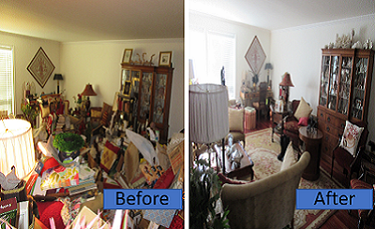
"I wanted to live the way I wanted. My things were my happiness. I never believed this could harm me. But when my house caught on fire from a faulty wire, I was never so thankful that the County had come by and had me declutter and move things. Without their intervention, I probably would not be telling this story right now. The clear pathways allowed me to escape in time."

-Resident of Fairfax County


stairs before and after trash is cleaned up    living room before and after - dirty to clean


Recent Interactions

    Ask Fairfax

    Terms & Conditions
    Live chat available Search our site

    Related Resources

    • Hoarding Home
    • Dangers & Health Risks
    • Do You Need Help
    • Do You Suspect Hoarding
    • FAQs
    • Hoarding Strategies
    • Submit a Hoarding Complaint
    • What is Hoarding?
    • Translate
    • Awards
    • Site Feedback
    • PRIVACY POLICY & COPYRIGHT
    Main Address

    12000 Government Center Pkwy
    Fairfax, VA 22035

    Phone

    703-324-7329

    TTY 711

    Site Tools
    • Website Accessibility
    • Translate
    • Download Mobile App
    Support
    • ADA Accessibility
    • FOIA Requests
    • Website Administrator
    Additional Resources
    • Fairfax County Public Schools
    • Economic Development Authority
    • Visit Fairfax
    • Council of Governments
    • Commonwealth of Virginia
    • USA.gov
    • Calendar
    • Channel 16
    • Mail
    • Security
    • WIFI
    • Facebook
    • Twitter
    • Instagram
    • YouTube
    • Mobile

    The Official Site of Fairfax County