Search the Health Department
Updates from the Health Department
February 13, 2026
From the Virginia Department of Health (VDH)Due to reports of sewage spills in the Potomac River and the anticipated timeline for repairs, the Virginia Department of Health (VDH) is issuing a recreational water advisory for Virginia residents. For the safety of people and pets, VDH is advising Virginia residents to avoid recreational water activities in the Potomac River, such as swimming, wading, tubing, white-water canoeing or kayaking, where full-body submersion is more likely to occur.The advisory is being issued out of an abundance of caution due to a sewage spill in the Potomac River that occurred on Jan. 19, and subsequent reports of a sewage discharge Feb. 7. The timeline for the repair is estimated to be four to six weeks. The advisory area extends for 72.5 miles from the American Legion Memorial Bridge (I-495) in Fairfax County to the Governor Harry W. Nice Memorial Bridge (Route 301) in King George County.VDH has observed no evidence of impacts to drinking water at this time. For updates on the repair status, visit DC Water. For updates on Virginia impacts and to find links to the Maryland and DC agencies responding to this incident, please visit the VDH Sewage Spill page.To prevent recreational water illnesses due to exposure to sewage spill events, people should:Avoid contact with water in the advisory area and observe advisory signage posted at waterbody access points.Avoid any area of the water body where water has a foul odor, dead or dying fish, or discolored water.Promptly wash skin with soap and water if you cannot avoid contact with water in the vicinity.Rinse or wash items that come into contact with the water, including clothing, fishing gear, life vests, ropes and paddles.Seek medical care and notify your practitioner of the waterbody exposure if you experience adverse health effects after contact with the waterbody.When harvesting fish or crabs, discard skin, organs, cook the meat to proper temperature, and clean cutting boards and cutting implements with warm soapy water.For more information on recreational water safety, visit SwimHealthyVA.com.###
February 6, 2026
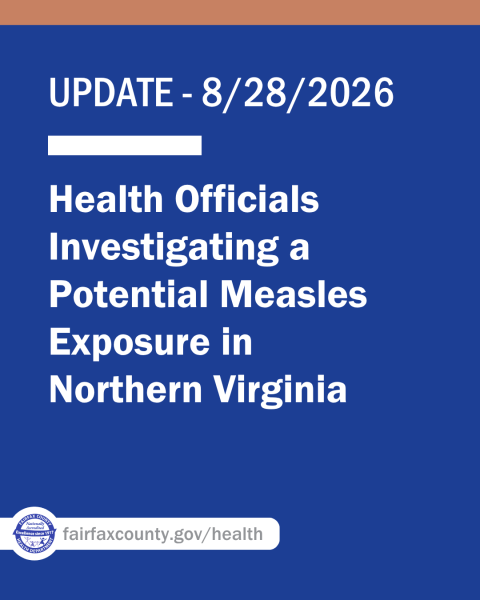
From the Virginia Department of Health (VDH)The Virginia Department of Health (VDH) is reporting a confirmed case of measles in a resident of the Northern Region. The patient is a pre-school age child (0-4 years). Additionally, VDH was notified of a confirmed case of measles that is a resident of another state and traveled through Ronald Regan Washington National airport on January 26. To protect the patients’ privacy, VDH will not provide any additional information about the patients. Health officials are coordinating an effort to identify people who might have been exposed.Listed below are the dates, times, and locations of the potential exposure sites in Virginia:Heathcote Health Center, located at 15195 Heathcote Blvd. in Haymarket between 1:15 p.m. and 4:15 p.m. Thursday, January 29.Ronald Reagan Washington National Airport, Terminal 2, located at 2401 Smith Blvd, Arlington between 12:30 pm and 10:30 pm Monday, January 26.Washington Area Metro on Monday, January 26:Red Line Train from Brookland – CUA station transferring at the Gallery Place – Chinatown station to the Yellow Line Train heading towards the Huntington Station between 11:30 a.m. and 2 p.m.Yellow Line Train from Ronald Reagan Washington National Airport station transferring at the Gallery Place – Chinatown station to the Red Line Train heading towards the Glenmont station between 8:30 p.m. and 11:30 p.m.To date in 2026, Virginia has reported six cases of measles. Any additional exposure sites identified in Virginia will be posted to the VDH Measles website.What to Do If You Have Been Exposed to MeaslesMost people in Virginia have immunity to measles through vaccination, so the risk to the general public is low. However, anyone who was at the potential exposure sites at the times listed should:Report your exposure to VDH by completing this short survey. Public health officials will follow up with respondents if additional actions are needed.Find out if you have been vaccinated for measles or have had measles previously. Make sure you are up to date with the recommended number of measles (MMR) vaccinations.To check your immunization status, call your healthcare provider or request records through the VDH Record Request Portal.If you have received two doses of a measles-containing vaccine, or were born before 1957, you are considered protected and do not need to seek post-exposure treatment at this time.People who are not fully vaccinated or otherwise immune to measles should contact their healthcare provider or call their local health department promptly to discuss any questions they might have. If you have already completed the above survey, your local health department will reach out to you to provide recommendations if additional actions are needed.Watch for symptoms of measles for 21 days after the potential exposure. Monitoring for symptoms is especially important for people who are not fully vaccinated or otherwise immune to measles.If you notice symptoms of measles, immediately isolate yourself by staying home. Contact your healthcare provider right away. If you need to seek healthcare, call ahead before going to your healthcare provider’s office or the emergency room to notify them that you may have been exposed to measles and ask them to call the local health department. This call will help protect other patients and staff.The most likely time you would become sick from these exposures is by February 19, 2026.Contact your local health department or email epi_response@vdh.virginia.gov to discuss any additional recommendations.General Measles InformationMeasles is a highly contagious illness that can spread easily through the air when an infected person breathes, coughs, or sneezes. Measles symptoms usually appear in two stages. In the first stage, most people have a fever of greater than 101 degrees, runny nose, watery red eyes, and a cough. These symptoms usually start seven to 14 days after being exposed. The second stage starts three to five days after symptoms start, when a rash begins to appear on the face and spreads to the rest of the body. People with measles are contagious from four days before the rash appears through four days after the rash appeared.Measles is preventable through a safe and effective MMR vaccine. Two doses of the vaccine are given to provide lifetime protection. Virginia has high measles vaccination rates, with approximately 95% of kindergarteners fully vaccinated against measles. However, infants who are too young to be vaccinated, and others who are not vaccinated, are at high risk of developing measles if they are exposed. Infants six months through 11 months of age who will be traveling internationally, or to an outbreak setting, should receive one dose of MMR vaccine prior to travel. Talk to your healthcare provider if you have questions about the MMR vaccine.For more information about measles visit www.vdh.virginia.gov/measles/.
February 4, 2026
From the Virginia Department of Health (VDH)The Virginia Department of Health is reporting a confirmed case of measles in an adult resident of Northern Virginia. To protect the patient’s privacy, VDH will not provide any additional information about the patient. Health officials are coordinating an effort to identify people who might have been exposed.Listed below are the dates, times, and locations of the potential exposure sites in Virginia:The Ian Apartment Complex, located at 2249 Woodland Grove Place in Herndon, any time between Friday, January 23 and Saturday, January 31.Kumo Sushi, located at 2338 Woodland Crossing Drive in Herndon, between 7 p.m. and 10 p.m. Saturday, January 24.Target, located at 12197 Sunset Hills Road in Reston, between 11 a.m. and 2 p.m. Sunday, January 25.Harris Teeter, located at 12960 Highland Crossing Drive in Herndon, between 2 p.m. and 5 p.m. Sunday, January 25.Fairfax County Animal Shelter – West Ox Campus, located at 4500 West Ox Road in Fairfax, between 3 p.m. and 6 p.m. Saturday, January 31.To date in 2026, Virginia has reported five cases of measles. Any additional exposure sites identified in Virginia will be posted to the VDH Measles website.What to Do If You Have Been Exposed to MeaslesMost people in Virginia have immunity to measles through vaccination, so the risk to the general public is low. However, anyone who was at the potential exposure sites at the times listed should: Report your exposure to the Fairfax County Health Department by completing this short survey. Public health officials will follow-up with respondents if additional actions are needed.Find out if you have been vaccinated for measles or have had measles previously. Make sure you are up to date with the recommended number of measles (MMR) vaccinations.To check your immunization status, call your healthcare provider or request records through the VDH Record Request Portal.If you have received two doses of a measles-containing vaccine, or were born before 1957, you are considered protected and do not need to seek post-exposure treatment at this time.People who are not fully vaccinated or otherwise immune to measles should contact their healthcare provider or call their local health department promptly to discuss any questions they might have. If you have already completed the above survey, your local health department will reach out to you to provide recommendations if additional actions are needed. Watch for symptoms of measles for 21 days after the potential exposure. Monitoring for symptoms is especially important for people who are not fully vaccinated or otherwise immune to measles.If you notice symptoms of measles, immediately isolate yourself by staying home. Contact your healthcare provider right away. If you need to seek healthcare, call ahead before going to your healthcare provider’s office or the emergency room to notify them that you may have been exposed to measles and ask them to call the local health department. This call will help protect other patients and staff.The most likely time you would become sick from this exposure is by February 21, 2026.Contact your local health department or email epi_response@vdh.virginia.gov to discuss any additional recommendations.General Measles InformationMeasles is a highly contagious illness that can spread easily through the air when an infected person breathes, coughs, or sneezes. Measles symptoms usually appear in two stages. In the first stage, most people have a fever of greater than 101 degrees, runny nose, watery red eyes, and a cough. These symptoms usually start seven to 14 days after being exposed. The second stage starts three to five days after symptoms start, when a rash begins to appear on the face and spreads to the rest of the body. People with measles are contagious from four days before the rash appears through four days after the rash appeared. Measles is preventable through a safe and effective MMR vaccine. Two doses of the vaccine are given to provide lifetime protection. Virginia has high measles vaccination rates, with approximately 95% of kindergarteners fully vaccinated against measles. However, infants who are too young to be vaccinated, and others who are not vaccinated, are at high risk of developing measles if they are exposed. Infants six months through 11 months of age who will be traveling internationally, or to an outbreak setting, should receive one dose of MMR vaccine prior to travel. Talk to your healthcare provider if you have questions about the MMR vaccine. For more information about measles visit www.vdh.virginia.gov/measles/.
January 30, 2026
From the Virginia Department of Health (VDH)The Virginia Department of Health (VDH) was notified of a confirmed case of measles that traveled through Washington Dulles International Airport Saturday, January 24. The person is a resident of another state. To protect the patient’s privacy, VDH will not provide any additional information about the patient. Health officials are coordinating an effort to identify people who might have been exposed, including contacting potentially exposed passengers on specific flights.Listed below are the dates, times, and locations of the potential exposure sites in Virginia:Dulles International Airport (IAD): in Concourse B, on transportation to the International Arrivals Building (IAB) and in the baggage claim area between 5 a.m. and 9 a.m. Saturday, January 24.Dulles shuttle bus to the rental car facilities between 7 a.m. and 9:30 a.m. Saturday, January 24.Any additional exposure sites identified in Virginia will be posted to the VDH Measles website.What to Do If You Have Been Exposed to MeaslesMost people in Virginia have immunity to measles through vaccination, so the risk to the general public is low. However, anyone who was at the potential exposure sites at the times listed should:Report your exposure to the Loudoun County Health Department by completing this short survey. Public health officials will follow up with respondents if additional actions are needed.Find out if you have been vaccinated for measles or have had measles previously. Make sure you are up to date with the recommended number of measles (MMR) vaccinations.To check your immunization status, call your healthcare provider or request records through the VDH Record Request Portal.If you have received two doses of a measles-containing vaccine, or were born before 1957, you are considered protected and do not need to seek post-exposure treatment at this time.People who are not fully vaccinated or otherwise immune to measles should contact their healthcare provider or call their local health department promptly to discuss any questions they might have. If you have already completed the above survey, your local health department will reach out to you to provide recommendations if additional actions are needed.Watch for symptoms of measles for 21 days after the potential exposure. Monitoring for symptoms is especially important for people who are not fully vaccinated or otherwise immune to measles.If you notice symptoms of measles, immediately isolate yourself by staying home. Contact your healthcare provider right away. If you need to seek healthcare, call ahead before going to your healthcare provider’s office or the emergency room to notify them that you may have been exposed to measles and ask them to notify the local health department. This call will help protect other patients and staff.The most likely time you would become sick from this exposure would be between January 31 and February 14.Contact your local health department or email epi_response@vdh.virginia.gov to discuss any additional recommendations.General Measles InformationMeasles is a highly contagious illness that can spread easily through the air when an infected person breathes, coughs, or sneezes. Measles symptoms usually appear in two stages. In the first stage, most people have a fever of greater than 101 degrees, runny nose, watery red eyes, and a cough. These symptoms usually start seven to 14 days after being exposed. The second stage starts three to five days after symptoms start, when a rash begins to appear on the face and spreads to the rest of the body. People with measles are contagious from four days before the rash appears through four days after the rash appeared.Measles is preventable through a safe and effective MMR vaccine. Two doses of the vaccine are given to provide lifetime protection. Virginia has high measles vaccination rates, with approximately 95% of kindergarteners fully vaccinated against measles. However, infants who are too young to be vaccinated, and others who are not vaccinated, are at high risk of developing measles if they are exposed. Infants six months through 11 months of age who will be traveling internationally, or to an outbreak setting, should receive one dose of MMR vaccine prior to travel. Talk to your healthcare provider if you have questions about the MMR vaccine.To date in 2026, Virginia has four reported cases of measles. For more information about measles visit www.vdh.virginia.gov/measles/.
Wash Your Hands Often
![]()
Mosquito & Tick Bite Prevention
![]()
Health Dept. Strategic Plan
![]()
Parents: Get your child's immunizations up-to-date!

Ensuring children are up-to-date on their vaccinations helps provide immunity before they are exposed to potentially life-threatening diseases.
And remember, vaccination it important at all ages. Parents, grandparents, and caregivers, make sure you are up to date, too!
Opioid Resources
Featured Video: Maternal Mental Health Awareness
Stay Connected with Public Health
Make Health Happen: Join Our Team
Working in public health provides opportunities to make a difference in your community. Learn more about full-time, part-time, and internship positions.
About the Health & Human Services System
This agency is a part of the Fairfax County Health & Human Services System (HHS). The HHS System is a network of county agencies and community partners that support the well-being of all who live, work and play in Fairfax County.