
Stream restoration is a complicated process. Residents and stakeholders often have questions about how it works, what to expect, and what will be done to reduce impacts on trees and restore areas next to the stream.

Stream restoration is a complicated process. Residents and stakeholders often have questions about how it works, what to expect, and what will be done to reduce impacts on trees and restore areas next to the stream.
To find out if stream restoration is working, Fairfax County checks on the streams regularly and works with other agencies, organizations, and researchers. If any problems are found in a restored stream, Fairfax County will take care of it and make repairs.
Monitoring: Fairfax County workers check on the streams in three (3) ways after fixing them to see if the project is successful:
Maintenance: After Fairfax County fixes a stream, they keep checking on it through the county’s Maintenance and Inspections program. They do regular inspections to see if the project is working well and to find any issues. If they find a problem, county workers and contractors will fix it. If you notice any problems with a restored stream, you can Report a Problem to county staff.
Working Together with Independent Agencies and Organizations
In 2022 the Center for Watershed Protection completed a detailed study with many different groups to look at how stream restoration affects forests in the Maryland, Washington D.C., and Virginia areas. They checked out stream projects and practices and gave advice on how to reduce the impact on forests from stream restoration.
Fairfax County took part in interviews, case studies, and online seminars. All four case studies in Virginia were Fairfax County projects. An independent expert inspected these projects and found that all four were successful.
Working with Independent Researchers
Scientists in the mid-Atlantic region have found that while fixing streams doesn't help improve the number of insects and other small creatures living in the stream beds (called benthic macroinvertebrates), it is good at making stream banks stable, protecting buildings and roads, and improving physical features like pools and riffles. (See Hildebrand, July 2020, Chesapeake Bay Trust)
In 2007 Fairfax County partnered with the US Geological Survey to establish a long-term study of water resources in the County and specifically to observe how conditions may be changing in response to watershed improvement efforts - like stream restorations. Please visit the Fairfax County – USGS Partnership page to learn much more about this intensive monitoring effort and the studies produced from these efforts.
In 2022, a graduate student working with the United States Geological Survey studied floodplains at eighteen of Fairfax County’s restored stream sites. She discovered that these sites were successfully trapping and storing carbon, nitrogen, and phosphorus. She also found that the soil in the floodplains was wetter in the restored areas. (See Napora, 2023, University of Maryland)
To access and fix stream channels, trees often need to be removed. Fairfax County has a strict program to limit the impact on trees and to restore the areas around the streams as part of the restoration process.
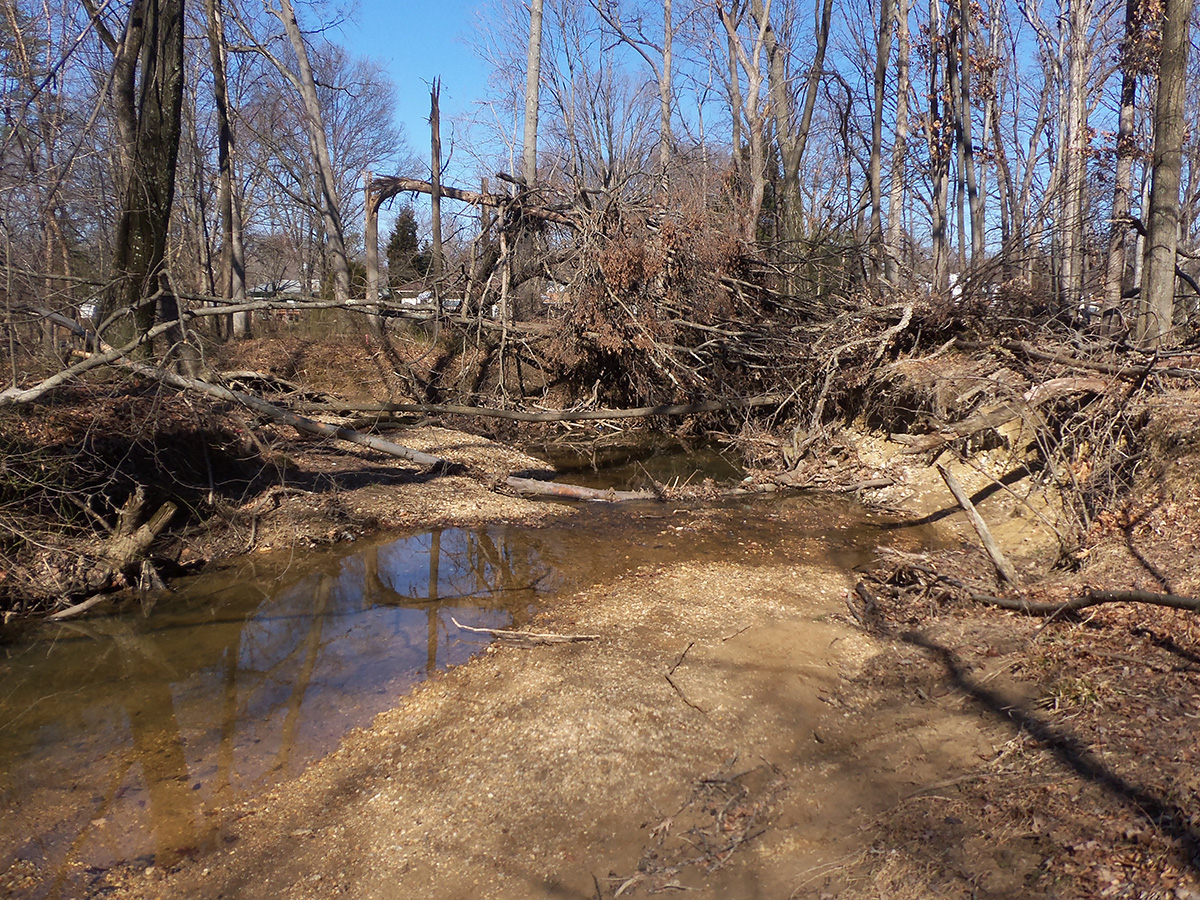
Stabilizing Streams: Urban streams can harm trees. At least 75% of streams in Fairfax County have poor water quality because of runoff. This heavy runoff erodes the banks and causes many trees to fall. Many of the trees removed during restoration might have been weakened by erosion and would have fallen into the stream eventually. The restored banks are stable and will not erode in the future. New plantings around the stream banks will grow and create a healthier area over time.
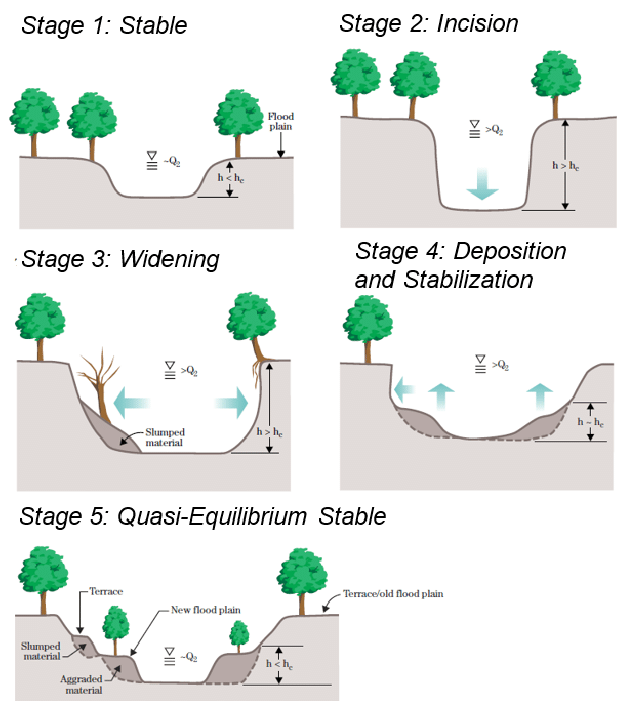
Focusing on Lower Quality Forests and Trees: One of the first steps in planning a stream restoration is to take note of the different plant communities around the stream. We avoid the rare and good quality areas and plan the restoration in the fair poor quality areas.
Old Courthouse Spring Branch @ Gosnell Road – Tysons, VA
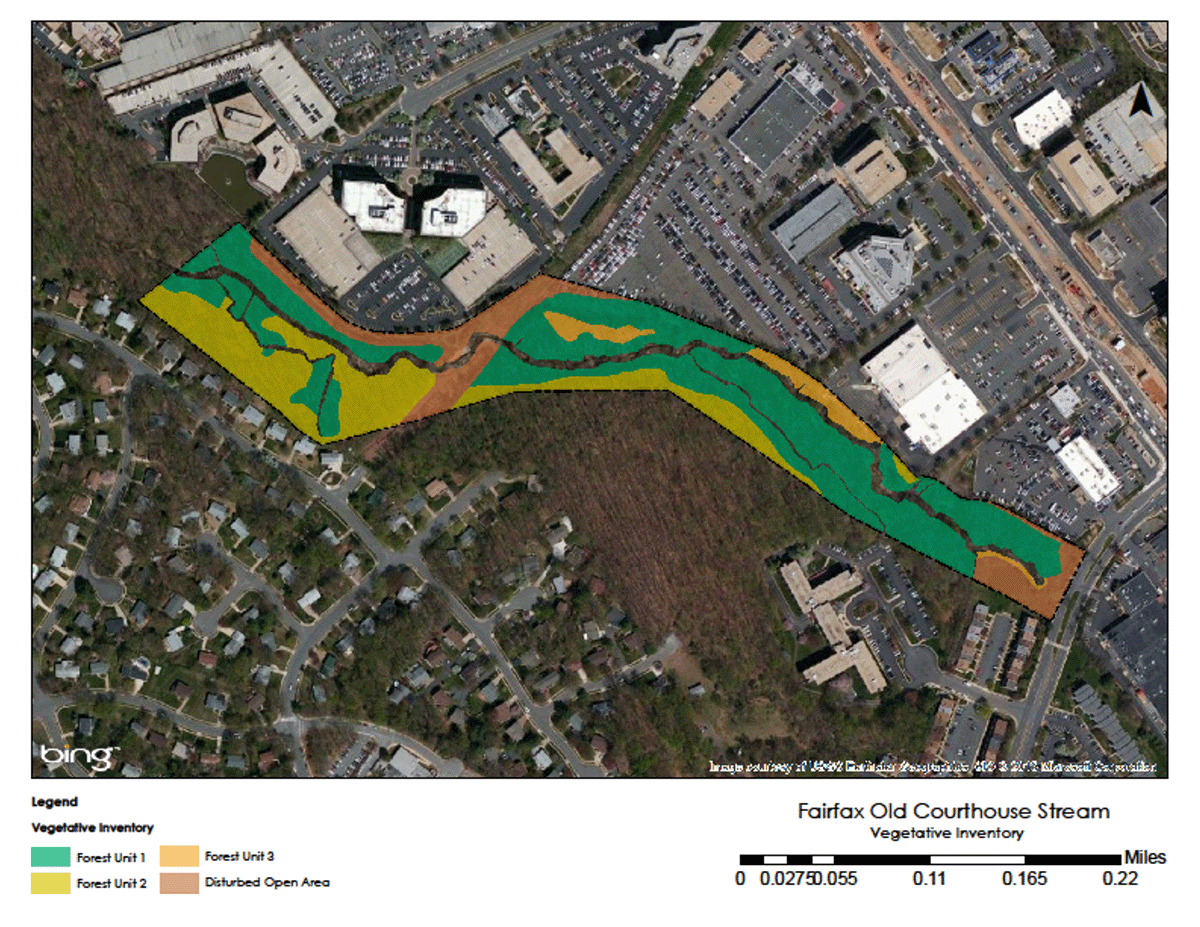
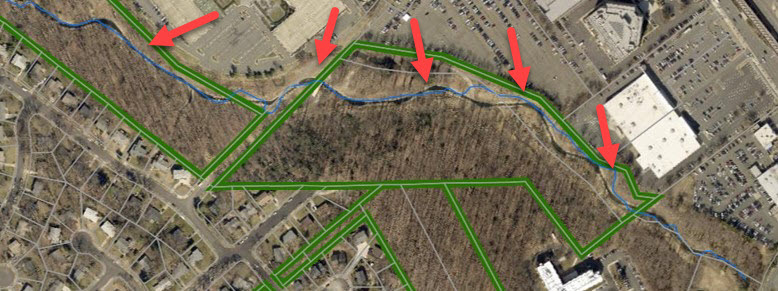
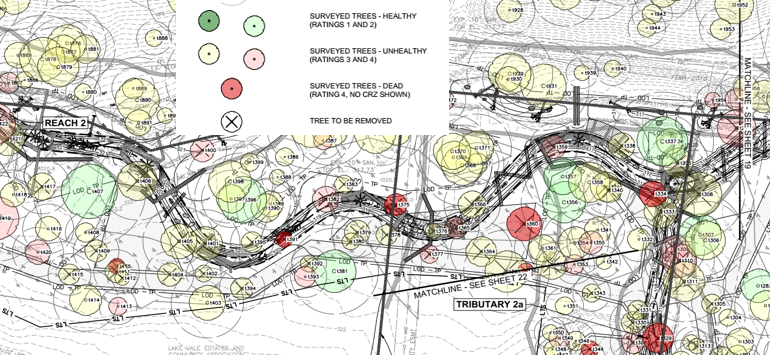
While checking the plant communities, a survey is also done to look at all trees that are 12 inches in diameter or bigger. Surveyors note the species and the condition of each tree. The project is planned to avoid impacting healthy trees as much as possible and focuses on trees that are in poor health. In this example, only 2% of the trees affected are in good condition.
Example from Rocky Branch @ Hickory Hollow Lane Stream Restoration – Vienna, VA
| Tree Condition | Number to be removed | Percentage of total |
|---|---|---|
| Excellent | 0 | 0% |
| Good | 5 | 2% |
| Stressed | 133 | 55% |
| Poor | 55 | 23% |
| Dead | 48 | 20% |
| Total: | 241 |
Nitrogen, phosphorus, and total suspended solids (TSS, or sediment) are three pollutants that affect water quality in the Chesapeake Bay. Sediment can smother aquatic life, clog waterways, and make the water cloudy, which reduces the ability of photosynthetic organisms to produce oxygen and food. Nitrogen and phosphorus can cause algae blooms.
Stream restoration projects help reduce these pollutants in several ways:
Reducing Erosion: Stream restoration stabilizes and plants vegetation on stream banks, which reduces the amount of sediment that gets carried downstream. Since most phosphorus is attached to sediment, reducing sediment also reduces phosphorus.
Filtration: Stream restoration helps reduce nitrogen in two important ways. Nitrogen is mostly dissolved in water. Stream restoration captures nitrogen by improving how water interacts with soils and groundwater around the stream (the hyporheic zone). Also, reconnecting the stream with its floodplain allows floodwaters to spread out, slow down, and interact with soils, woody debris, and vegetation, capturing nitrogen. This floodplain interaction also captures sediment and phosphorus and stores carbon, which benefits the atmosphere.
Healthy Floodplains: By planting thick, native vegetation in the floodplain, stream restoration creates a natural filter that captures pollutants before they reach the stream and filters out many pollutants in floodwaters. Healthy vegetation also absorbs nutrients and holds them in the plant tissues. It produces leaf litter and woody debris, which help filter out pollutants.
Most stream restoration projects take over a year to construct. During construction, county contractors will put up safety fencing, barriers, and signs to keep the public safe by limiting access to construction areas. Here's what you can expect:
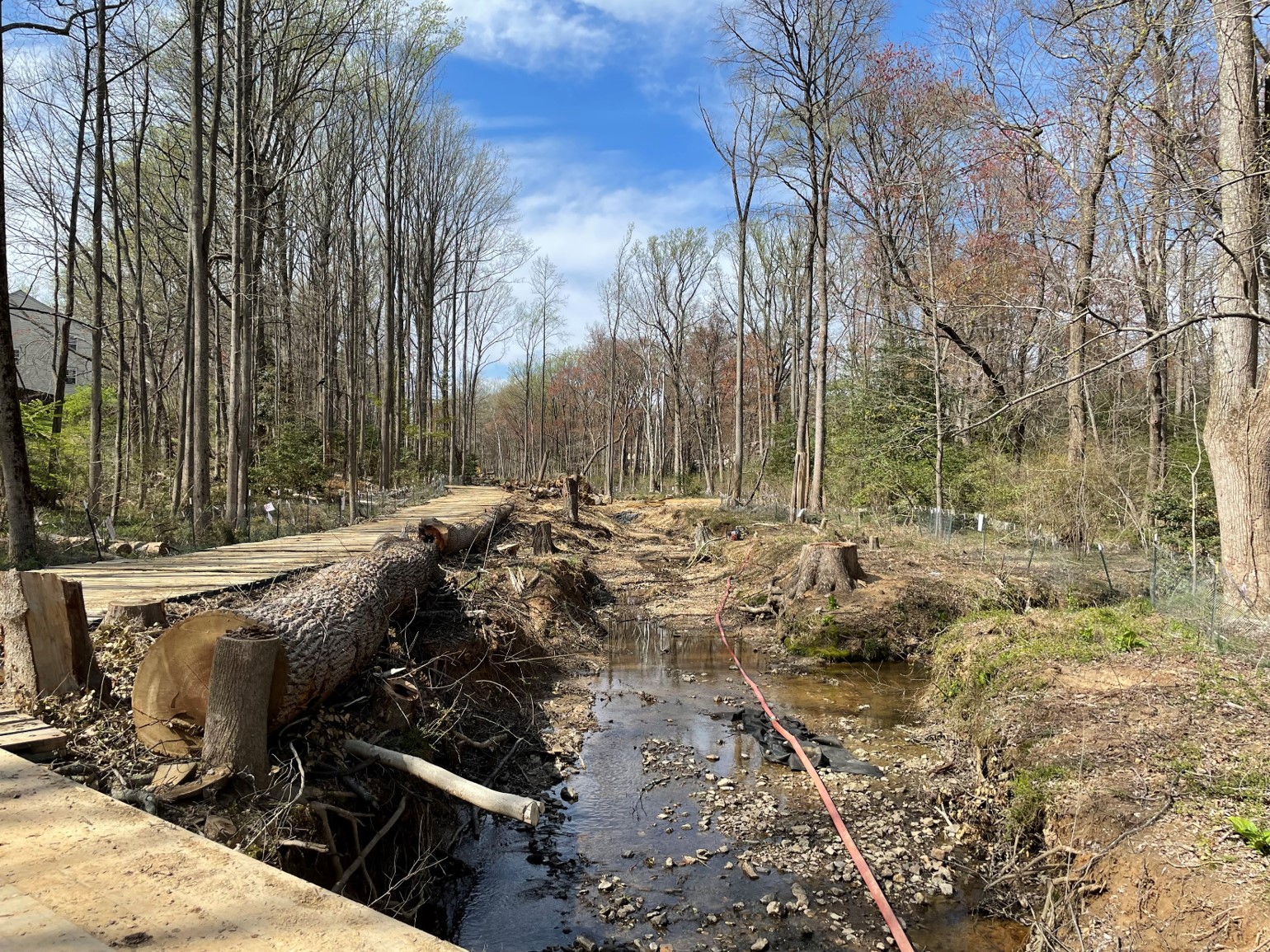
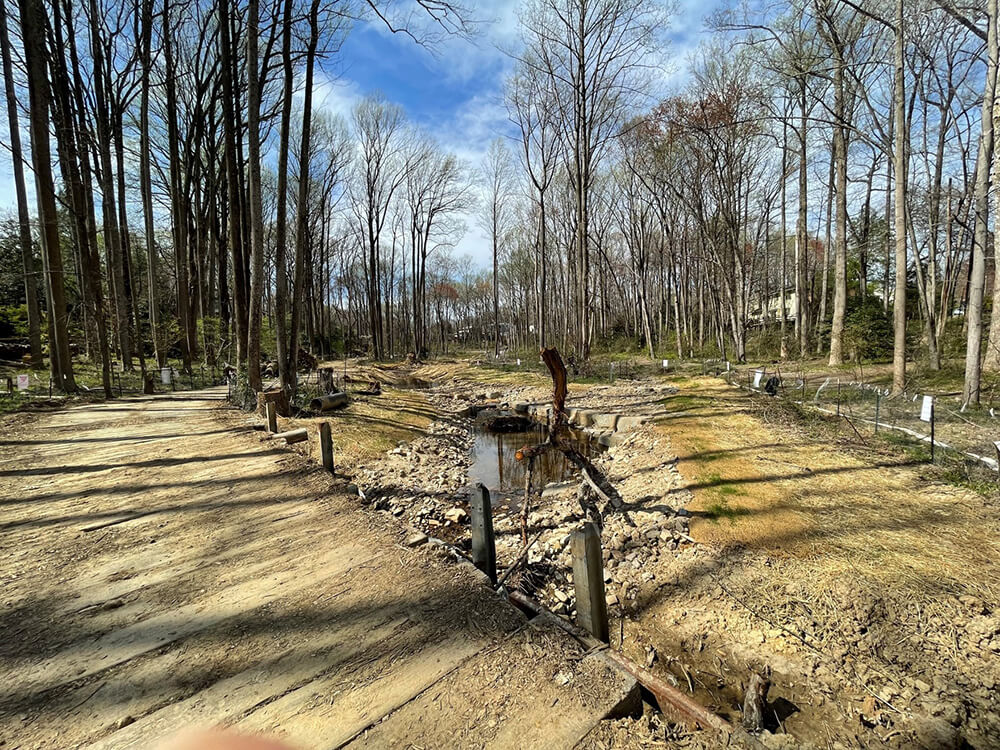
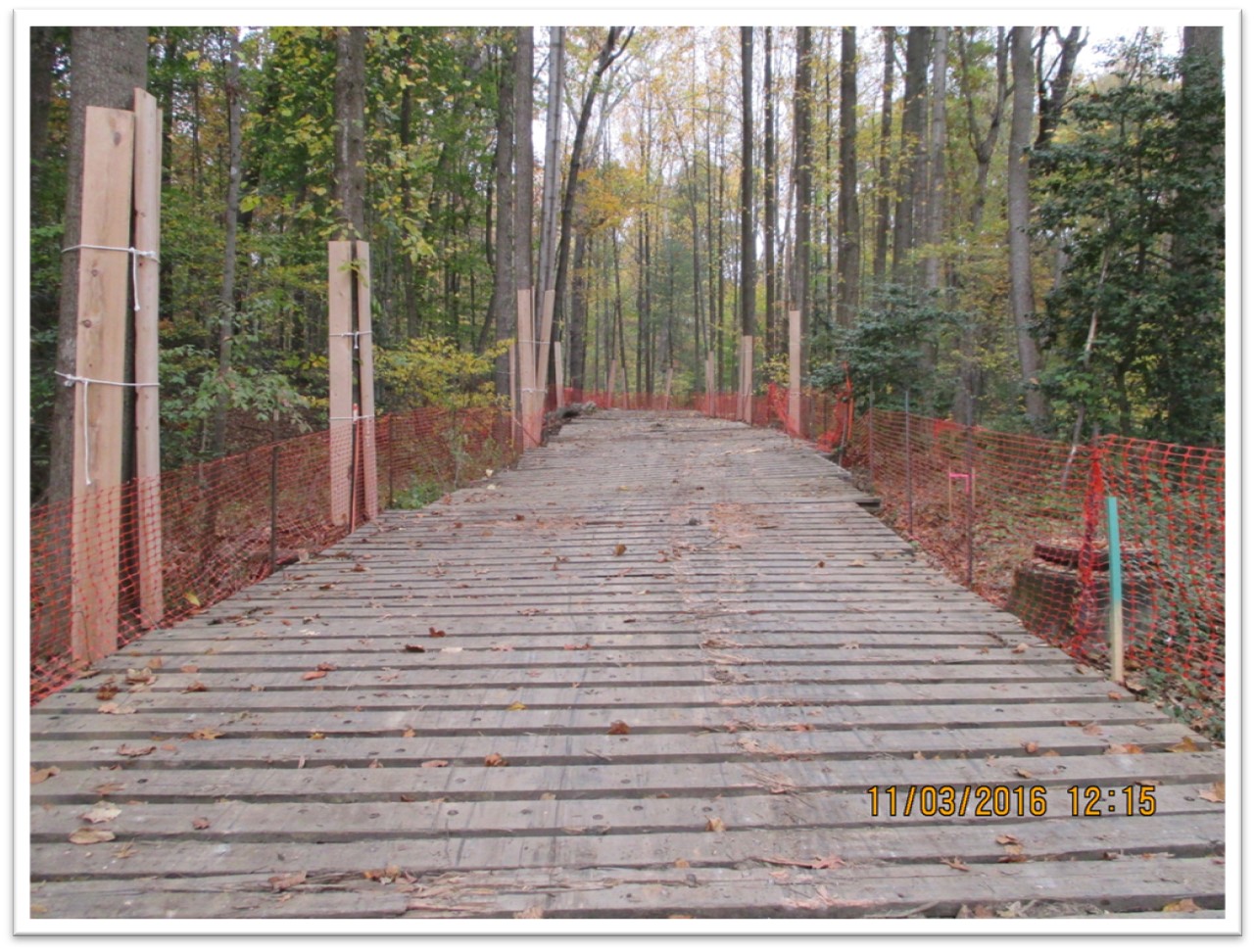
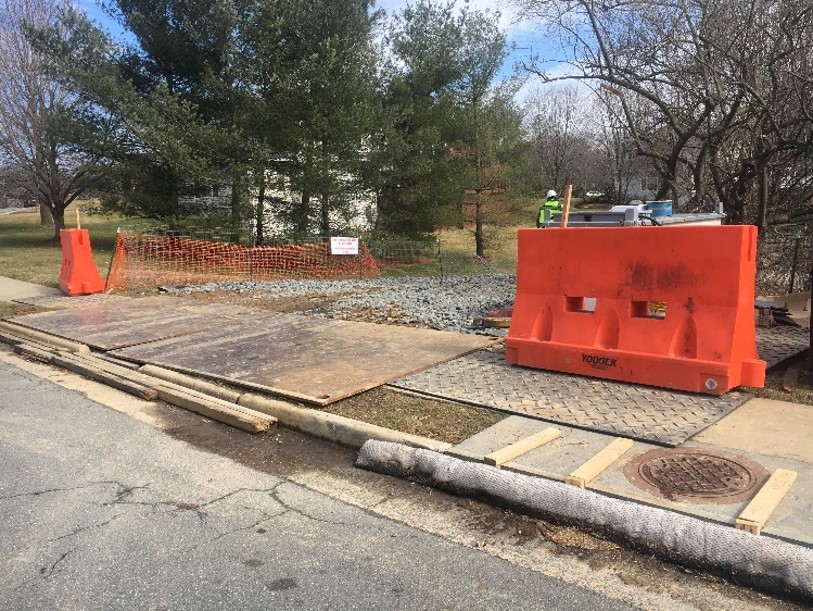

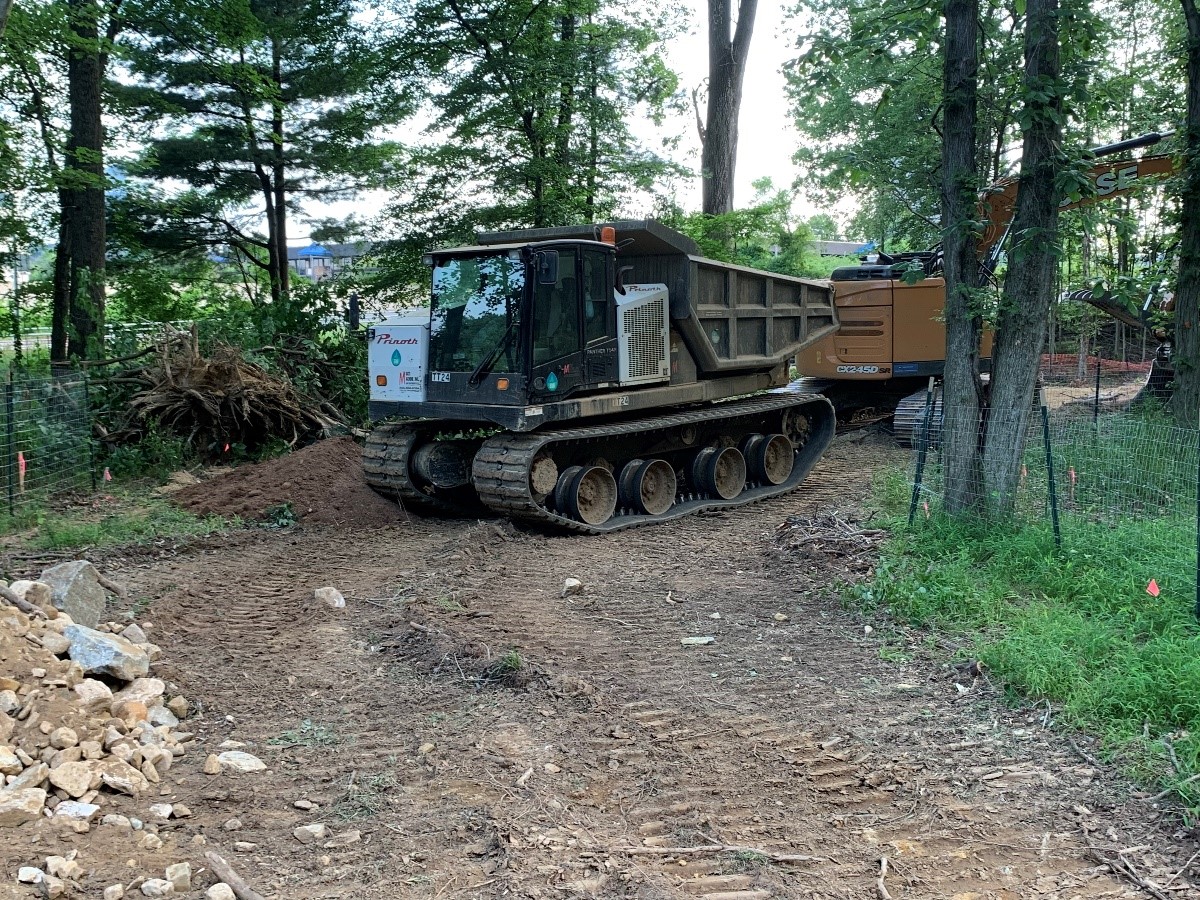
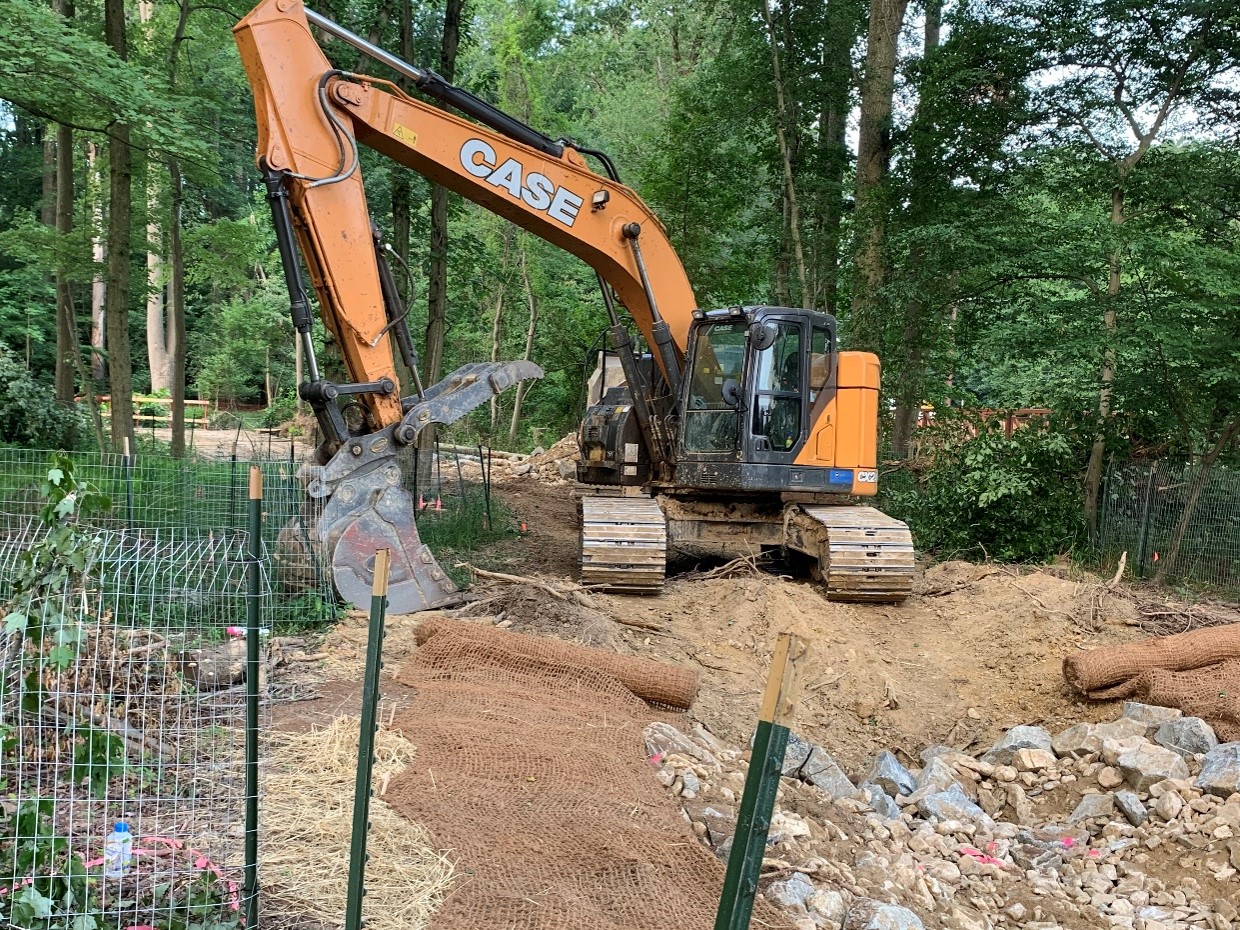
Wood/ Log:
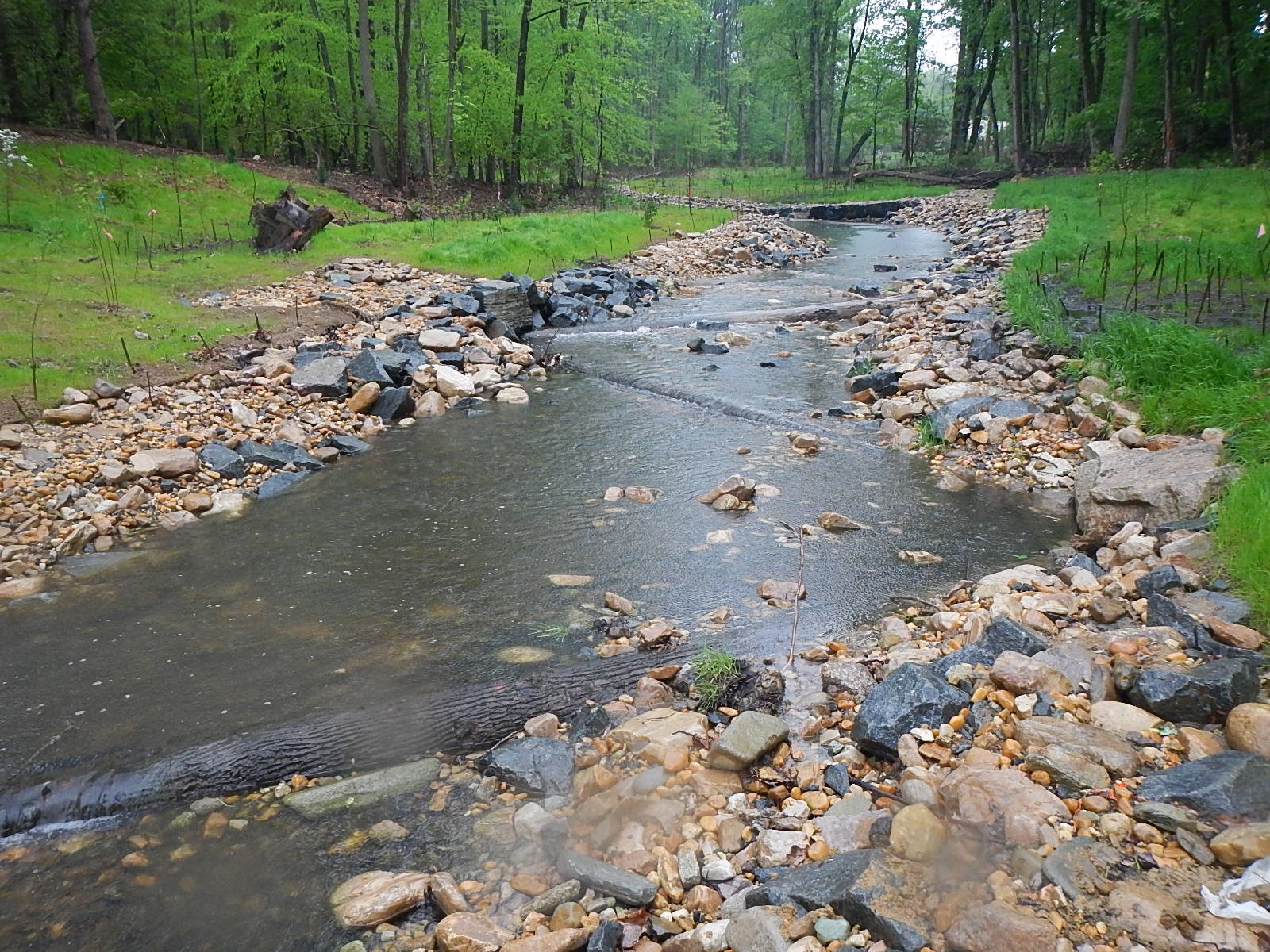
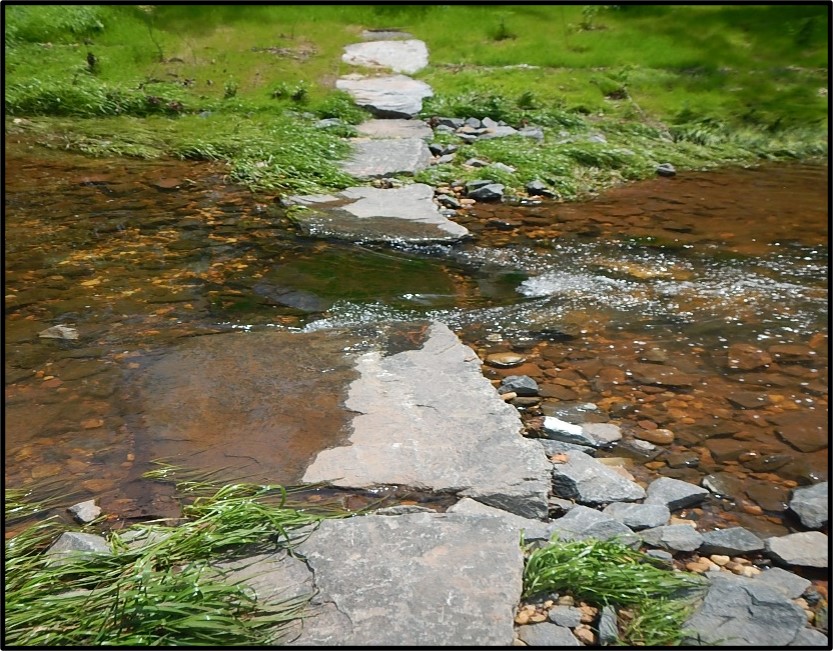
Rock:
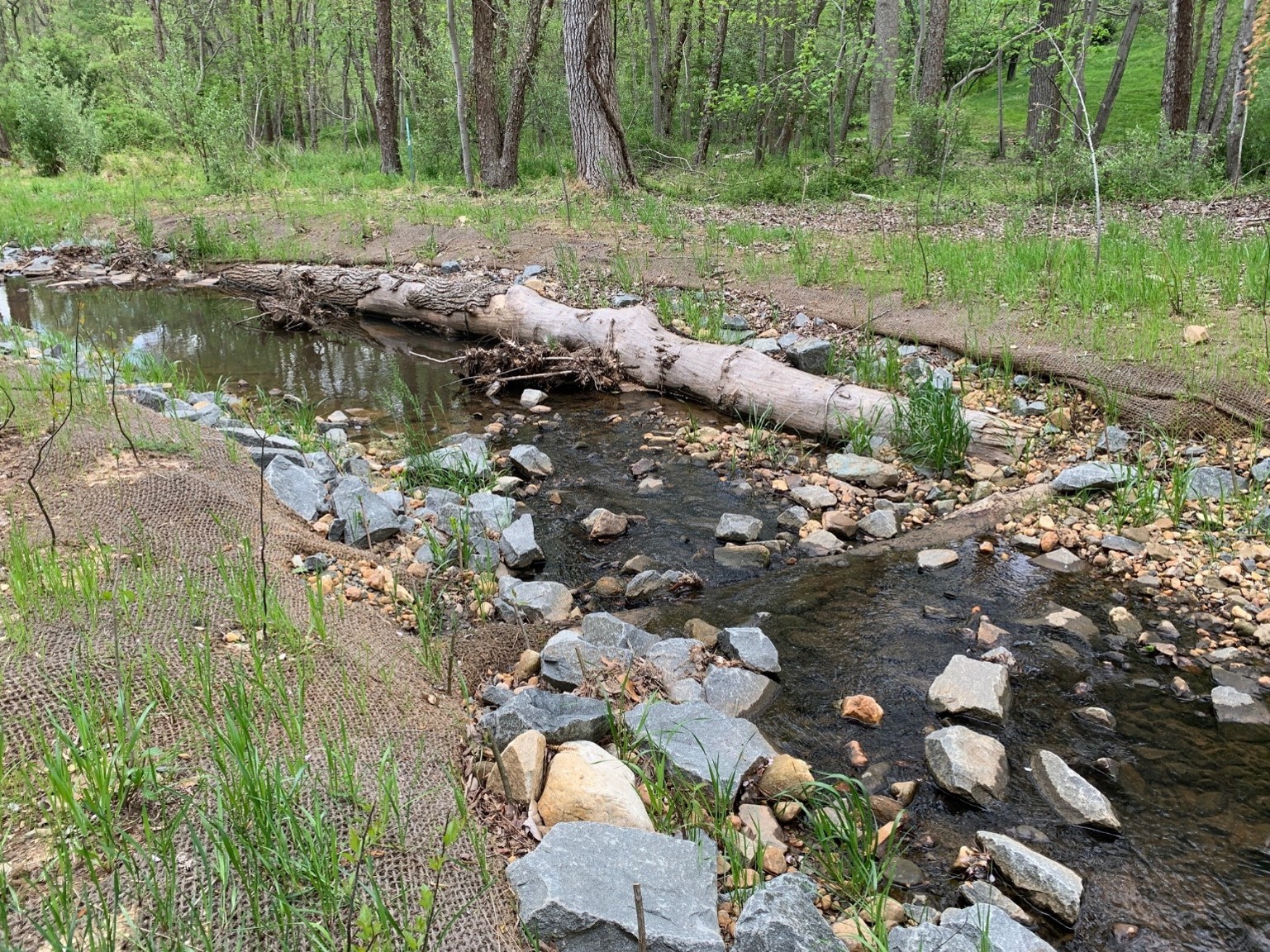
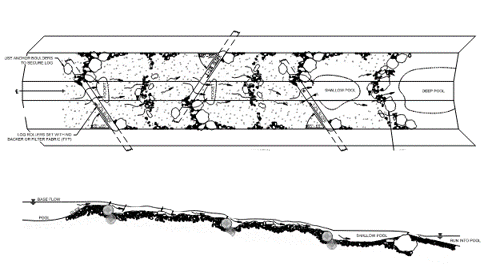
In-stream structures:
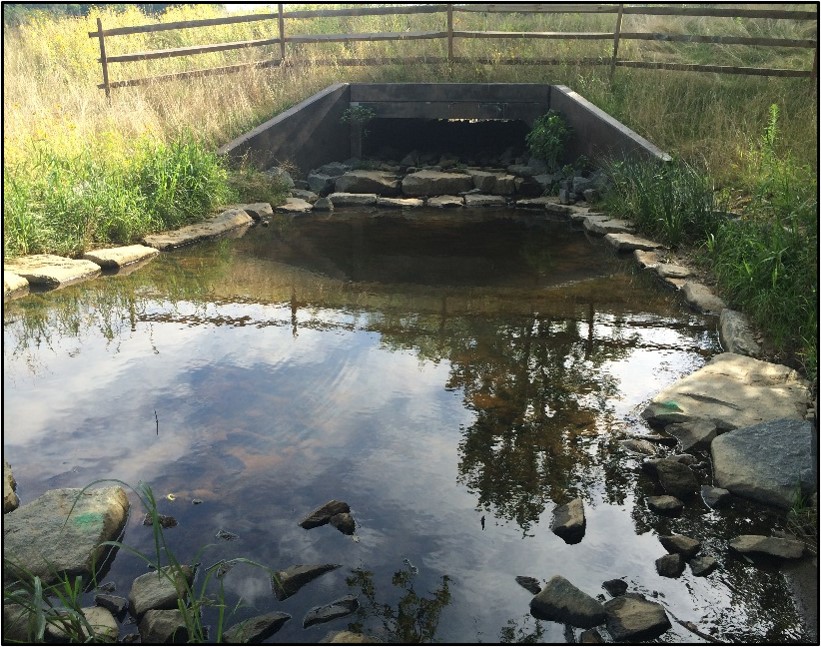
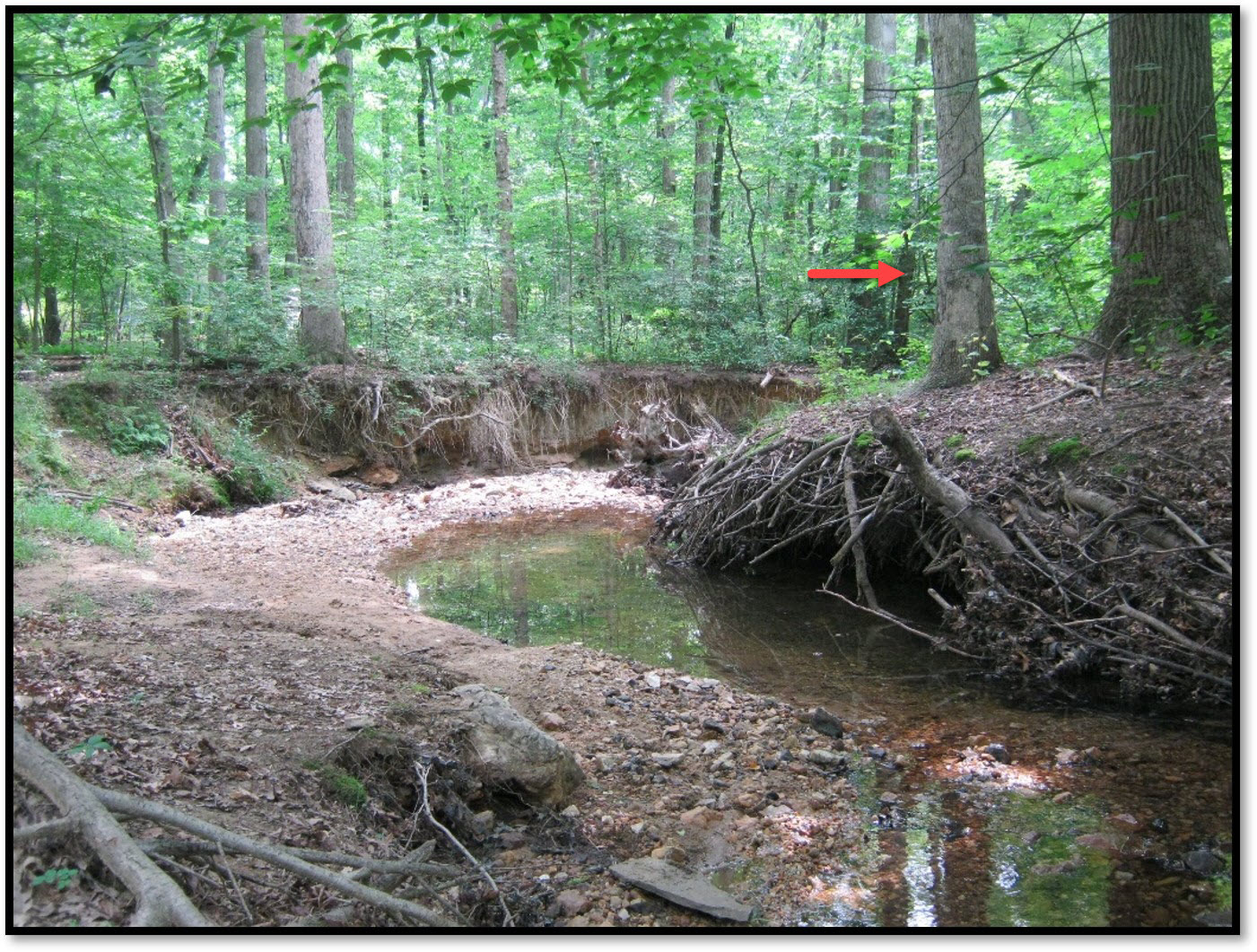
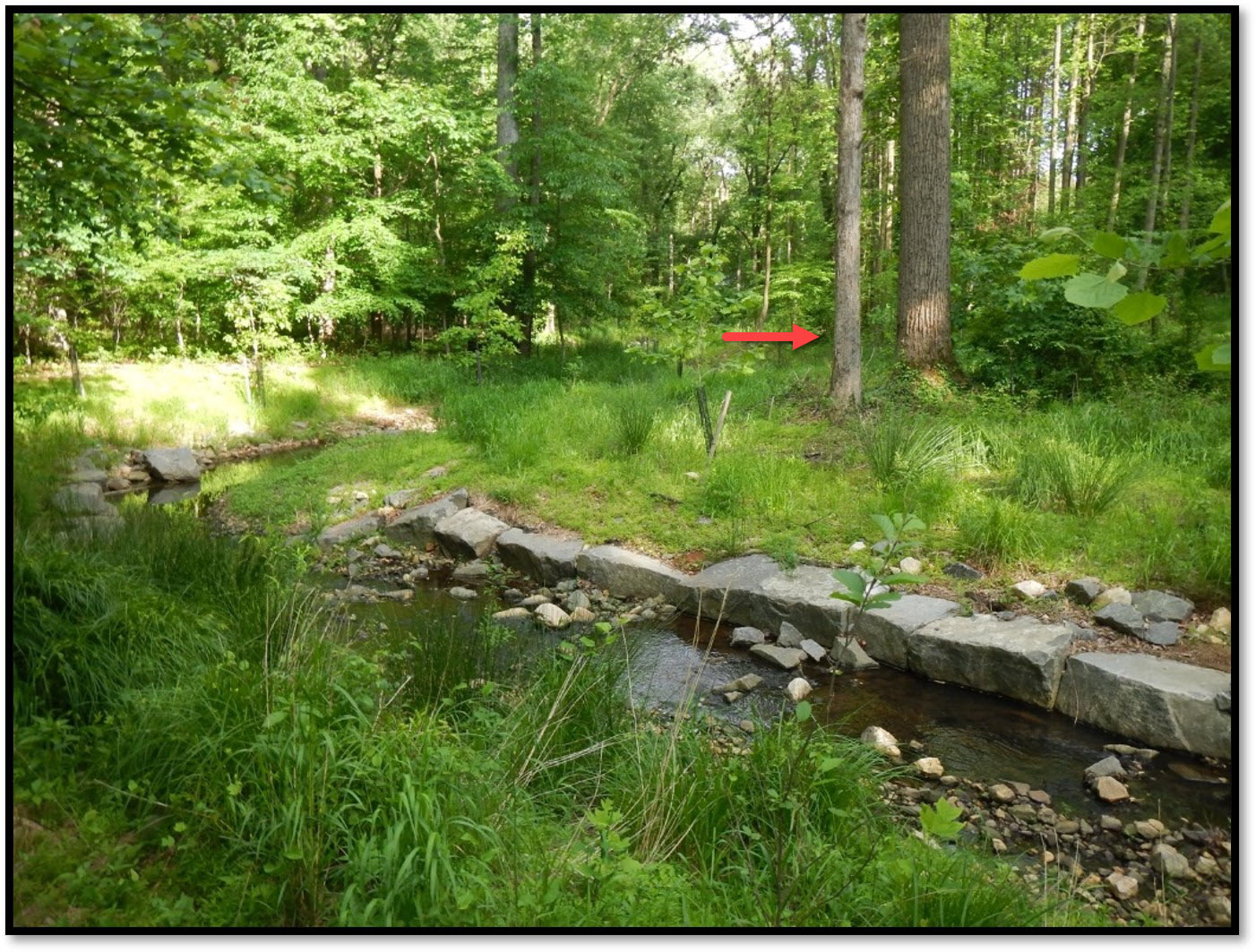
Stream restoration can help reduce the effects of flooding from smaller, more frequent storms. This works by reconnecting the stream to its floodplain, which allows water to spread out and slow down. It also helps if the project upgrades old or too-small stormwater facilities.
However, stream restoration can't stop flooding during big storms. During those times, the improvements from the restoration aren't enough to manage the large amounts of floodwater.
Yes, invasive species are controlled before and during construction. Staff also monitor the plantings and control invasive species for three years after construction. To learn more about invasive species, what you can do about them, and what Fairfax County is doing, visit the County’s Invasive Species webpage.
Is building more homes and roads, known as urban development, causing streams to get worse?
Yes, building more roads and buildings is the main reason our streams are getting worse. Find out more at Why Restore Streams?
Is fixing the streams the only way to solve this problem?
Stream restoration is one way to protect our streams and improve water quality. Fairfax County does not own most of the land in our watersheds, so it is often hard to build more facilities to capture and hold stormwater. Because of this, stream restorations are often the most practical and cost-effective way to protect infrastructure and address pollution.
What is Fairfax County doing to handle the effects of all this building and development?
Fairfax County requires all new developments or properties with land-disturbing activities of more than 2,500 square feet to use stormwater protections, including erosion and sediment controls during construction and stormwater detention and treatment. Additionally, the Department of Public Works and Environmental Services inspects all public and private stormwater facilities in the county to ensure they are working properly.
Mosquitos do not live in flowing water, so they do not occur in flowing streams. If there are concerns about mosquitos in stormwater facilities, please call 703-877-2800, TTY 711.
To learn more about mosquitoes, you can visit the Fairfax County Health Department Disease Carrying Insects Program. They can give you tips on how to reduce health risks, get rid of mosquito habitat on your property, and ask Health Department staff to check for insects. If mosquitoes are found in county stormwater facilities, we work with the Health Department to monitor and treat the area to prevent mosquitoes when needed.
Most wildlife in Fairfax County can handle human activities, and the disruptions from stream restoration are usually temporary. There is some loss of habitat in streams during construction. After construction, frogs, turtles, and snakes return very quickly, and fish come back to the pool areas. The recovery of insects and other animals that live in the stream bed depends on whether those animals are already living in and around the restored stream. How fast animals come back and which ones return depends on how close they live to the project site. Wildlife such as white-tailed deer, foxes, raccoons, and green herons are often seen in construction sites. Within a few years, the wildlife habitat is often better after restoration because of the improved native plants along the stream.
There are several things property owners can do to protect their property, reduce stormwater runoff, and protect our streams. Here are some suggestions:
Stormwater FAQs offers helpful tips on dealing with drainage issues, maintaining private stormwater facilities, and what to do if you see pollution in a stream. If you notice any problems at a restored stream site or other stormwater facility, you can Report a Problem to county staff.
Northern Virginia Soil and Water Conservation District (NVSWCD) has resources for residents on soil testing, reducing flood risk, building a rain barrel or rain garden, and many other topics. NVSWCD also has grant assistance programs to help landowners make stormwater-related improvements on their property.
If you find out that a stormwater project is going to happen in your neighborhood, contact the county staff using the provided information to learn more about the project and attend public meetings to give your input.